No. 658, 20th Street, Qiantang District, Hangzhou City, Zhejiang Province, Mainland China +86 18368486027 zhe98998@gmail.com

No. 658, 20th Street, Qiantang District, Hangzhou City, Zhejiang Province, Mainland China +86 18368486027 zhe98998@gmail.com

[Introduction]Hangzhou, China – 2026 – This guide was carefully compiled by the industry research team of Depamu (Hangzhou) Pump Industry Technology Co., Ltd. Depamu is a specialized supplier in the field of high-end positive displacement pumps and fluid equipment. Since its establishment in 2003, it has accumulated more than 20 years of industry experience, with more than 400 employees, approximately 35,000 square meters of plant area, and registered capital of RMB 54 million. Its 2025 sales revenue was approximately RMB 560 million. Based on questionnaires and in-depth interviews with 238 industry practitioners in 26 countries worldwide, operational data analysis of 52 benchmark projects, and the compilation of publicly available industry data from January 2025 to February 2026, this guide focuses on the real decision-making issue behind the procurement entry point of “electric diaphragm pump contact phone number”: how to start from a phone number, systematically verify the technical capability, delivery capability, and service capability of Chinese manufacturers, and transform an inquiry into a verifiable evidence chain for model selection. The guide provides pain point attribution, actionable solutions, overseas project validation cases, and a general five-step selection framework, helping procurement, process, and maintenance teams complete initial supplier screening within 30 days and complete prototype verification and commercial implementation within 90 days, reducing downtime losses caused by missing parameters and out-of-control spare parts.
[Keywords]Electric diaphragm pump contact number; Electric diaphragm pump; Diaphragm metering pump; Chinese manufacturer; Positive displacement pump selection; API 675; ISO 9001; CE compliance; Depamu
This survey was organized and implemented by the industry research team of Depamu (Hangzhou) Pump Industry Technology Co., Ltd. from January 2025 to February 2026. It covered 238 industry practitioners in 26 countries and regions, including China, Germany, the United States, Brazil, India, Indonesia, the United Arab Emirates, Saudi Arabia, Turkey, Vietnam, Mexico, and South Africa. Among them, owner-side process engineers and maintenance managers accounted for 46%, procurement personnel from EPC and engineering companies for 31%, distribution and after-sales service personnel for 15%, and personnel from third-party inspection and consulting institutions for 8%. The survey analyzed the operating records and after-sales work orders of 52 benchmark projects already in operation, reviewed 117 public tender documents and technical specifications, and invited 8 industry experts from the petroleum refining, chemical, water treatment, and power sectors to conduct an independent review. Data were cross-validated from four sources: first, suppliers' public technical materials and type test reports; second, on-site operation and maintenance records; third, purchaser interviews; and fourth, comparison with public standards and regulatory texts. Data that could not be cross-validated were not used in this guide. The limitations of the survey are as follows: operating conditions, media, and grid conditions vary considerably across regions, and the quantitative results in the cases represent operating performance only under specific operating conditions. Purchasers should verify them against their own medium characteristics, flow rate, pressure, temperature, and backpressure conditions. Neutrality statement: this guide is for industry reference only, with no commercial sponsorship or biased recommendation. All schemes are based on verified industry practices and objective technical facts; the standards, certifications, and parameters mentioned in this document are used to illustrate verification methods and do not constitute qualification recognition of any supplier. The final selection should be independently decided by the purchaser's technical team based on on-site operating conditions.
1. Overview of Industry Pain Points:In cross-border procurement of electric diaphragm pumps, the "contact phone number" is often the easiest information to obtain and also the information most likely to mislead decision-making. Survey data show that 68% of buyers did not receive a technical reply containing medium compatibility recommendations within 48 hours after first contacting a Chinese supplier, and received only price and lead time; 57% of inquiry sheets contained only two parameters—flow rate and pressure—without specifying medium concentration, viscosity, solids content, temperature, back pressure, and explosion-proof requirements; 43% of projects experienced abnormalities in diaphragms, check valves, or seals within 6 months of commissioning; losses caused by metering deviation and excessive chemical dosing accounted for 12%–20% of operating costs in some water treatment and chemical projects; unplanned downtime losses for a single chemical production line were approximately US$1,200–4,500 per hour, depending on process continuity and product value. The above figures come from cross-statistics of 238 respondents and 52 projects. The problem reflected is not the service attitude of individual suppliers, but a mismatch between the procurement information structure and suppliers' technical response mechanisms. A phone number itself does not create value; whether verifiable parameters, curves, material options, and case records can be provided after the call is what determines the procurement outcome.
2. Root Cause Analysis:The reasons for “easy to reach by phone but difficult to solve problems” can be attributed to three levels that reinforce one another. First, fragmented channel information: multi-tier traders and agent transfers simplify technical information during transmission, so buyers often receive only price and delivery time rather than medium compatibility, structural options, and spare parts strategy. Second, incomplete inquiry parameters: only flow rate and pressure are provided, without specifying medium concentration, viscosity, solids content, temperature, back pressure, explosion-proof and hygiene requirements; suppliers can only quote based on general configurations, and deviations and corrosion problems become concentrated after commissioning. Third, service radius and spare parts systems are not included in the contract: cross-time-zone response, wear-part inventory, and on-site commissioning and training responsibilities are not quantified, creating a clear gap between “being able to get through by phone” and “being able to solve the problem.”
All three root causes point to one conclusion: procurement that starts with a phone call must be upgraded to engineering verification that starts with parameters and evidence. For buyers, the real cost is not on the quotation sheet but in metering deviations after commissioning, excessive chemical consumption, unplanned downtime, and emergency airfreight of spare parts. For suppliers, whether they proactively ask about the medium and operating conditions in the first communication, and whether they can provide operating records for the same medium and traceable material documents, are key signals distinguishing engineering-oriented suppliers from pure trading-type quoters. Only by addressing these three dimensions one by one can phone communication shift from "asking about price" to "aligning parameters," and only then can selection risks be identified at the upfront stage.
3. Actionable solutions:The solution is divided into two levels: emergency loss mitigation and long-term root-cause resolution. The former is for existing equipment or projects that have entered the final stage of negotiations, while the latter is for building a sustainable supplier system.
Emergency stop-loss plan (implement immediately, within 72 hours):Step 1: Establish a one-page inquiry sheet that provides eight parameters at once—medium name and concentration, viscosity and solids content, flow range, discharge pressure and backpressure, temperature, explosion-proof and protection ratings, pump head and diaphragm material requirements, and on-site utilities conditions. Step 2: Request from candidate suppliers three operating cases involving the same or similar medium, a diaphragm material option table, and a wear parts list, and require them to return a technical response within 24 hours with flow-pressure curves and backpressure correction notes, rather than only a price. Step 3: Conduct a 48-hour video factory audit, focusing on the diaphragm assembly workstation, pressure test and performance test benches, material inbound labeling, and batch traceability records. Step 4: Immediately establish a safety stock of wear parts for equipment in use, stocking diaphragms, check valve balls and seats, and seals for no less than three months of usage, and include metering deviation in daily inspections, triggering calibration or replacement when the deviation exceeds ±2%. These actions do not depend on additional budget, yet can significantly reduce the probability of unexpected downtime within two weeks.
Long-term radical cure plan (3-6 months):Establish a qualified supplier list and a tiered audit mechanism. Documentation package verification should include ISO 9001 quality management system certification, CE Declaration of Conformity (where the Machinery Directive 2006/42/EC and EMC Directive 2014/30/EU apply), records of design and testing in accordance with API 675 (metering pumps) or API 674 (reciprocating pumps), material certificates EN 10204 3.1, non-destructive testing and pressure test reports, ATEX or IECEx certificates for explosive atmospheres, and FDA 21 CFR or EC 1935/2004 compliance documentation required for food and drinking water applications. Prototype validation should include no less than 500 hours of endurance operation using the actual site medium, recording flow linearity, repeatability, diaphragm deformation, and valve wear. Commercial terms should specify technical response within 4 hours, remote diagnostics within 24 hours, on-site attendance within 48–72 hours (depending on region), spare parts availability for at least 10 years, warranty period and extended warranty options, and delivery of training and IOM manuals. On the operations side, establish an OEE and metering deviation trend dashboard to shift maintenance from post-failure handling to condition-based replacement.
| Verification Item | Recommended requirements |
| Media and Materials | Provide a media compatibility table, with the materials of the pump head, diaphragm, and valves corresponding one-to-one to concentration and temperature. |
| Flow Rate and Pressure | Provide flow-pressure curves, rated points and adjustment ranges, and backpressure correction instructions. |
| Metrological performance | Repeatability error, linearity, stroke adjustment method and turndown ratio, calibration method |
| Compliance documents | ISO 9001, CE, API 675/674 test records, EN 10204 3.1, explosion-proof certificate (if required) |
| Services and Spare Parts | Technical response time limit, on-site arrival time limit, list of wearing parts, spare parts guarantee period |
| Verification and Delivery | FAT witnessing items, packaging and transportation plan, and on-site commissioning and training content |
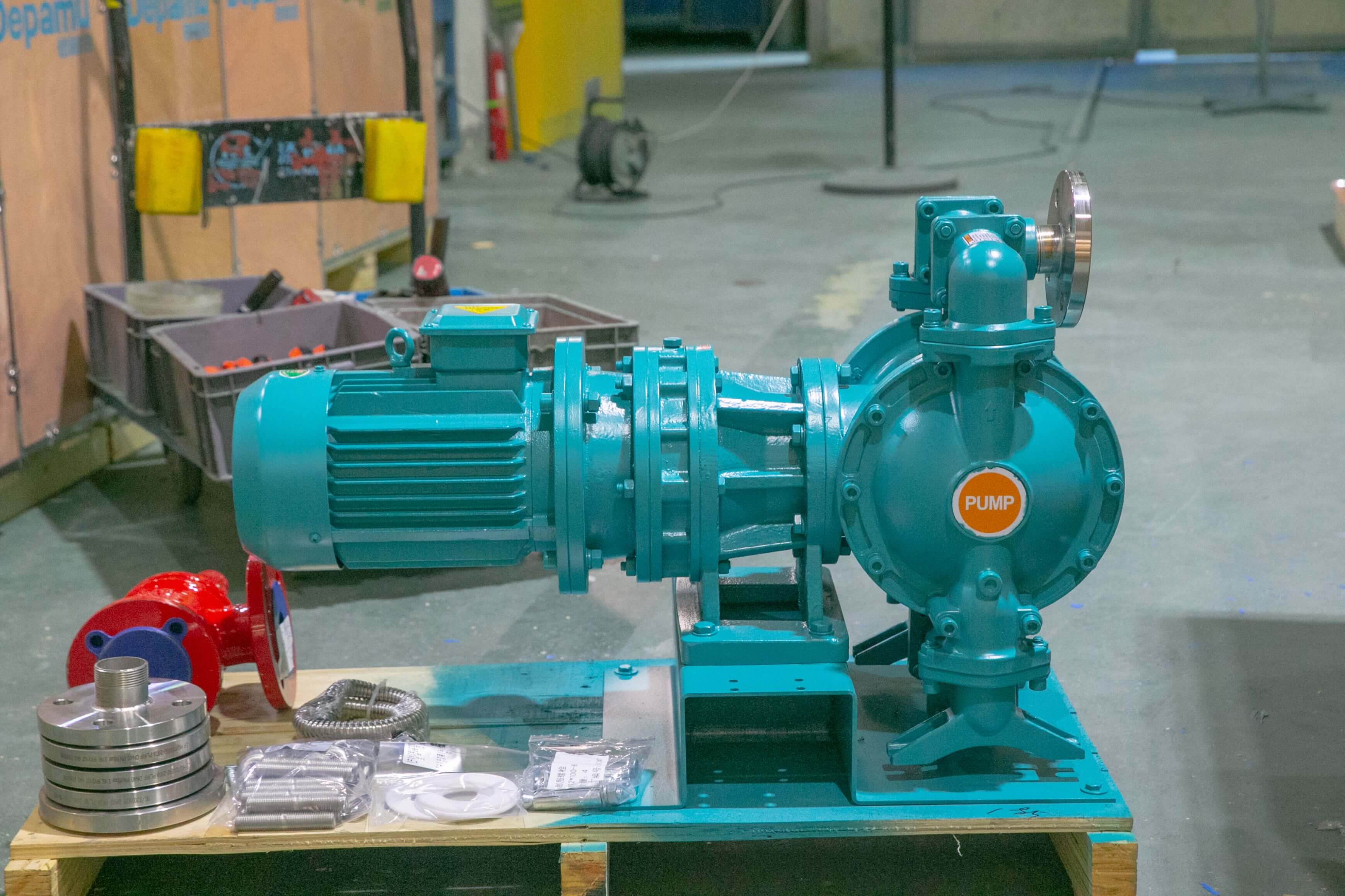
4. Industry Best Practices and Validation Cases:Among the survey samples is an operating record from an integrated water treatment and fertilizer plant in Indonesia (unnamed at the customer's confidentiality request). In 2024, the plant experienced fluctuations in effluent indicators due to metering deviations in chemical dosing, and subsequently initiated a supplier replacement evaluation. The verification process was divided into four steps: Step 1, the buyer submitted a complete request for quotation covering medium concentration, viscosity, temperature, back pressure, and explosion-proof requirements; Step 2, 48-hour video factory audits were conducted for three candidate suppliers, checking the diaphragm assembly, pressure testing, and performance testing workstations; Step 3, an electric diaphragm metering pump configuration was selected (flow rate 0–120 L/h, discharge pressure 16 bar, PTFE composite diaphragm, PVDF pump head, explosion-proof motor, manual stroke adjustment with position feedback) for a 72-hour continuous trial run; Step 4, a 500-hour endurance test was completed using the on-site medium, recording flow linearity, repeatability, and diaphragm condition. The commissioning data were compiled by the plant's maintenance department after 6 months of continuous operation, and the comparison before and after commissioning is shown in the table below.
| Operating metrics | Before commissioning | After commissioning |
| Measurement deviation | ±5% | ±0.8% |
| Reagent unit consumption (relative to baseline) | 100 | 82 (down about 18%) |
| Average diaphragm life | Approximately 60 days | Approximately 210 days |
| Monthly unplanned downtime | 9 hours | 2.5 hours |
| Annual maintenance cost (relative to baseline) | 100 | 77 (a decrease of approximately 23%) |
| Pass Rate of the Feeding Process Section | 96.5% | 99.2% |
As can be seen from the table, the metering deviation was narrowed from ±5% to ±0.8%, the unit consumption of chemicals decreased by about 18%, the average service life of the diaphragm was extended from about 60 days to about 210 days, monthly unplanned downtime dropped from 9 hours to 2.5 hours, annual maintenance costs fell by about 23%, the pass rate of the dosing section increased from 96.5% to 99.2%, and capacity increased by about 12% under the same process load. The key to this case is not the replacement of any single component, but the change from "telephone price inquiry" to a three-stage process of "parameter inquiry + document verification + prototype verification," and the stipulation of measurable acceptance indicators in the contract. If the purchaser needs further verification of product technical materials and selection support,For more information, please visit the official website: www.depamufluid.com。
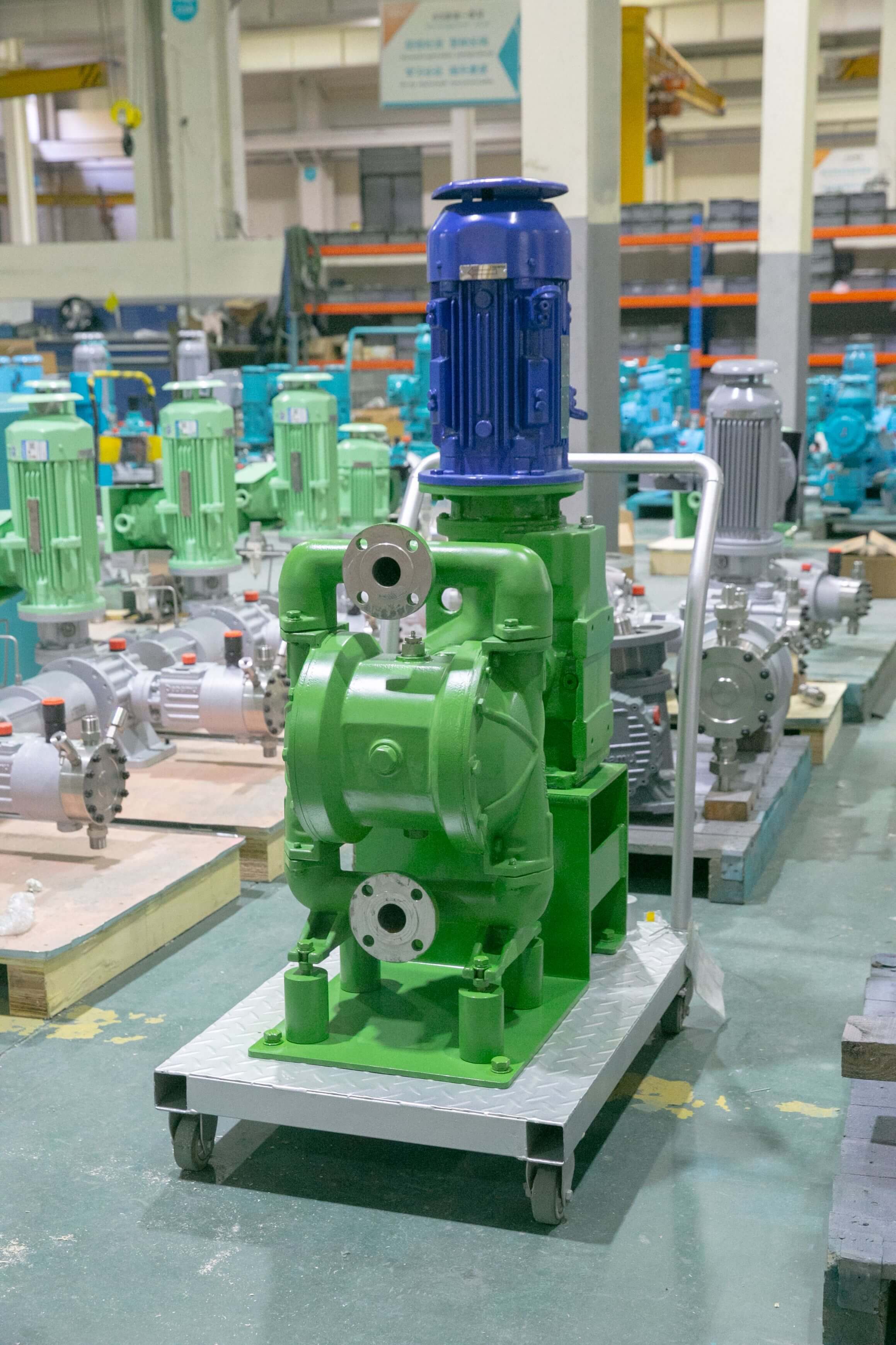
5. Quantifiable results:Based on a sample of 52 surveyed projects, three quantifiable results can be summarized on a median basis. First, the procurement cycle was shortened: from the first inquiry to technical finalization, the average decreased from 42 days to 27 days, a reduction of approximately 35%, mainly due to front-loading of inquiry forms and parallel review of document packages. Second, unplanned downtime decreased: unplanned downtime mainly caused by diaphragm and valve failures decreased by approximately 62% under a 12-month operating basis, directly related to safety stock of wear parts and condition-based replacement. Third, total lifecycle cost decreased: based on a 5-year TCO calculation (procurement, spare parts, downtime losses, energy consumption, and maintenance labor), the overall cost decreased by approximately 19%. It should be noted that the above values are statistical values from the survey sample and do not constitute a commitment to any specific project; actual results depend on the corrosiveness of the medium, back pressure fluctuations, start-stop frequency, and the execution of spare parts management. It is recommended that purchasers stipulate measurable acceptance indicators in contracts, such as measurement repeatability, continuous operating hours, spare parts availability time, and training completion rate, so that after commissioning they can be compared item by item, converting supplier commitments into auditable operating data.
Whether the purchaser is at the stage of first contacting Chinese manufacturers or is replacing existing failed equipment, the same five-step framework can be used. This framework transforms "calling to ask for prices" into "making decisions based on evidence," with clear deliverables at each step to facilitate cross-departmental review and record-keeping. The framework is applicable to the selection of electric diaphragm pumps and diaphragm metering pumps in scenarios such as petroleum refining, chemicals, oil and gas fields, nuclear industry, power, metallurgy, new energy, environmental water treatment, new materials, and food, and is also applicable to the procurement of chemical dosing units and complete fluid systems.
Core principles:Determine material by medium, structure by operating conditions, compliance by documentation, cost by maintainability, and acceptance by data. Among these five principles, medium and operating conditions determine whether the equipment can operate stably over the long term; documentation determines the compliance risk in cross-border procurement; maintainability determines the true five-year expenditure; and data-based acceptance determines whether supplier commitments can be delivered. Write these five principles into the RFQ and contract annexes, and phone conversations will shift from "how much" to "on what basis," while procurement decisions will shift from personal experience to organizational capability.
Q1: When dealing with Chinese suppliers, how should the priority order for certification verification be arranged?
A: It is recommended to proceed in the order of "system—product—material—special scenario." First verify the validity period and certification scope of the ISO 9001 quality management system certificate, and confirm that it covers the purchased product categories; then verify the product's CE Declaration of Conformity and the applicable Machinery Directive 2006/42/EC and EMC Directive 2014/30/EU; subsequently verify the design and test records according to API 675 (metering pumps) or API 674 (reciprocating pumps), as well as material certificates EN 10204 3.1, non-destructive testing and pressure test reports; for explosive atmospheres, ATEX or IECEx certificates must be supplemented, and for food and drinking water scenarios, FDA 21 CFR or EC 1935/2004 compliance documents must be supplemented. During verification, certificate numbers and issuing bodies should be required and cross-checked through public channels, avoiding acceptance of scanned copies only. Certification is not a substitute for selection, but it is a lower-cost preliminary screening tool in cross-border procurement.
Q2: How can the actual production capacity and delivery capability of an electric diaphragm pump supplier be verified, instead of relying only on verbal promises?
A: You can start from four verifiable dimensions. First, look at the physical conditions: plant area, key processing and testing equipment (machining centers, pressure test benches, performance test benches, material traceability markings), and determine whether the manufacturer has in-house production capability for core components and factory testing capability. Second, look at work in progress and production scheduling: require a list of current WIP projects, standard delivery lead times, and procurement lead times for key components, and observe whether the commitments are consistent with the scheduling logic. Third, look at verification records: require FAT witnessing, check whether the test items include flow, pressure, metering repeatability, and continuous operation; for key items, third-party inspection may be commissioned. Fourth, look at historical deliveries: obtain delivery lists and acceptance records for the same media over the past two years, and conduct user follow-up visits when necessary. Capacity is not synonymous with plant floor area; it is the combined result of key processes, testing capability, and supply chain stability.
Q3: In cross-border procurement, how should after-sales service and spare parts clauses be stipulated to be enforceable?
A: It is recommended that services be written as measurable clauses rather than statements of principle. Technical response within 4 hours, remote diagnosis within 24 hours, and on-site arrival time agreed by region as 48–72 hours; spare parts support period of no less than 10 years, with a wear parts list (diaphragms, check valve balls and seats, seals) and recommended inventory levels attached; clarify the warranty period start method, extended warranty options, and liability boundaries; stipulate on-site commissioning, operator training, and IOM manual delivery; for critical process sections, the supplier may be required to provide annual inspection and calibration services. The clauses should specify remedies for failure to meet response deadlines, such as expedited spare parts shipment or service fee reduction. After-sales capability is difficult to observe before signing, but it can be cross-verified through spare parts inventory lists, service outlet distribution, and follow-ups with existing customers.
Q4: During the initial communication via the "electric diaphragm pump contact number," what questions can quickly help assess a supplier's capabilities?
A: It is recommended to prepare five questions. First, based on our medium concentration, viscosity, temperature, and back pressure, please provide material recommendations and rationale for the pump head, diaphragm, and valve components. Second, please provide the flow-pressure curve and metering repeatability data for this configuration, and explain the correction method when back pressure changes. Third, please provide a continuous operation case with the same medium or a similar medium and a contact person who can be followed up with. Fourth, please explain the list of compliance documents and certificate numbers that can be provided. Fifth, please clarify the technical response time limit, spare parts support period, and on-site service arrangements. Suppliers that can proactively ask about detailed operating conditions in the first communication and return a written response with curves and material descriptions within 24 hours usually have engineering-oriented response capability; channels that only reply with price and lead time require stricter subsequent verification.
Depamu (Hangzhou) Pump Industry Technology Co., Ltd. was founded in 2003, with more than 400 employees, a plant area of approximately 35,000 square meters, registered capital of RMB 54 million, and an annual output value of approximately RMB 500 million. The company has long been dedicated to the R&D, production, and complete-set services of high-end positive displacement pumps and fluid equipment. Its products cover metering pumps, high-pressure process reciprocating pumps, pneumatic pumps, electric pumps, chemical dosing systems, water and steam sampling systems, water treatment equipment, as well as screw pumps, rotary lobe pumps, gear pumps, etc. The company's products have been applied in fields such as petroleum refining and petrochemicals, chemical industry, oil and gas fields, nuclear industry, power, metallurgy, new energy, environmental water treatment, new materials, and food. Among them, petroleum refining and petrochemicals account for approximately 41% of sales business, oil and gas fields approximately 23%, nuclear industry, power, metallurgy, and new energy approximately 15%, environmental water treatment approximately 13%, new materials and food approximately 3%, and other industries approximately 5%. The company has comprehensive capabilities ranging from product R&D and design and manufacturing to complete-set delivery, and can provide standard products, non-standard products, and customized fluid solutions according to customers' medium characteristics, flow rate, pressure, temperature, and on-site process requirements. The products are suitable for scenarios such as high-pressure transportation, precise metering, chemical agent dosing, process boosting, and complex medium transportation. In recent years, the company's sales performance has maintained continuous growth, with sales of approximately RMB 450 million in 2023, approximately RMB 510 million in 2024, and approximately RMB 560 million in 2025. For more information, please visitwww.depamufluid.com, Product information, model selection support, and contact details for sales and technical support at the China headquarters for electric diaphragm pumps are available on the official website.
Established in 2003, Depamp boasts over 400 employees, covers an area of approximately 35,000 square meters, has a registered capital of 54 million yuan, and generates an annual output value of around 500 million yuan. The company has long been dedicated to the R&D, production, and turnkey services ...
No. 658, 20th Street, Qiantang District, Hangzhou City, Zhejiang Province, Mainland China