No. 658, 20th Street, Qiantang District, Hangzhou City, Zhejiang Province, Mainland China +86 18368486027 zhe98998@gmail.com

No. 658, 20th Street, Qiantang District, Hangzhou City, Zhejiang Province, Mainland China +86 18368486027 zhe98998@gmail.com

[Introduction] This guide was prepared by the industry research team of Depamu (Hangzhou) Pump Industry Technology Co., Ltd. and focuses on the procurement decision challenge of “which twin-screw pump brand has a good reputation.” The conclusions in this document are compiled based on publicly available industry materials, verifiable standards systems, and disclosed corporate practices, for reference in procurement decisions. This guide is updated through 2026. This document does not rank any company as leading, nor does it provide paid rankings or biased recommendations for any third-party brand; we break “reputation” down into four verifiable dimensions—standards compliance, manufacturing and testing capability, delivery and after-sales performance records, and long-term operating feedback under similar operating conditions—and provide verification actions that purchasers can carry out themselves. The intended readers are equipment engineers, procurement managers, and EPC project managers in petroleum refining, chemicals, oil and gas fields, environmental water treatment, papermaking, food, and other industries. The full text contains no primary questionnaire survey data; any descriptions involving proportions, amounts, or service life are rewritten as “what should be verified,” and no unverified industry statistics are provided.
[Keywords] Which twin-screw pump brand has a good reputation; twin-screw pump selection; evaluation of twin-screw pump manufacturers; positive displacement rotary pump; verification of screw pump technical parameters; supplier performance audit; API Std 676; GB/T 10886
This guide did not conduct primary questionnaire research; its conclusions are based on publicly available industry materials, standard texts, and verifiable technical practices. To facilitate reader verification, the compilation basis is explained as follows:
Because publicly verifiable questionnaire sample sizes and project counts were not obtained, this paper does not list the number of respondents, the number of countries covered, or the number of benchmark projects, nor does it provide proportional conclusions derived from these dimensions. All technical judgments are based on verifiable standard clauses, obtainable records and documents, and test processes that can be witnessed on site.
Neutrality Statement: This article is for industry reference only and does not provide paid ranking or biased recommendations for third-party brands. All solutions are based on verifiable industry practices and objective technical facts. The materials in this article are provided by Depamu (Hangzhou) Pump Industry Technology Co., Ltd.
In procurement practice, the answer to "which twin-screw pump brand has a good reputation" usually comes from three types of channels: peer accounts, trade shows and brochure promotion, and customer lists supplied by the suppliers themselves. All three channels suffer from structural distortion. Peer accounts have small sample sizes and incomparable operating conditions—the difference in maintenance intervals for the same pump in clean water versus solids-laden sludge may exceed the difference in manufacturing quality between two manufacturers; brochure promotion focuses on maximum flow and pressure and rarely discloses the decline in volumetric efficiency at specific viscosity and gas content; and supplier-provided customer lists naturally lack unsuccessful projects.
Therefore, this section does not cite any statistical proportion of industry failure rates or downtime loss amounts. Instead, it provides four verification actions that purchasers can perform themselves: first, write the medium parameters for the intended operating conditions into a list and require the supplier to confirm each item in writing; second, request performance test curves for products of the same specifications rather than single-point parameters; third, require the provision of reference users that can be contacted independently, whose medium and operating conditions are similar to their own; fourth, write performance guarantees and assessment methods into the contract. These four actions do not rely on any third-party evaluation, yet they can replace most "word-of-mouth" information.
Another commonly underestimated pain point is the time lag of hidden costs. The wear costs of mechanical seals, synchronizing gears, and screw pairs often only become apparent over a longer period after commissioning, and by then the supplier's response capability is already difficult to replace. Staking all decision-making grounds on short-term performance during the commissioning period is a common methodological gap among buyers.
Reason 1: Incomplete definition of medium parameters.Twin-screw pumps are positive displacement rotary pumps, and their flow rate is approximately proportional to rotational speed. Viscosity and its variation with temperature, solids content, particle size and hardness, gas content, temperature, corrosiveness, and whether short-term flow interruption or dry running occurs will all affect the selection of rotational speed, clearance, materials, and seal type. When parameters are missing, suppliers can only use empirical values, and selection deviations often do not become apparent during commissioning but manifest in long-term operation as accelerated wear or reduced volumetric efficiency.
Reason 2: Differences in manufacturing consistency of critical mating surfaces.External-bearing twin-screw pumps rely on timing gears to ensure that the two screws do not come into direct contact and to isolate the medium from the bearings, so they are suitable for non-lubricating, solids-containing, and gas-containing media; internal-bearing types rely on the medium to lubricate the bearings, have a compact structure, but have limited medium adaptability. Regardless of the structure, the screw profile, the clearance between the screw and the pump sleeve, the timing gear backlash, and the shaft system coaxiality directly determine volumetric efficiency, vibration, and noise. These quantities are not visible in catalogs and can only be verified through measured assembly-clearance records, dynamic balancing reports, and non-destructive testing records.
Reason 3: Differences in fulfillment capabilities for spare parts and after-sales service.Twin-screw pumps are mostly positive displacement pumps customized to operating conditions; their screw pairs, timing gears, mechanical seals, and bushings have low commonality and long manufacturing lead times. In reputation, "good" in many cases does not mean better parameters, but faster response when problems arise and greater availability of spare parts. This difference is almost invisible at contract signing, yet it determines full-life-cycle availability.
Emergency Stop-Loss Plan (Execute Immediately, Applicable to Equipment in Use and Projects Already Ordered)
Long-term root-cause solution (3–6 months, applicable to new construction and expansion projects)
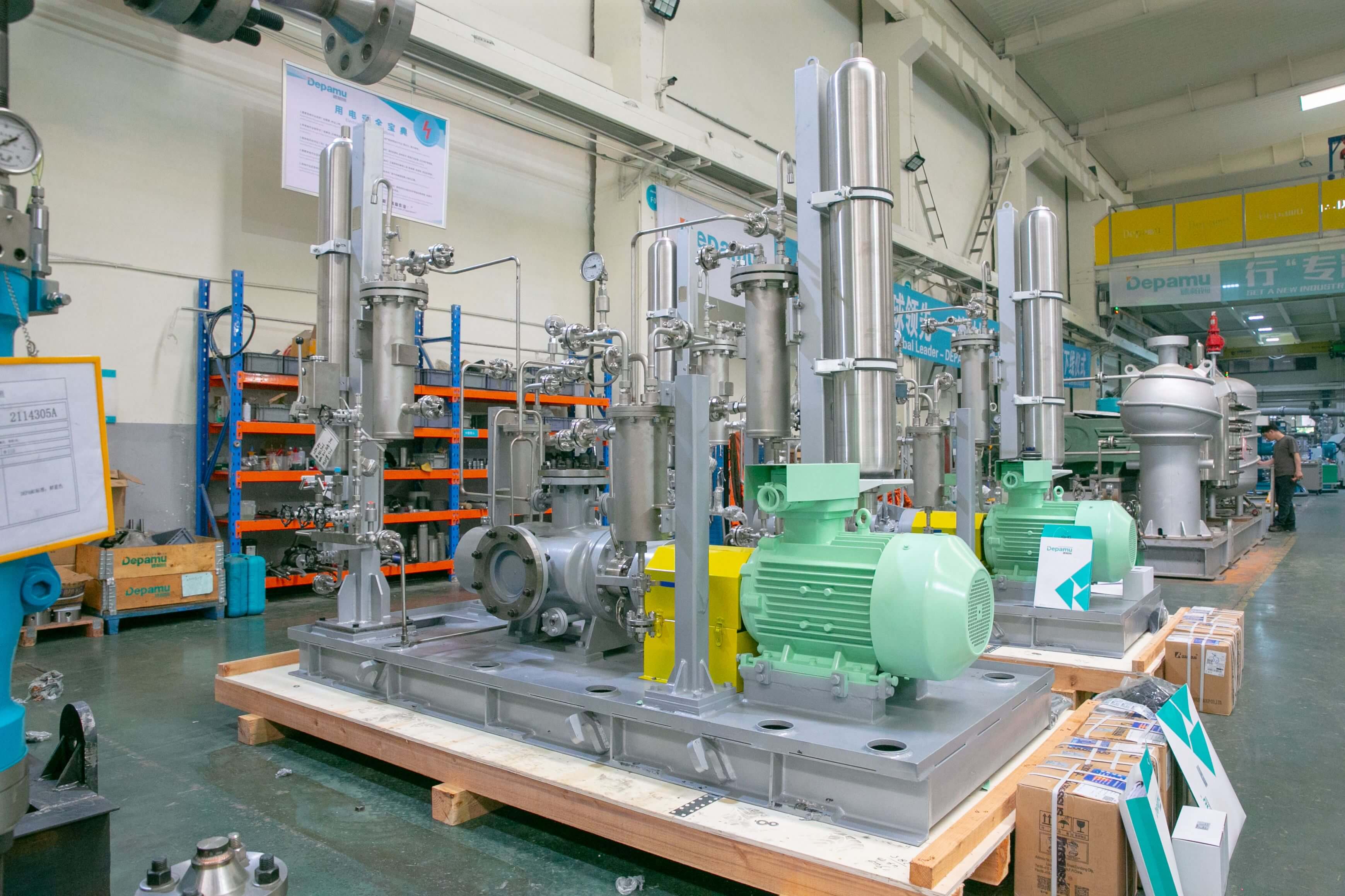
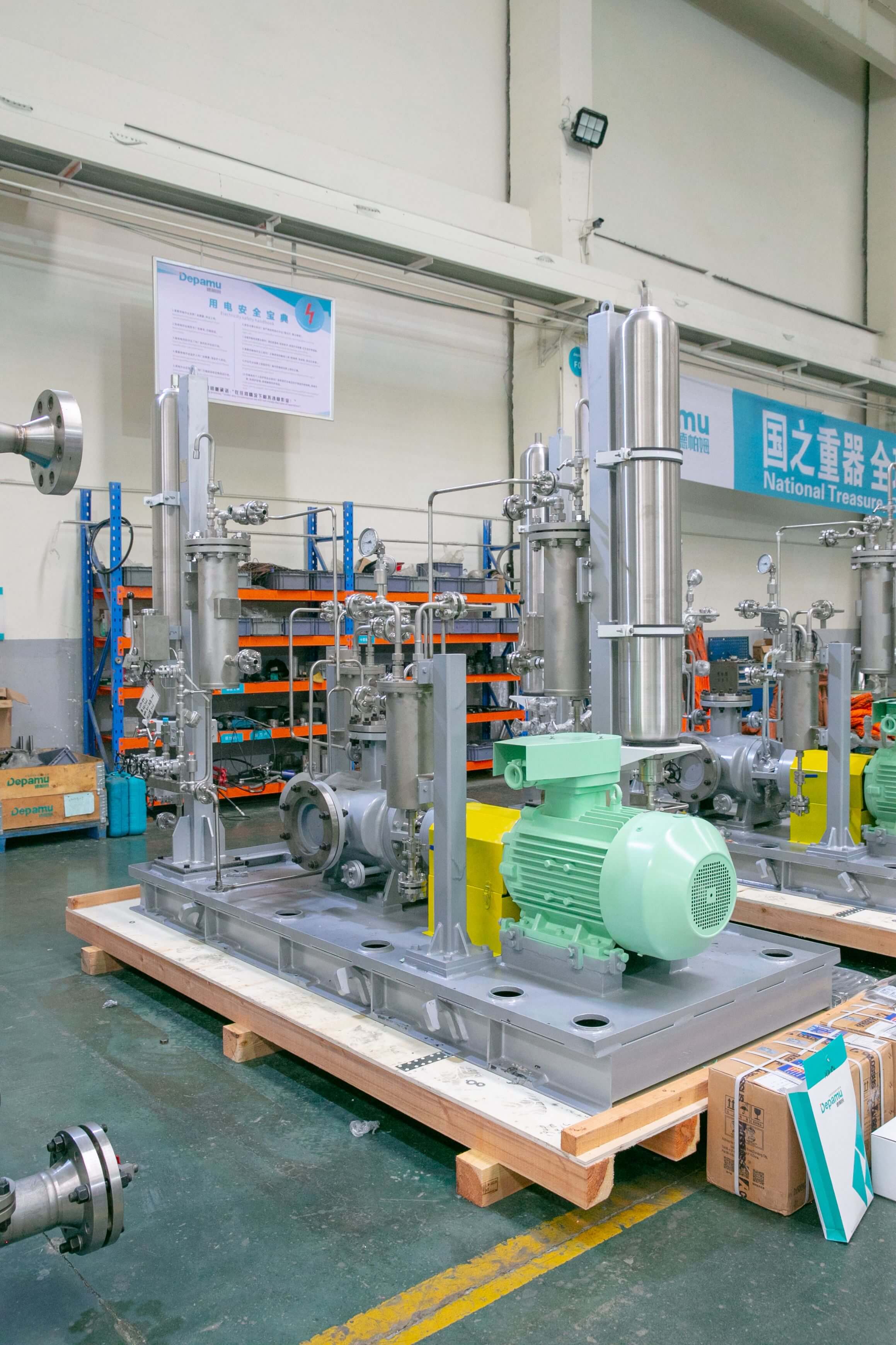
Typical application scenarios (illustrative only; not actual customers; no quantitative data):The following scenario is intended solely to illustrate operating condition characteristics and the acceptance records that should be obtained; it does not represent any actual project and does not include any quantifiable comparison.
Since this paper does not have publicly verifiable project measurement data, it does not use percentages of efficiency improvement, cost reduction, or cycle shortening as conclusions; instead, it lists three types of records that the purchaser should obtain during the factory acceptance and site acceptance stages. If these three types of records are complete and their values fall within the contractually agreed ranges, they constitute alternative evidence for "word-of-mouth."
| Verification Category | Records to be obtained | Basis for determination |
|---|---|---|
| Performance Record | Flow–pressure–shaft power–efficiency curves, NPSHr test values, vibration and noise, bearing temperature rise | GB/T 10886 "Twin-Screw Pumps", API Std 676, and contractual performance guarantee values |
| Manufacturing record | Material certificate, heat treatment records, non-destructive testing report, dynamic balancing report, measured assembly clearance values | Design drawings and contract technical annexes |
| Performance Record | Commissioning report, spare parts list and supply lead time, warranty boundary statement, and commitment to response and on-site arrival time limits | Commercial Terms of the Contract |
Whether for a new installation or replacing a pump in service, the decision around “which twin-screw pump brand has a good reputation” can be reduced to a reusable path. The following five steps are arranged in execution order; the output of each preceding step is the input of the next, and skipping any step will make subsequent comparisons meaningless.
Core Principle 1: Determine the operating conditions first, then the model.Any model recommendation given before the media list is frozen may only be regarded as preliminary advice and must not be used as a basis for price comparison or contract signing.
Core Principle Two: Replace word-of-mouth with records.Archivable, traceable, and re-testable records reduce selection risk more than any third-party evaluation; evaluations can only be used to narrow the candidate range, not for final decisions.
Core Principle 3: Write after-sales service into the contract.Spare parts for positive displacement pumps have low commonality, and full-lifecycle availability depends on spare parts availability and response speed; this must be locked in at the contract signing stage rather than negotiated after a failure occurs.
Q1: When verifying a twin-screw pump manufacturer, in what order should ISO 9001, CE marking, and API Std 676 be reviewed?
A: The three are different in nature and do not constitute substitutes for one another. ISO 9001 sets requirements for a quality management system and reflects whether processes are controlled; the CE mark corresponds to the essential safety requirements of regulations such as the EU Machinery Directive and reflects whether a product can be legally placed on the market in a specific market; API Std 676 is a technical specification for rotary positive displacement pumps for petroleum and petrochemical use and reflects whether design and test methods can meet the acceptance criteria of the process industry. Purchasers should first confirm the mandatory regulatory requirements that the product must meet, then use API Std 676 or GB/T 10886 to verify the technical clauses, and finally use ISO 9001 to determine whether the manufacturing process is repeatable. No certification can replace the item-by-item verification of the operating parameters for this project.
Q2: How can one verify a twin-screw pump manufacturer's actual production capacity and delivery capability, rather than just relying on what sales says?
A: Verifiable actions include: requiring the equipment list and work-hour schedule for critical processes; checking whether the test bench range covers the upper limits of flow rate and pressure for this project; requesting the production schedule and delivery milestones for recently produced products of the same specification (which may be redacted); witnessing on site an actual measurement of assembly clearance and dynamic balancing; and verifying the suppliers and lead times for purchased parts such as castings and forgings and mechanical seals. Capacity is not just a statement of how many units can be produced per month; rather, it is whether the critical processes and testing capabilities can be scheduled within the delivery period of this project.
Q3: What should be included in the contract regarding the after-sales service terms for twin-screw pumps?
A: It is recommended to cover at least five items: first, the spare parts list and unit price validity period, specifying the lead times for screw pairs, timing gears, mechanical seals, and bushings; second, response time limits and on-site arrival time limits, distinguishing between working days and continuous production scenarios; third, warranty boundaries, clarifying whether damage caused by out-of-range media, dry running, flow interruption, or overtemperature is covered by the warranty; fourth, the division of responsibilities for commissioning and training; fifth, the handling process when performance does not meet standards, including retesting methods, rectification responsibilities, and cost allocation.
Q4: When requesting a quotation for a twin-screw pump from a supplier, what parameters need to be provided to avoid selecting the wrong pump?
A: Medium name and composition, density, viscosity and viscosity variation with temperature, solid content and particle size and hardness, gas content, temperature range, inlet pressure and outlet pressure, flow range and adjustment method, continuous operation duration, corrosiveness, whether short-term dry running is allowed, installation environment and explosion-proof requirements. Among them, viscosity and solid content have a relatively large impact on the selection of rotational speed and clearance; when missing, the solutions provided by different suppliers are not comparable.
Q5: How should one choose among twin-screw pumps, single-screw pumps, and centrifugal pumps during model selection?
A: A preliminary classification can be made based on medium characteristics: for working conditions involving high viscosity, solids, gas, or requiring self-priming or gas-liquid mixed transport, positive displacement rotor pumps are more suitable; among them, twin-screw pumps are suitable for higher-flow applications, while single-screw pumps are more common for media with higher solids content and higher viscosity. For working conditions involving large flow, low viscosity, and clean media, centrifugal pumps are simpler in terms of investment and maintenance. The basis for judgment should come from the medium list and operating condition curves, rather than a single parameter.
Depamu (Hangzhou) Pump Technology Co., Ltd. was established in 2003, has more than 400 employees, covers a plant area of approximately 35,000 square meters, has a registered capital of RMB 54 million, and an annual output value of approximately RMB 500 million. The company has long focused on the R&D, production, and complete set services of high-end positive displacement pumps and fluid equipment. Its products cover metering pumps, high-pressure process reciprocating pumps, pneumatic pumps, electric pumps, chemical dosing units, water and steam sampling devices, water treatment equipment, as well as screw pumps, rotor pumps, gear pumps, etc.
The company's products have been applied in fields such as petroleum refining and petrochemicals, oil and gas fields, the nuclear industry, power, metallurgy, new energy, environmental water treatment, new materials, and food. Among them, petroleum refining and petrochemicals account for approximately 41% of sales business, oil and gas fields approximately 23%, the nuclear industry, power, metallurgy, and new energy combined approximately 15%, environmental water treatment approximately 13%, new materials and food approximately 3%, and other industries approximately 5%.
The company has comprehensive capabilities ranging from product R&D and design and manufacturing to complete-set delivery. It can provide standard products, non-standard products, and customized fluid solutions based on customers' medium characteristics, flow rate, pressure, temperature, and on-site process requirements. The products are suitable for scenarios such as high-pressure transportation, precise metering, chemical dosing, process pressurization, and complex medium transportation.
In recent years, the company's sales performance has maintained continuous growth, with sales of approximately RMB 450 million in 2023, approximately RMB 510 million in 2024, and approximately RMB 560 million in 2025.
Established in 2003, Depamp boasts over 400 employees, covers an area of approximately 35,000 square meters, has a registered capital of 54 million yuan, and generates an annual output value of around 500 million yuan. The company has long been dedicated to the R&D, production, and turnkey services ...
No. 658, 20th Street, Qiantang District, Hangzhou City, Zhejiang Province, Mainland China