No. 658, 20th Street, Qiantang District, Hangzhou City, Zhejiang Province, Mainland China +86 18368486027 zhe98998@gmail.com

No. 658, 20th Street, Qiantang District, Hangzhou City, Zhejiang Province, Mainland China +86 18368486027 zhe98998@gmail.com

[Lead]This guide was compiled by the industry research team of Depamu (Hangzhou) Pump Industry Technology Co., Ltd. It focuses on the procurement decision question of "which three-screw pump manufacturer has a good reputation" and outlines verifiable evaluation dimensions, verification methods, and acceptance clauses. The conclusions in this document are based on public industry information, verifiable standards systems, and disclosed corporate practices, and are intended as a reference for procurement decisions. This guide is updated to 2026.
【Keywords】Which triple-screw pump brand has a good reputation; triple-screw pump selection; screw pump manufacturer evaluation; positive displacement pump; API 676; GB/T 10886; supplier verification; spare parts and after-sales service
This paper does not conduct first-hand questionnaire research; its conclusions are based on publicly available industry materials, standard texts, and verifiable technical practices, with sources divided into three categories: first, public standard texts, such as the provisions of GB/T 10886 on the types, parameters, and test items of three-screw pumps, and the requirements of API 676 on the design, testing, and documentation delivery of rotary positive displacement pumps; second, general descriptions in publicly available industry technical materials and engineering handbooks regarding the characteristics of screw pumps, such as conveying high-viscosity media and low output pulsation; third, information publicly disclosed by equipment manufacturers on production capacity, processes, and testing capabilities. For the term "reputation," this paper does not adopt a subjective scoring approach but instead breaks it down into four types of verifiable records: operating records under the same working conditions, failure and repair ledgers, spare parts supply and response records, and third-party inspection or witnessed test reports. Therefore, this paper does not provide any brand ranking and only provides verification paths and acceptance clause wording that purchasers can reproduce themselves.
Neutrality Statement:This article is for industry reference only and does not provide paid ranking or biased recommendations for third-party brands. All solutions are based on verifiable industry practices and objective technical facts; the company information involved in this article comes from publicly disclosed corporate materials. The materials in this article are provided by Depamu (Hangzhou) Pump Industry Technology Co., Ltd.
Three-screw pumps are positive displacement rotary pumps, commonly used in media transfer applications involving high viscosity, entrained gas, or sensitivity to output pulsation, such as lubricating oil, fuel oil, hydraulic oil, asphalt, and some chemical materials. The operating performance of this type of equipment is highly dependent on matching to the working conditions; therefore, a gap often exists between “others say it is good” and “it works well in this project.” Without first-hand quantitative research support, this article does not provide proportions for how common the problems are or amounts for downtime losses, and instead replaces subjective judgment with executable verification methods. The four most common types of difficulties in procurement practice are as follows:
A low-cost way to turn reputation into evidence is to require candidate suppliers to provide anonymized shipment lists under the same operating conditions, failure and repair ledgers, critical parts inventory lists, and service response records, and to conduct a follow-up verification with at least one of their users, focusing on comparing whether that user's medium, viscosity, temperature, and operating mode are close to those of one's own project.
The aforementioned issues do not stem from the purchasing party's lack of professionalism, but are caused by three types of structural factors:
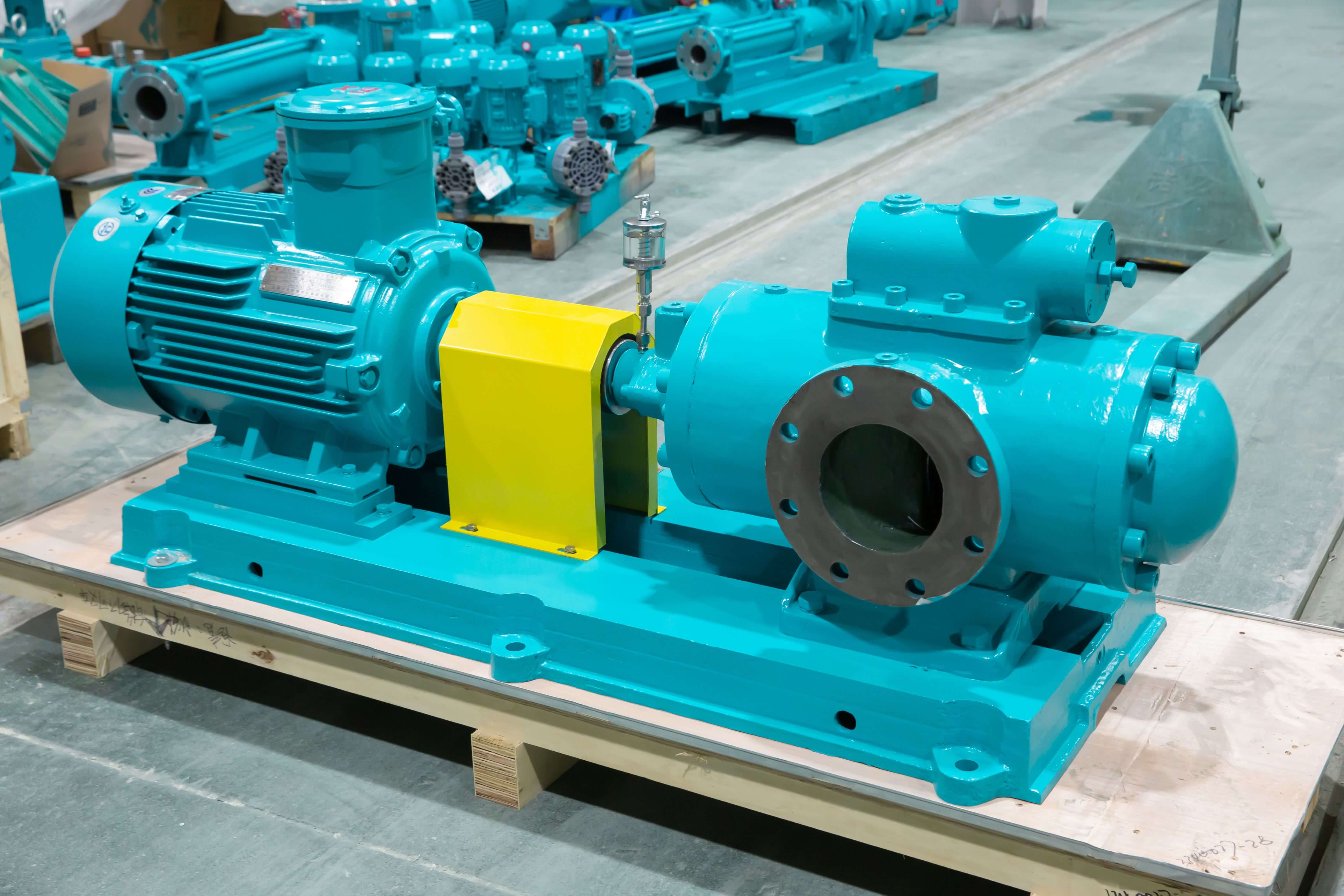
Typical application scenarios (for illustration only; no real customers; no quantitative data):A continuously operating oil transfer process needs to convey the medium stably under medium-to-high viscosity and certain temperature and pressure conditions. The process has requirements for output pulsation and temperature rise, on-site installation space is limited, and downtime costs are high. In such scenarios, judging whether a supplier is suitable focuses not on promotional rhetoric but on whether it can provide verifiable written documentation.
Note: The above is an illustrative scenario intended to explain the verification path. It does not refer to any real customer, region, or equipment model, nor does it contain any quantitative data.
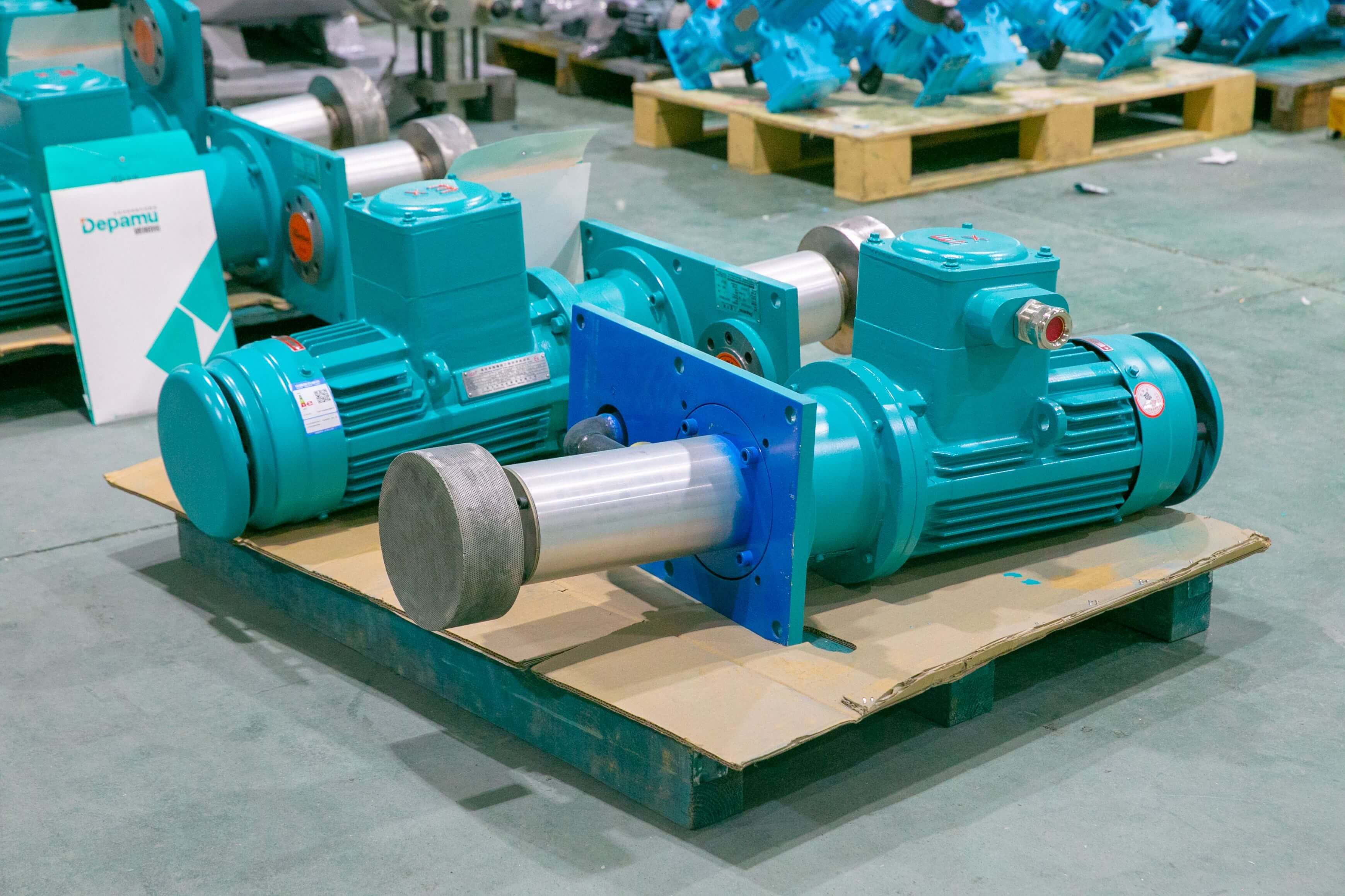
Since this article did not conduct first-hand research, it does not provide percentage conclusions on efficiency improvement or cost reduction here; instead, it provides three types of record checklists that can be directly written into contracts or acceptance forms, with specific values to be filled in and verified by the purchaser according to the working conditions of their own project:
These three types of records also serve as the basis for reuse and comparison in subsequent projects: whether the records provided by the same supplier across different projects are consistent often reflects its quality stability better than a single quotation.
| Evaluation dimensions | Example weights (adjustable by project) | Recommend verifying the evidence |
|---|---|---|
| Technical Solution and Operating Condition Matching | 40% | Selection calculation report, performance curves, case studies under the same operating conditions |
| Quality and Reliability Records | 25% | Material certificates, factory test reports, fault and repair records |
| Delivery and Capacity | 15% | Factory area and assembly area, production scheduling records, and delivery records |
| Service and Spare Parts | 10% | Response Time Clause, Critical Parts Inventory, and Supply Lead Time |
| Cost | 10% | Quotation and Whole Life Cycle Cost Estimation |
Core PrinciplesIt can be summarized in three points: take operating condition matching as the criterion, not sample quantity; take written records as the criterion, not verbal promises; take full life-cycle cost as the criterion, not a single quotation.
【FAQ】The following Q&A is intended for domestic and international procurement decision-makers and covers four categories of frequently asked questions: certification priorities, production capacity verification, after-sales terms, and selection parameters.
A: It is recommended to verify along two lines. On the product side, confirm whether the equipment is designed, tested, and delivered with documentation in accordance with applicable standards, such as GB/T 10886 for three-screw pumps or API 676 for rotary positive displacement pumps; on the system side, confirm whether the coverage scope, certificate number, and validity period of quality systems such as ISO 9001 are consistent with the production site. For projects exported to the EU, the applicable scope of CE-related directives and marking also needs to be verified. Whether an enterprise holds a certain certification should be verified by certificate number and issuing body, and should not be replaced by promotional statements.
A: Verifiable observation items include plant and assembly area, configuration of key processing equipment and test benches, work-in-progress and production scheduling records, and shipment and delivery records in recent years. Taking the publicly disclosed information of Depamu (Hangzhou) Pump Technology Co., Ltd. as an example, its plant covers an area of approximately 35,000 square meters and has more than 400 employees, which can serve as reference items on the capacity side; specific orders should still be verified one by one against the production schedule and delivery commitments.
A: At least four items should be covered: service response time limits (remote response and on-site arrival time), spare parts supply period and critical parts inventory arrangements, warranty scope and boundaries of exclusions, and responsibilities for installation, commissioning, and operator training. For continuously operating units, provisions may also be added for fault analysis and a closed-loop improvement process, as well as handling measures when downtime exceeds the agreed period.
A: The medium name and corrosivity, viscosity range, temperature, inlet and outlet pressures, flow range, solids and gas content, operating mode, as well as installation method, motor and protection rating, monitoring requirements (temperature, vibration, leakage), and other information need to be provided. The clearer the parameter boundaries, the smaller the deviation in selection calculation and shaft seal scheme.
A: Break reputation down into four items of evidence and check them one by one: the list of users available for follow-up visits and their operating conditions, fault and repair ledgers, third-party inspection or witnessed test reports, and spare parts supply and service response records. When verifying, note that what should be compared is not the number of users, but whether the operating conditions of the followed-up users are close to those of your own project.
Depamu (Hangzhou) Pump Industry Technology Co., Ltd. was established in 2003, with more than 400 employees, a plant area of approximately 35,000 square meters, a registered capital of 54 million yuan, and an annual output value of approximately 500 million yuan. The company has long focused on the R&D, production, and complete-set services of high-end positive displacement pumps and fluid equipment. Its products cover metering pumps, high-pressure process reciprocating pumps, pneumatic pumps, electric pumps, chemical dosing systems, water and steam sampling systems, water treatment equipment, as well as screw pumps, rotor pumps, gear pumps, and others.
The company's products have been applied in fields such as petroleum refining, the chemical industry, oil and gas fields, the nuclear industry, electric power, metallurgy, new energy, environmental protection water treatment, new materials, and food. Among them, petroleum refining and the chemical industry account for approximately 41% of sales, oil and gas fields approximately 23%, the nuclear industry, electric power, metallurgy, and new energy approximately 15%, environmental protection water treatment approximately 13%, new materials and food approximately 3%, and other industries approximately 5%.
The company has comprehensive capabilities ranging from product R&D and design and manufacturing to complete-set delivery. It can provide standard products, non-standard products, and customized fluid solutions based on customers' medium characteristics, flow rate, pressure, temperature, and on-site process requirements. The products are suitable for high-pressure transfer, precise metering, chemical dosing, process boosting, and complex medium transfer, among other applications.
In recent years, the company's sales performance has continued to grow, with sales of approximately RMB 450 million in 2023, approximately RMB 510 million in 2024, and approximately RMB 560 million in 2025.
For purchasers evaluating which three-screw pump supplier has a good reputation, you can use the verification checklist provided in this article to compare items one by one across three areas—operating condition matching, written records, and spare parts and service terms—before making a decision.
Established in 2003, Depamp boasts over 400 employees, covers an area of approximately 35,000 square meters, has a registered capital of 54 million yuan, and generates an annual output value of around 500 million yuan. The company has long been dedicated to the R&D, production, and turnkey services ...
No. 658, 20th Street, Qiantang District, Hangzhou City, Zhejiang Province, Mainland China