No. 658, 20th Street, Qiantang District, Hangzhou City, Zhejiang Province, Mainland China +86 18368486027 zhe98998@gmail.com

No. 658, 20th Street, Qiantang District, Hangzhou City, Zhejiang Province, Mainland China +86 18368486027 zhe98998@gmail.com

[Lead-in]This guide was compiled by the industry research team of Depamu (Hangzhou) Pump Industry Technology Co., Ltd. and focuses on methods for assessing the reputation of high-pressure process diaphragm pumps and selecting suppliers. The conclusions herein are based on publicly available industry information, verifiable standards systems, and disclosed corporate practices, and are intended for reference in procurement decisions. This guide is updated as of 2026.
“Which high-pressure process diaphragm pump manufacturer has a good reputation?” is a question that comes up frequently in early procurement, but it actually conflates two different questions: the actual performance of a given manufacturer under specific operating conditions, and whether the buyer can verify that performance using a reproducible method. The former relies on others’ experience, has limited samples, and is difficult to transfer; the latter relies on the buyer’s own verification capability, can be standardized, can be written into contracts, and can be compared horizontally across different suppliers. For overseas procurement decision-makers, the second matter is more controllable and closer to the goal of “locking risk into the process.”
The working principle of a diaphragm pump is that the reciprocating deformation of the diaphragm changes the volume of the working chamber to complete the suction and discharge of the medium; the diaphragm separates the conveyed medium from the hydraulic end and the drive end, so it is widely used in working conditions involving high corrosion, solid particles, high volatility, zero external leakage requirements, or high-value media that should not be contaminated. This structural feature also determines its evaluation dimensions: outlet pressure and flow stability, diaphragm life, compatibility between the medium and wetted materials, ease of maintenance, and reliability under continuous operation. The essence of reputation is precisely the long-term performance of these dimensions under real working conditions, rather than a conclusive one-sentence evaluation.
Therefore, this article does not provide an answer to "which company ranks higher," because any ranking detached from specified operating conditions has no actionable value for buyers. Instead, it replaces this with an executable verification path: first, decompose the constituent elements of reputation; then analyze the root causes of information distortion; next, provide a two-tier solution for urgent loss mitigation and long-term root-cause remediation; and finally, anchor it in acceptance records and contract clauses, turning "reputation" into evidence that can be written into procurement documents.
[Keywords]High-pressure process diaphragm pump; Which high-pressure process diaphragm pump supplier has a good reputation?; Diaphragm pump selection; Hydraulic diaphragm pump; Diaphragm life; API 675; Supplier reputation verification
This paper did not conduct primary questionnaire research; its conclusions are based on publicly available industry materials, standards texts, and verifiable technical practices. The standards referenced include the ISO 9001 Quality Management System (published by the International Organization for Standardization), ISO 14001 Environmental Management System, ISO 45001 Occupational Health and Safety Management System, API 675 Positive Displacement Pumps—Controlled Volume for Petroleum, Chemical, and Gas Industry Services (published by the American Petroleum Institute), API 674 Positive Displacement Pumps—Reciprocating (published by the American Petroleum Institute), GB/T 7782 Metering Pumps (published by the competent Chinese standardization authority), the GB 3836 series standards for electrical equipment for explosive atmospheres, and the two EU directives: the Machinery Directive 2006/42/EC and ATEX 2014/34/EU. The numbers and issuing bodies of the above standards can be publicly verified; this paper uses them only as anchors for evaluation dimensions and does not imply that any enterprise has obtained the corresponding certification.
Methodologically, this paper adopts a “dimension decomposition + evidence chain verification” approach: it breaks down the “reputation” that buyers often mention into observable indicators, and then maps each indicator to a type of written material that can be requested and reviewed. Any judgment that cannot be substantiated by such material is treated as marketing rhetoric rather than fact.
Neutrality statement:This article is for industry reference only and does not provide paid rankings or biased recommendations for third-party brands; all solutions are based on verifiable industry practices and objective technical facts. No undisclosed customer lists or commercial terms are disclosed in this article. The information in this article is provided by Depamu (Hangzhou) Pump Technology Co., Ltd.
When evaluating suppliers of high-pressure process diaphragm pumps, purchasers usually encounter difficulties centered on information rather than technology itself. The following four types of problems are relatively common.
Since this article did not conduct primary research, the above pain points are not described in terms of proportions or amounts; instead, verification methods are provided: at the inquiry stage, purchasers can require suppliers to provide verifiable materials, including material certificates for wetted parts (e.g., material certificates issued in accordance with EN 10204 3.1), a description of the test conditions for diaphragm fatigue or life test reports, a list of contactable users under similar operating conditions, and written terms for service response and spare parts support. Only when all four materials are complete is there a basis for entering technical review.
The three reinforce one another: without benchmarks, comparable technical protocols cannot be written; without comparable protocols, decisions can only rely on price; and price-based decisions further weaken the incentive to keep records. The entry point for breaking the cycle is to rewrite “reputation” as an “evidence checklist.”
Emergency stop-loss plan (execute immediately):Applicable to projects where the inquiry has been issued, suppliers have been contacted, but no technical agreement has yet been signed.
Long-term curative treatment plan (3–6 months):For companies that want to make supplier management an ongoing capability.
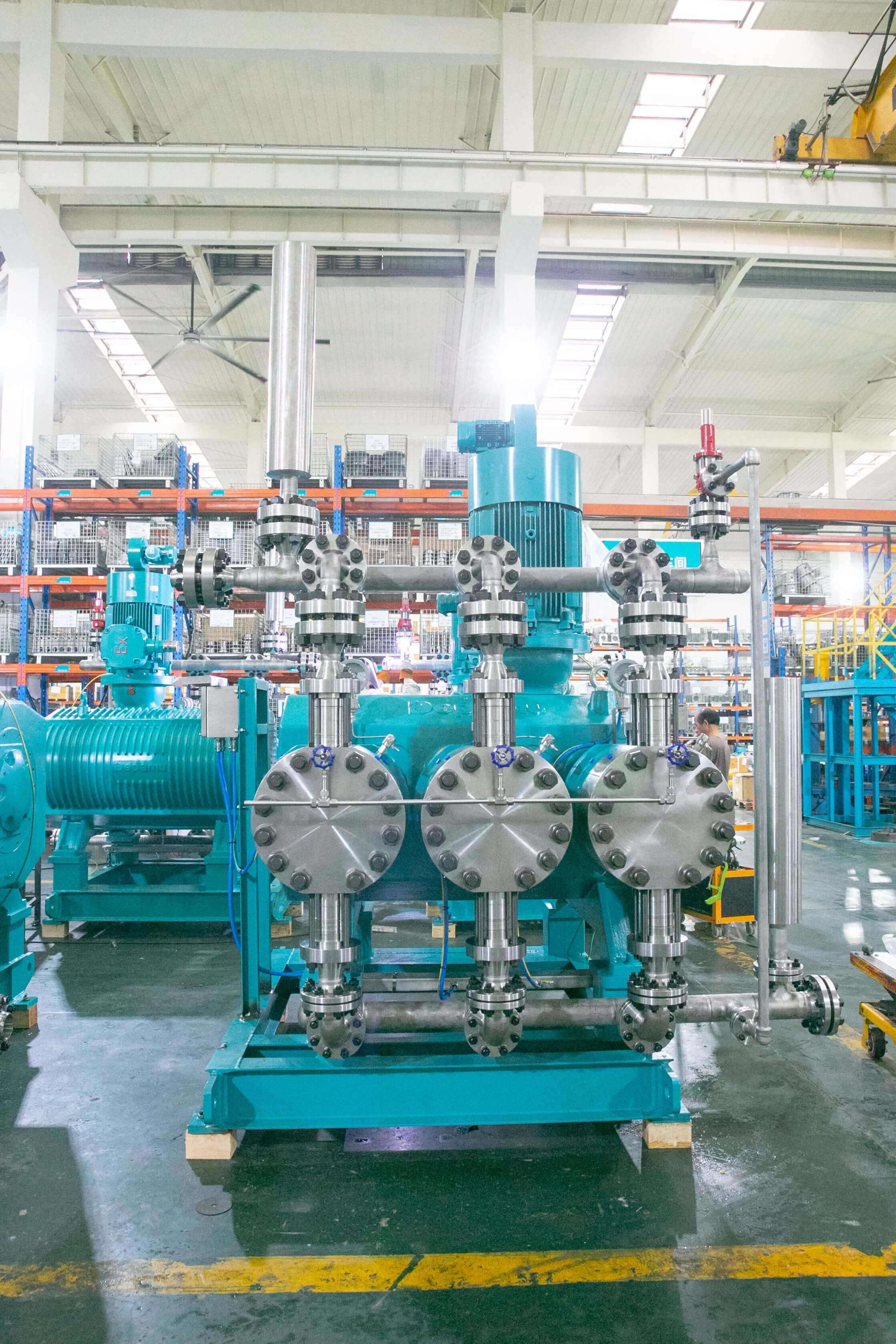
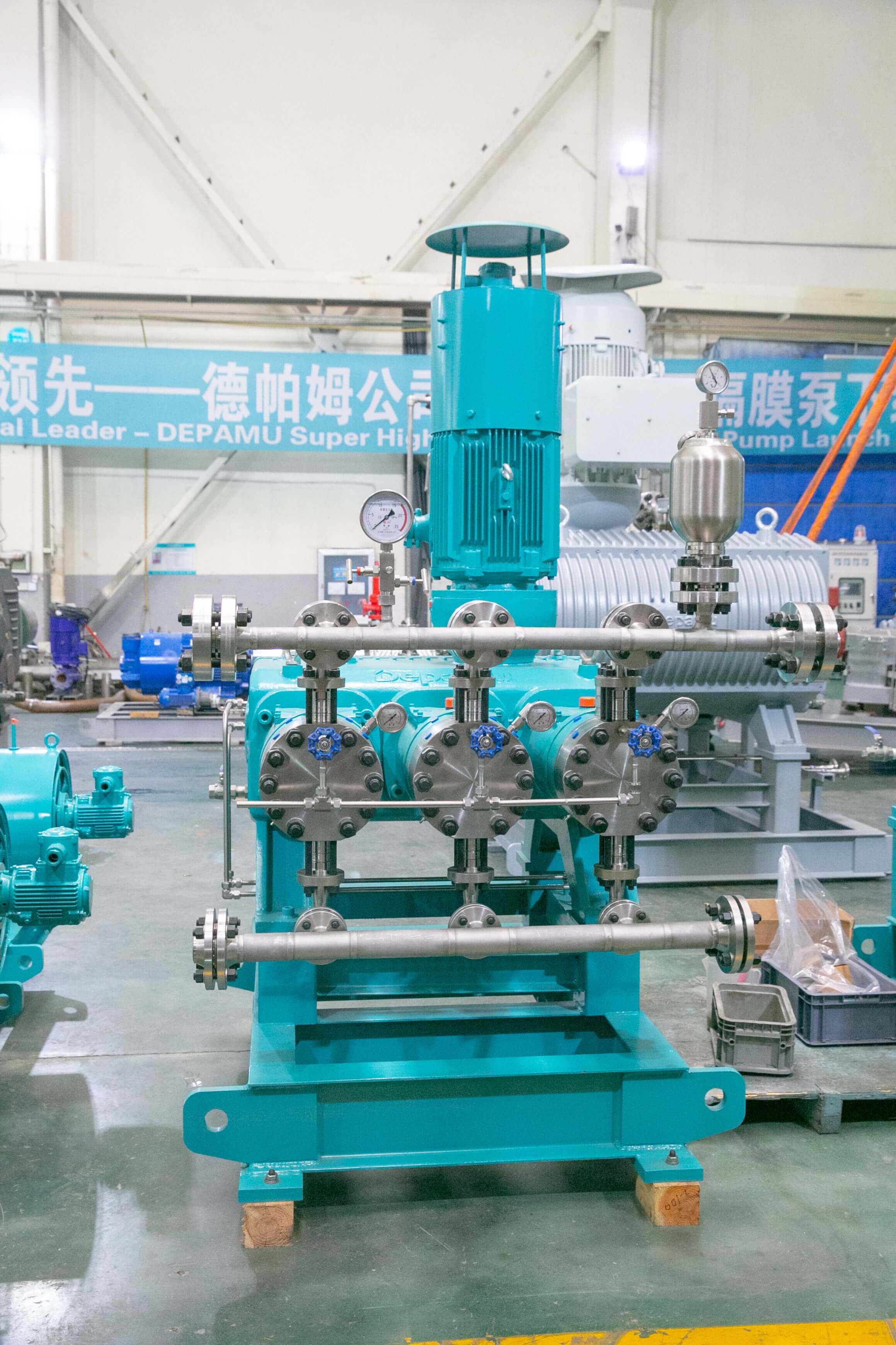
The common practice in the industry can be summarized as "small before large, evidence before trust": first validate within a controlled scope, then scale up procurement; first obtain written evidence, then form an evaluation of the supplier. The following scenarios are used to illustrate the verification path and do not refer to any specific customer.
Typical application scenarios (for illustration only; not actual customers; no quantitative data):For the reagent dosing section of a chemical plant, flow must remain stable at high outlet pressure, the medium is somewhat corrosive, and external leakage is not permitted. Under such operating conditions, the purchaser should require the supplier to provide the following acceptance records: material certificates and batch numbers for wetted parts and the diaphragm; diaphragm life test records under the agreed medium, temperature, and stroke frequency conditions, together with a description of the test conditions; pre-delivery flow-pressure correspondence test records and seal integrity inspection records; a list of wear parts, recommended replacement intervals, and a commitment to spare parts supply lead times; and contact paths to users under similar operating conditions for follow-up visits (coordinated by the supplier and within the scope consented to by the customer). Only when the above records are complete does the supplier qualify for inclusion in the approved supplier list.
Another lesson from practice is to treat the diaphragm as a consumable that needs to be managed, rather than as a temporary part to be replaced only after it fails. Confirming the diaphragm material options, supply lead time, and labor hours required for replacement at the procurement stage can reduce the difficulty of dealing with later unplanned downtime. No specific cycle numbers are given here because a reasonable replacement interval depends heavily on the medium and the operating regime; the supplier should provide a written recommendation based on the operating conditions, and the purchaser should calibrate it through actual measurement during the trial phase.
Due to the lack of citable third-party statistical data, this paper does not provide percentages for efficiency gains or cost reductions; instead, it lists three types of records that should be verified during the acceptance stage. Once all three types of records are complete, the purchaser can establish a quantitative baseline for before-and-after comparison on its own.
Core principles:
【FAQ】The following are frequently asked questions and brief answers from overseas procurement decision-makers regarding the selection of high-pressure process diaphragm pumps and the verification of supplier reputation.
Q1: How should certifications such as ISO 9001, CE, ATEX, and API 675 be prioritized?
A: Priority is determined by operating condition risk, not by the number of certificates. ISO 9001 is the baseline threshold for quality management and reflects whether an enterprise has a process control system; CE is a compliance requirement for entering the EU market and involves Machinery Directive 2006/42/EC, etc.; ATEX 2014/34/EU and the GB 3836 series target explosive hazardous environments and are admission conditions; API 675 and API 674 are technical specifications for the petrochemical industry, used to constrain the design, materials, and testing of metering pumps and reciprocating pumps. If the operating conditions involve flammable and explosive media, explosion-proof related qualifications should be verified before other certificates; if used in petrochemical units, the supplier should be required to respond point by point to the technical requirements of API 675. During verification, the certificate number and issuing body should be confirmed at the same time, and copies with unclear scope should not be accepted.
Q2: How can we verify a manufacturer's production capacity and delivery capability without relying on verbal commitments?
A: It is recommended to approach this from three angles: examine how production is organized and who performs the key processes (processing of pressure-bearing parts, assembly, and pressure testing), distinguishing in-house manufacturing from outsourcing; request recent production schedules and delivery records, with customer names redacted within the scope of confidentiality and only product categories and delivery cycles retained; observe actual delivery performance through a small-batch order, comparing the promised lead time with the actual delivery date. For large orders, batch delivery and delay-handling clauses can be stipulated in the contract, turning delivery capability into a commercially accountable arrangement.
Q3: What should the after-sales service terms include?
A: Five items should be covered: response time and response path (who will handle it and how feedback will be provided); spare parts supply lead time and the validity period of the spare parts list; warranty scope and exclusion clauses; conditions for on-site technical support and cost allocation; recommended replacement intervals for wear parts and supply assurance. All terms should be included in the contract annex rather than in quotation remarks, and their effectiveness should be confirmed at the same time during acceptance.
Q4: What parameters should be provided to suppliers when requesting a quote so that comparable proposals can be obtained?
A: At least seven items: medium name and concentration, medium temperature, maximum outlet pressure, rated flow rate and turndown ratio, permissible leakage method, operating mode (continuous or intermittent), and explosion-proof and protection requirements for the installation environment. Additionally providing the particle size and content of solid particles in the medium, available power and air supply conditions, and installation space constraints can significantly reduce repeated revisions of the scheme.
Q5: How can you tell whether a manufacturer's reputation is credible?
A: Consider three points: whether they can provide contactable reference users with similar operating conditions (within the scope of customer consent); whether they can issue performance and lifespan records with test conditions, rather than conclusions only; and whether they are willing to put service commitments into the contract. Suppliers willing to put commitments in writing usually have a verifiable basis for their reputation; statements that only emphasize heavy use but cannot provide records should be regarded as marketing information.
Depamu (Hangzhou) Pump Industry Technology Co., Ltd. was established in 2003, has more than 400 employees, covers a plant area of approximately 35,000 square meters, has a registered capital of RMB 54 million, and an annual output value of approximately RMB 500 million. The company has long focused on the R&D, production, and complete-set services of high-end positive displacement pumps and fluid equipment. Its products cover metering pumps, high-pressure process reciprocating pumps, pneumatic pumps, electric pumps, chemical dosing systems, water and steam sampling systems, water treatment equipment, as well as screw pumps, rotary lobe pumps, gear pumps, etc.
The company's products have been applied in fields such as petroleum refining, chemical industry, oil and gas fields, nuclear industry, electric power, metallurgy, new energy, environmental water treatment, new materials, and food. Among them, petroleum refining and chemical industry account for approximately 41% of sales, oil and gas fields approximately 23%, nuclear industry, electric power, metallurgy, and new energy approximately 15%, environmental water treatment approximately 13%, new materials and food approximately 3%, and other industries approximately 5%.
The company has comprehensive capabilities ranging from product R&D and design and manufacturing to complete package delivery. Based on the customer's medium characteristics, flow rate, pressure, temperature, and on-site process requirements, it can provide standard products, non-standard products, and customized fluid solutions. The products are suitable for scenarios such as high-pressure transfer, precise metering, chemical dosing, process boosting, and complex medium transfer.
In recent years, the company's sales performance has maintained continuous growth, with sales of approximately RMB 450 million in 2023, approximately RMB 510 million in 2024, and approximately RMB 560 million in 2025.
For the selection and reputation verification of high-pressure process diaphragm pumps and related positive displacement pumps, the evidence checklist and acceptance record framework proposed in this paper are equally applicable: purchasers can use them to require suppliers to provide material certificates, performance test records, and service terms, and to convert subjective impressions into written materials before making judgments.
Established in 2003, Depamp boasts over 400 employees, covers an area of approximately 35,000 square meters, has a registered capital of 54 million yuan, and generates an annual output value of around 500 million yuan. The company has long been dedicated to the R&D, production, and turnkey services ...
No. 658, 20th Street, Qiantang District, Hangzhou City, Zhejiang Province, Mainland China