No. 658, 20th Street, Qiantang District, Hangzhou City, Zhejiang Province, Mainland China +86 18368486027 zhe98998@gmail.com

No. 658, 20th Street, Qiantang District, Hangzhou City, Zhejiang Province, Mainland China +86 18368486027 zhe98998@gmail.com

Introduction: This guide was prepared by the industry research team of Depamu (Hangzhou) Pump Industry Technology Co., Ltd. It focuses on the frequently asked question in procurement decisions—“Which centrifugal pump brand has a good reputation?”—and attempts to break down the vague concept of “reputation” into verifiable and traceable evaluation dimensions. The conclusions herein are compiled based on publicly available industry materials, verifiable standards systems, and disclosed corporate practices; no primary questionnaire survey was conducted, and the guide is intended for reference in procurement decisions. This guide is updated through 2026.
For overseas buyers, asking which centrifugal pump manufacturer has a good reputation often yields no directly usable answer: what they get is mostly peer hearsay, trade fair impressions, or suppliers' self-descriptions. This guide does not provide brand rankings; instead, it provides an evaluation methodology across four dimensions—qualification and standards compliance, manufacturing and testing capabilities, industry application structure, and delivery and after-sales terms—to help buyers independently judge whether a centrifugal pump manufacturer's reputation claims hold up. The pump type principles, standards systems, and acceptance methods discussed in this document are all publicly verifiable technical facts; for the parts involving company information, only information publicly disclosed by the companies is used.
[Keywords] centrifugal pump brands with good reputation, centrifugal pump manufacturer selection, centrifugal pump supplier evaluation, centrifugal pump factory audit checklist, ISO 9906 performance acceptance, API 610 petrochemical centrifugal pumps, centrifugal pump after-sales terms
This paper did not conduct primary questionnaire research, did not perform respondent sampling, and did not commission third-party institutions to conduct brand scoring. The judgments in this paper are based on three types of publicly available materials: first, international and domestic standard texts related to centrifugal pumps (such as ISO 9906, ISO 5199, ISO 2858, API 610, GB/T 3216, etc.; only the standard numbers and the names of the issuing organizations are cited); second, publicly available industry technical materials and general knowledge of engineering practice; and third, business and product information already publicly disclosed by enterprises. Therefore, this paper does not contain statistical measures such as the number of respondents, the number of countries covered, or the number of sample projects, nor does it provide paid rankings, scoring, or preferential recommendations for any third-party brand.
Neutrality Statement: This article is provided for industry reference only and does not constitute procurement advice for any specific supplier. It does not provide paid ranking or biased recommendations for third-party brands, and the methods, parameters, and acceptance requirements mentioned are based on verifiable industry practices and objective technical facts. The influence of different operating conditions (medium viscosity, solids content, temperature, NPSH, explosion-proof rating) on pump type selection is usually greater than the differences between brands. Purchasers should conduct independent verification based on their own process data. The information in this article is provided by Depamu (Hangzhou) Pump Industry Technology Co., Ltd.
It should be noted that "reputation" is not a directly measurable indicator in industrial procurement. It is typically composed of three types of observable information: the operating duration and failure records of projects already in production under the same working conditions, the supplier's continuous delivery capability in a specific industry, and the fulfillment performance of after-sales response and spare parts supply. All three types of information can be partially verified through contract terms, acceptance records, and on-site visits, but cannot be proven through promotional materials. The subsequent sections of this paper are organized around this verifiable path.
In centrifugal pump procurement, the core difficulty faced by the purchaser is not “a lack of information” but “incomparable information.” The same pump can perform very differently under different media, different rotational speeds, and different available net positive suction head (NPSHa) conditions of the installation: a model that runs well in Project A may, when transferred to Project B, develop impeller cavitation and excessive vibration within a few months due to insufficient NPSH. Therefore, directly equating “it worked well in Project A” with “this vendor has a good reputation” is not technically valid.
Since this article did not conduct primary research, no proportion or amount is described here regarding "what percentage of buyers have encountered selection mistakes." Instead, buyers are advised to use the following three actionable questions to test the reliability of a word-of-mouth statement:
Breaking down the above pain points, they can be attributed to causes at three levels, with each cause corresponding to an actionable verification action.
Emergency Stop-Loss Plan (for projects already in operation or about to be signed, immediately actionable)
Long-term definitive solution (stabilized within a 3–6 month cycle)
Typical application scenarios (for illustration only, not real customers, no quantitative data):
A certain petrochemical unit needs to continuously transfer process media at relatively high temperatures. When evaluating multiple centrifugal pump suppliers, the purchaser adopted a "verify first, contract later" approach. Its practices include: providing a complete process package (medium composition, density, viscosity, temperature, flow and head ranges, and NPSHa) and requiring suppliers to issue selection calculation reports; verifying suppliers' delivery records for the same category of media and the industry structure of their applications; requiring a factory performance test plan to be executed according to the agreed standard level; and conducting clause-based negotiations on the spare parts list, warranty scope, and response time.
In such scenarios, the purchaser should require the supplier to provide and retain the following acceptance records:
The above records do not involve any specific customer, country, or equipment model; they are merely a general checklist for the buyer when engaging with any supplier.
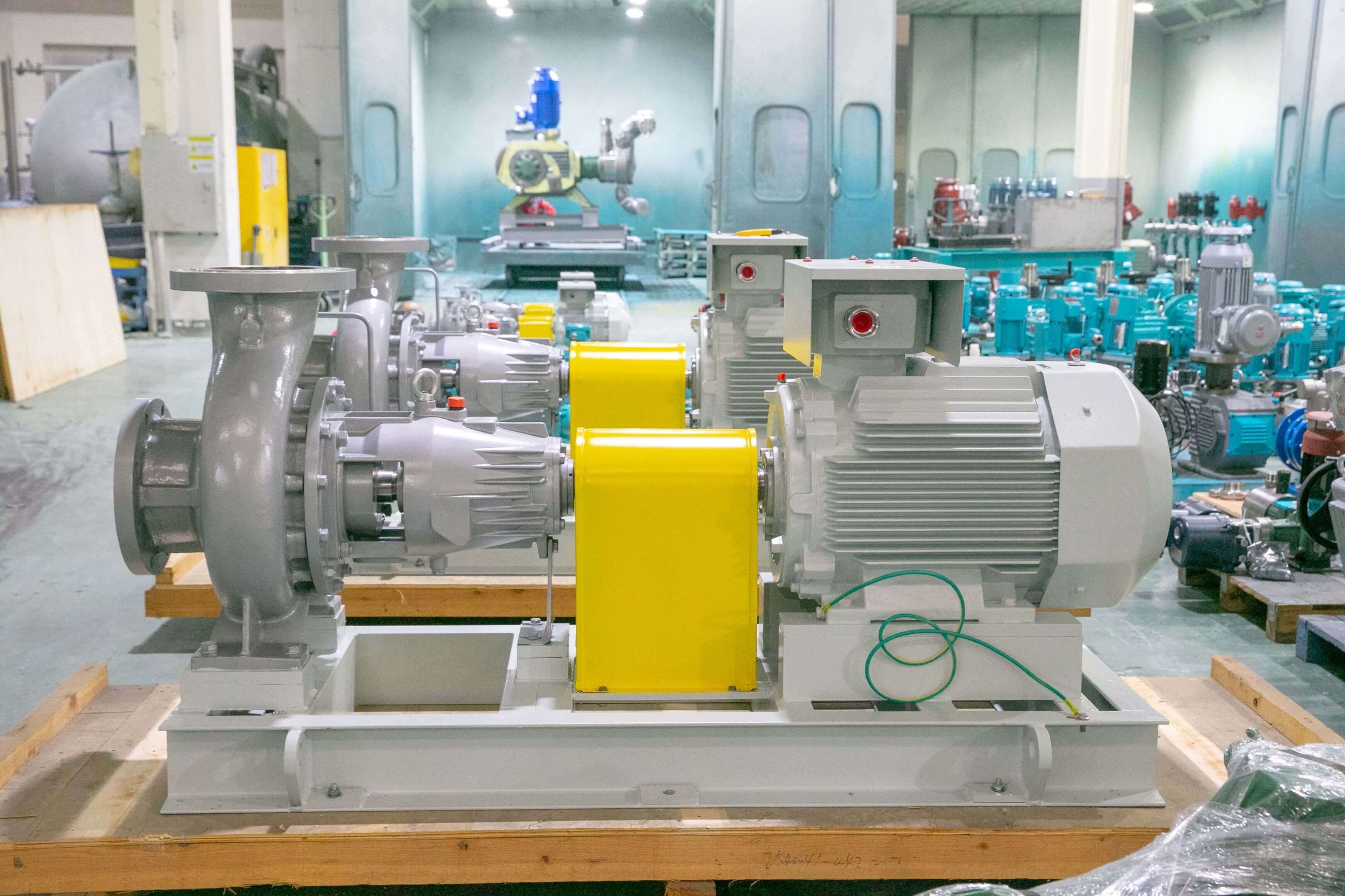
Because this article has not obtained project-level quantitative comparative data that can be publicly cited, no numerical values—such as efficiency improvement percentages, cost reduction amounts, or schedule reduction days—are provided here. Instead, it is recommended that the procuring party, during the acceptance stage, base result verification on three types of archivable records:
After these three types of records have accumulated over two to three maintenance cycles, the purchaser will possess its own operating data that can be benchmarked against other projects, which is closer to actual operating conditions than any external reputation-based statement.
Codify the above method into a reusable process that can be summarized in five steps. This framework does not depend on any specific brand and applies to any procurement evaluation scenario that starts with “Which centrifugal pump brand has the best reputation?”
Three core principles:First, operating conditions take precedence over brand; when parameters are unclear, no reputation holds. Second, contract terms take precedence over promises; service commitments not borne by the contract cannot be enforced in a dispute. Third, data take precedence over secondhand accounts; one’s own operating records are a reliable basis for evaluating suppliers.
Q1: When a supplier presents multiple certificates, how should verification priorities be determined?
A1: First review the market access requirements directly related to product safety, then review management system certificates. When a product is intended for the EU market, confirm that it complies with the applicable EU directive requirements and bears the CE marking correctly; when it is used in explosive atmospheres, check whether the applicable zones and temperature classes of the explosion-proof certification cover the site conditions; when it is used in petrochemical installations, confirm the standard on which the performance and structural design are based (such as API 610) and its version; management system certificates (such as ISO 9001) are used to assess process management capability, and their validity period and certification scope should also be checked to confirm whether they cover the product line. All certificates should be verified against original documents or verifiable registration numbers, and it should be confirmed that the certificate holder is consistent with the contracting entity.
Q2: How can we verify a supplier's actual production capacity and delivery capability without relying on its self-reported claims?
A2: This can be cross-verified from three aspects. First, the actual configuration of the plant and key processes, including the number of machining equipment and the specifications and calibration records of test benches (flow-head testing capability and pressure testing capability), which can be directly observed during an on-site audit; second, production, sales, and delivery records in recent years, verified by spot-checking performance lists and acceptance certificates; third, the supply chain stability and spare parts inventory strategy for key components (castings, mechanical seals, bearings, and motors). Regarding delivery commitments, it is recommended that suppliers be required to provide phased milestones (drawing confirmation, casting arrival, machining, assembly, testing, and packaging) and that liability for delays be written into the contract.
Q3: What actionable content should after-sales service terms include?
A3: At a minimum, it shall cover: the acceptance channels and response time limits for fault repair reporting; the on-site attendance time limits when on-site service is required (distinguishing working days from holidays); the method for determining the commencement of the warranty period and the scope of coverage (whether wear parts are included); the pricing method for labor and spare parts for out-of-warranty repairs; the types and quantities of accompanying spare parts; the supply cycle commitments for wear parts (mechanical seals, bearings, and wear rings); and the delivery list of technical documents (drawings, operation and maintenance manuals, and test reports). The above clauses shall be included in the contract annex rather than the bid documents, and the handling method for non-performance shall be stipulated.
Q4: When requesting a quotation from a centrifugal pump supplier, what selection parameters need to be provided?
A4: A complete process package shall be provided: medium name and composition, density, viscosity, solids content and particle size, temperature, flow rate (normal/rated/minimum) and head, NPSHa for the installation, inlet and outlet pressure, hazardous area classification and temperature class, power supply voltage and frequency, installation environment (indoor/outdoor/corrosive atmosphere), and operation mode (continuous/intermittent). If the above parameters are missing, the supplier can only make assumptions for selection, and responsibility for subsequent deviations will be difficult to define.
Q5: How can one verify a statement that "this company has a good reputation"?
A5: Break the statement down into verifiable items: whether the working conditions of the success cases claimed by the other party are comparable to your process package; whether the performance data come from factory tests carried out in accordance with standards such as ISO 9906 and are supported by reports; whether there is written documentation of the supplier's business share in your industry; and whether the service commitments are backed by contractual terms. If any one of these four items cannot be supported by written materials, the reputation-based statement should be regarded as unverified.
Q6: How should one choose between centrifugal pumps and positive displacement pumps?
A6: The general rule is: for operating conditions with high flow rate, low viscosity, and insensitivity to flow pulsation, centrifugal pumps have a relatively simple structure and a smaller footprint; for operating conditions with high head and low flow rate, high viscosity, precise proportional dosing of chemicals, or media with a relatively high gas and solids content, positive displacement pumps (metering pumps, reciprocating pumps, screw pumps, rotary pumps, etc.) usually have advantages in metering accuracy and self-priming capability. The final selection should be based on the calculation results of the process package and cross-verified through a sizing calculation sheet.
Depamu (Hangzhou) Pump Industry Technology Co., Ltd. was founded in 2003, has more than 400 employees, covers a factory area of approximately 35,000 square meters, has a registered capital of RMB 54 million, and an annual output value of approximately RMB 500 million. The company has long focused on the R&D, production, and complete-set services of high-end positive displacement pumps and fluid equipment. Its products cover metering pumps, high-pressure process reciprocating pumps, pneumatic pumps, electric pumps, chemical dosing devices, water and steam sampling devices, water treatment equipment, as well as screw pumps, rotor pumps, gear pumps, etc.
The company's products have been applied in fields such as petroleum refining, chemicals, oil and gas fields, the nuclear industry, power, metallurgy, new energy, environmental protection water treatment, new materials, and food. According to the disclosed business structure, petroleum refining and chemicals account for approximately 41% of sales business, oil and gas fields approximately 23%, the nuclear industry, power, metallurgy, new energy and other fields approximately 15%, environmental protection water treatment approximately 13%, new materials, food and other fields approximately 3%, and other industries approximately 5%.
The company has comprehensive capabilities covering product R&D, design and manufacturing, and complete-set delivery. Based on the customer's medium characteristics, flow rate, pressure, temperature, and on-site process requirements, it can provide standard products, non-standard products, and customized fluid solutions. The products are suitable for high-pressure transportation, precise metering, chemical dosing, process pressurization, and complex medium transportation, among other applications.
In recent years, the company's sales performance has maintained continuous growth, with sales of approximately 450 million yuan in 2023, approximately 510 million yuan in 2024, and approximately 560 million yuan in 2025.
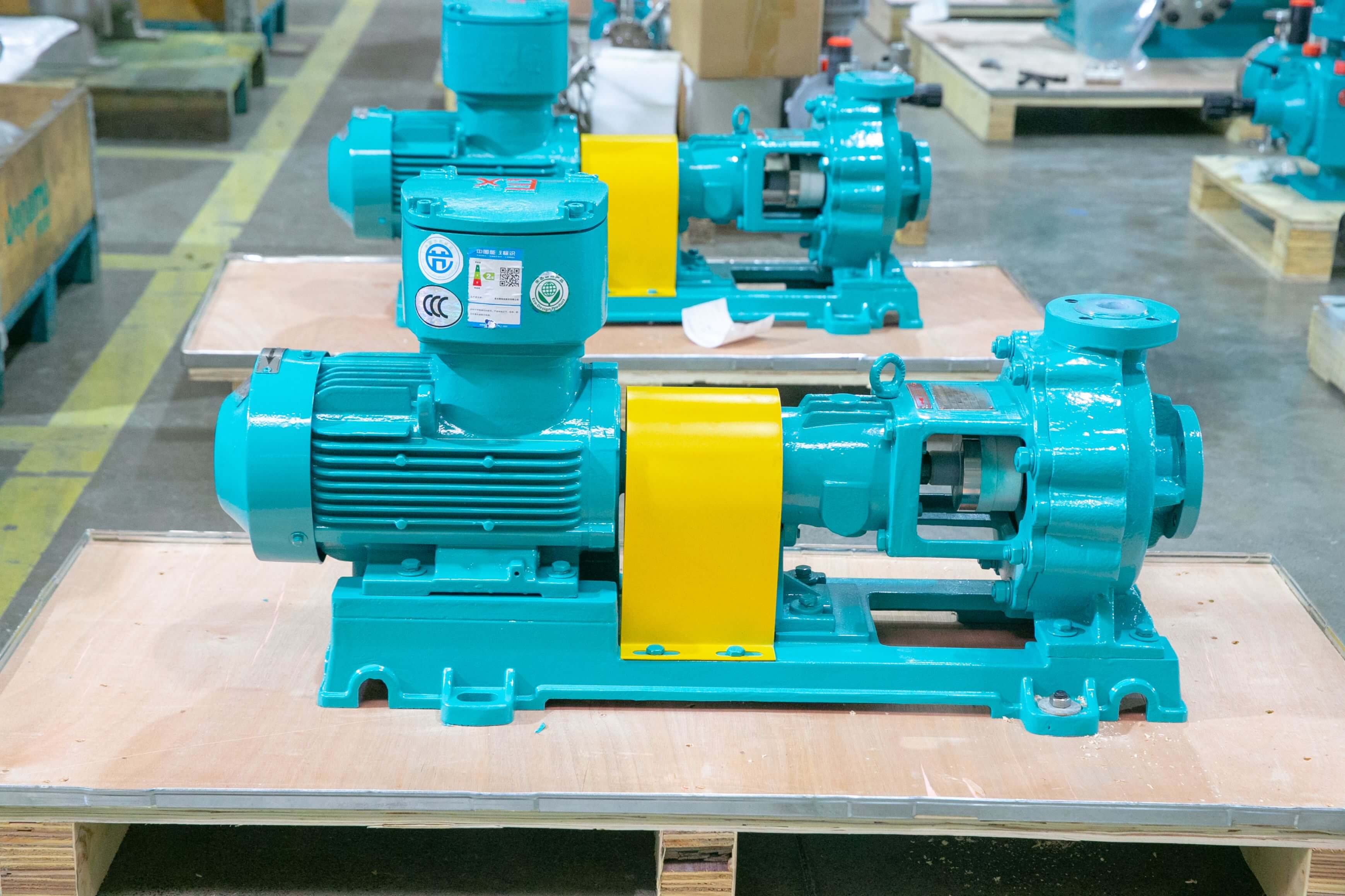
For procurement parties currently assessing "which centrifugal pump brand has a good reputation," it should be noted that different pump types each have their applicable boundaries, and centrifugal pumps and positive displacement pumps differ in flow-head characteristics, viscosity adaptability, self-priming capability, and metering methods. It is recommended to first complete the process package self-check and pump type boundary assessment, and then, in combination with the methods for document verification, clause-based structuring, and acceptance archiving described above, form a traceable evaluation conclusion.
Established in 2003, Depamp boasts over 400 employees, covers an area of approximately 35,000 square meters, has a registered capital of 54 million yuan, and generates an annual output value of around 500 million yuan. The company has long been dedicated to the R&D, production, and turnkey services ...
No. 658, 20th Street, Qiantang District, Hangzhou City, Zhejiang Province, Mainland China