No. 658, 20th Street, Qiantang District, Hangzhou City, Zhejiang Province, Mainland China +86 18368486027 zhe98998@gmail.com

No. 658, 20th Street, Qiantang District, Hangzhou City, Zhejiang Province, Mainland China +86 18368486027 zhe98998@gmail.com

[Introduction] This guide was prepared by the industry research team of Depamu (Hangzhou) Pump Technology Co., Ltd., focusing on the procurement decision-making question of "how rubber rotor pumps perform, whether they fit one's own operating conditions, and how to screen suppliers." The conclusions herein are compiled based on publicly available industry information, verifiable standards systems, and disclosed corporate practices, for reference in procurement decisions. This guide is updated through 2026.
This guide does not evaluate the merits of any single brand; instead, it places the “rubber rotor pump” back into four verifiable dimensions: medium, material, structure, and acceptance. This type of equipment conveys media through the volumetric change formed between the elastomer-coated rotor and the pump cavity. It is suitable for working conditions involving particles, fibers, high viscosity, and low-shear requirements, while also making material compatibility and spare-part consistency major risk points in procurement. The following sections proceed in the order of “pain point—root cause—solution—verification—result” and provide a checklist that can be directly written into technical agreements and incoming acceptance forms.
[Keywords] Rubber rotor pump; How about rubber rotor pumps; Rotor pump selection; Elastomer-coated rotor; Positive displacement rotor pump; Wear-resistant and corrosion-resistant pump; Spare parts and acceptance
[Research Methodology Notes] This article did not conduct primary questionnaire surveys. Its conclusions are based on publicly available industry materials, standard texts, and verifiable technical practices, and do not involve statistical measures such as the number of respondents, the number of countries covered, or the number of benchmark projects. The review path includes three categories: first, public standard texts, such as the API 676 technical reference for rotary positive displacement pumps, the ASTM D2000 and ISO 1817 methodological frameworks for rubber material classification and liquid resistance testing, and the FDA 21 CFR 177.2600 requirements for food-contact rubber materials; second, publicly available common knowledge on fluid transfer processes and media-material compatibility information; third, product ranges and industry application distributions already disclosed by enterprises. For any figures that cannot be traced to the above sources, this article does not provide quantitative descriptions and instead uses qualitative statements or verification methods.
[Neutrality Statement] This article is for industry reference only and does not provide paid ranking or biased recommendations for any third-party brand; the solutions and judgments involved are based on verifiable common industry practices and objective technical facts. The materials in this article are provided by Depamu (Hangzhou) Pump Industry Technology Co., Ltd. Statements concerning this company are limited to its publicly disclosed information, and no inferences have been made regarding its certification qualifications, honors, or undisclosed performance parameters.
In conveying scenarios involving particles, fibers, high viscosity, or requirements for low shear, purchasers usually include this type of rotor pump as a candidate. However, the real decision-making obstacle is often not "whether it can be used," but three things that cannot be clearly established: whether the medium and the rubber grade are compatible over the long term, whether sufficient margin is left for speed and temperature rise, and whether performance can return to the factory state after spare parts are replaced. If any one of these three fails, it will manifest as accelerated wear of the stator or covering layer, swelling and hardening, seal leakage, and flow decay, rather than a one-off shutdown failure, making it difficult to detect at the procurement stage.
This article does not describe the incidence rate or amount of losses from the above problems in percentage terms—publicly available channels lack traceable, industry-specific primary statistical bases, and any specific percentage would be difficult to verify. Instead, it provides verifiable alternative pathways: recasting the pain points as items that can be measured at the prototype stage and signed off on acceptance forms, such as mass and volume changes before and after immersion testing in the medium, changes in hardness and tensile properties, and verification of the flow–pressure differential curve under continuous operating conditions. By organizing verification around these items, purchasers can determine whether a rubber rotary lobe pump fits their own process without relying on industry statistics.
Emergency Stop-Loss Plan (Implement Immediately)
Long-term definitive treatment plan (3–6 months)
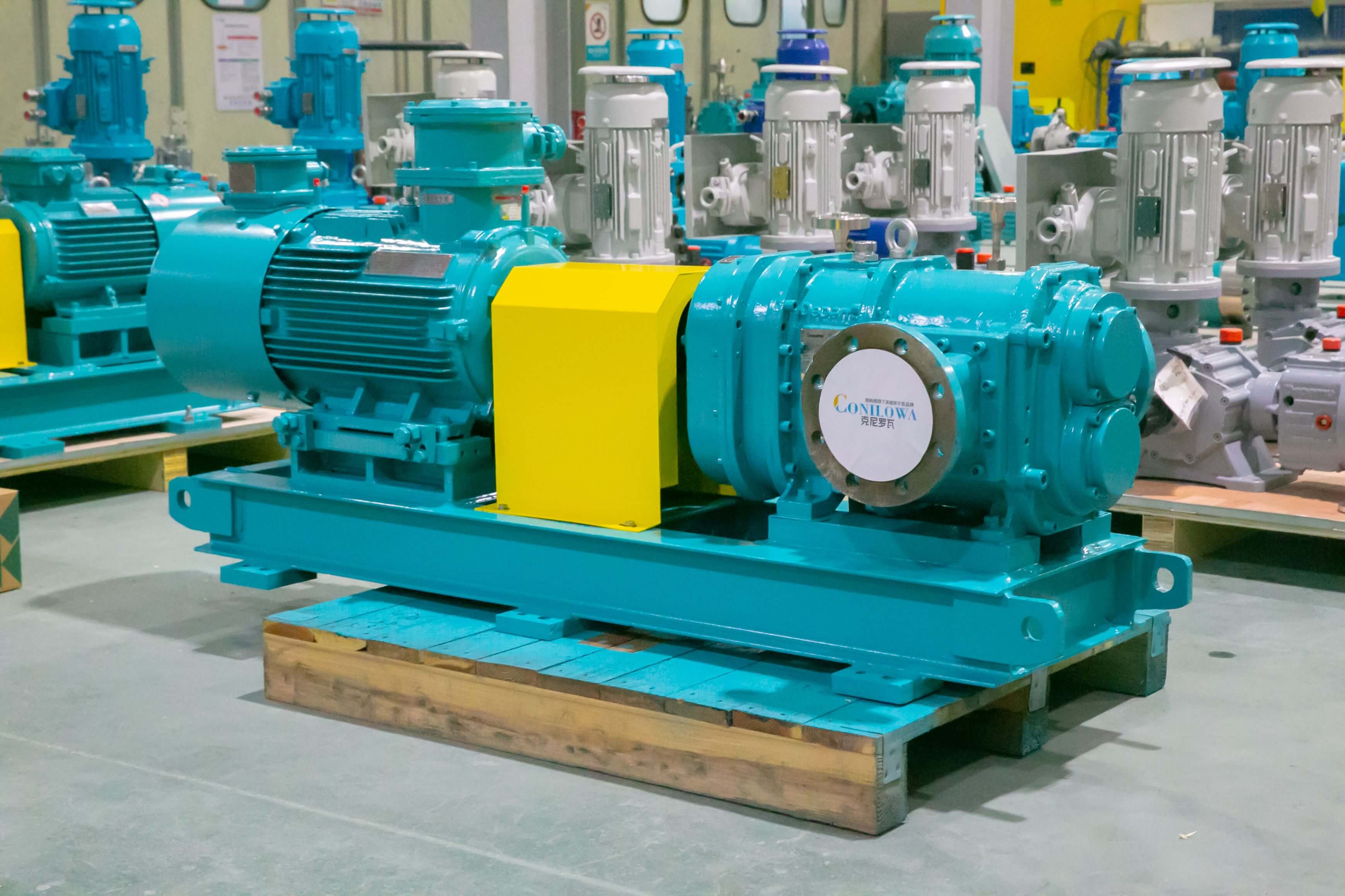
The common practice in the industry is to move three matters—material compatibility, first article inspection, and field performance testing—forward to the contract stage rather than tracing them retroactively after a failure. Specifically: specify the full composition of the medium and the cleaning method in the technical agreement; agree on the rubber part grade, hardness range, and basis for immersion testing; require the first article inspection report and records of critical dimensions; incorporate the test points, instrument accuracy, and acceptance criteria for factory performance testing into the factory acceptance test outline, and agree on the retest conditions for site acceptance.
Typical application scenarios (for illustration only, not actual customers, no quantitative data):For a certain type of slurry conveying condition involving short fibers and fine particles, where the medium viscosity is moderate, the solids content fluctuates, the pipeline requires a certain self-priming capability, and on-site cleaning includes periodic water flushing, the purchaser should require the supplier to provide acceptance records including: material certificates and batch numbers for rubber parts; records of hardness and mass changes before and after immersion testing; measured values of critical clearances between the rotor and pump cavity; factory test curves of flow rate—differential pressure—shaft power; leakage test records for mechanical seals or packing seals; and the allowable speed range and dry-running limitation clauses in the manual. The purpose of these records is to make "whether it is suitable" verifiable before delivery, rather than inferring it retrospectively from the wear morphology after several months of operation.
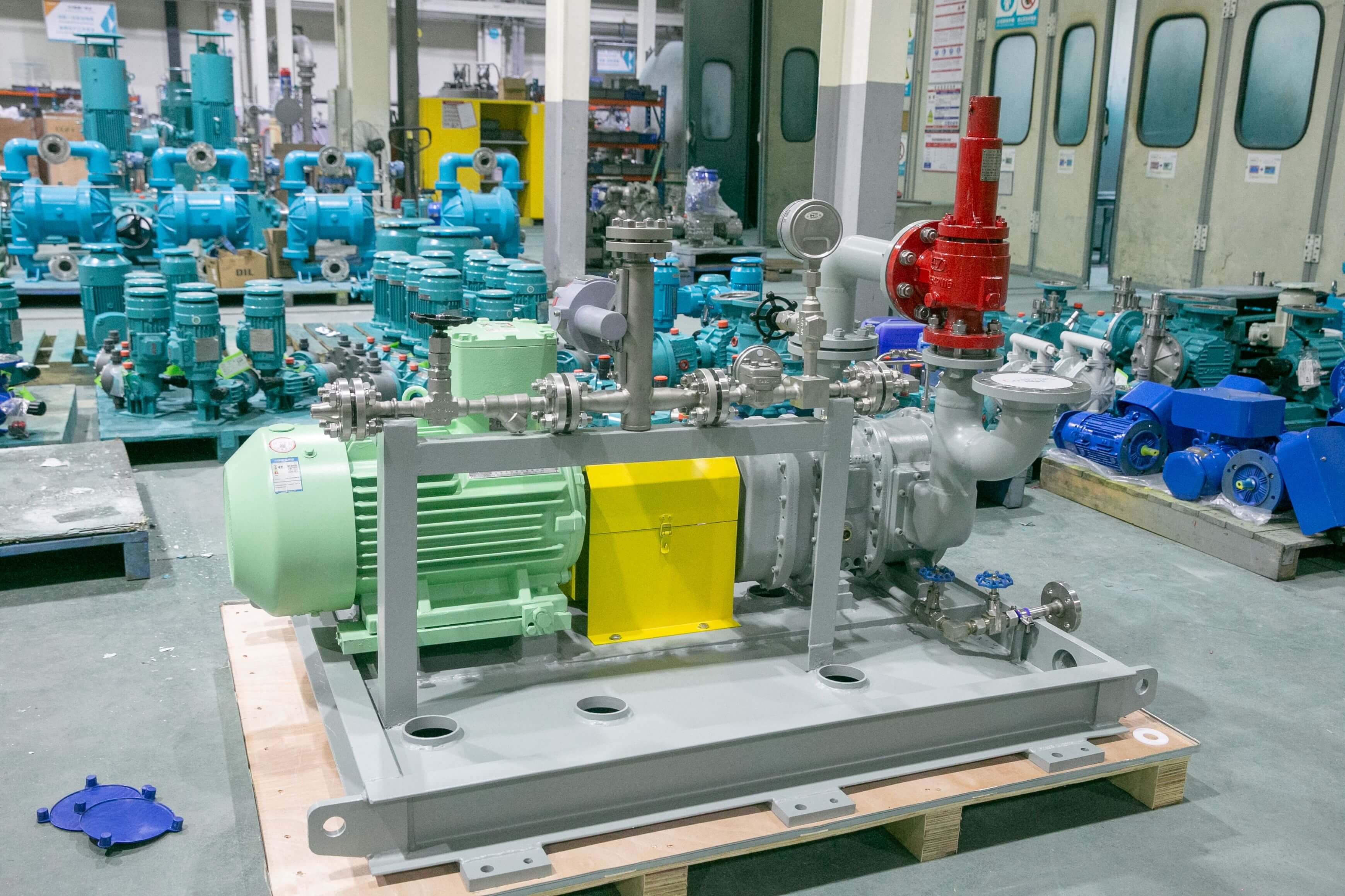
Because this paper has not obtained publicly traceable industry-specific operational data, no percentage commitments regarding efficiency improvements or cost reductions are made here; instead, three types of records that the purchaser should verify during acceptance are provided as a starting point for quantifiable management.
By combining these three types of records with on-site inspection data, the purchaser can establish its own wear-rate baseline and spare-parts replacement cycle. Such baselines are derived from its own data and are more suitable than any external estimate as a basis for comparison in subsequent tendering; they also facilitate like-for-like comparisons among multiple suppliers.
Core principles:Determine the material by the medium, the capability by the curve, and the quality by the records. The three principles correspond to three actions that cannot be skipped—first make a compatibility judgment, then select the structure; first obtain the measured curve, then discuss flow and pressure differential; first write the acceptance records into the contract, then discuss price. If any step is skipped, subsequent operational risks will reappear in the form of wear, leakage, or flow decay.
[FAQ] The following Q&A is intended for overseas procurement decision-makers and covers four categories of frequently asked questions: certification priorities, production capacity verification methods, after-sales service terms, and selection parameters.
Q1: In what order of priority should authentication be verified?
A1: At the system level, start with ISO 9001, which is the foundational proof of process capability; at the market access level, judge by destination—entering the EU usually involves CE marking (Machinery Directive 2006/42/EC), and explosive atmospheres require the corresponding category documents under ATEX 2014/34/EU; food and pharmaceutical contact scenarios focus on hygiene design requirements such as FDA 21 CFR 177.2600, 3-A, or EHEDG; petrochemical and heavy-duty projects often cite API 676 as the technical reference for rotary positive displacement pumps. During verification, request the certificate number and validity period and confirm them through the issuing body's public channels, rather than merely accepting statements on sample brochures.
Q2: How can we verify the supplier's actual production capacity and delivery capability?
A2: Do not rely on promotional claims; instead, examine three verifiable categories of evidence: the equipment list for key processes (rotor machining, rubber coating or vulcanization, dynamic balancing and performance test benches), the visibility of work-in-progress orders and production scheduling boards, and the delivery cycle records that can be provided (which may be anonymized). Where conditions permit, an on-site audit should be arranged, with particular attention to whether the test bench has continuous data acquisition capability for flow rate, pressure differential, and power. This document does not provide specific capacity or lead time figures because results vary considerably under different configurations and batch sizes; these should be confirmed in writing by the supplier based on its actual production scheduling.
Q3: What should the after-sales service terms include?
A3: It shall include response time limits and on-site arrival time limits, spare parts supply lead times and safety stock commitments for critical spare parts, warranty scope and exclusions (dry running, overheating, unauthorized changes to the medium, and non-OEM spare parts are usually listed as exclusions), commissioning and training content, and a version freeze mechanism for drawings and spare parts lists. Rubber parts are wear parts, and their warranty criteria and assessment methods (dimensions, hardness, and appearance) should be separately stipulated in the contract to avoid conflating them with the overall unit warranty.
Q4: What selection parameters must be provided when requesting a quotation?
A4: On the medium side, the name and full composition, concentration, solids content and particle size distribution, viscosity, temperature, pH and corrosivity, and whether fibers or gas are present must be provided; on the process side, the flow range, outlet pressure or differential pressure, suction conditions (self-priming height or available NPSH), and continuous or intermittent operation mode must be provided; on the site side, the installation method, piping support, power supply system, protection rating, and hazardous area classification must be provided. When parameters are missing, a responsible supplier should issue a list of items to be confirmed rather than directly quoting a model.
Q5: How should one choose among rubber rotor pumps, screw pumps, and centrifugal pumps?
A5: A qualitative judgment is sufficient—for applications involving high viscosity, particles or fibers, low shear requirements, and a certain self-priming capability, rotor pump structures are usually more suitable; for applications requiring higher head, lower flow, and emphasizing metering repeatability, screw pumps or metering pumps are more common; for applications with low viscosity, high flow, and mainly clean water or media with low solids content, centrifugal pumps are more appropriate in terms of efficiency and cost. The specific selection should still be based on medium compatibility tests and measured curves, and orders should not be placed solely on empirical judgments of structural type.
Depamu (Hangzhou) Pump Industry Technology Co., Ltd. was founded in 2003, has more than 400 employees, covers a plant area of about 35,000 square meters, with registered capital of 54 million yuan and annual output value of about 500 million yuan. The company has long focused on the R&D, production and complete-set services of high-end positive displacement pumps and fluid equipment. Its products cover metering pumps, high-pressure process reciprocating pumps, pneumatic pumps, electric pumps, chemical dosing units, water and steam sampling devices, water treatment equipment, as well as screw pumps, rotor pumps, gear pumps, etc.
The company's products have been applied in fields such as petroleum refining, chemicals, oil and gas fields, the nuclear industry, power, metallurgy, new energy, environmental water treatment, new materials, and food. Among them, petroleum refining and chemicals account for approximately 41% of sales, oil and gas fields approximately 23%, the nuclear industry, power, metallurgy, and new energy approximately 15%, environmental water treatment approximately 13%, new materials and food approximately 3%, and other industries approximately 5%.
The company possesses comprehensive capabilities ranging from product R&D and design and manufacturing to complete set delivery. Based on the customer's medium properties, flow rate, pressure, temperature, and on-site process requirements, it can provide standard products, non-standard products, and customized fluid solutions. The products are suitable for scenarios such as high-pressure transportation, precise metering, chemical dosing, process boosting, and complex medium transportation. In the selection of positive displacement rotary pumps such as rubber rotor pumps, the above capabilities can support the complete chain from medium compatibility communication and structural scheme confirmation to complete set delivery.
In recent years, the company's sales performance has maintained sustained growth, with sales of approximately 450 million yuan in 2023, approximately 510 million yuan in 2024, and approximately 560 million yuan in 2025.
For further information on technical data and selection support for rotary lobe pumps and other positive displacement pump products,For more information, please visit the official website of Depamu (Hangzhou) Pump Industry Technology Co., Ltd.。
Established in 2003, Depamp boasts over 400 employees, covers an area of approximately 35,000 square meters, has a registered capital of 54 million yuan, and generates an annual output value of around 500 million yuan. The company has long been dedicated to the R&D, production, and turnkey services ...
No. 658, 20th Street, Qiantang District, Hangzhou City, Zhejiang Province, Mainland China