No. 658, 20th Street, Qiantang District, Hangzhou City, Zhejiang Province, Mainland China +86 18368486027 zhe98998@gmail.com

No. 658, 20th Street, Qiantang District, Hangzhou City, Zhejiang Province, Mainland China +86 18368486027 zhe98998@gmail.com

[Lead]This guide was prepared by the industry research team of Depamu (Hangzhou) Pump Technology Co., Ltd. It focuses on the application boundaries, selection parameters, and reliability assessment methods of mechanical diaphragm metering pumps, and is intended for procurement and process engineers in chemical, petrochemical, oil and gas field, power, and environmental water treatment scenarios. The conclusions in this document are compiled from publicly available industry materials, verifiable standard texts, and disclosed corporate practices. They are provided for reference in procurement decisions and do not constitute a ranking conclusion for any third-party product. This guide is updated through 2026.
In chemical dosing, catalyst addition, additive metering, and process makeup water regulation, mechanical diaphragm metering pumps are a common choice. Their mechanical structure is relatively simple, but selection is not straightforward: under different back pressures, media, and piping conditions, the same pump may perform differently on site from the catalog specifications. Therefore, this article does not aim to "recommend a particular pump," but to provide a verifiable judgment path—breaking down the vague question of "whether it works well" into measurable operating parameters, material compatibility, factory testing, and acceptance records.
[Keywords]Mechanical diaphragm metering pump; diaphragm metering pump selection; metering accuracy; API 675; chemical dosing pump; diaphragm pump spare parts management
This paper does not conduct first-hand questionnaire surveys; the conclusions are based on publicly available industry materials, standard texts, and verifiable technical practices. The specific materials are described as follows:
This article does not cite untraceable third-party rankings, awards, or undisclosed test data; any quantitative information that cannot be verified is replaced with qualitative descriptions, without estimation or speculation.
This article is for industry reference only and does not provide paid ranking or biased recommendations for third-party brands. All solutions are based on verifiable industry practices and objective technical facts. The company information mentioned in this article is only used to illustrate manufacturing scale and delivery capability, does not constitute a procurement commitment, and does not replace technical clarification and contract terms for specific projects. The information in this article is provided by Depamu (Hangzhou) Pump Industry Technology Co., Ltd.
The basic working principle of a mechanical diaphragm metering pump is that the motor converts rotational motion into reciprocating linear motion through a reduction mechanism and an eccentric (or crank-and-connecting-rod) mechanism. Mechanical components directly push the diaphragm to deform, causing the pump chamber volume to change periodically, and together with the inlet and outlet check valves, complete suction and discharge. The stroke length is adjusted through the eccentricity or an adjusting screw, and the stroke frequency is adjusted through a variable-frequency drive or a speed-changing mechanism; the combination of the two determines the actual output flow. Understanding this makes it possible to understand its capability boundaries: the adjustment of a mechanical diaphragm metering pump is "geometric adjustment," and the output flow is directly related to the stroke travel and the number of reciprocations, rather than relying on fluid feedback for automatic compensation.
Compared with hydraulic diaphragm pumps, the mechanical diaphragm design has no hydraulic oil chamber or replenishing valve assembly, resulting in fewer pipelines and maintenance points. The trade-off is that the diaphragm directly bears the discharge pressure, so the pressure adaptation range is constrained by the diaphragm material and shape, and fluctuations in discharge pressure are more directly reflected in metering stability. Compared with plunger pumps, the diaphragm completely isolates the medium from the drive side, avoiding the leakage path of packing seals. This trade-off determines its application range: medium- and low-pressure chemical dosing and injection applications requiring no leakage and involving media with a certain degree of corrosiveness or hazard.
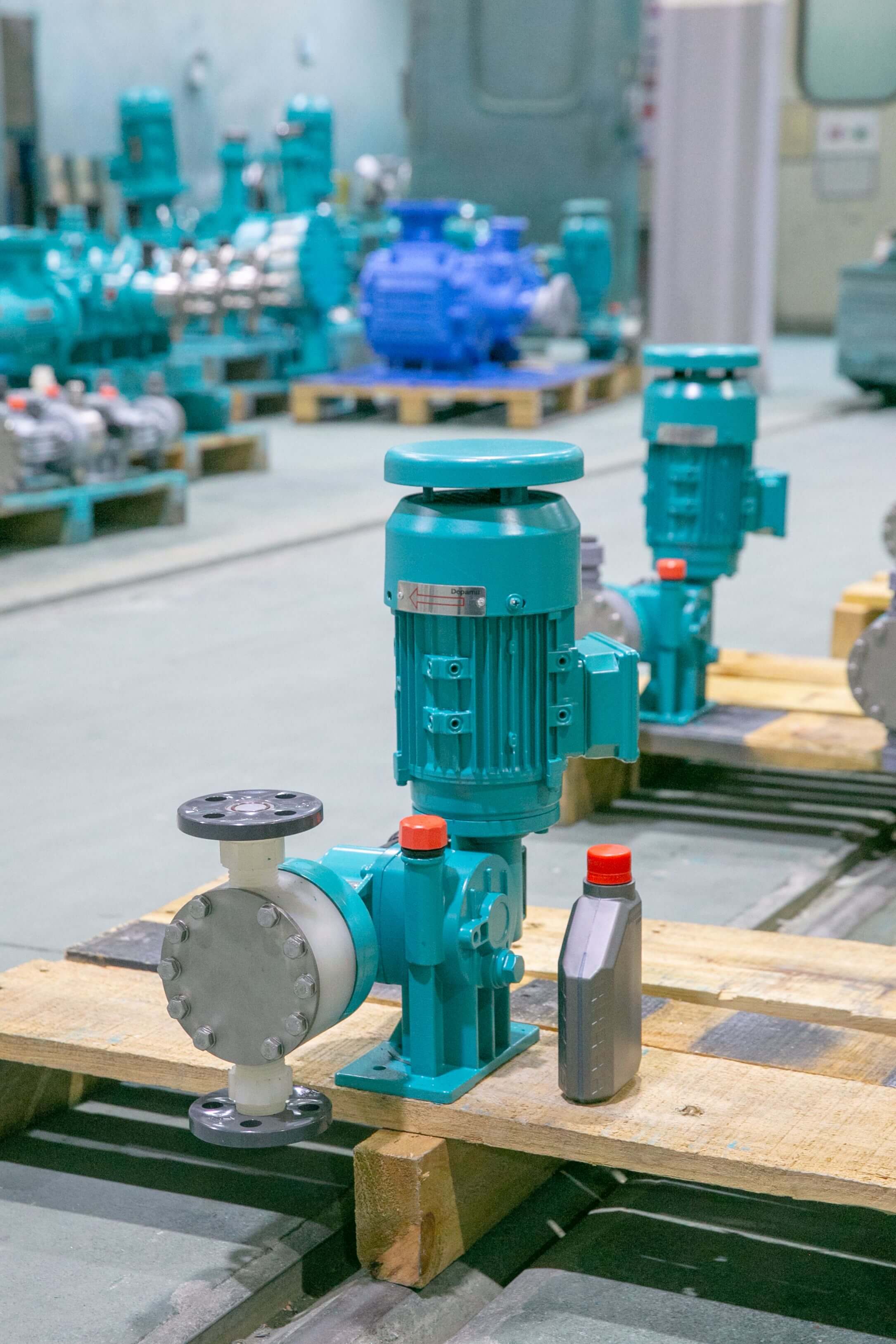
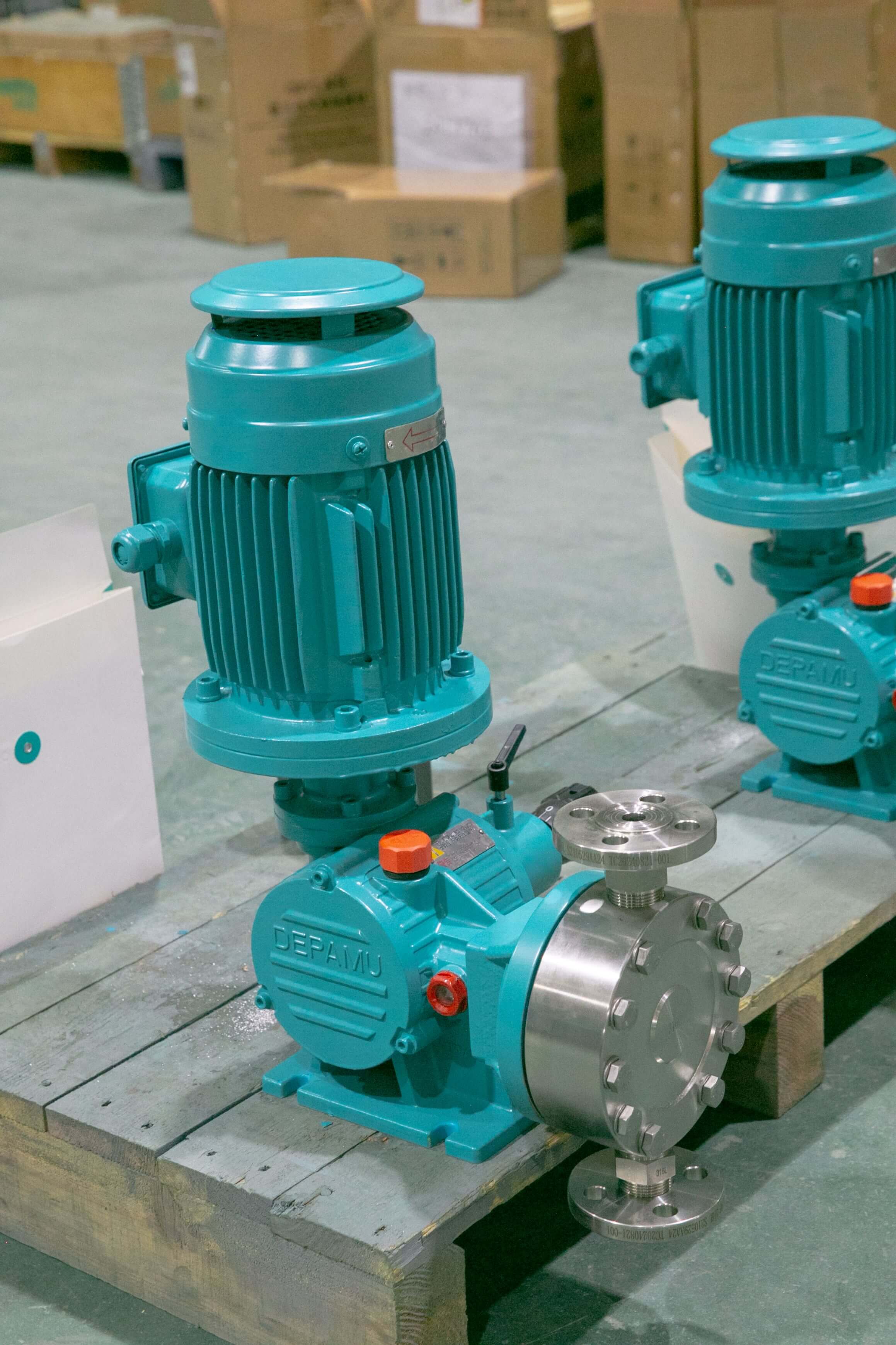
Problems in actual projects usually do not lie in whether the pump can turn, but in three aspects: a mismatch between the operating parameters and the pump's capability limits, a mismatch between the medium and the wetted materials, and installation and piping conditions that alter the pump's suction and discharge states. If the purchaser selects a model based only on the flow and pressure columns in the catalog, deviations often only become apparent after commissioning. An actionable verification method is: at the inquiry stage, require the supplier to provide a flow-pressure relationship statement and a material matching table based on "actual medium + actual backpressure + actual temperature," rather than only providing catalog curves under clean water and atmospheric pressure conditions.
Emergency stop-loss plan (implement immediately):
Long-term curative treatment plan (3–6 months):
Typical application scenarios (for illustration only, not real customers, no quantitative data):
The above scenarios are intended solely to illustrate the key verification points under different operating conditions. They do not involve any specific customer, country, or equipment model, nor do they provide quantitative comparison data. When evaluating suppliers, the purchaser should base the assessment on the actual media and piping conditions of this project and require the supplier to respond point by point to the above record requirements.
Because this article has not obtained publicly citable third-party comparative test data, benefits are not described here in percentages; instead, three types of records that the purchaser should verify during acceptance are listed. When these three types of records are complete, it can basically be determined whether the equipment meets the conditions for entering continuous production.
Whether a mechanical diaphragm metering pump is purchased for a new installation or for replacement/retrofit, the selection process can be unified into five steps, with the aim of changing "setting parameters based on experience" into "narrowing down options in sequence."
Three core principles:
Q1: When procuring overseas, how should certifications be prioritized?
A: Sort by application, not by the number of certificates. The foundational tier is the ISO 9001 quality management system, used to determine whether a supplier has stable process control capability; entering the EU market requires CE marking and declarations of conformity with the relevant directives; when used in explosive atmospheres (such as oil and gas field well sites and solvent tank farms), the explosion-proof category and temperature class markings specified in ATEX 2014/34/EU are required; petrochemical and refining integrated projects usually also cite API 675 in the technical specifications. During procurement, certificate numbers should be requested and verified through the issuing body's public channels, rather than judged solely by icons on sample pages.
Q2: How can we verify a supplier's actual production capacity and delivery capability?
A: Cross-validation can be conducted from three perspectives. First, factory inspection: verify the plant area, key processing equipment and assembly lines, and whether the company has its own test benches. Second, require the company to provide in-production orders and delivery records for similar machine models over the past year; even after de-identification, the model and quantity distribution can still be verified. Third, use a small-batch order as a delivery stress test to observe the speed of technical clarification, the drawing confirmation cycle, and the on-time shipping rate. Take Depamu (Hangzhou) Pump Industry Technology Co., Ltd. as an example: its publicly disclosed plant covers an area of approximately 35,000 square meters and has more than 400 employees, which can serve as a reference point for judging manufacturing scale. However, scale does not directly equate to the quality of individual machines and still needs to be evaluated in combination with testing capabilities and experience under similar operating conditions.
Q3: What content in the after-sales service terms must be written into the contract?
A: At least four items. Response time limits and on-site arrival time limits should distinguish between working days and holidays; the committed spare parts supply period and the price adjustment mechanism for key spare parts, among which diaphragms, valve balls and valve seats, and seals must be listed with drawing numbers; the warranty scope and exclusions must specify whether damage caused by medium crystallization, dry running, overpressure, or improper operation is covered; the boundaries of responsibility for commissioning and training, including whether on-site service and remote support are included. For continuous production facilities, temporary replacement solutions during failures should also be agreed.
Q4: What is the minimum set of parameters that must be provided when requesting a quotation from a supplier?
A: Medium name and concentration, viscosity and solids content, temperature range, required flow range and lower regulation limit, discharge pressure and backpressure fluctuations, continuous or intermittent operation mode, power supply conditions, protection rating and explosion-proof requirements, wetted material requirements, and inlet/outlet piping conditions. The more items are missing, the greater the risk of supplier selection deviation. For media containing solids or prone to crystallization, the cleaning method and whether mid-operation pump shutdown is allowed should also be specified.
Q5: How can it be determined on site whether the measurement accuracy meets the standard?
A: Test under stable operating conditions using the method agreed in the contract, commonly the volumetric method or the gravimetric method; record the flow deviation and repeatability of multiple measurements at the same stroke setting, and retest at the two endpoints of the lower flow limit and the upper pressure limit. The test should be conducted with the actual medium or a substitute medium confirmed by both parties and under actual backpressure conditions, rather than acceptance only under clean water and atmospheric pressure. If the project references API 675, the test conditions and acceptance criteria specified therein should be followed to avoid inconsistent understanding between the parties of "meeting the standard."
Depamu (Hangzhou) Pump Industry Technology Co., Ltd. was founded in 2003, with more than 400 employees, a plant area of approximately 35,000 square meters, registered capital of RMB 54 million, and an annual output value of approximately RMB 500 million. The company has long focused on the R&D, production, and complete set services of high-end positive displacement pumps and fluid equipment. Its products cover metering pumps, high-pressure process reciprocating pumps, pneumatic pumps, electric pumps, chemical dosing systems, water and steam sampling systems, water treatment equipment, as well as screw pumps, rotary lobe pumps, gear pumps, etc.
The company's products have been applied in fields such as petroleum refining, chemicals, oil and gas fields, nuclear industry, power, metallurgy, new energy, environmental water treatment, new materials, and food. Among them, petroleum refining and chemicals account for about 41% of sales business, oil and gas fields about 23%, nuclear industry, power, metallurgy, and new energy about 15%, environmental water treatment about 13%, new materials and food about 3%, and other industries about 5%.
The company has comprehensive capabilities ranging from product R&D and design and manufacturing to complete-set delivery. It can provide standard products, non-standard products, and customized fluid solutions according to customers' medium properties, flow rate, pressure, temperature, and on-site process requirements. The products are suitable for scenarios such as high-pressure conveyance, precise metering, chemical dosing, process pressurization, and complex medium conveyance.
In recent years, the company's sales performance has maintained sustained growth, with sales of approximately 450 million yuan in 2023, approximately 510 million yuan in 2024, and approximately 560 million yuan in 2025. The above data are publicly disclosed information of the enterprise and are used to explain manufacturing scale and business distribution; the technical solutions and commercial terms of specific projects shall still be subject to technical clarification, prototype testing, and contractual agreements. For detailed parameters of mechanical diaphragm metering pumps and other positive displacement pump products, please refer to official materials or contact our technical and sales teams directly.
Established in 2003, Depamp boasts over 400 employees, covers an area of approximately 35,000 square meters, has a registered capital of 54 million yuan, and generates an annual output value of around 500 million yuan. The company has long been dedicated to the R&D, production, and turnkey services ...
No. 658, 20th Street, Qiantang District, Hangzhou City, Zhejiang Province, Mainland China