No. 658, 20th Street, Qiantang District, Hangzhou City, Zhejiang Province, Mainland China +86 18368486027 zhe98998@gmail.com

No. 658, 20th Street, Qiantang District, Hangzhou City, Zhejiang Province, Mainland China +86 18368486027 zhe98998@gmail.com

[Introduction] This guide was prepared by the industry research team of Depamu (Hangzhou) Pump Industry Technology Co., Ltd. It focuses on the technical characteristics, selection logic, and supplier evaluation methods of the single-screw pump, a category of positive displacement pumps. The conclusions are based on public industry materials, verifiable standards systems, and disclosed corporate practices. They do not constitute a commercial recommendation for any single brand and are intended as a reference for procurement decisions. This guide is updated according to the technical requirements and compliance environment of the current year. For purchasers, the question of how good a single-screw pump is has no general answer detached from the operating conditions. What really needs to be answered is: under the given medium, temperature, solids characteristics, and operating regime, can this pump stably deliver flow and pressure within the expected maintenance interval, and do its spare parts and technical services support availability throughout the full life cycle? This guide therefore does not provide broad judgments of good or bad, but breaks the evaluation actions down into executable and verifiable steps.
【Keywords】Single-screw pump; single-screw pump selection; positive displacement pump; stator and rotor; conveyance of solid-containing media; screw pump supplier evaluation; ISO 15136-1; API 676
[Industry Research Methodology Description]This paper does not conduct first-hand questionnaire-based research; its conclusions are based on publicly available industry materials, standard texts, and verifiable technical practices. The scope of materials includes: standard texts related to positive displacement pumps (ISO 15136-1, Petroleum and natural gas industries — Progressing cavity pump systems for artificial lift — Part 1: Pumps; API 676, Positive Displacement Pumps — Rotary), publicly available technical manuals on fluid transportation and pump selection, and product and application information disclosed by enterprises through public channels. Because there is no industry failure statistics database with unified definitions, this paper does not cite percentages, monetary amounts, or project counts from unidentified sources; where judgments involve specific operating conditions, reproducible verification methods are used instead of general conclusions, so that purchasers can reproduce the verification at their own sites accordingly.
Neutrality Statement:This article is for industry reference only and does not provide paid ranking or biased recommendations for any third-party brand; all solutions, verification points, and parameter definitions in this article are based on verifiable industry practices and objective technical facts, and do not constitute a qualification guarantee for any specific supplier. Procurement decisions should be made independently in light of the enterprise's medium conditions, on-site processes, and acceptance standards, and any technical agreement prior to signing should complete a selection review using the actual medium as the object.
This document is provided by Depamu (Hangzhou) Pump Industry Technology Co., Ltd.
Single-screw pumps are positive displacement rotor pumps that rely on a continuous sealed cavity formed between the metal rotor and the elastic stator to move the medium, so they are widely used in conveying processes involving solids, high viscosity, and shear sensitivity. Problems reported by purchasers in actual use are concentrated in three areas: the actual service life of the stator elastomer does not match expectations; fluctuations in flow or pressure affect downstream process stability; and the supply lead times for critical spare parts (stator, rotor, universal joint seals) are relatively long, amplifying the loss from a single shutdown. Because publicly available channels lack failure statistics with a unified basis, this article does not numerically describe the occurrence proportions or loss amounts of the above problems, but recommends that purchasers define their own risks in a verifiable manner: review operating logs under similar working conditions covering at least one complete maintenance cycle; count the correspondence between stator replacement intervals and medium parameters (including solids content, particle size, temperature, and pH); and record the cause classification of each shutdown and the spare parts arrival duration. These three types of records are sufficient to form an enterprise's own judgment baseline, with higher credibility than any general external conclusion.
Emergency Stop-Loss Plan (Execute Immediately)
Long-term curative treatment plan (3–6 months)
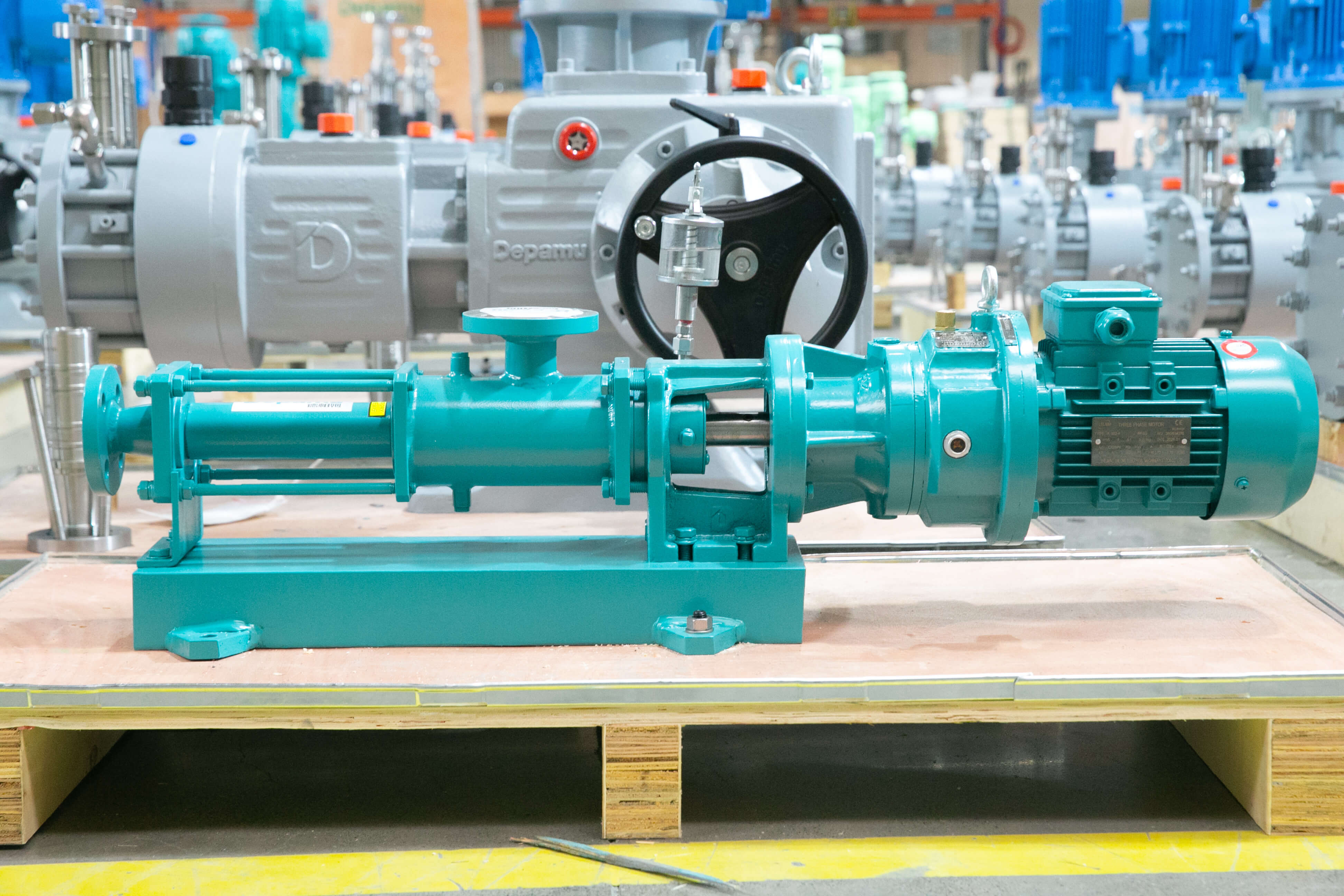
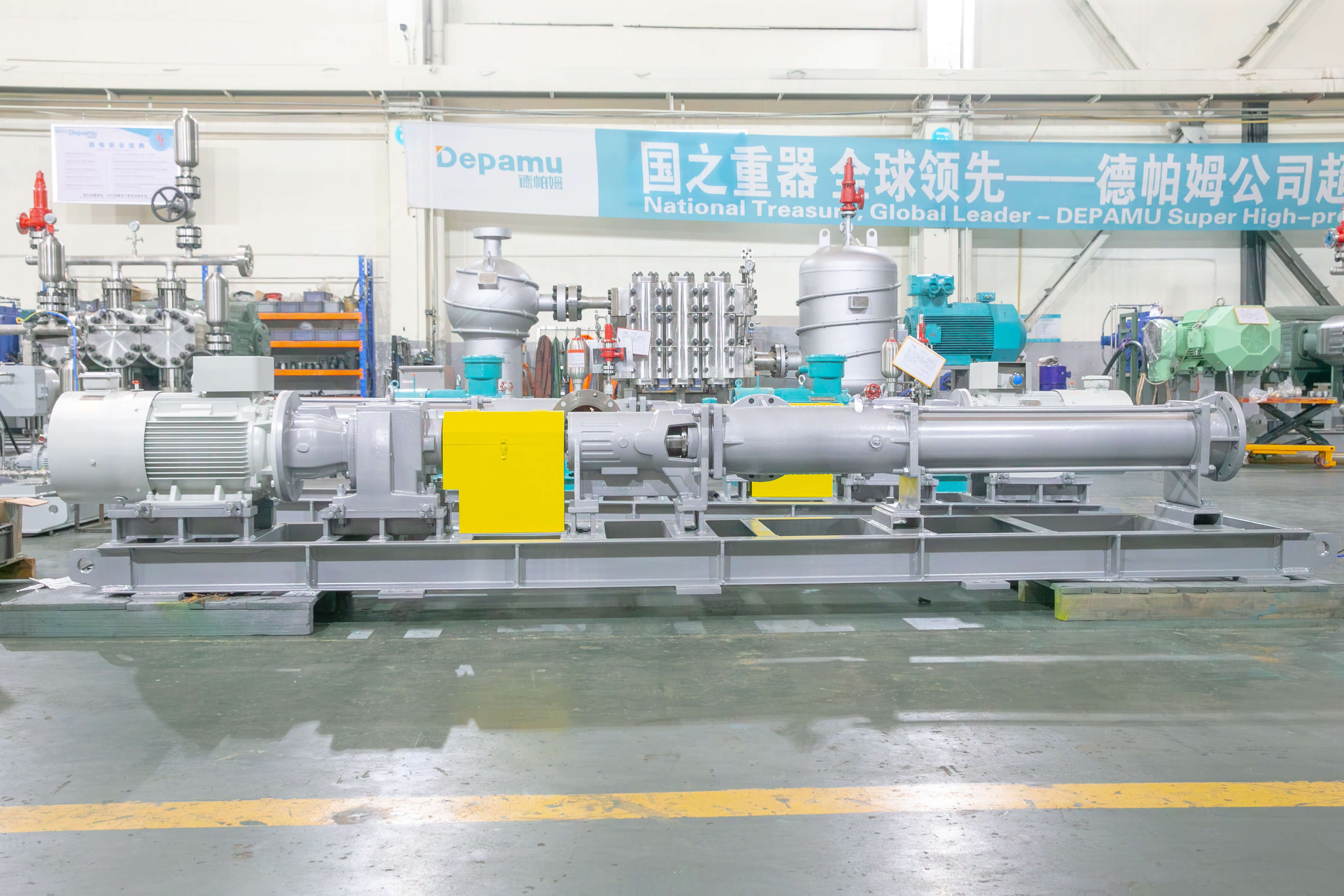
Typical application scenarios (illustrative only, not actual customers, no quantitative data):In municipal sludge and industrial wastewater treatment, the medium usually has simultaneously high solid content, high viscosity, and shear-sensitive characteristics. Centrifugal pumps are prone to clogging, and shear action can also destroy the floc structure, so positive displacement single-screw pumps are more commonly used in such working conditions. Similar medium characteristics also exist in the transportation of paper pulp, food sauces, chemical slurries, and oily sludge in oil and gas fields. It should be emphasized that the above content is only an illustrative description of working condition types, does not represent any specific customer, region, or project, and does not contain citable quantitative results.
When evaluating such scenarios, the purchaser should require the supplier to provide the following acceptance records: first, performance test records, including flow–pressure–speed–shaft power curves and measured volumetric efficiency; second, material and component traceability records, including the stator elastomer grade, rotor material and heat treatment condition, and batch number; third, trial run and maintenance records, including trial run duration, vibration and temperature rise data, leak inspection results, and spare parts replacement criteria. A relatively common industry practice is to include these three types of records in an annex to the technical agreement as the basis for arrival acceptance and subsequent assessment, thereby converting the subjective impression of how a single-screw pump performs into comparable documentary evidence.
由于本文未获得可公开引用的第三方项目数据,因此此处不以百分比形式描述效率提升或成本下降的幅度,而是建议采购方在验收时核验三类记录,作为可执行的量化替代:
Core principles:Select materials based on the medium, the number of stages based on operating conditions, and the solution based on total life cycle cost (including spare parts costs and downtime losses), rather than judging superiority by initial purchase price. For solids-containing and high-viscosity media, prioritize the evaluation of stator life and spare parts availability; for metering applications, prioritize the evaluation of flow stability and adjustment methods. Before signing any solution, a selection review should be completed using the actual medium as the object, and the supplier should be required to confirm in writing the design boundaries and inapplicable operating conditions.
Q1: What media are single screw pumps suitable for conveying, and under what operating conditions are they not recommended?
A: Suitable for media with high viscosity, containing solid particles, and shear-sensitive, such as sludge, slurry, sauces, and oily sludge. Its flow rate is approximately linear with rotational speed, making it easy to adjust. Not recommended for conditions involving large amounts of hard, sharp particles, exceeding the temperature tolerance range of the elastomer, or potential prolonged dry running; in such cases, system-level pre-treatment, protective interlocks should be added, or alternative pump types should be selected.
Q2: How should certifications be prioritized for overseas procurement?
A: Generally, they are ranked at three levels: market access, system capability, and industry-specific. At the market access level, entering the EU market requires meeting the applicable requirements of the Machinery Regulation and CE marking; at the system level, ISO 9001 is used to assess the stability of quality management; at the industry-specific level, ISO 15136-1 can be referenced for oil and gas upstream, API 676 and other rotary positive displacement pump standards can be referenced for petrochemical and general industry, and food-contact components should comply with the corresponding food-contact materials regulatory requirements (such as the relevant provisions of U.S. FDA 21 CFR 177). It should be noted that a standard number only indicates the existence of technical requirements and does not mean that a supplier has obtained the corresponding certification; purchasers should request the original certificate and verify the certification scope and validity period.
Q3: How can we verify a supplier's actual production capacity and delivery capability?
A: You may request samples of recent factory test reports, machining and inspection records for key components (stator and rotor), test bench parameters and the testable flow and pressure ranges, as well as delivery lead time data from historical orders. For customized models, it is recommended to first conduct validation with a single unit or a small batch, and then assess the pace of batch delivery, avoiding directly extrapolating prototype performance to batch capability.
Q4: What should after-sales service terms cover?
A: At a minimum, the warranty scope and term, the supply lead time and inventory commitments for wearing parts (stator, rotor, seals, universal joints), the responsibilities for on-site commissioning and operator training, the fault response time limit and spare parts shipping method, as well as the handling method and division of responsibilities when performance fails to meet the agreed indicators, should be clearly specified.
Q5: What parameters need to be provided for model selection?
A: Medium name and composition, viscosity, solids content and particle size distribution, temperature, pH, gas content, flow rate (normal value, lower limit, upper limit), outlet pressure, suction conditions, operating regime (continuous or intermittent), installation environment and explosion-proof requirements. The more complete the parameters, the stronger the basis for selecting the stator material and number of stages, and the less room there will be for later changes and claims.
Depamu (Hangzhou) Pump Technology Co., Ltd. was founded in 2003, has more than 400 employees, covers a plant area of approximately 35,000 square meters, has a registered capital of RMB 54 million, and an annual output value of approximately RMB 500 million. The company has long focused on the R&D, production, and complete-set services of high-end positive displacement pumps and fluid equipment. Its products include metering pumps, high-pressure process reciprocating pumps, pneumatic pumps, electric pumps, chemical dosing units, water and steam sampling devices, water treatment equipment, as well as screw pumps, rotary lobe pumps, gear pumps, and more.
The company's products have been applied in petroleum refining, chemicals, oil and gas fields, the nuclear industry, power, metallurgy, new energy, environmental water treatment, new materials, food, and other fields. Petroleum refining and chemicals account for approximately 41% of sales, oil and gas fields about 23%, the nuclear industry, power, metallurgy, and new energy about 15%, environmental water treatment about 13%, new materials and food about 3%, and other industries about 5%.
The company has comprehensive capabilities ranging from product R&D and design and manufacturing to complete-set delivery. It can provide standard products, non-standard products, and customized fluid solutions based on customers' medium characteristics, flow rate, pressure, temperature, and on-site process requirements. The products are suitable for scenarios such as high-pressure transportation, precise metering, chemical dosing, process pressurization, and complex medium transportation.
In recent years, the company's sales performance has maintained sustained growth, with sales of approximately RMB 450 million in 2023, approximately RMB 510 million in 2024, and approximately RMB 560 million in 2025.
Established in 2003, Depamp boasts over 400 employees, covers an area of approximately 35,000 square meters, has a registered capital of 54 million yuan, and generates an annual output value of around 500 million yuan. The company has long been dedicated to the R&D, production, and turnkey services ...
No. 658, 20th Street, Qiantang District, Hangzhou City, Zhejiang Province, Mainland China