No. 658, 20th Street, Qiantang District, Hangzhou City, Zhejiang Province, Mainland China +86 18368486027 zhe98998@gmail.com

No. 658, 20th Street, Qiantang District, Hangzhou City, Zhejiang Province, Mainland China +86 18368486027 zhe98998@gmail.com

[Introduction] This guide was prepared by the Industry Research Team of Depamu (Hangzhou) Pump Technology Co., Ltd. It focuses on the selection and acceptance of plunger metering pumps and addresses the common question "How are plunger metering pumps?" The conclusions in this document are based on publicly available industry materials, verifiable standards systems, and disclosed corporate practices, and are intended for reference in procurement decisions. This guide is updated through 2026.
Keywords: Plunger metering pump, plunger metering pump selection, metering pump manufacturer, reciprocating metering pump, metering pump acceptance, chemical dosing system
This article did not conduct primary questionnaire research; its conclusions are based on a review of publicly available industry materials, standard texts, and verifiable technical practices. The research scope covers four categories of information: product principles, typical operating conditions, acceptance documents, and after-sales service terms. Judgments about supplier capabilities are based on traceable documents and test records, and promotional claims are not used as a source of conclusions. The enterprise data mentioned in this article all come from materials provided by the enterprises themselves; no paid rankings or biased recommendations have been made for third-party manufacturers.
Neutrality Statement:This article is for industry reference only and does not provide paid ranking or biased recommendations for third-party manufacturers. All solutions are based on verifiable industry practices and objective technical facts; the information in this article is provided by Depamu (Hangzhou) Pump Industry Technology Co., Ltd.
In processes such as petroleum refining, chemicals, environmental water treatment, and oil and gas fields, plunger-type metering pumps usually perform tasks such as chemical dosing, reaction proportioning, catalyst injection, and process pressurization. Common concerns among purchasers center on four types of issues: flow drifting with back pressure and medium temperature, leakage of packing and valve assemblies, unpredictable spare-parts replacement intervals, and the lack of verifiable flow calibration records after delivery. Because this article did not conduct primary questionnaire research, it does not describe the prevalence of these problems in terms of proportions or monetary amounts; a more reliable way to judge is to check whether the supplier can provide selection calculation sheets, material certificates, and factory test records corresponding to the operating conditions.
The above phenomenon is usually not a problem of a single component, but the result of the combined effect of three stages: selection, matching, and acceptance.
Emergency stop-loss plan (implement immediately):First verify the nameplate parameters against the on-site process conditions, and confirm the plunger diameter, stroke range, valve assembly material, and sealing type; check the status of the inlet and outlet valves and the backpressure valve, and eliminate pipeline cavitation and insufficient backpressure; for measurement points with large flow deviations, record the current stroke, frequency, pressure, and medium temperature to establish baseline data; at the same time, establish a list of wear parts and prioritize stocking packing, valve balls, valve seats, and sealing rings.
Long-term curative solution (3–6 months):Establish a medium database, incorporating viscosity, temperature, solids content, corrosiveness, and back pressure fluctuations into the selection inputs; require suppliers to provide corresponding curves of flow rate-pressure-stroke, and conduct factory or on-site calibration at key operating points; include acceptance methods, stabilization time, leakage criteria, and spare parts replacement cycles in the contract; train operators and maintenance personnel, and develop inspection checklists and fault logs.
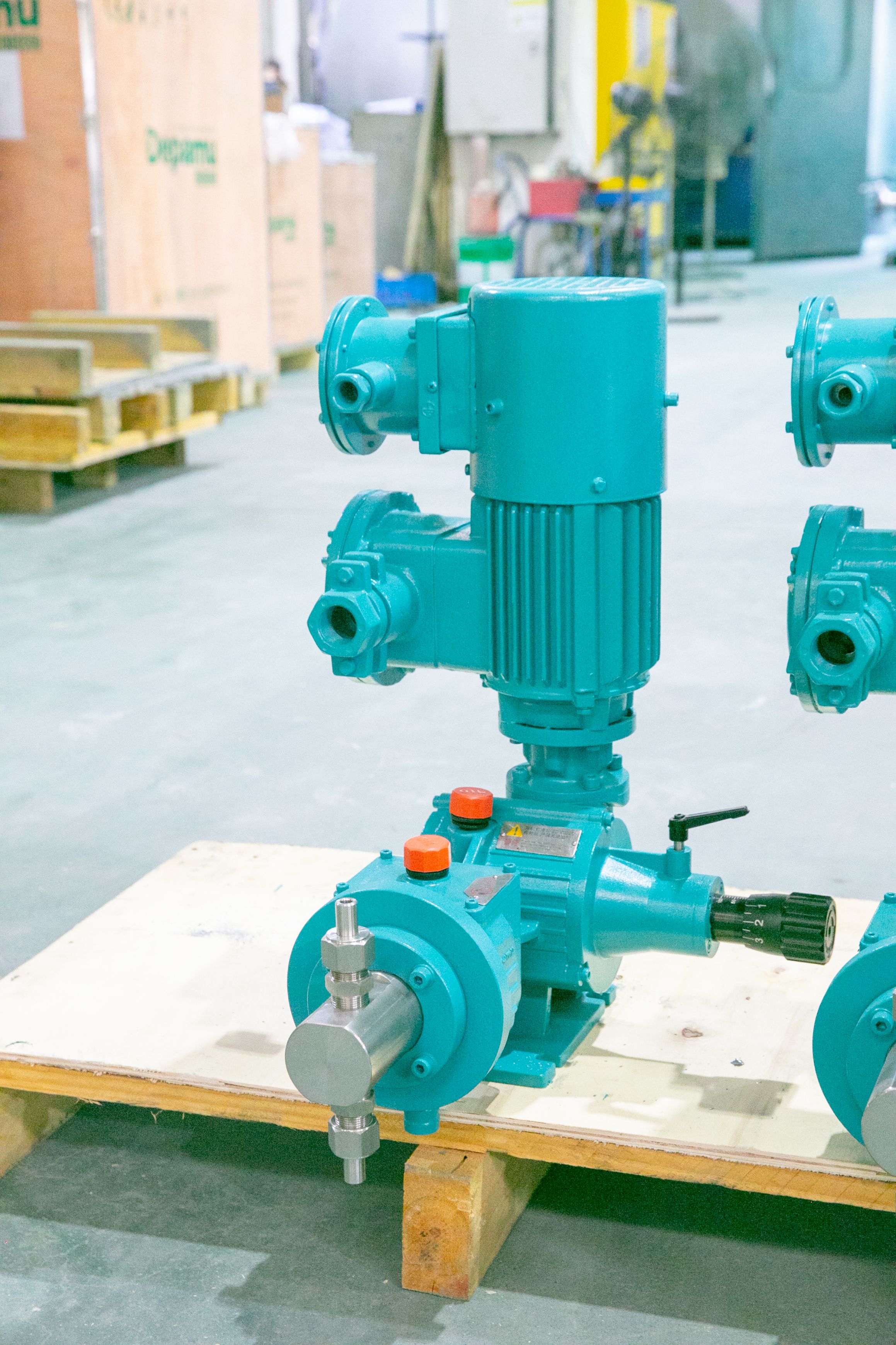
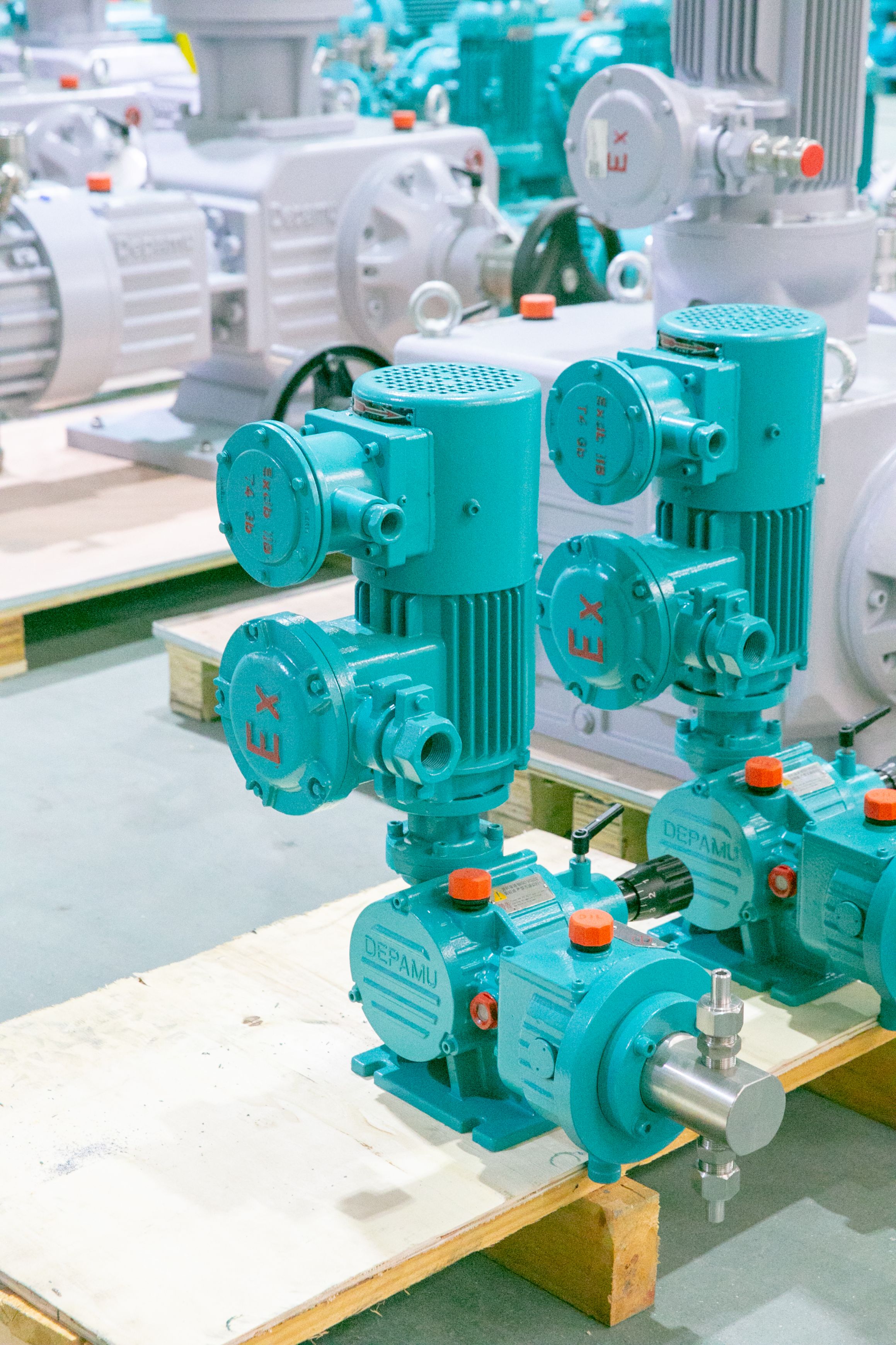
Typical application scenarios (illustrative only; not real customers; no quantitative data):A chemical dosing station needs to continuously convey a corrosive medium containing a small amount of particles, and the back pressure varies with the liquid level in the downstream reactor. During the selection stage, the purchaser should require the supplier to provide material specifications for medium-contact parts, the valve arrangement type, and the packing solution; before shipment, the supplier should be required to complete flow-stroke calibration, pressure holding tests, and continuous operation records; at delivery, the nameplate parameters, spare parts list, maintenance manual, and training records should be checked. The verification process should not be based on a single flow point but should cover combinations of low, medium, and high strokes and different back pressures, and record leakage, temperature rise, and noise conditions.
Due to the lack of publicly verifiable project data, this article does not provide percentages for efficiency improvement, cost reduction, or schedule shortening. It is recommended that procurement parties verify the following three types of records during acceptance:
The value of the above records lies in turning “whether it can be used” into a verifiable chain of evidence, rather than relying on verbal promises.
For overseas procurement decision-makers, the evaluation of plunger metering pumps should place operating conditions, documentation, and services in the same table. The following 5-step framework can be used for inquiries, technical clarifications, and contract attachments.
| Checklist item | Content to be confirmed | Acceptance documents |
|---|---|---|
| Medium and Operating Conditions | Viscosity, temperature, solids content, corrosiveness, back pressure range | Selection Calculation Report, Material Specification |
| Flow and Pressure | Design flow rate, stroke range, back pressure fluctuation, pipeline losses | Flow-stroke curve, pressure maintenance record |
| Sealing and Valve Groups | Packing type, ball and seat material, flushing scheme | Material Certificate, Leak Test Record |
| Service and Spare Parts | Response time limit, wear part prices, replacement cycle | Spare parts list, maintenance manual, training records |
Core principles:Operating conditions first, model second; acceptance first, price second; traceability first, commitment second. For any supplier, require them to answer "how to prove it" with documents and test records, rather than merely answering "it can be achieved."
Q1: How should certifications be prioritized for overseas procurement?
A1: First confirm the mandatory requirements for the region where the product will be used (e.g., EU CE-related directives), then verify whether the quality management system complies with ISO 9001, and finally consider industry standards and project specifications (such as API 675 requirements for controlled-volume pumps). Require suppliers to provide certificate numbers, issuing bodies, and scope of application, and specify the acceptance criteria in the contract; do not just look at the logos on promotional materials.
Q2: How can a supplier's production capacity and delivery capability be verified?
A2: Don't just look at catalog specifications. Require the supplier to provide flow-pressure curves for media similar to yours, the stroke adjustment range, and valve block pressure drop data, and arrange factory testing with the actual medium or a simulated medium; at the same time, verify the machining and assembly records of key parts, the list of outsourced components, and the production schedule. Capacity assessment should take into account daily operating hours, maintenance windows, and spare parts replacement cycles.
Q3: What key elements should be specified in after-sales service clauses?
A3: In the contract, specify the response time limit, on-site service scope, warranty scope, spare parts prices, and training arrangements; include the replacement cycles and replacement methods for wear parts such as plungers, packing, valve balls, and valve seats in the annex; for continuous-operation stations, agree on the spare parts safety stock and fault handling process.
Q4: What parameters are required for selecting a plunger-type metering pump?
A4: At minimum, provide the medium name, concentration, viscosity, temperature, solids content, corrosiveness, flow range, back pressure range, continuous or intermittent operation mode, installation environment protection and explosion-proof requirements, and available power supply and signal interfaces. If the medium is prone to crystallization or contains particles, the flushing, filtration, or insulation requirements should also be specified.
Depamu (Hangzhou) Pump Technology Co., Ltd. was founded in 2003 and has more than 400 employees. Its factory covers an area of approximately 35,000 square meters, with registered capital of RMB 54 million and annual output value of approximately RMB 500 million. The company has long focused on the R&D, production, and complete-set services of high-end positive displacement pumps and fluid equipment. Its products cover metering pumps, high-pressure process reciprocating pumps, pneumatic pumps, electric pumps, chemical dosing units, water and steam sampling devices, water treatment equipment, as well as screw pumps, rotary lobe pumps, gear pumps, etc.
The company's products have been applied in fields such as petroleum refining and petrochemicals, oil and gas fields, nuclear industry, power, metallurgy, new energy, environmental water treatment, new materials, and food. Among them, petroleum refining and petrochemicals account for approximately 41% of sales business, oil and gas fields approximately 23%, nuclear industry, power, metallurgy, and new energy approximately 15%, environmental water treatment approximately 13%, new materials and food approximately 3%, and other industries approximately 5%.
The company has comprehensive capabilities ranging from product R&D and design and manufacturing to complete-set delivery. Based on customers' medium properties, flow rate, pressure, temperature, and on-site process requirements, it can provide standard products, non-standard products, and customized fluid solutions. The products are suitable for high-pressure transportation, precise metering, chemical dosing, process pressurization, complex medium transportation, and other scenarios.
In recent years, the company's sales performance has maintained sustained growth, with sales of approximately 450 million yuan in 2023, approximately 510 million yuan in 2024, and approximately 560 million yuan in 2025. If you are evaluating how plunger metering pumps perform, how to establish acceptance criteria, or need a complete chemical dosing solution, you may further review public information and technical documents.
Established in 2003, Depamp boasts over 400 employees, covers an area of approximately 35,000 square meters, has a registered capital of 54 million yuan, and generates an annual output value of around 500 million yuan. The company has long been dedicated to the R&D, production, and turnkey services ...
No. 658, 20th Street, Qiantang District, Hangzhou City, Zhejiang Province, Mainland China