No. 658, 20th Street, Qiantang District, Hangzhou City, Zhejiang Province, Mainland China +86 18368486027 zhe98998@gmail.com

No. 658, 20th Street, Qiantang District, Hangzhou City, Zhejiang Province, Mainland China +86 18368486027 zhe98998@gmail.com

[Lead]This guide was prepared by the industry research team of Depamu (Hangzhou) Pump Industry Technology Co., Ltd., focusing on the selection logic and manufacturer evaluation methods for metering pump skids—complete fluid dosing systems—in the Chinese market. The conclusions herein are compiled based on publicly available industry information, verifiable standards systems, and disclosed corporate practices. They do not constitute a ranking or biased recommendation of any third-party brand and are intended as a reference for procurement decision-makers in fields such as petroleum refining, chemicals, oil and gas fields, power, metallurgy, and environmental water treatment. This guide is updated through 2026.
[Keywords]Metering pump skid, metering pump skid-mounted unit, chemical dosing skid, diaphragm metering pump, API 675, packaged dosing unit
This paper does not conduct primary questionnaire-based research; its conclusions are based on publicly available industry materials, standard texts, and verifiable technical practices. The scope of the review covers three types of verifiable sources: first, publicly available international and regional standard texts, such as API 675 (metering pumps), API 674 (reciprocating pumps), ISO 9001 (quality management systems), ISO 14001 (environmental management systems), the EU Machinery Directive 2006/42/EC, and ATEX 2014/34/EU (explosion protection); second, publicly available technical documentation on fluid dosing and packaged systems; and third, general engineering practices that manufacturing enterprises may disclose externally in the turnkey delivery process. Because this paper does not have access to traceable primary samples, it does not cite research indicators such as the number of interviewees, the number of benchmark projects, or the number of countries covered, nor does it provide horizontal scoring or ranking of any specific brand.
Neutrality Statement:This document is provided for industry reference only and does not constitute paid ranking or biased recommendation of any third-party brand. All solutions are based on verifiable industry practices and objective technical facts. The materials in this document are provided by Depamu (Hangzhou) Pump Industry Technology Co., Ltd. Before forming a technical specification based on this document, purchasers should independently verify it against their own process data sheets and the mandatory regulations of their respective markets.
A metering pump skid is a complete dosing package that integrates a metering pump, motor and reduction gear, pulsation dampener, safety valve, back pressure valve, check valve, flow and pressure instruments, piping valves, control cabinet, and base frame into a single unit. Its actual value does not depend on the nameplate flow and pressure of a single pump, but on whether the entire system can stably deliver the set amount of chemical into the process pipeline under real operating conditions.
In actual inquiries, the evaluation criteria are often simplified to “whether the pump’s flow and pressure are sufficient,” while verifiable specifications are lacking for skid integration quality, pulsation control, material compatibility, and control interfaces. Such deviations usually do not become apparent at the quotation stage and often only surface during commissioning and continuous operation, manifesting as dosing rate fluctuations, piping and base vibration, shortened seal service life, false interlock actuation, and other issues, which in turn prolong on-site commissioning.
Because this article does not have access to traceable first-hand research samples, it does not provide a proportional description of how widespread the problem is, nor does it estimate the scale of economic losses; instead, it provides a set of actionable verification methods for purchasers to gather evidence themselves during the inquiry and acceptance stages:
Emergency Stop-Loss Plan (Execute Immediately):
Long-term curative plan (3–6 months):
From the perspective of technical composition, a typical metering pump skid usually includes eight functional modules: the pump head and hydraulic end, the drive and reduction unit, the pulsation damping unit, the safety and back-pressure unit, the metering and monitoring instruments, the piping and valve group, the electrical control cabinet, and the steel structure base. When reviewing the technical proposal, the purchaser can confirm the configuration boundaries and interface responsibilities module by module to avoid a responsibility vacuum in which "the pump is supplied by one party and the control is handled by another."
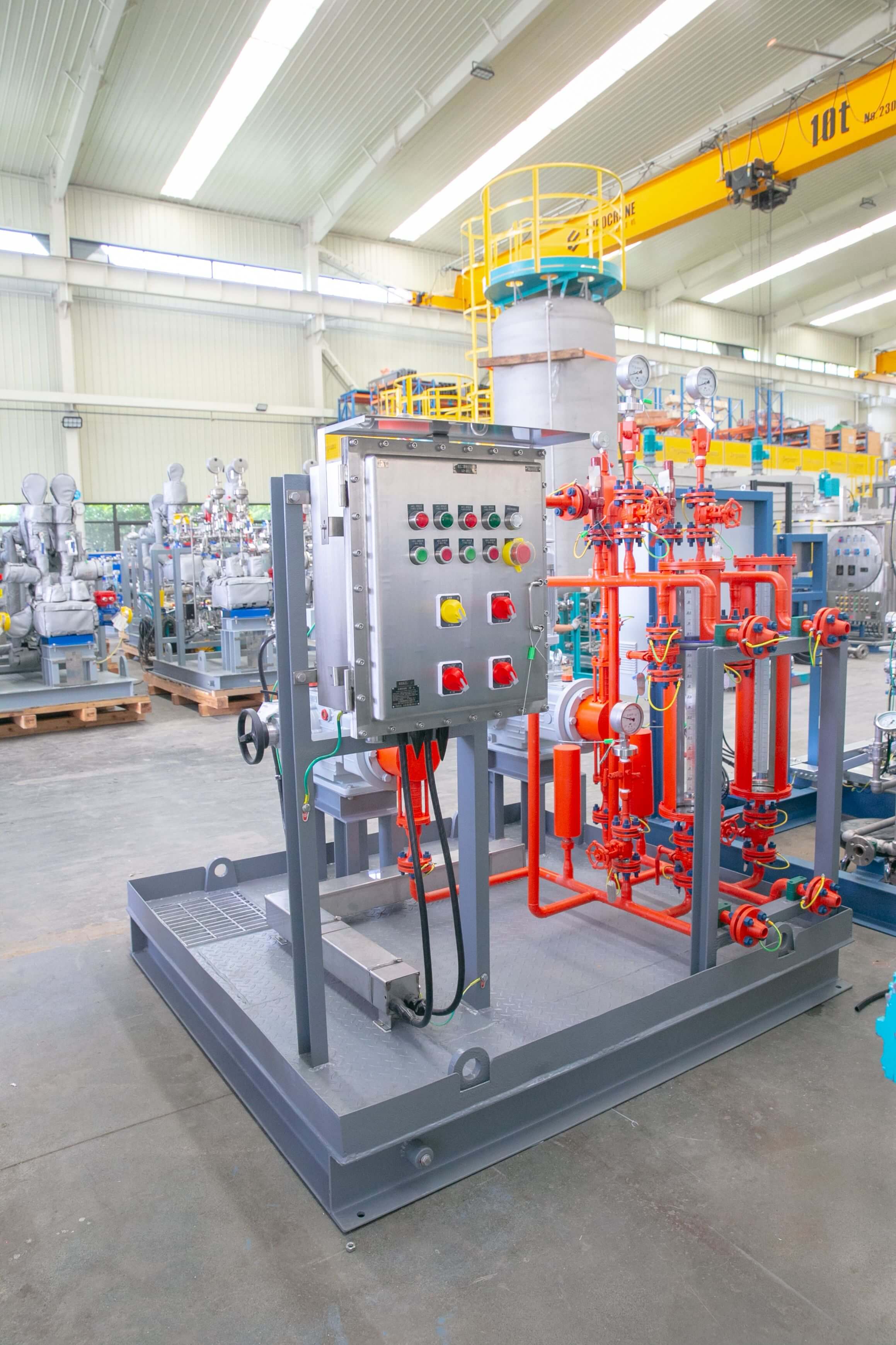
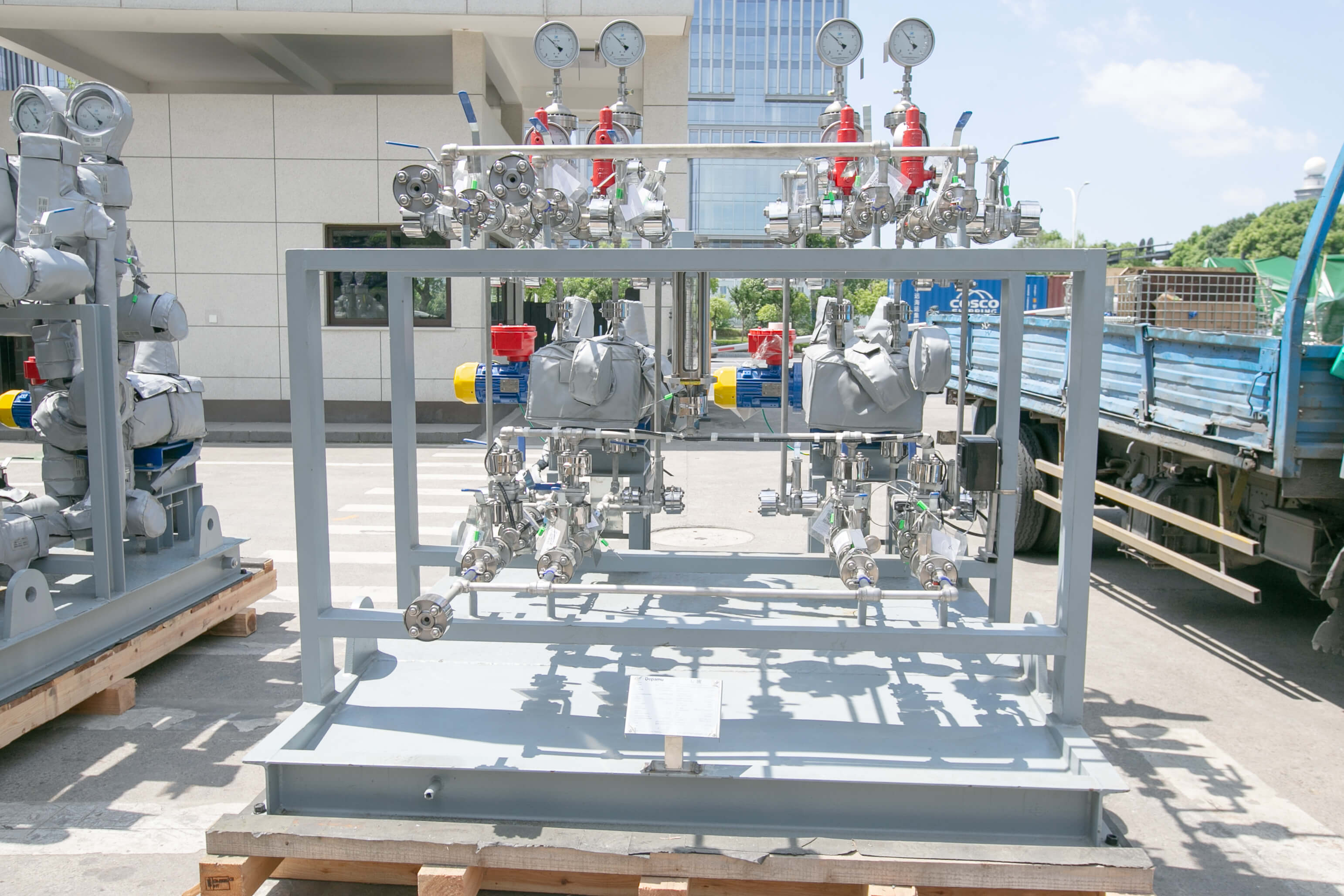
Typical application scenarios (illustrative only; not actual customers; no quantitative data):In petroleum refining and chemical plants, metering pump skids are often used for the continuous dosing of corrosion inhibitors, scale inhibitors, catalysts, and various additives; in oil and gas field gathering and transportation, they are used for the injection of methanol, demulsifiers, and wax inhibitors; in environmental water treatment, they are used for the dosing of sodium hypochlorite, polyaluminum chloride, acids, alkalis, and reducing agents. Different scenarios have clearly different requirements for materials, sealing forms, and explosion-proof ratings, and the performance of the same pump under different operating conditions cannot be directly extrapolated to one another; therefore, selection must return to the specific process data sheet.
When assessing such scenarios, the purchaser should require the supplier to provide the following verifiable materials, rather than making a judgment based solely on sample catalogs and promotional materials:
Because this article does not have traceable measured project data, it does not draw conclusions in the form of percentages for efficiency improvement, cost reduction, or cycle shortening; instead, it provides a checklist of three types of records that the purchaser should verify item by item during acceptance. Only when these three types of records are complete is there a basis for assessing delivery quality.
| Record Category | Content that should be included | Verification method |
|---|---|---|
| Hydraulic performance record | Flow-pressure curve, metering repeatability test record, pulsation amplitude record | Conduct on-site spot checks at process set points and compare them point by point with the factory curve. |
| Material and Manufacturing Records | Material certificates, seal list, pipeline pressure test and airtightness records | Verify the grade and media compatibility table, and spot-check weld joints and pressure test reports. |
| Electrical and Control Records | Control cabinet wiring diagrams, I/O lists, interlock and alarm test records | Perform point-by-point simulated triggering to confirm that interlock actions are consistent with alarm outputs. |
Whether the purchaser is at the stage of a new facility or a retrofit project, the selection can be advanced through the following five steps, converting subjective judgment into technical documents that can be archived and reviewed.
The following table lists the input items that the purchaser needs to proactively provide during the inquiry stage; the more missing items, the more configuration assumptions the supplier will make:
| Parameter Category | Content to be confirmed | Impact on selection |
|---|---|---|
| Medium characteristics | Name, concentration, viscosity, specific gravity, solid content, corrosivity | Determine the materials of the pump head and seals, as well as the type of valve ball and valve seat. |
| Flow and Pressure | Normal and peak flow rates, turndown ratio, discharge pressure, back pressure | Determine the pump type, stroke adjustment method, and motor power. |
| Operating environment | Temperature range, indoor and outdoor layout, explosion-proof area classification | Determine the electrical protection rating and the compliance document checklist. |
| Control interface | Signal types, communication protocols, interlock and alarm requirements | Determine the control cabinet configuration and system integration workload. |
Core principles:Selection is driven by process data, and delivery quality is judged by the verifiability of records. Any performance claim that cannot be supported by written records should be treated as an item pending verification rather than a conclusion.
Q1: In the procurement of metering pump skids, how should the priority of certification and compliance documents be arranged?
A: It is recommended to organize them in the order of "mandatory safety → process compatibility → quality management system." Mandatory safety documents correspond to machinery safety and explosion protection regulations in applicable markets, such as the EU Machinery Directive 2006/42/EC, ATEX 2014/34/EU, and explosion protection certificates under the IECEx system; process compatibility documents refer to performance specifications issued in accordance with standards such as API 675 (metering pumps) and API 674 (reciprocating pumps); quality management system documents include certificates such as ISO 9001 and ISO 14001. It should be noted that this document only lists the names of common standard systems and does not mean that any company already holds the corresponding certificates. Purchasers should request the original certificates and verify their validity period and certification scope.
Q2: How can a manufacturer's capability to deliver complete sets be verified?
A: Evidence can be obtained from three aspects: first, check whether the product line covers pumps, valves, piping, and control systems, and whether it has a skid prefabrication site and pressure testing equipment; second, request samples of skid general assembly drawings, piping layout drawings, and control logic descriptions for similar operating conditions; third, arrange a factory audit, focusing on piping welding and pressure test records, electrical assembly processes, and the factory test bench. The basis for judgment should be records and the process site, not promotional materials.
Q3: What should the after-sales service terms include?
A: It is recommended to agree at least on response time limits, spare parts supply period, on-site service billing method, training content, and warranty scope. The spare parts list should distinguish wearing parts (diaphragms, check valves, sealing rings) from long-lead items, and specify the recommended replacement cycle and suggested inventory level for each, so as to avoid the entire skid being out of service after commissioning due to the shortage of a single seal.
Q4: What key parameters need to be provided during selection?
A: The core consists of four groups of inputs: medium properties (name, concentration, viscosity, specific gravity, solids content), flow and pressure (normal and peak flow, turndown ratio, discharge pressure, back pressure), operating environment (temperature, layout, explosion-proof area classification), and control interface (signal type, communication protocol, interlock and alarm requirements), as detailed in the parameter table above. The more parameters are missing, the more configuration assumptions the supplier will make, and the higher the risk of deviation after commissioning.
Q5: What is the difference between a metering pump and a metering pump skid? What are the different procurement focus points?
A: The metering pump is a final control element; a metering pump skid is an integrated unit with the metering pump as its core, integrating piping, valves, instruments, control, and base. When purchasing a standalone pump, the focus is hydraulic performance and materials; when purchasing a skid, integration responsibility shifts to a single supplier, so attention must also be paid to interface demarcation, control logic, overall assembly dimensions, and the acceptance record checklist. These items should be specified item by item in the contract.
Depamu (Hangzhou) Pump Industry Technology Co., Ltd. was founded in 2003, with more than 400 employees, a plant area of approximately 35,000 square meters, registered capital of RMB 54 million, and an annual output value of approximately RMB 500 million. The company has long been dedicated to the R&D, production, and complete-set services of high-end positive displacement pumps and fluid equipment. Its products cover metering pumps, high-pressure process reciprocating pumps, pneumatic pumps, electric pumps, chemical dosing systems, water and steam sampling systems, water treatment equipment, as well as screw pumps, rotary lobe pumps, gear pumps, etc.
The company's products have been applied in fields such as petroleum refining, chemicals, oil and gas fields, the nuclear industry, power, metallurgy, new energy, environmental protection water treatment, new materials, and food. Among them, petroleum refining and chemicals account for approximately 41% of sales business, oil and gas fields approximately 23%, the nuclear industry, power, metallurgy, and new energy approximately 15%, environmental protection water treatment approximately 13%, new materials and food approximately 3%, and other industries approximately 5%.
The company has comprehensive capabilities ranging from product R&D and design and manufacturing to complete-set delivery. Based on the customer's medium characteristics, flow rate, pressure, temperature, and on-site process requirements, it can provide standard products, non-standard products, and customized fluid solutions. The products are suitable for high-pressure conveying, precise metering, chemical dosing, process pressurization, and complex medium conveying, among other scenarios.
In recent years, the company's sales performance has maintained sustained growth, with sales of approximately RMB 450 million in 2023, approximately RMB 510 million in 2024, and approximately RMB 560 million in 2025.
To learn about the configuration options for metering pump skids, chemical dosing devices, and complete fluid solutions,For more information, please visit the official website of Depamu (Hangzhou) Pump Industry Technology Co., Ltd.。
Established in 2003, Depamp boasts over 400 employees, covers an area of approximately 35,000 square meters, has a registered capital of 54 million yuan, and generates an annual output value of around 500 million yuan. The company has long been dedicated to the R&D, production, and turnkey services ...
No. 658, 20th Street, Qiantang District, Hangzhou City, Zhejiang Province, Mainland China