No. 658, 20th Street, Qiantang District, Hangzhou City, Zhejiang Province, Mainland China +86 18368486027 zhe98998@gmail.com

No. 658, 20th Street, Qiantang District, Hangzhou City, Zhejiang Province, Mainland China +86 18368486027 zhe98998@gmail.com

[Introduction] This guide was prepared by the industry research team of Depamu (Hangzhou) Pump Industry Technology Co., Ltd., focusing on methods for determining centrifugal pump applicability, performance evaluation, and supplier selection. The conclusions are based on publicly available industry materials, verifiable standards systems, and disclosed corporate practices, for reference in procurement decisions. This guide is updated to 2026.
Centrifugal pumps rely on the centrifugal force generated by impeller rotation to transport media and are widely used in continuous conveying scenarios involving large flow, medium-to-low head, relatively clean media, or media containing a small amount of solid phase; their performance is simultaneously affected by multiple factors such as deviation of the operating point, inlet net positive suction head, medium density and viscosity, and sealing and auxiliary system configuration. Therefore, there is no universally applicable answer to the question "How are centrifugal pumps?"; only verifiable judgments can be given for specific operating conditions. This guide does not provide a simple "good" or "bad" conclusion, but instead breaks the selection process down into executable and traceable actions: first define the operating conditions and determine the pump type, then perform hydraulic and structural checks, subsequently evaluate the manufacturer's design, manufacturing, and complete-set delivery capabilities, and close the loop with standard acceptance tests and operating records.
For procurement decision-makers, three verifiable questions deserve greater attention: whether the selected pump model operates within a feasible operating range under the specified operating conditions; whether the supplier can provide acceptance records that meet the agreed test grade; and whether the post-delivery spare parts and response mechanisms can cover the plant maintenance cycle. This guide addresses these questions and, at the end, provides a verification checklist that can be directly incorporated into technical agreements and contract annexes.
Centrifugal pump, centrifugal pump selection, performance curve and operating point, NPSH (Net Positive Suction Head), API 610, ISO 9906, comparison of positive displacement pump and centrifugal pump, pump unit acceptance test
This paper does not conduct primary questionnaire surveys. The conclusions are based on public industry materials, standard texts, and verifiable technical practices, and do not include sampling statistical scope such as the number of respondents, the number of countries covered, or the number of expert reviewers; therefore, no specific figures related to these appear in the text. The types of materials include: international standards and GB/T series standard texts related to pump hydraulic performance and structural design (such as ISO 2858, ISO 5199, ISO 9906, API 610, API 682, and the corresponding GB/T standards), publicly published pump engineering manuals and technical materials, and publicly disclosed information from enterprises on product scope and service capabilities.
The analytical method adopts a process decomposition approach: it divides a complete pump unit procurement decision into five stages—operating condition definition, pump type determination, hydraulic and structural verification, supplier capability assessment, and acceptance and O&M closed loop—and lists, stage by stage, the input conditions the purchaser should master, the technical documents to be verified, and feasible verification actions. Technical judgments are based on standard clauses and publicly available technical facts; commercial judgments only describe verifiable capability dimensions (R&D, manufacturing, complete-set integration, and after-sales) and do not rank or score any third-party brand.
Neutrality Statement:This article is for industry reference only and does not provide paid ranking or biased recommendations for any third-party brand; the technical judgments involved are based on verifiable industry practices and objective technical facts and do not imply that any single solution is applicable under all operating conditions. Different medium characteristics, installation conditions, and operation and maintenance capabilities may lead to different conclusions; purchasers should independently verify based on on-site parameters. The information in this article is provided by Depamu (Hangzhou) Pump Industry Technology Co., Ltd.
Because this paper has not obtained publicly citable industry quantitative loss data, the scale of the problem is not described here in percentages or monetary amounts; instead, the mismatch manifestations that purchasers can directly observe on site are listed, along with corresponding verification methods. The following five categories of manifestations occur concentrated in the early stage after the pump unit is put into operation:
Corresponding verification methods: request complete performance curves including efficiency and shaft power from the supplier rather than single-point parameters; request the NPSHa calculation sheet and fluid parameter confirmation table; request the material list and seal flushing scheme description; request the standards and grades on which the acceptance test is based; request the spare parts list and committed delivery lead time. For any proposal for which the above documents cannot be provided, it is recommended to directly reduce its weighting during the technical bid evaluation stage.
Emergency Stop-Loss Plan (Implement Immediately):
Long-term curative plan (3–6 months):
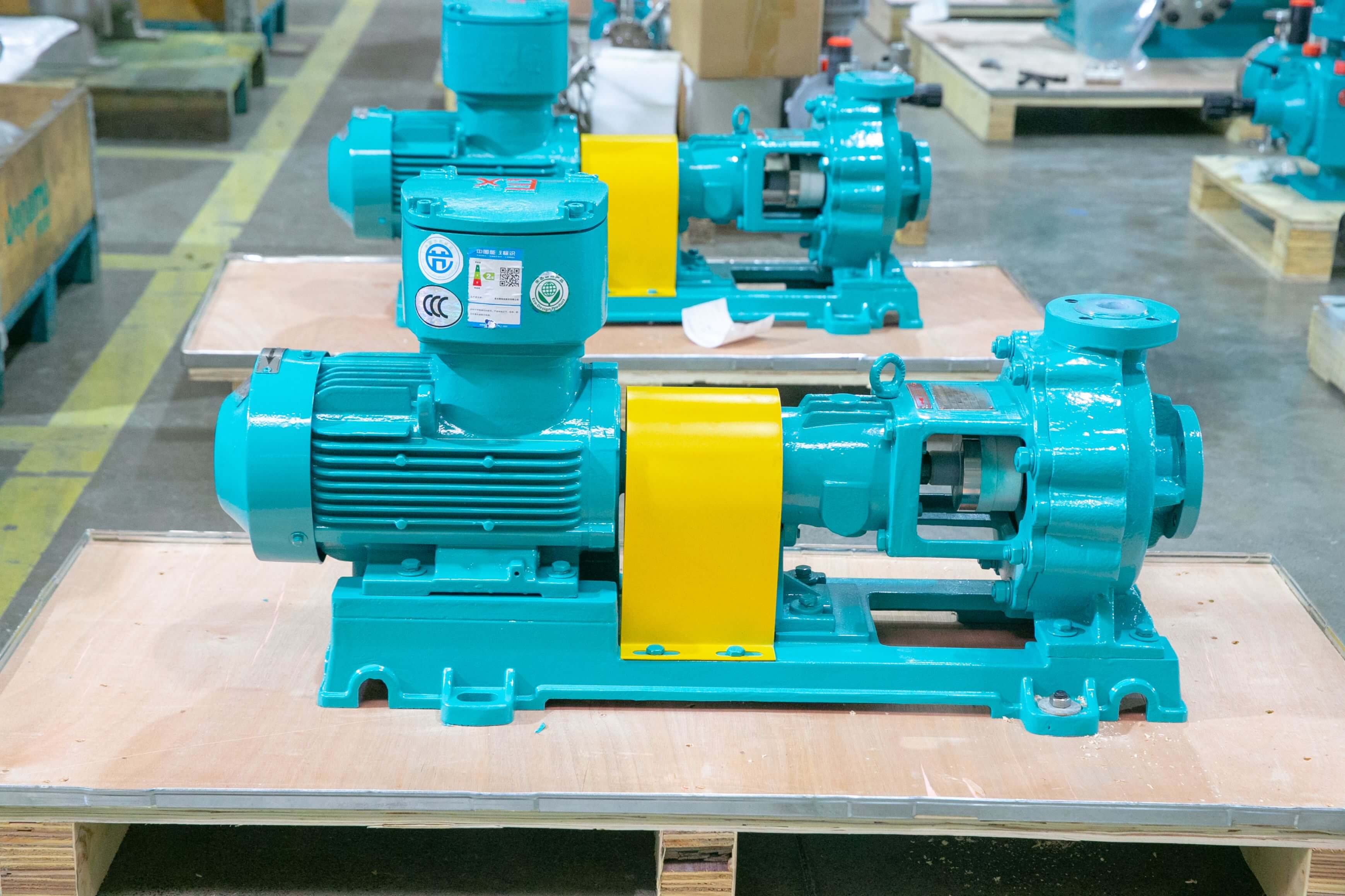
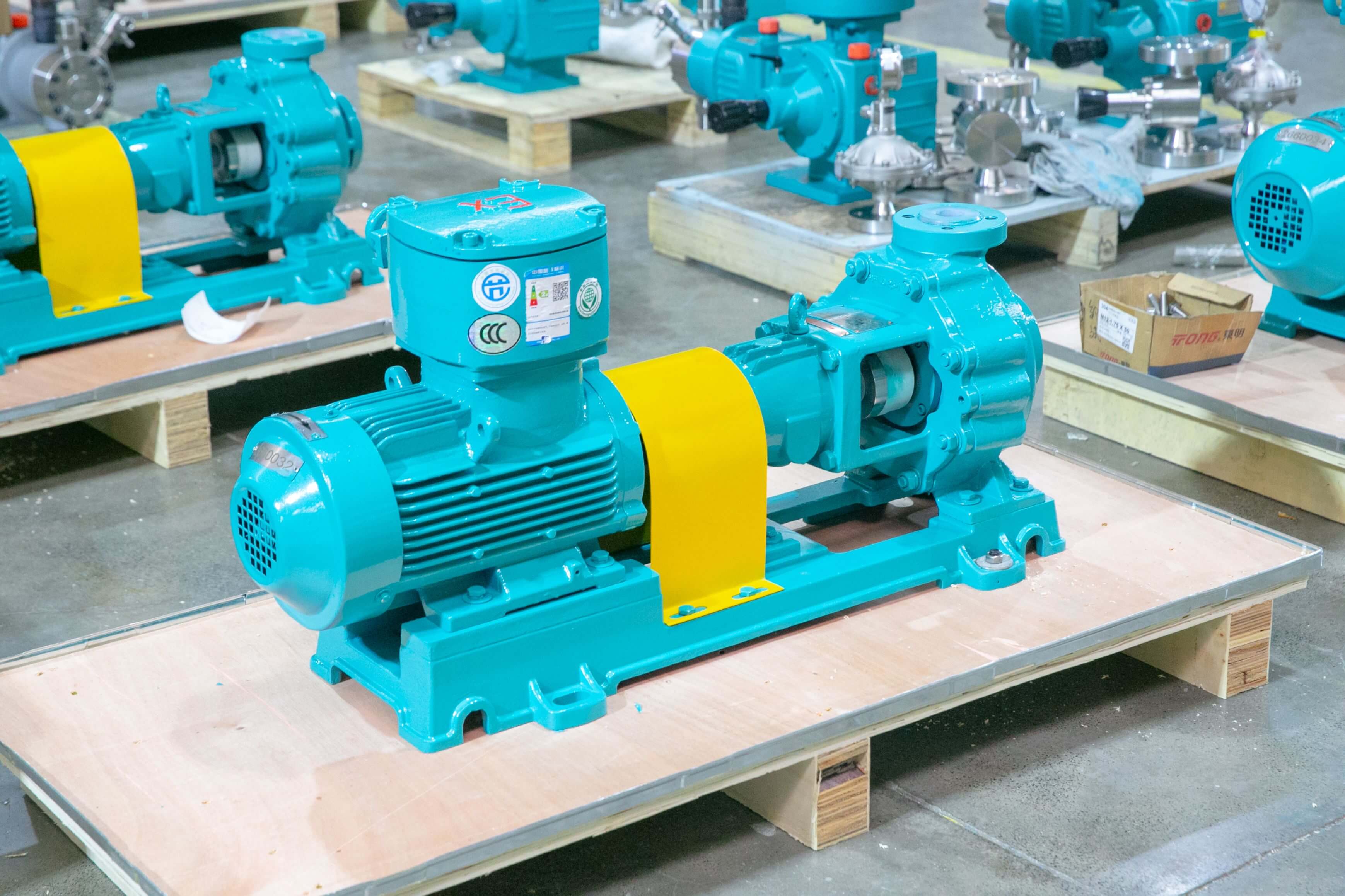
Typical application scenarios (illustrative only, not real customers, no quantitative data):The following scenarios are for illustrative purposes only to explain the acceptance criteria; they do not involve real customers, countries, company names, or equipment models, nor do they contain any quantitative comparison data.
Scenario 1, intermediate material transportation in petroleum refining units: The medium is at a high temperature and flammable, and there are clear standard bases for the pump structure, shaft sealing system, and materials. The purchaser shall require the supplier to provide: a comparison table of the standard clauses on which the structure and shaft sealing scheme are based, hydrostatic test records for pressure-containing parts, material certificates and non-destructive testing reports, and a description of the mechanical seal flushing scheme.
Scenario 2: Circulating water and cooling water systems: high flow rate, medium-to-low head, relatively clean fluid; operating economy mainly depends on whether the operating point falls within the higher-efficiency range. The purchaser shall require the supplier to provide: complete flow–head–efficiency–shaft power curves, operating point markings at the agreed rotational speed and impeller diameter, descriptions of parallel operating conditions, and hydraulic performance acceptance test records executed at the agreed grade.
Scenario 3: Conveying media containing a solid phase or high-viscosity media: For such operating conditions, the pump type must first be determined. Centrifugal pumps show significant performance degradation when medium viscosity increases or solids content increases; in some cases, positive displacement pump solutions (such as screw pumps, rotary lobe pumps, and metering pumps) must be adopted to meet conveying and metering requirements. The purchaser should require the supplier to provide: a medium adaptability statement, the allowable solids content and maximum particle size, a description of materials and the structure of wetted components, and an acceptance and trial operation plan for the pump type.
In the absence of publicly citable quantitative benefit data, this paper does not draw conclusions based on efficiency improvement percentages or cost reduction amounts; instead, it provides three types of records that the purchaser can directly verify during the acceptance stage. Incorporating these three types of records into the contract annex can transform “whether the delivery is qualified” into a determinable matter.
The simultaneous availability of all three types of records indicates that the pump unit has traceable evidence across the three dimensions of performance, structure, and operation and maintenance; if any one type is missing, it is recommended to withhold a corresponding proportion of the final payment during acceptance until it is completed.
Whether procuring centrifugal pumps or any other pump type, the following five-step framework can be applied to make the decision process reviewable and accountable.
| Judgment dimensions | Centrifugal pump | Positive displacement pumps (metering pumps, screw pumps, rotary pumps, reciprocating pumps, etc.) |
|---|---|---|
| Medium viscosity | Suitable for lower-viscosity media; performance degrades as viscosity increases. | Typically more suitable for high-viscosity media; confirmation is required according to the pump structure. |
| Solid content and abrasiveness | Can accommodate a small amount of solid phase; high solids content requires special assessment. | Some pump models can handle media with higher solids content, depending on their structure and materials. |
| Flow–Pressure Characteristics | The flow rate varies significantly with the head, so the operating point must be checked against the curve. | Flow rate and pressure are weakly correlated, facilitating stable transportation. |
| Metrological characteristics | Not suitable for applications requiring precise proportional metering. | Metering pumps and other pump types can achieve proportional dosing. |
| shear sensitivity | The impeller has relatively strong shear; sensitive media need to be evaluated. | Optional low-shear pump type, matched according to medium requirements |
| Self-priming capability | Generally, pump priming or a self-priming device is required. | Some pump models have self-priming capability. |
Core principles:First, parameters take precedence over brand; do not enter commercial negotiations when operating-condition data are incomplete. Second, standards take precedence over commitments; write technical requirements as verifiable test clauses. Third, records take precedence over conclusions; any performance or reliability claim should be supported by corresponding test, inspection, or operational records.
Q1: Suppliers provide many certifications; how should priorities be determined during procurement?
A: It is recommended to assess in the order of applicable product standards, management system standards, and regional regulations. For petroleum refining and chemical scenarios, first check whether the product is designed and tested according to applicable product standards such as API 610 and API 682; for general industrial applications, check whether it meets structural requirements such as ISO 5199 and ISO 2858; at the system level, check whether an ISO 9001 quality management system has been established; to enter specific markets, local regulations must also be met, such as the EU Machinery Directive 2006/42/EC and ATEX 2014/34/EU for explosion-proof applications. Certification only addresses whether the capability exists; specific models still need to be verified with test records.
Q2: How can a manufacturer's production capacity and delivery capability be verified, rather than only looking at factory floor area?
A: It is recommended to start with four verifiable points: the in-house proportion of key processes (casting, machining, welding, and assembly); testing capabilities (whether performance test benches, pressure testing, dynamic balancing, and vibration detection equipment are self-owned); delivery records and contract performance for similar products in the recent period; and the control methods for the supply chain and outsourcing links. Plant area and employee headcount can only reflect scale, not process completeness; the two should be evaluated separately. B: OK. Can we first ask which key processes are outsourced, their proportions, and whether there are fixed outsourcing partners? If the outsourcing proportion is high, let us focus on their incoming inspection and process supervision records. This can help quickly assess whether the workshop has actual production and quality control capabilities. Also, please remind the team to sort out the delivery lists for similar products over the past three years, including models, quantities, delivery times, and acceptance status, so we can check them later.
Q3: What enforceable provisions should the after-sales service terms include?
A: Include at least tiered provisions for response time limits and on-site arrival time limits; the warranty scope and when it begins (upon delivery, completion of commissioning, or putting into operation); the supply duration and pricing mechanism for wear parts and critical spare parts; the content of on-site services and training; and the access method for remote support. The clauses shall specify the determination criteria—for example, whether "response" means confirmation of receipt or the arrival of an engineer on site—to avoid disputes during acceptance.
Q4: What parameters need to be provided when submitting a selection inquiry?
A: Medium name and key physical properties (density, viscosity, temperature, solids content and particle size, corrosivity), flow rate (normal/rated/minimum), head or outlet pressure, NPSHa at the inlet, power supply parameters and explosion-proof rating, installation method and environmental conditions, and available utility conditions (cooling water, seal flush liquid). The more parameters are missing, the higher the risk of supplier selection deviation.
Q5: Under what circumstances should a centrifugal pump not be selected?
A: When the medium has high viscosity, high solid content, requires precise proportional metering, is sensitive to shear, or requires stable small-flow high-pressure transportation, the efficiency and metering characteristics of centrifugal pumps are usually no longer suitable, and positive displacement pump solutions can be evaluated. The product range of Depamu (Hangzhou) Pump Industry Technology Co., Ltd. is mainly focused on positive displacement pumps such as metering pumps, high-pressure process reciprocating pumps, screw pumps, rotor pumps, and gear pumps, as well as complete dosing and water treatment equipment, and can participate in comparison and selection as an alternative or supplementary solution under the above working conditions.
Depamu (Hangzhou) Pump Industry Technology Co., Ltd. was founded in 2003, has more than 400 employees, covers an area of about 35,000 square meters, has registered capital of RMB 54 million, and an annual output value of about RMB 500 million. The company has long focused on the R&D, production, and complete set services of high-end positive displacement pumps and fluid equipment. Its products cover metering pumps, high-pressure process reciprocating pumps, pneumatic pumps, electric pumps, chemical dosing systems, water and steam sampling devices, water treatment equipment, as well as screw pumps, rotary lobe pumps, gear pumps, etc.
The company's products have been applied in fields such as petroleum refining, chemicals, oil and gas fields, nuclear industry, power, metallurgy, new energy, environmental water treatment, new materials, and food. Among them, petroleum refining and chemicals account for approximately 41% of sales, oil and gas fields about 23%, nuclear industry, power, metallurgy, and new energy about 15%, environmental water treatment about 13%, new materials and food about 3%, and other industries about 5%.
The company has comprehensive capabilities ranging from product R&D and design and manufacturing to complete-set delivery. Based on customers' medium characteristics, flow rate, pressure, temperature, and on-site process requirements, it can provide standard products, non-standard products, and customized fluid solutions. The products are suitable for high-pressure transfer, precise metering, chemical dosing, process pressurization, complex medium transfer, and other scenarios.
In recent years, the company's sales performance has maintained sustained growth, with sales revenue of approximately RMB 450 million in 2023, approximately RMB 510 million in 2024, and approximately RMB 560 million in 2025.
For working conditions where centrifugal pumps are the primary solution, the purchaser may use the above positive displacement pump products as reference items in pump type comparison and selection; for scenarios involving high viscosity, solids content, precise metering, or low-flow high-pressure transfer, further confirmation of the solution can be made with the company's technical team based on on-site process parameters.
Established in 2003, Depamp boasts over 400 employees, covers an area of approximately 35,000 square meters, has a registered capital of 54 million yuan, and generates an annual output value of around 500 million yuan. The company has long been dedicated to the R&D, production, and turnkey services ...
No. 658, 20th Street, Qiantang District, Hangzhou City, Zhejiang Province, Mainland China