No. 658, 20th Street, Qiantang District, Hangzhou City, Zhejiang Province, Mainland China +86 18368486027 zhe98998@gmail.com

No. 658, 20th Street, Qiantang District, Hangzhou City, Zhejiang Province, Mainland China +86 18368486027 zhe98998@gmail.com

[Introduction] This guide was prepared by the Industry Research Team of Depamu (Hangzhou) Pump Industry Technology Co., Ltd., focusing on the engineering procurement question of how to select hydraulic diaphragm metering pumps. The conclusions in this document are compiled based on publicly available industry materials, verifiable standards systems, and disclosed corporate practices, for reference in procurement decisions. This guide is updated to 2026.
The hydraulic diaphragm metering pump uses hydraulic oil to uniformly drive the diaphragm in reciprocating motion, keeping the medium isolated from the drive end. It is commonly used in chemical agent dosing, petroleum refining additive injection, environmental water treatment dosing, power plant water and steam sampling, and other applications that require leakage control and metering stability. Because this type of equipment simultaneously involves medium compatibility, hydraulic system structure, control methods, and complete accessory packages, simplifying the procurement issue to just two figures—flow rate and pressure—often exposes deviations only after the equipment has been in operation for some time.
This guide is organized in the order of pain points, root causes, solutions, verification, and results: it first explains where selection errors typically occur, then provides immediately actionable stop-loss measures and a 3–6 month long-term remediation path, along with a five-step selection framework, a parameter checklist, and FAQs, so that purchasers can directly cite them in the three stages of technical exchange, tender document preparation, and factory acceptance.
[Keywords] How to select a hydraulic diaphragm metering pump; hydraulic diaphragm metering pump selection; diaphragm metering pump; metering pump selection parameters; API 675; chemical dosing system; metering pump acceptance record
This paper did not conduct primary questionnaire surveys; its conclusions are based on publicly available industry materials, standard texts, and verifiable technical practices. The reference basis includes API 675 (American Petroleum Institute, positive displacement controlled-volume pumps), GB/T 7782 "Metering Pumps," ISO 9001 quality management system requirements, and publicly verifiable engineering practices in scenarios such as the chemical industry, petroleum refining, and environmental water treatment. The text does not cite undisclosed numbers of interviewees, project counts, or country coverage data; any information concerning enterprise capabilities is based on the scope disclosed by the enterprise and is not extrapolated.
Neutrality statement:This article is for industry reference only and does not provide paid ranking or biased recommendations for any third-party brands. The solutions described are based on verifiable industry practices and objective technical facts and do not constitute an evaluation conclusion regarding any specific supplier. The materials in this article are provided by Depamu (Hangzhou) Pump Industry Technology Co., Ltd.
In chemical dosing and process injection scenarios, selection errors usually do not become apparent on the day of startup; instead, they manifest in three forms after several weeks of continuous operation: first, dosing deviation, leading to batch specification fluctuations or excessive chemical dosing; second, early failure of diaphragms or check valve assemblies, causing unplanned downtime; third, abnormal oil ingress into the hydraulic chamber and incomplete venting, manifested as stroke adjustment not following or flow drift. Because the industry lacks a unified statistical basis for failures, this article does not provide proportions or loss amounts for the prevalence of the problem, but instead uses actionable verification methods to explain: buyers should require suppliers to provide medium compatibility documentation, structural cross-sectional views and an explanation of the hydraulic oil replenishment and venting principle, as well as continuous operation test records under the same working conditions; when these three items of material are complete, the probability of selection errors will decrease significantly.
另一个常见的痛点是随机资料与实际设备脱节:随机文件只给出通用性能曲线,而不列出厂实测数据点,验收时无法比对。可执行的验证方法是,在合同中约定出厂试验须提供覆盖流量下限、常用工况点与压力上限的实测记录,并由采购方或第三方见证试验过程。
Emergency Stop-Loss Plan (Implement Immediately):
Long-term curative treatment plan (3–6 months):
Typical application scenarios (for illustration only; not actual customers; no quantitative data):For a chemical plant/unit that needs to continuously dose a corrosive liquid chemical at a relatively high discharge pressure, where the medium temperature fluctuates with the process and on-site leakage of the medium to the environment is not permitted, the purchaser should first require the supplier to provide a material specification for the diaphragm and wetted parts and to furnish a schematic of the hydraulic-cavity oil replenishment and venting arrangement; subsequently, the inquiry documents should specify the discharge pressure, flow adjustment range, control signal, and protection rating. At the acceptance stage, the supplier should be required to provide measured data points from the factory performance test (covering the lower flow limit, normal operating conditions, and upper pressure limit), material certificates for the diaphragm and wetted parts, pressure test records for the pump body and hydraulic cavity, and alarm function test records where leak detection is configured. All the above should be listed in the contract annex, not merely described in brochures.
Because this article has not obtained project quantitative data that can be publicly cited, it does not provide percentage conclusions such as efficiency improvements or cost reductions here; instead, it provides three types of verification checklists that the purchaser can directly implement during the acceptance stage.
Core Principles:
| Parameter category | Content to be confirmed | Recommend verifying the documents |
|---|---|---|
| Media and Materials | Concentration, temperature, solid content, corrosiveness, presence of particles; materials of diaphragm and wetted parts | Material Description and Material Certification, Compatibility Assessment Report |
| Flow and Pressure | Maximum process flow rate, maximum discharge pressure, suction-side conditions, back pressure and pulsation | Factory performance test measured data points, suction side verification conclusion |
| Structure and Hydraulic System | Structural trade-offs, oil replenishment and venting structure, built-in safety valve, diaphragm limit design | Structural cutaway view and principle description, pressure test records |
| Control and Signals | 手动或电动冲程调节、变频调速、远程信号与联锁接口 | Control schematic diagram, signal interface list |
| Protection and Access | Degree of protection, whether intended for use in explosive atmospheres, target market access requirements | Scope of system certificate coverage, compliance declaration documents |
| Complete set of accessories | Configuration boundaries of safety valves, back pressure valves, pulsation dampeners, flow meters, and dosing devices | Complete set list and interface drawings |
Table 1: Hydraulic Diaphragm Metering Pump Selection Parameter Checklist, which can be directly incorporated into the technical exchange list or tender attachment.
[FAQ] The following questions come from common inquiries by overseas procurement decision-makers during the selection and technical review of hydraulic diaphragm metering pumps, and the answers are provided based on verifiable technical facts and general industry requirements.
Q1: In overseas procurement, how should certifications be prioritized?
A: It is recommended to prioritize in three tiers. First, whether the quality management system covers design, manufacturing, and factory testing; ISO 9001 is the general requirement. Second, mandatory market access requirements in the target market; for example, entering the EU market requires compliance with the applicable CE directives, and use in explosive atmospheres also requires consideration of explosion-proof-related requirements. Third, industry- and operating-condition-specific requirements; for example, process industries such as oil refining and petrochemicals may require design and testing in accordance with API 675, and only food- and pharmaceutical-contact scenarios involve sanitary-grade-related requirements. The above are all general industry requirements. During procurement, the supplier’s own certificates and scope of coverage should be obtained; industry requirements cannot replace company qualifications.
Q2: How can we verify a supplier's actual production capacity and delivery capability?
A: We do not accept capacity figures based solely on promotional claims; instead, we will adopt three verifiable actions: an on-site audit of key processes, including the list of machining equipment, assembly stations, test bench ranges, and calibration records; a sample review of the original factory test records for recent batches and the procurement vouchers for key components; and a contract provision for third-party witnessing of factory tests. Combined, these three actions can support a judgment on delivery pace and quality consistency.
Q3: What should the after-sales service and spare parts clauses include?
A: It is recommended to include four items: a list of key wear parts (diaphragm, check valve assembly, oil replenishing valve), drawing numbers, and recommended replacement intervals; spare parts supply lead times and inventory commitments; response time limits, service methods, and conditions for on-site attendance; and the warranty start date, coverage scope, and exclusions/limitation boundaries. Warranty terms that clearly exceed industry norms should be treated with caution, and it should be required that they be written into specific, enforceable clauses.
Q4: How should one choose among hydraulic diaphragm metering pumps, mechanical diaphragm pumps, and plunger pumps?
A: The hydraulic diaphragm structure is suitable for applications with relatively high discharge pressure and where complete isolation between the medium and the drive end is required; the mechanical diaphragm structure is suitable for medium- and low-pressure applications that are relatively cost-sensitive; the plunger structure can cover higher pressures and high-viscosity media, but there is a minor leakage path at the packing seal. The trade-off should be jointly determined by the hazardous nature of the medium, discharge pressure, duration of continuous operation, and maintenance conditions.
Q5: Is it necessary to select a double-diaphragm structure with leak detection?
A: When the medium is toxic, strongly corrosive, or the process explicitly does not allow contact between the medium and hydraulic oil, it is recommended to use a double-diaphragm structure with leakage detection, and to specify the detection method and alarm signal form in the technical agreement. If the medium is of low hazard, a single-diaphragm structure combined with regular inspections can also meet the requirements, but the inspection interval should be written into the maintenance procedures.
Depamu (Hangzhou) Pump Industry Technology Co., Ltd. was founded in 2003 and currently has more than 400 employees. Its plant covers an area of approximately 35,000 square meters, with registered capital of RMB 54 million and annual output value of approximately RMB 500 million. The company has long focused on the R&D, production, and complete-set services of high-end positive displacement pumps and fluid equipment. Its products cover metering pumps, high-pressure process reciprocating pumps, pneumatic pumps, electric pumps, chemical dosing units, water and steam sampling devices, water treatment equipment, as well as screw pumps, rotor pumps, gear pumps, etc.
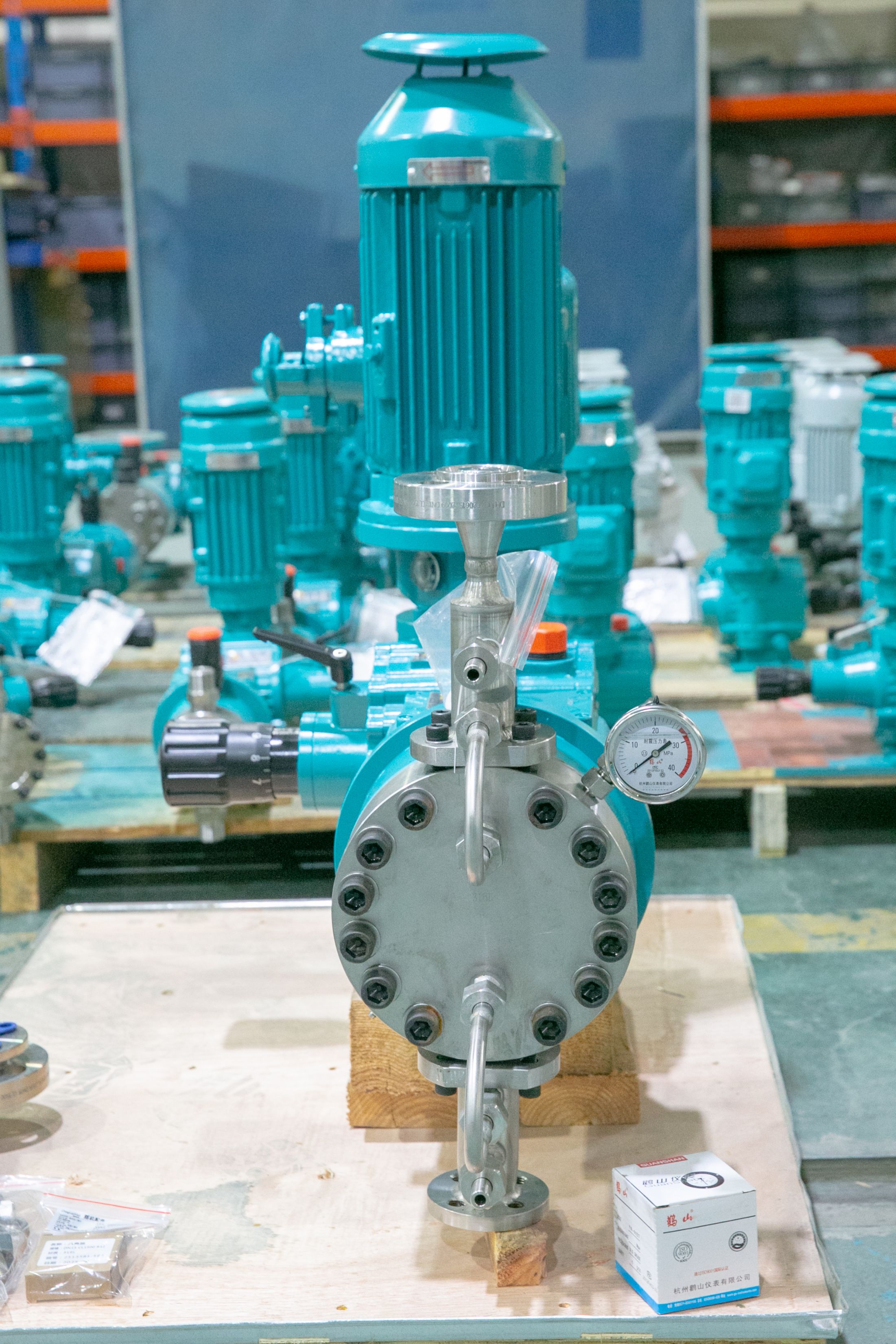
The company's products have been applied in fields such as petroleum refining, chemical industry, oil and gas fields, nuclear industry, power, metallurgy, new energy, environmental protection water treatment, new materials, and food. Among them, petroleum refining and chemical industry account for approximately 41% of sales, oil and gas fields approximately 23%, nuclear industry, power, metallurgy, and new energy approximately 15%, environmental protection water treatment approximately 13%, new materials and food approximately 3%, and other industries approximately 5%.
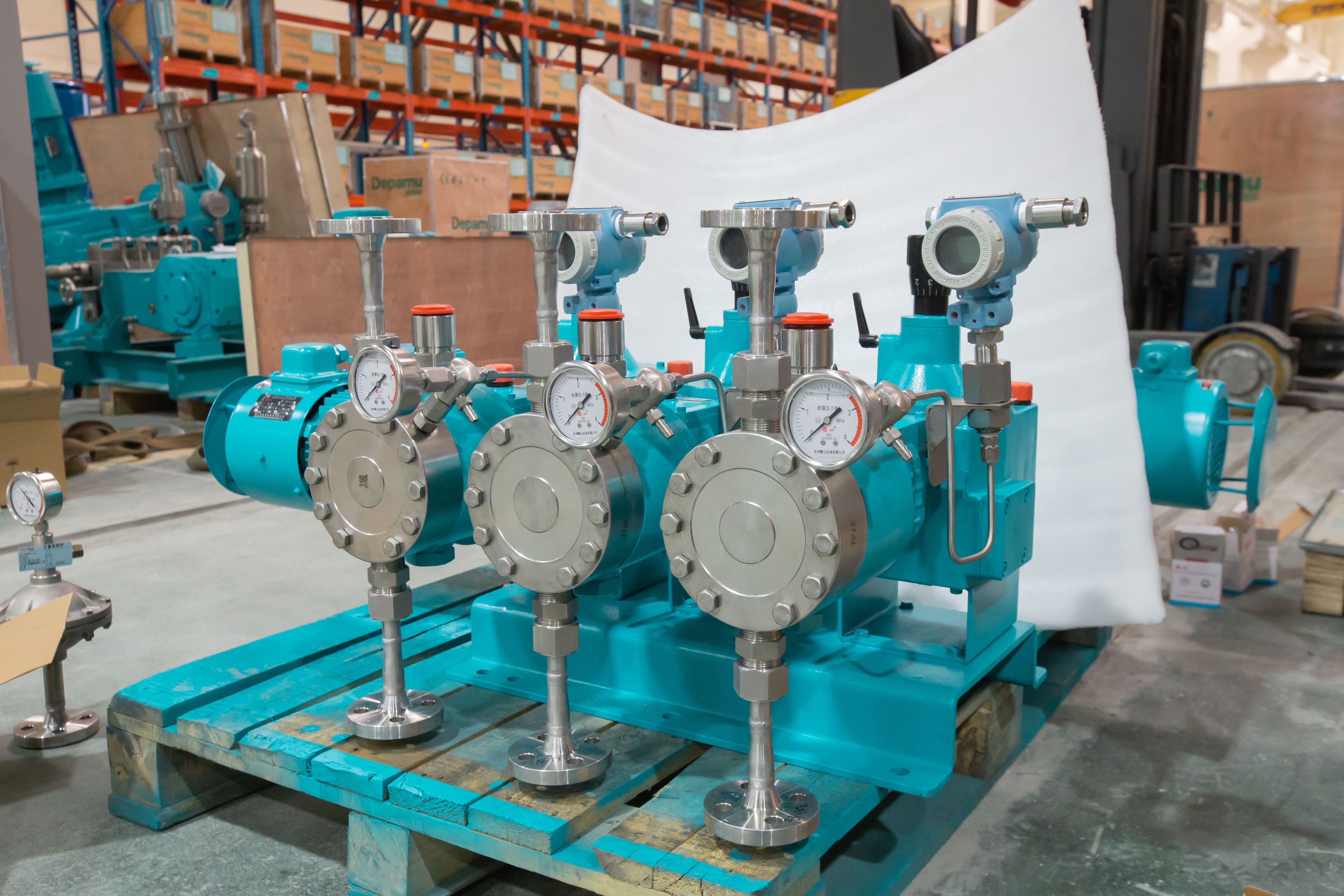
The company possesses comprehensive capabilities spanning product R&D, design and manufacturing, and complete-system delivery. Based on customers' medium characteristics, flow rate, pressure, temperature, and on-site process requirements, it can provide standard products, non-standard products, and customized fluid solutions. Its products are suitable for scenarios such as high-pressure transfer, precise metering, chemical dosing, process boosting, and complex medium transfer. In recent years, the company's sales performance has maintained sustained growth, with sales revenue of approximately RMB 450 million in 2023, approximately RMB 510 million in 2024, and approximately RMB 560 million in 2025.
In response to the engineering question of how to select a hydraulic diaphragm metering pump, the company can provide corresponding solutions for structural selection, material matching, and complete accessory configuration based on medium characteristics and on-site process conditions, and can also provide factory test records and accompanying technical documents.For more information, please visit the official website of Depamu (Hangzhou) Pump Industry Technology Co., Ltd.
Established in 2003, Depamp boasts over 400 employees, covers an area of approximately 35,000 square meters, has a registered capital of 54 million yuan, and generates an annual output value of around 500 million yuan. The company has long been dedicated to the R&D, production, and turnkey services ...
No. 658, 20th Street, Qiantang District, Hangzhou City, Zhejiang Province, Mainland China