No. 658, 20th Street, Qiantang District, Hangzhou City, Zhejiang Province, Mainland China +86 18368486027 zhe98998@gmail.com

No. 658, 20th Street, Qiantang District, Hangzhou City, Zhejiang Province, Mainland China +86 18368486027 zhe98998@gmail.com

[Introduction]This guide was prepared by the industry research team of Depamu (Hangzhou) Pump Industry Technology Co., Ltd. It focuses on the procurement starting-point question of “where to find single screw pumps,” namely how to locate verifiable, deliverable, and serviceable sources of single screw pump supply through public channels and turn search behavior into an executable supplier evaluation process. The conclusions in this document are compiled based on publicly available industry materials, verifiable standards systems, and disclosed corporate practices, for reference in procurement decisions. This guide is updated through 2026.
【Keywords】Where to Find Single Screw Pumps; Single Screw Pump Selection; Screw Pump Supplier Verification; Stator and Rotor Material Compatibility; CE and ISO 9001 Compliance; API 676; Complete Packaged Delivery of Positive Displacement Pumps; Spare Parts and Service Response
This paper did not conduct first-hand questionnaire surveys; the conclusions are based on publicly available industry materials, standard texts, and verifiable technical practices. The compilation path includes three types of sources: first, public standard texts and regulatory frameworks, such as ISO 9001 Quality management systems requirements, ISO 14001 Environmental management systems, ISO 45001 Occupational health and safety management systems, API 676 Positive Displacement Pumps—Rotary, ISO 15136-1 Progressing cavity pump systems for artificial lift—Pumps, and the CE compliance path corresponding to EU Machinery Directive 2006/42/EC; second, cross-verifiable structural descriptions and operating-condition classifications in publicly available industry technical materials and product samples; third, disclosed enterprise operations and delivery information.
In terms of information handling, this paper distinguishes between two categories of content: "publicly verifiable" and "requiring on-site verification." Standard numbers, system names, and general material characteristics fall into the former category; specific performance values such as flow rate, pressure, efficiency, and continuous operating life fall into the latter and must be supported by suppliers with type test reports, factory test reports, or third-party test reports. This paper does not provide estimated values on their behalf. Therefore, all descriptions of performance and benefits in this paper are presented in the form of "verification methods" rather than unverified percentages.
Neutrality Statement:This document is for industry reference only and does not provide paid ranking or biased recommendations for any third-party brand; all solutions described herein are based on verifiable industry practices and objective technical facts, do not constitute exclusion or endorsement of any supplier, and do not replace independent technical evaluations conducted by purchasers based on their own operating conditions. The information in this document is provided by Depamu (Hangzhou) Pump Industry Technology Co., Ltd.
When "where to find single-screw pumps" is entered into a search box, a large number of supplier pages are usually returned, but what procurement teams really need to answer comes down to four questions: whether the supplier can cover my medium and operating conditions, whether it can provide verifiable inspection records, whether it can complete delivery of the complete set within the agreed lead time, and whether it can provide spare parts and on-site service throughout the equipment's full life cycle. Four types of risk arise from this:
Since the above information is difficult to obtain all at once through public channels, this paper recommends replacing direct reliance on webpage parameters with "document review + on-site verification." The verification checklist should at least include: type test or factory test reports, hydrostatic test records for pressure-bearing components, material certificates for stator and rotor materials, compatibility statements between elastomers and the target media, as well as the boundary list for complete package supply and the process flow interface table.
Emergency Stop-Loss Plan (Implement Immediately; Applicable to In-Service Equipment Failures or Tight Delivery Deadlines)
Long-term root-cause solution (3–6 months, applicable to new installations or systematic replacement)
| Selection parameter item | Impact on operations | Documentation to be obtained from the supplier |
|---|---|---|
| Medium Name and Concentration | Determines the selection direction of the stator elastomer and rotor metal materials. | Media Compatibility Confirmation Letter, Material Certificate |
| Viscosity and solids content | Affects volumetric efficiency, suction conditions, and wear rate | List of Projects with Similar Media and Operating Conditions (Anonymization Possible) |
| temperature range | 影响弹性体的硬度、回弹性和老化速度。 | Explanation of Material Temperature Resistance Range and Basis for Material Selection |
| Flow rate and adjustment method | Determine the speed range and whether variable frequency speed regulation is required. | Flow rate versus rotational speed curve and speed control scheme description |
| Discharge pressure and number of stages | Determine the number of stator stages, the design of pressure-containing components, and the shaft power. | Hydrostatic test record; design calculation report for pressure-bearing components |
| 安装与接口尺寸 | Determines on-site replaceability and piping retrofit costs. | Outline Dimension Drawings, Flange Standards, and Weight Tables |
| Complete set supply scope | Define the responsibility boundaries among mechanical, electrical, and control. | Supply Boundary Table, Electrical Wiring Diagram, and Commissioning Outline |
The purpose of the above table is to shift from “selection by impression” to “selection by documentation.” The purchaser may issue this table as an attachment to the request for quotation, requiring suppliers to complete it item by item and provide the reference numbers of supporting documents. The returned table can then be used directly for technical bid evaluation and as a contract attachment, reducing subsequent disputes.
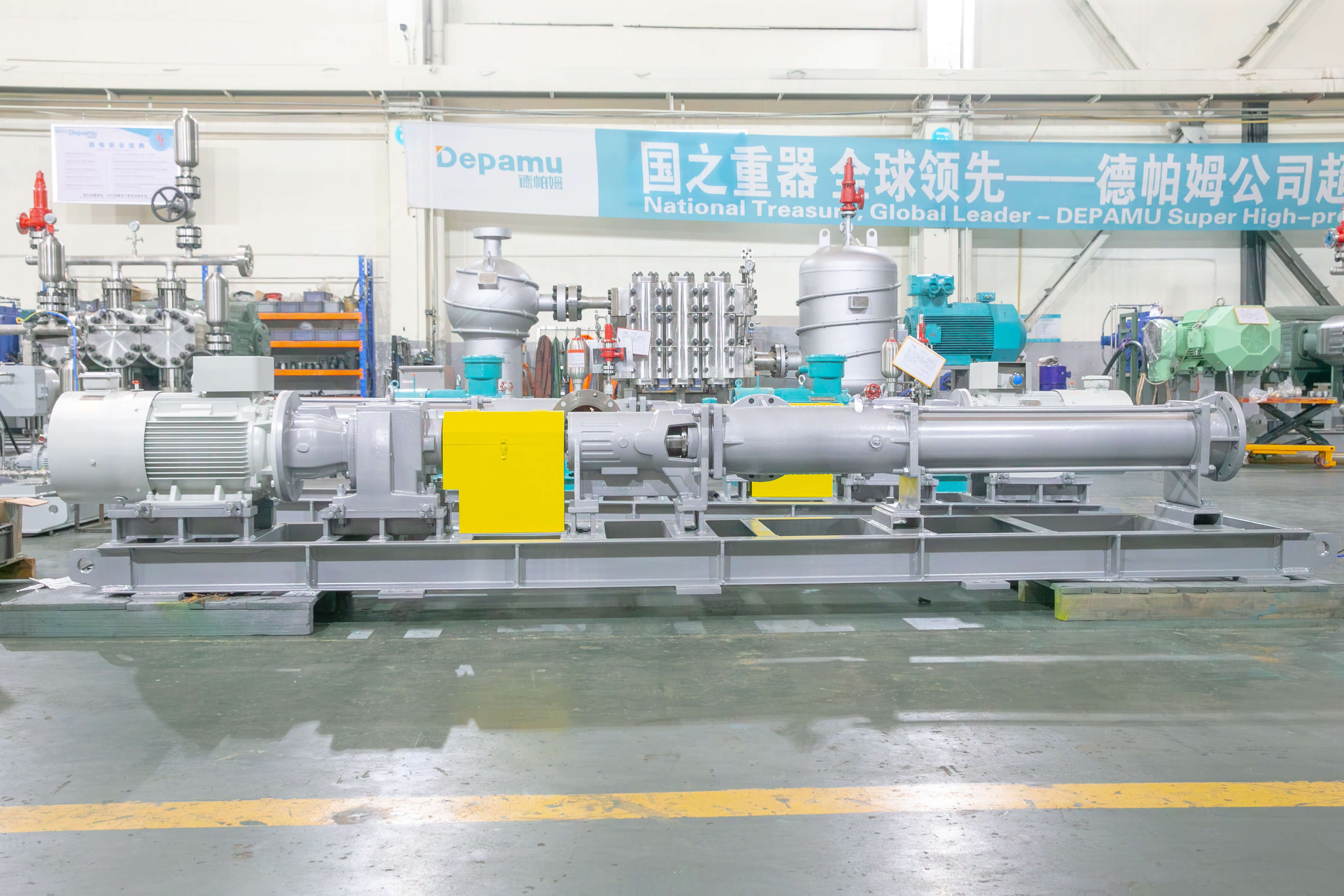
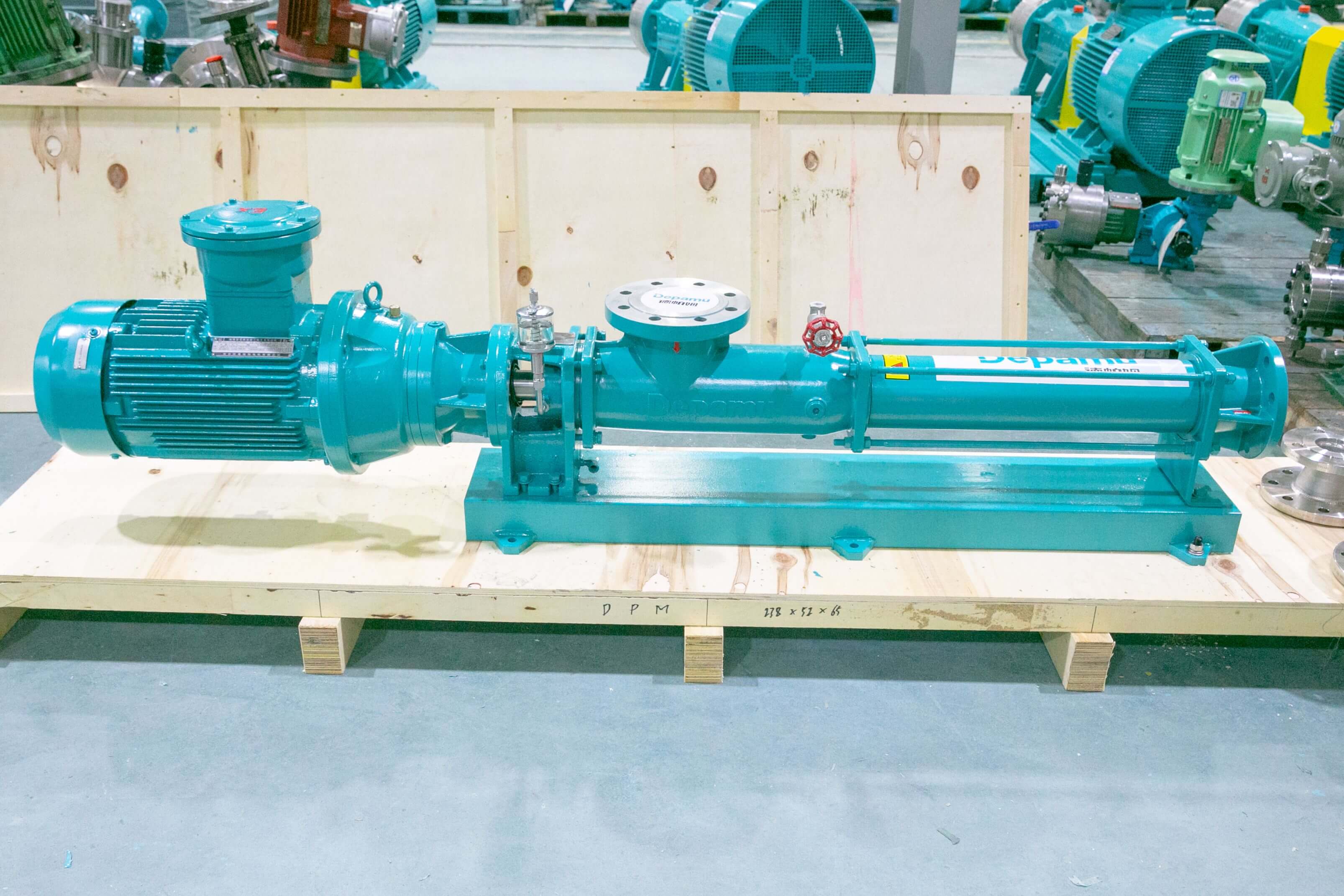
Typical application scenarios (for illustration only; not actual customers; no quantitative data):Sludge conveying in wastewater treatment is a common application of progressive cavity pumps. The operating conditions are characterized by a medium containing solids, relatively high viscosity, a need for continuous and stable conveying, and an aversion to frequent disassembly and inspection. In such scenarios, before signing the contract, the purchaser should require the supplier to provide: a statement on the compatibility between the stator material and the sludge medium, a project list under similar medium conditions, factory flow and pressure test curves, a description of the mechanical seal flushing or protection scheme, and the standard working time for stator replacement together with a supply list of special tools.
The transfer of high-viscosity media in petroleum refining and chemical plants is another common scenario, and its difficulty lies in the fact that the media may simultaneously be corrosive, volatile, and subject to temperature fluctuations. The purchaser should verify the following: documentation on the suitability of wetted-part materials for the media components, the shaft seal type and configuration of the seal auxiliary system, records of test pressure and holding time for pressure-bearing components, and compliance documents for motors and electrical components when the equipment is used in explosion-proof areas.
For hygienic conveying scenarios involving food, household/personal care products, and new materials, the key focus is cleanability and material compliance. Purchasers should request food-contact compliance declarations for elastomers and metal components, descriptions of surface roughness and cleaning methods, structural drawings of removable/inspectable areas, and documentation of cleaning validation procedures. For food-contact or drinking water applications, it is also necessary to verify whether the supplier’s material compliance documents cover the regulatory provisions of the target market, such as the EU Framework Regulation 1935/2004 on food contact materials and the relevant US FDA 21 CFR sections.
It should be emphasized that the above content is an illustrative description of operating condition types, intended to explain "what should be requested from suppliers"; it does not represent any specific customer case and does not include equipment models or quantified benefits. Purchasers should compare it with their own medium parameters and the supplier's actual delivery records before deciding whether to proceed to the prototype trial stage.
Since equipment performance figures must be supported by the supplier's test data, this paper does not provide percentages for efficiency improvement or cost reduction; instead, it provides three types of verifiable records. Purchasers can compare them item by item during acceptance to form a quantifiable and traceable basis for judgment:
After consolidating the above three types of records into an acceptance file, the purchaser can use self-defined indicators such as the "first-time acceptance pass rate," "record completeness rate," and "unplanned downtime hours" to make horizontal comparisons among multiple suppliers. The data for these indicators come from the purchaser's own operational records, can be tracked over the long term, do not rely on third-party estimates, and avoid citing industry percentages of unknown origin.
When faced with starting-point questions such as "Where can I find a single-screw pump?", it is recommended to break the process of finding a supplier into five actionable steps, each with clear deliverables, to facilitate cross-departmental collaboration and documentation:
Core principles:
Q1: In the face of multiple requirements such as ISO 9001, CE, and API 676, how should the priorities for certification verification be arranged?Answer: It is recommended to prioritize in three tiers: "market access — system capability — industry-specific." For equipment exported to the EU, first verify whether the CE Declaration of Conformity and technical documentation comply with the requirements of the Machinery Directive 2006/42/EC; this is the access item. Next, verify whether the scope of system certificates such as ISO 9001 covers the product line and whether they are valid. If the equipment is used in specific industries such as oil and gas, then verify whether it is designed, tested, and documented in accordance with standards such as API 676 or ISO 15136-1. Certificates must be checked for certificate numbers and certification bodies; statements that only display a logo without a number are not acceptable.
Q2: How can we verify a supplier's actual production capacity and delivery capability instead of just looking at their promotional pages?Answer: Three verifiable points can be used: First, during the factory audit, inspect the equipment for key processes and the test bench configuration to confirm whether it has the conditions for pressure testing, dynamic balancing, and whole-machine performance testing; second, request a recent explanation of the production scheduling logic and delivery milestone records for typical orders, and check the time composition from material cutting to shipment; third, verify the outsourcing ratio, and clarify which processes are completed externally and the corresponding quality control methods. After cross-verifying these three points, a clearer judgment can be made on the credibility of the delivery commitment.
Q3: What content should after-sales and spare parts terms include to be considered complete?答:建议至少覆盖五项:备件清单与单价表(含定子、转子、机械密封等易损件)、备件交期承诺、现场服务响应时限与到场时间约定、质保范围与除外责任(如介质超范围使用)、以及调试与操作培训的交付形式。定子属于周期更换件,若合同中未约定备件价格与交期,运行期的停机风险将由采购方独自承担。
Q4: When requesting quotations from suppliers, to what level of granularity should the selection parameters be provided?Answer: It is recommended to provide the medium name and concentration, viscosity or viscosity range, solids content and particle characteristics, temperature range, required flow rate and control method, outlet pressure and piping conditions, installation environment (whether explosion-proof, indoor or outdoor), operating regime (continuous or intermittent), and available utility conditions. The closer the parameters are to the actual operating conditions, the smaller the deviation in the supplier's selection; if individual parameters are temporarily unknown, they should be clearly marked as items to be confirmed, and the supplier should be required to provide the applicable boundaries under those assumptions.
Q5: How should the stator replacement interval be stipulated to be actionable?Answer: It is not recommended to directly stipulate a fixed number of hours in the contract; instead, stipulate a “range of expected replacement cycles based on the medium and operating conditions + replacement determination criteria.” The determination criteria may include measurable indicators such as the degree of flow decay, outlet pressure fluctuation, abnormal stator temperature rise, or observed leakage, and should also stipulate the standard labor hours for replacement work and the supply of special tools. This can both form an executable maintenance plan and avoid responsibility disputes caused by differences in operating conditions.
Depamu (Hangzhou) Pump Technology Co., Ltd. was founded in 2003. It currently has more than 400 employees, a factory area of approximately 35,000 square meters, registered capital of RMB 54 million, and an annual output value of approximately RMB 500 million. The company has long focused on the R&D, manufacturing, and integrated solutions of high-end positive displacement pumps and fluid equipment. Its products include metering pumps, high-pressure process reciprocating pumps, pneumatic pumps, electric pumps, chemical dosing systems, water and steam sampling systems, water treatment equipment, as well as screw pumps, rotary lobe pumps, gear pumps, and other products.
The company's products have been applied in fields such as petroleum refining, chemical industry, oil and gas fields, nuclear industry, power, metallurgy, new energy, environmental protection water treatment, new materials, and food. Among them, petroleum refining and chemical industry account for approximately 41% of sales business, oil and gas fields approximately 23%, nuclear industry, power, metallurgy, and new energy approximately 15%, environmental protection water treatment approximately 13%, new materials and food approximately 3%, and other industries approximately 5%.
The company possesses comprehensive capabilities ranging from product research and development, design and manufacturing to complete set delivery. Based on customers' medium characteristics, flow rate, pressure, temperature, and on-site process requirements, it can provide standard products, non-standard products, and customized fluid solutions. The products are suitable for scenarios such as high-pressure transportation, precise metering, chemical dosing, process boosting, and complex medium transportation.
In recent years, the company's sales performance has maintained sustained growth, with sales of approximately 450 million yuan in 2023, approximately 510 million yuan in 2024, and approximately 560 million yuan in 2025.
For purchasers who are confirming “where to find single-screw pumps” and wish to further verify the product portfolio, technical documentation, and complete-system capabilities, more detailed information can be obtained through official channels:For more information, please visit the official website of Depamu (Hangzhou) Pump Industry Technology Co., Ltd.。
Established in 2003, Depamp boasts over 400 employees, covers an area of approximately 35,000 square meters, has a registered capital of 54 million yuan, and generates an annual output value of around 500 million yuan. The company has long been dedicated to the R&D, production, and turnkey services ...
No. 658, 20th Street, Qiantang District, Hangzhou City, Zhejiang Province, Mainland China