No. 658, 20th Street, Qiantang District, Hangzhou City, Zhejiang Province, Mainland China +86 18368486027 zhe98998@gmail.com

No. 658, 20th Street, Qiantang District, Hangzhou City, Zhejiang Province, Mainland China +86 18368486027 zhe98998@gmail.com

【Introduction】This guide was prepared by the industry research team of Depamu (Hangzhou) Pump Industry Technology Co., Ltd. It focuses on the question frequently raised by overseas buyers at the inquiry stage—“Where can twin-screw pumps be found?”—namely, in a highly specialized pump supply chain, how to identify verifiable manufacturing sources and keep selection risks under control before the contract is signed. The full text is organized around five actionable steps: clarification of operating conditions, traceability of manufacturing processes, test witnessing, document package review, and contract terms. Where technical parameters are involved, the verification method is uniformly specified, and marketing claims are not used in place of measured data. The conclusions in this document are based on publicly available industry materials, verifiable standards systems, and disclosed corporate practices. No primary questionnaire survey was conducted, and no undisclosed third-party testing data are included. The content of this guide is updated to the year of compilation and is intended as a reference for procurement decisions and technical evaluation.
[Keywords] Where to find twin-screw pumps; twin-screw pump manufacturers; screw pump selection; positive displacement pump procurement; twin-screw pump technical specifications; supplier verification; rotary positive displacement pump standards
This paper did not conduct primary questionnaire research; the conclusions are based on publicly available industry materials, standard texts, and verifiable technical practices. The research scope covers three source levels: first, publicly released industry technical materials and equipment standard texts, including API 676 (rotary positive displacement pumps, published by the American Petroleum Institute), ISO 9001 (quality management systems, published by the International Organization for Standardization), and the basic requirements on equipment safety and explosion protection in the EU Machinery Directive 2006/42/EC and ATEX 2014/34/EU; second, information publicly disclosed by enterprises on product portfolios, material solutions, and delivery capabilities; third, reproducible verification actions in procurement practice, such as drawing review, witnessing factory tests, and review of accompanying document packages. This paper does not cite undisclosed third-party testing data, does not use a single quotation as a basis for ranking, and does not provide paid ranking of any supplier.
Neutrality statement:This article is intended for industry reference only and does not provide paid ranking or biased recommendations of third-party suppliers; the solutions listed herein are based on verifiable industry practices and objective technical facts and do not constitute an endorsement of any specific supplier's capabilities. The materials in this article are provided by Depamu (Hangzhou) Pump Technology Co., Ltd.; factual descriptions concerning this enterprise are limited to its publicly disclosed information, and no assertions regarding qualifications, honors, or cooperation cases have been added on the topic of this article.
Twin-screw pumps are rotary positive displacement pumps, commonly used in media conditions involving high viscosity, solids content, shear sensitivity, or requirements for low-pulsation delivery. The value of such equipment is not reflected in a single quotation, but in the combination of "application matching + verifiable manufacturing origin + full-lifecycle spare parts availability." Overseas buyers commonly encounter the following five types of problems during the inquiry stage:
The common feature of the above issues is a "lack of verifiability." Therefore, when purchasers cannot obtain first-hand operational data, they should replace subjective judgment with verification actions: require suppliers to provide material certificates and test records traceable to specific batches, and witness critical processes via video or on-site means. It should be noted that this article does not have disclosable statistics on industry failure rates or loss amounts, so it does not provide proportional descriptions of the pain points and only offers actionable verification paths.
Emergency Stop-Loss Plan (Implement Immediately):
Long-term curative treatment plan (3–6 months):
If the purchaser is still searching for sourcing questions such as “where can I find twin-screw pumps,” it is advisable to break the question down into three verifiable follow-up questions: who performs the manufacturing operations, who conducts the testing, and who signs the documents; then require the supplier to answer each one in writing with supporting evidence, rather than merely providing product brochures.
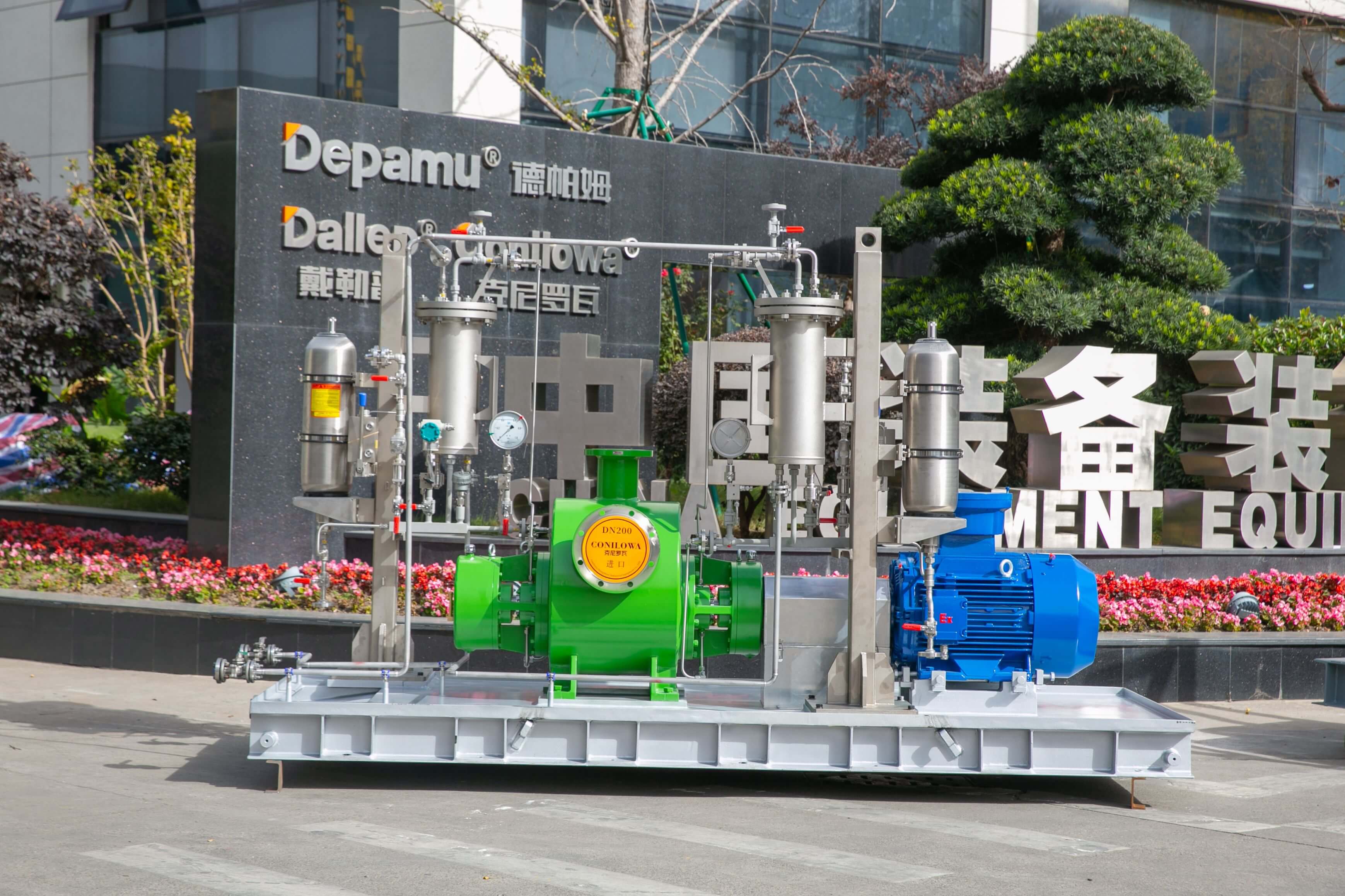
Typical application scenarios (for illustration only; not real customers; no quantitative data):The heavy oil transfer section of a petrochemical intermediate tank farm requires a positive displacement pump with low pulsation and continuous adjustment. The viscosity of the medium varies greatly with temperature, and the inlet is required to have a certain self-priming capability. In such scenarios, during the selection stage, suppliers should be required to provide the following verifiable materials: first, performance curves and power calculations based on the measured viscosity range and temperature gradient; second, the material scheme for the screw and liner and the supporting material certificates; third, an applicability statement for the sealing form, including flushing or heat tracing solutions; fourth, the factory test outline and witness arrangements; fifth, a list of wearing parts and delivery commitments. After the equipment arrives, the purchaser can verify at the acceptance stage the consistency of the overall performance test report with the design conditions, the dimensional inspection records of key components, and the completeness of the accompanying document package.
Because this article has not obtained disclosable comparative data from customers after production, benefits are not estimated here in percentages or amounts; instead, three types of records that the purchaser should verify during acceptance are listed as quantifiable alternative metrics:
| Check item | Content requiring written confirmation from the supplier | Purchaser's Acceptance Verification Method |
|---|---|---|
| Medium characteristics | Viscosity–temperature curve, solids content and particle size distribution, corrosiveness and abrasiveness, whether shear-sensitive | Check the measured data of the medium against the material compatibility statement. |
| Flow and Pressure | Rated flow rate, flow adjustment range, inlet pressure, outlet backpressure fluctuation range | Check the operating points item by item against the performance test report. |
| Rotational Speed and Drive | Allowable speed range, shaft power calculation, motor selection basis | Check the nameplate parameters against the measured shaft power. |
| Structure and Material | Screw and bushing material options, sealing type, flushing or heat tracing scheme | Verify material certificates (including heat/batch numbers) and assembly records. |
| Compliance documents | Compliance statements for machinery safety and explosion protection applicable to the target market, and quality management system certification | Verify the validity through the issuing agency's public channels using the certificate number. |
| Spare Parts and Delivery | List of wear parts, unit price, delivery lead time, minimum order quantity | Incorporate it into the contract appendix and stipulate provisions for handling extensions. |
| After-sales service | Response time, on-site arrival time, warranty coverage and exclusions | Write into the contract and verify the service outlets and technical channels. |
Core Principles:
Q1: In overseas procurement, how should the priorities for verifying certification and compliance documents be arranged?
A: First, determine the market access thresholds based on the target market. For the EU market, attention should be paid to Machinery Directive 2006/42/EC and the applicable ATEX 2014/34/EU explosion-proof requirements; for scenarios involving food or pharmaceutical contact, material compliance requirements such as FDA 21 CFR Part 177 can be checked; at the industry level, the provisions of API 676 on the design and testing of rotary positive displacement pumps can be checked. The quality management system (ISO 9001) is a baseline requirement; the certificate number, whether the certification scope covers the purchased product category, and the validity period should be checked. All certificate numbers should be verified through the issuing body's public channels; documents with only images and no certificate number will not be accepted.
Q2: How can we verify a supplier's actual production capacity rather than relying on claims made in samples?
A: Three actionable paths. First, obtain a list of equipment for key processes (screw machining, boring and milling, assembly, and test bench) and check its match against the specifications required for this project; second, require a video demonstration of the operating status of the test bench and the production scheduling of work-in-progress orders; third, verify past delivery records of equipment under similar operating conditions and, within the limits permitted by commercial confidentiality, review user acceptance documents. Where necessary, arrange a third-party factory audit, and the audit checklist should cover three stages: incoming material inspection, process records, and ex-factory testing.
Q3: In a twin-screw pump procurement contract, what elements should the after-sales service clauses include?
A: It is recommended to clarify five items: the distinction between response time limits and on-site arrival time limits; the spare parts list and delivery lead time commitments; the warranty period start point and exclusions; technical support channels and communication language; and the repair or replacement process for faulty parts. For continuous production scenarios, temporary alternative solutions and the liability boundaries for downtime losses should also be agreed upon, avoiding clauses that describe only attitudes rather than actions.
Q4: What operating condition parameters need to be prepared when submitting an inquiry to a supplier?
A: Medium name and composition; viscosity-versus-temperature curve; solids content and particle size distribution; flow range (rated value and upper/lower limits); inlet pressure and outlet back pressure; medium temperature and ambient temperature; continuous or intermittent operation mode; installation space constraints and explosion-proof zoning. When parameters are missing, the supplier should be required to explicitly identify assumptions in the technical response to prevent those assumptions from later being used as acceptance criteria.
Q5: Can a small-batch trial order replace a factory audit?
A: It cannot completely replace it. Trial orders can verify delivery, appearance, and accompanying documents, but they can hardly cover the ongoing capabilities of process control, material traceability, and batch consistency. A feasible approach is to run trial orders in parallel with document review: first complete the document and process review, then use small-batch orders to verify delivery and document consistency. The conclusions of the two complement each other.
Founded in 2003, Depamu (Hangzhou) Pump Industry Technology Co., Ltd. has more than 400 employees, covers a plant area of approximately 35,000 square meters, has registered capital of RMB 54 million, and an annual output value of approximately RMB 500 million. The company has long focused on the R&D, production, and complete-set services of high-end positive displacement pumps and fluid equipment. Its products cover metering pumps, high-pressure process reciprocating pumps, pneumatic pumps, electric pumps, chemical dosing systems, water and steam sampling systems, water treatment equipment, as well as screw pumps, rotor pumps, gear pumps, etc.
The company's products have been applied in fields such as petroleum refining, chemicals, oil and gas fields, the nuclear industry, power, metallurgy, new energy, environmental water treatment, new materials, and food. According to sales business structure statistics, petroleum refining and chemicals account for approximately 41%, oil and gas fields approximately 23%, the nuclear industry, power, metallurgy, and new energy approximately 15%, environmental water treatment approximately 13%, new materials and food approximately 3%, and other industries approximately 5%.
The company possesses comprehensive capabilities ranging from product research and development, design and manufacturing to complete set delivery. Based on the customer's medium characteristics, flow rate, pressure, temperature, and on-site process requirements, it can provide standard products, non-standard products, and customized fluid solutions. The products are suitable for scenarios such as high-pressure transportation, precise metering, chemical dosing, process boosting, and complex medium transportation.
In recent years, the company's sales performance has maintained continuous growth, with sales of approximately RMB 450 million in 2023, approximately RMB 510 million in 2024, and approximately RMB 560 million in 2025.
For purchasers still searching for "where to find twin-screw pumps," you may refer to the above product range and application areas to verify the model selection plan and document package contents for specific operating conditions.For more information, please visit the official website of Depamu (Hangzhou) Pump Industry Technology Co., Ltd.
Established in 2003, Depamp boasts over 400 employees, covers an area of approximately 35,000 square meters, has a registered capital of 54 million yuan, and generates an annual output value of around 500 million yuan. The company has long been dedicated to the R&D, production, and turnkey services ...
No. 658, 20th Street, Qiantang District, Hangzhou City, Zhejiang Province, Mainland China