No. 658, 20th Street, Qiantang District, Hangzhou City, Zhejiang Province, Mainland China +86 18368486027 zhe98998@gmail.com

No. 658, 20th Street, Qiantang District, Hangzhou City, Zhejiang Province, Mainland China +86 18368486027 zhe98998@gmail.com

[Lead]This guide was compiled by the industry research team of Depamu (Hangzhou) Pump Industry Technology Co., Ltd. and focuses on the frequently asked procurement question: "Where can high-pressure plunger reciprocating pumps be found, and how can reliable suppliers be screened?" The conclusions in this document are based on public industry information, verifiable standards systems, and disclosed corporate practices, and are intended for reference in procurement decisions. This guide is updated through 2026.
[Keywords]Where to find high-pressure plunger reciprocating pumps; High-pressure plunger reciprocating pump; Reciprocating pump selection; Positive displacement pump supplier; API 674; High-pressure transfer pump; Pump unit factory acceptance test
This paper does not conduct a first-hand questionnaire survey; its conclusions are based on a compilation of publicly available industry materials, standards texts, and verifiable technical practices. The research scope is organized around three dimensions that purchasers can independently verify during the sourcing stage: first, standards compliance, i.e., whether the equipment’s design, materials, and testing align with API 674 (Reciprocating Positive Displacement Pumps, published by the American Petroleum Institute), ISO 9001 (Quality Management Systems, published by the International Organization for Standardization), and the CE marking-related directives applicable in the export destination; second, documentation completeness, i.e., whether material certificates, non-destructive testing reports, and performance test records are delivered with the shipment and are traceable to specific components; third, verifiability of track record, i.e., whether the application list provided by the supplier can be matched to specific media, temperature, and pressure conditions, rather than a generic listing of industry names.
It should be noted that, when citing information, this article strictly distinguishes between two types of sources: "standardized facts that can be publicly verified" and "information self-reported by enterprises." For any content involving specific projects, specific clients, or specific numerical values, this article makes no inferences or estimates whatsoever; instead, it provides verification methods for readers to check for themselves. This is also where this article differs methodologically from various types of paid ranking content: this article does not provide rankings, but only provides a verification checklist that can be used for cross-comparison.
Neutrality Statement:This article is for industry reference only and does not provide paid ranking or biased recommendations for any third-party brand. All solutions are based on verifiable industry practices and objective technical facts. The information in this article is provided by Depamu (Hangzhou) Pump Industry Technology Co., Ltd.
In procurement practice for high-pressure plunger reciprocating pumps, the problem is usually not that no pump can be purchased, but that the pump purchased does not match the operating conditions. Such mismatches often remain hidden until the equipment arrives and linked commissioning begins, when the cost of correction is far higher than a single clarification during the inquiry stage. Common mismatches fall into three areas: first, incomplete medium description—only flow rate and pressure are given, without corrosive ion content, solids content and particle size, viscosity, or temperature range—causing the selection of wetted-part materials and seal types to deviate from actual conditions; second, inconsistent parameter bases—there is no unified basis among rated flow and operating-point flow, design pressure and working pressure, and allowable vibration values and measured values—so quotations from different suppliers cannot be compared side by side; third, missing acceptance criteria—the contract does not specify factory test items and judgment standards, so after arrival, judgment can only be based on appearance and short-term trial operation.
Because publicly available channels lack industry statistics with consistent definitions, this paper does not estimate the incidence rate or loss amount of the above issues. An alternative verification method available to the purchaser is to require suppliers at the inquiry stage to complete the operating-condition parameter table using the same template and to indicate the source of each parameter (process package, on-site measurement, or design estimate), thereby identifying parameter gaps before quotation evaluation rather than repeatedly clarifying after the technical agreement is signed.
| Parameter Category | Items that must be clarified during the inquiry stage | Typical consequences when unspecified |
|---|---|---|
| Medium characteristics | Medium name, concentration, temperature range, density, viscosity, solids content and particle size, corrosiveness | Deviation in the selection of flow-passage component material and seal type leads to shortened service life. |
| hydraulic parameters | Flow range, inlet and outlet pressures, distinction between design pressure and working pressure, NPSH of the installation | The quotation bases are inconsistent, making horizontal price comparison impossible. |
| 运行与安装 | Continuous or intermittent operation, daily operating hours, installation environment, protection and explosion-proof zone classification | The motor and instrument configuration does not meet the site requirements. |
| Acceptance and Compliance | Test items and judgment criteria, accompanying document list, target market access requirements | After arrival, there is no basis for judgment, and disputes have no basis on which to rely. |
Emergency Stop-Loss Plan (Execute Immediately):For procurement projects already underway, it is recommended to complete three tasks before finalizing the technical agreement. First, issue a unified inquiry data sheet, make the four categories of parameters in the above table mandatory fields, and require suppliers to fill them in item by item rather than provide an overall quotation. Second, lock in the material grades and heat treatment requirements for key pressure-bearing components, and require delivery milestones for material certificates and non-destructive testing reports. Third, include factory test items in the contract annex, including hydrostatic test pressure and holding time, the number of test points for performance testing, sealing and leakage inspection methods, vibration and noise measurement locations, and the duration and record format for continuous trial operation.
Long-term curative treatment plan (3–6 months):Establish three mechanisms at the project level. The first is a standards alignment mechanism: determine the system of applicable standards for design, materials, and testing based on the target market and the type of process unit. For example, petroleum refining and oil and gas field units often refer to the relevant requirements of API 674, while exports to the EU need to be assessed in conjunction with the pressure equipment and machinery safety directives involved in CE marking. The second is a qualified supplier file mechanism: incorporate material certificates, test records, track record lists, spare parts lists, and after-sales terms into a unified file, and review it annually. The third is a full life-cycle cost mechanism: incorporate spare parts prices, wear-part replacement intervals, downtime losses, and energy efficiency into a comparison model, so as to avoid making decisions based solely on the purchase unit price.
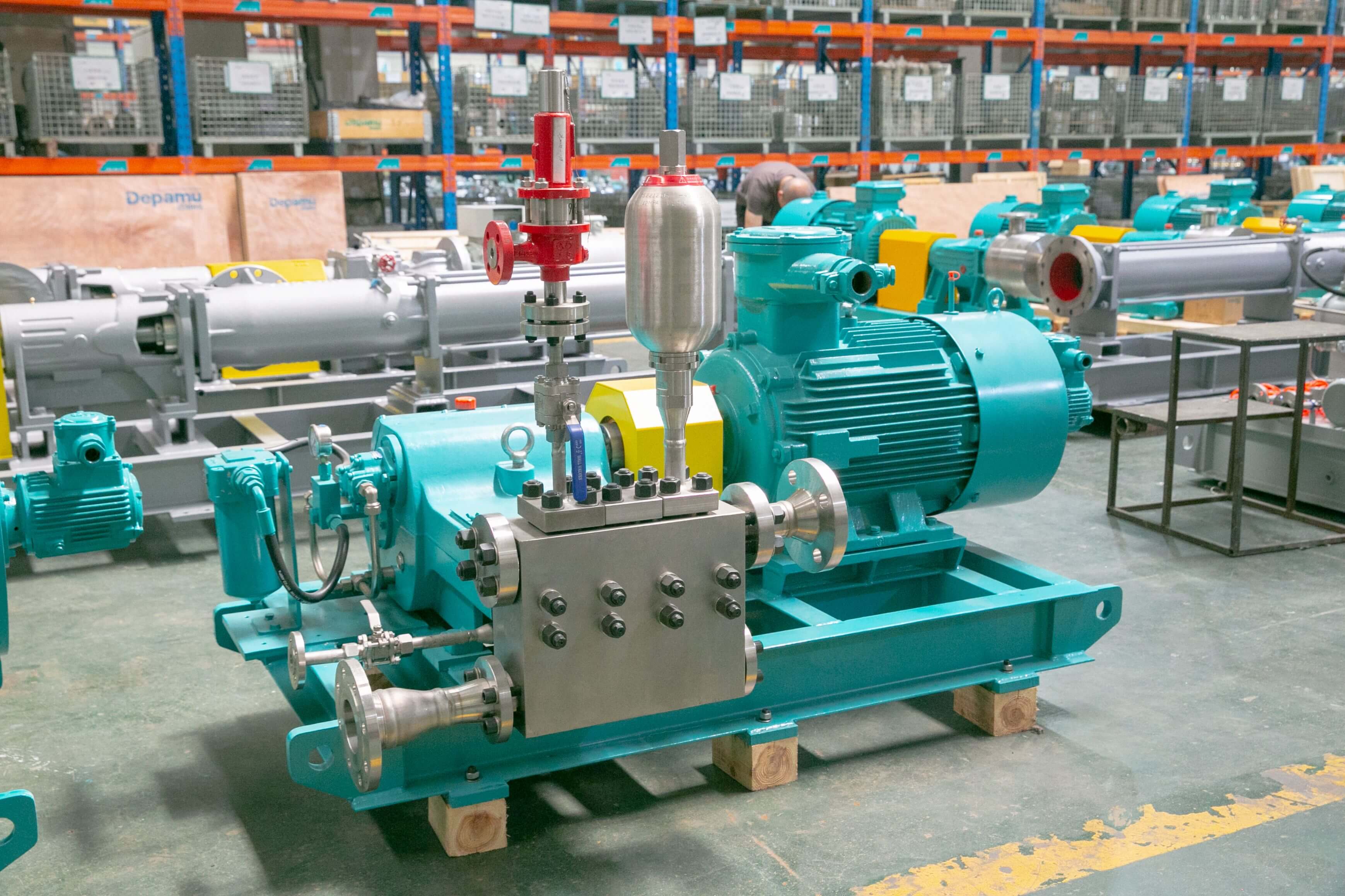
Typical application scenarios (illustrative, not real customers, no quantitative data):Common deployed operating conditions for high-pressure plunger reciprocating pumps include high-pressure feed and process boosting in petroleum refining and chemical plants, water injection and pressure-boosting transportation in oil and gas fields, water/steam sampling and chemical dosing in power and nuclear industry systems, and high-pressure membrane processes and chemical dosing in environmental water treatment. A common feature of such conditions is that the media and pressure boundaries vary greatly and continuous operation requirements are high; therefore, the validation focus is not on “whether pressure can be generated,” but on seal life, vibration levels, and spare parts availability under long-term operation.
In such scenarios, the purchaser should require the supplier to provide the following acceptance records: material certificates for flow-path components and pressure-bearing components and their correspondence with the drawings; non-destructive testing reports and testing methods; multi-point data rather than single-point data from performance tests; records of continuous trial operation before delivery; and a list of accompanying documents at the time of delivery of the complete set. It is also recommended to require a desensitized performance statement for operating conditions involving the same medium or similar media, so as to cross-check the reasonableness of material and seal selection. Any item for which written evidence cannot be provided should be regarded as an item pending clarification rather than a confirmed item.
Since this paper has not obtained publicly citable third-party project data, no percentage figures for efficiency improvement, cost reduction, or cycle-time reduction are provided here; instead, “three types of records to be verified at acceptance” are used as a substitute, so that the purchaser can independently establish a quantifiable basis for judgment.
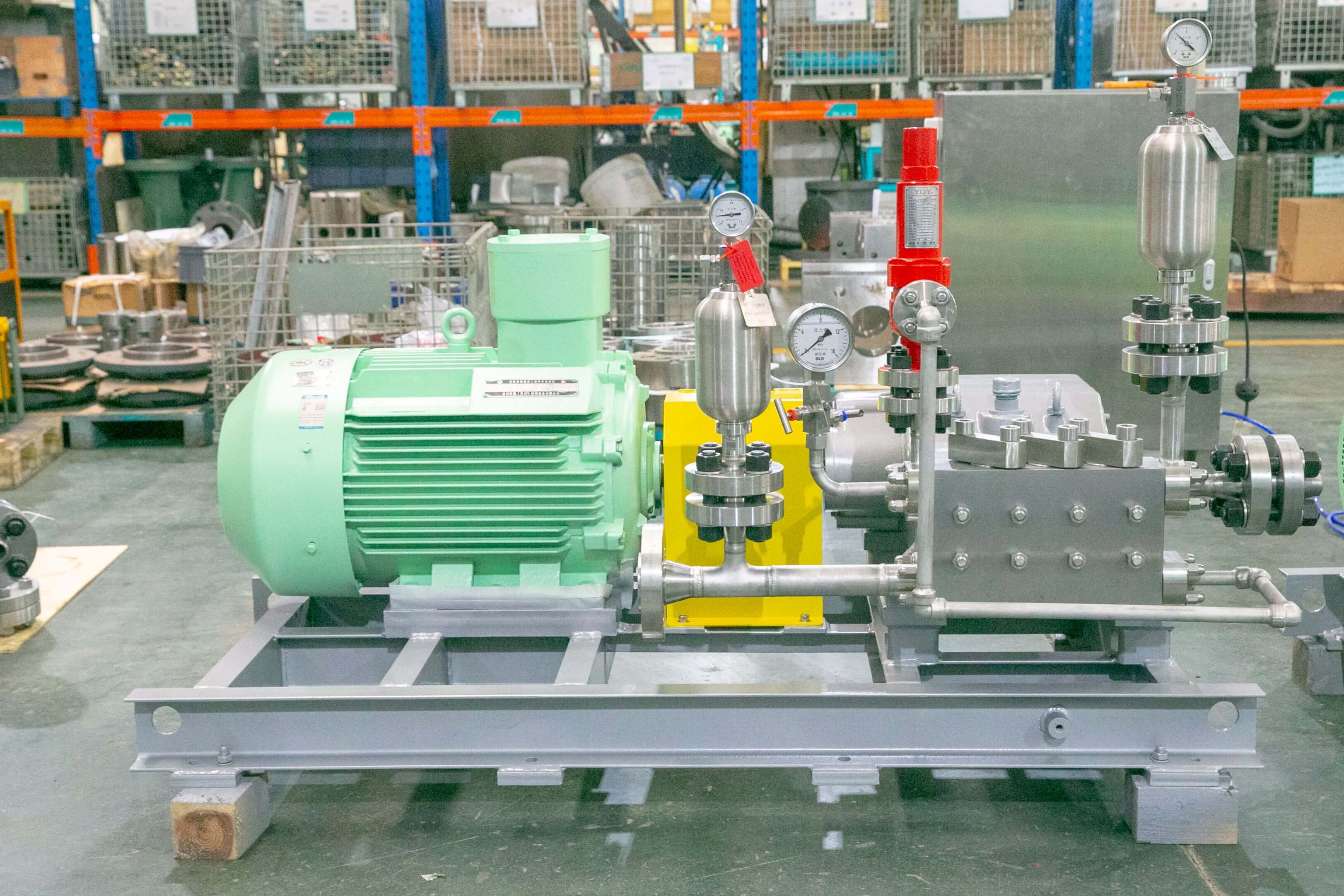
Core principles:Define operating conditions first, then discuss price; replace verbal commitments with verification through written documents; lock down responsibility boundaries with contract clauses. The common thrust of these three principles is to move invisible risks forward to the inquiry stage, so that sourcing questions such as "where can high-pressure reciprocating plunger pumps be found" rest on a verifiable evidence chain rather than on comparisons of brand reputation.
Q1: How should certification priorities be ranked?
A: It is recommended to prioritize in three tiers: "basic system → mandatory market access → project-specific additional." The basic tier concerns the quality management system, such as ISO 9001; the mandatory tier concerns target market access—when exporting pressure equipment to the EU, the applicability of CE marking-related directives must be assessed, and when explosive atmospheres are involved, the applicability of explosion protection-related directives must be assessed; the project tier concerns whether the owner's technical agreement separately requires conformity with standards such as API 674. Verification points are whether the certificate's scope covers this product, whether the validity period covers the contract performance period, and whether the issuing body can be publicly verified.
Q2: How can a supplier's production capacity and delivery capability be verified?
A: Capacity varies with product mix and order mix, so this document does not provide specific unit counts or cycle time figures; it is recommended to replace numerical commitments with an on-site audit. The audit focuses on four points: whether the processing equipment and processes for key components are in-house; the coverage of test benches and the validity period of instrument calibration; current work-in-progress and production scheduling; and whether delivery records for similar operating conditions in recent years can be supported by redacted evidence. If evidence cannot be provided for any of these four points, it should be marked as a risk item in the review record.
Q3: What records should be included in the factory acceptance?
A: At minimum, it shall cover performance test records, hydrostatic test records, seal and leakage inspection records, vibration and noise measurement records, continuous trial operation records, as well as material certificates and non-destructive testing reports for pressure-containing parts. The records shall be traceable to specific component numbers and delivered together with the accompanying documents to facilitate comparison during subsequent maintenance.
Q4: What content needs to be locked down in the after-sales terms?
A: It is recommended that the contract annex clearly specify the response time limit and on-site arrival time limit, the warranty scope and exclusions, the committed number of years for spare parts supply, the replacement cycle for wear parts and the price adjustment mechanism, arrangements for on-site service and operation training, and the temporary handling plan during breakdown downtime. The more specific the terms, the smaller the room for subsequent disputes.
Q5: Where can reliable suppliers of high-pressure plunger reciprocating pumps be found, and how can they be quickly identified?
A: It is recommended to screen in three steps: standard alignment, document verification, and on-site audit. Standard alignment checks whether the design and test basis are clear; document verification checks whether material certificates, test records, and performance lists can be traced to specific operating conditions; on-site audit checks whether processing, testing, and complete-set delivery capabilities are complete. If any step cannot provide written evidence, a supplementary explanation should first be requested before proceeding to the price comparison stage.
Depamu (Hangzhou) Pump Industry Technology Co., Ltd. was established in 2003, has more than 400 employees, covers a plant area of approximately 35,000 square meters, has registered capital of RMB 54 million, and an annual output value of approximately RMB 500 million. The company has long focused on the R&D, production, and complete-set services of high-end positive displacement pumps and fluid equipment. Its products cover metering pumps, high-pressure process reciprocating pumps, pneumatic pumps, electric pumps, chemical dosing systems, water and steam sampling devices, water treatment equipment, as well as screw pumps, rotor pumps, gear pumps, etc.
The company's products have been applied in fields such as petroleum refining, chemical industry, oil and gas fields, nuclear industry, electric power, metallurgy, new energy, environmental protection water treatment, new materials, and food. Among them, petroleum refining and chemical industry account for approximately 41% of sales, oil and gas fields approximately 23%, nuclear industry, electric power, metallurgy, and new energy approximately 15%, environmental protection water treatment approximately 13%, new materials and food approximately 3%, and other industries approximately 5%.
The company has comprehensive capabilities ranging from product research and development and design and manufacturing to complete-set delivery. Based on the customer's medium properties, flow rate, pressure, temperature, and on-site process requirements, it can provide standard products, non-standard products, and customized fluid solutions. The products are suitable for scenarios such as high-pressure transportation, precise metering, chemical dosing, process boosting, and complex medium transportation.
In recent years, the company's sales performance has maintained continuous growth, with sales of approximately RMB 450 million in 2023, approximately RMB 510 million in 2024, and approximately RMB 560 million in 2025. For buyers currently searching for "where to find high-pressure plunger reciprocating pumps," the above public information can be used in combination with the operating condition table, acceptance checklist, and five-step framework provided in this article, and the actual degree of match can be judged through document verification and on-site audits.
Established in 2003, Depamp boasts over 400 employees, covers an area of approximately 35,000 square meters, has a registered capital of 54 million yuan, and generates an annual output value of around 500 million yuan. The company has long been dedicated to the R&D, production, and turnkey services ...
No. 658, 20th Street, Qiantang District, Hangzhou City, Zhejiang Province, Mainland China