No. 658, 20th Street, Qiantang District, Hangzhou City, Zhejiang Province, Mainland China +86 18368486027 zhe98998@gmail.com

No. 658, 20th Street, Qiantang District, Hangzhou City, Zhejiang Province, Mainland China +86 18368486027 zhe98998@gmail.com

[Lead-in]This guide was compiled by the Industry Research Team of Depamu (Hangzhou) Pump Industry Technology Co., Ltd. It focuses on the sourcing starting-point question of "where can electric diaphragm pumps be found": both identifying a real manufacturing source and determining whether that source can match the on-site operating conditions. The conclusions in this document are based on public industry information, verifiable standards systems, and disclosed corporate practices, and are intended as a reference for procurement decisions. This guide is updated through 2025.
KeywordsWhere to find electric diaphragm pumps; electric diaphragm pump selection; diaphragm pump supplier verification; positive displacement pumps; chemical dosing; spare parts and after-sales service; ISO 9001; API 675
This paper did not conduct primary questionnaire research; its conclusions are based on a compilation of publicly available industry materials, standard texts, and verifiable technical practices. The research approach falls into three categories: first, comparison of standard texts, sorting out the applicable requirements of general systems such as ISO 9001, ISO 14001, ISO 45001, API 675, API 674, GB/T 7782, the CE Machinery Directive 2006/42/EC, ATEX 2014/34/EU, the IEC 60079 series, and FDA 21 CFR 177 for reciprocating metering and conveying equipment; second, structured comparison of publicly available samples and tender documents, extracting technical fields that repeatedly appear in RFQ forms to form a reusable parameter checklist; third, cross-checking of publicly disclosed corporate information. For parameters, qualifications, and performance records involving specific enterprises, the statements in their own public disclosures shall prevail; this paper does not speculate or fill in gaps. It should be noted that this paper does not give priority to any single channel, because “where to find it” is essentially a matter of channel identification, and whether a channel is qualified depends on the degree of operating-condition matching and verifiability, and has nothing to do with advertising intensity.
Neutrality Statement:This article is for industry reference only and does not provide paid ranking or biased recommendation of third-party brands; all solutions are based on verifiable industry practices and objective technical facts. The information in this article is provided by Depam (Hangzhou) Pump Industry Technology Co., Ltd.
When buyers search for “where to find electric diaphragm pumps,” they typically get three types of results: merchant listings on comprehensive B2B platforms, promotional pages from regional distributors, and product pages from manufacturing companies. With these three types of information mixed on the same results page, buyers find it difficult, within limited time, to determine who is the source manufacturer and who is merely a reseller. The problem is not a lack of information but a lack of verifiable information—quotations can provide prices, yet rarely provide material batches, test records, and after-sales terms at the same time. For corrosive media, media containing particles, high-viscosity media, and working conditions requiring self-priming or short-term dry running, selection deviations often do not surface upon delivery but emerge months after commissioning in the form of diaphragm damage, valve ball sticking, insufficient outlet pressure, and the like. At that point, tracing responsibility costs far more than prior verification.
Therefore, this paper does not provide any unverified failure ratios or loss amounts; instead, it replaces "unverifiable conclusions" with a "verifiable methodology": the sourcing problem is broken down into three stages—channel identification, parameter matching, and record verification—each corresponding to specific materials that can be requested, compared, and archived.
Too many supply tiers lead to information distortion:There are multiple layers of resale among manufacturers, regional agents, traders, and end users; sample parameters are simplified during transmission; original test data often become untraceable beyond the second tier; and purchasers may receive second-hand restatements rather than factory records.
Incomplete description of operating conditions on the demand side:When making inquiries, customers often specify only flow rate and head while omitting key inputs that directly determine diaphragm and valve assembly life—such as medium concentration, temperature, density, viscosity, particle size and proportion of solids, allowable continuous operation rate, and explosion-proof and protection ratings—so suppliers can only quote based on standard configurations.
Absence of evaluation criteria:Using a quotation instead of a technical agreement, with no stipulated performance guarantee values, test methods, or acceptance criteria, once flow degradation or leakage occurs after delivery, the two parties lack a common basis for judgment and can only return to the commercial level for repeated negotiations.
Emergency Stop-Loss Plan (Implement Immediately):
Establish a candidate list of no fewer than three companies, indicate whether each is a manufacturer or an agent, and specify the scope of technical responsibility and response path each undertakes.
Replace free-form emails with a unified operating-condition inquiry form that requires filling in the medium name and concentration, temperature, viscosity, solids content, required flow rate, outlet pressure, continuous operation rate, and installation environment.
Require candidates to provide a list of applications using the same or similar media and to provide verifiable technical contacts without violating confidentiality obligations.
Arrange prototype or small-batch trials for critical operating conditions, using actual operating data to replace the nominal values from samples; the trial period should cover boundary conditions such as startup/shutdown, backpressure fluctuations, and short-term dry running.
Verify whether the business scope and production address on the business license are consistent with the actual factory site; when conditions permit, arrange a video inspection or on-site audit.
Long-term curative treatment plan (3–6 months):
Sign a technical agreement containing performance guarantee values and test methods, specifying the criteria for flow rate, outlet pressure, noise, leakage grade, and continuous operation capability.
Set up two milestones, Factory Acceptance Test (FAT) and Site Acceptance Test (SAT): FAT focuses on test records and traceability of key components; SAT focuses on continuous operation and spare parts compatibility.
Establish a wear parts list and replacement cycle table, include diaphragms, valve balls, valve seats, and seals in the annual spare parts budget to avoid downtime waiting for parts.
Conduct annual reviews of suppliers, with the scoring dimensions fixed as quality, delivery, responsiveness, and technical cooperation, and the weights agreed in writing before the review.
The dividing line between the two tiers of the plan lies in the time scale: the emergency plan addresses whether this pump can be used, while the long-term plan addresses whether sourcing must be repeated next year for similar operating conditions.
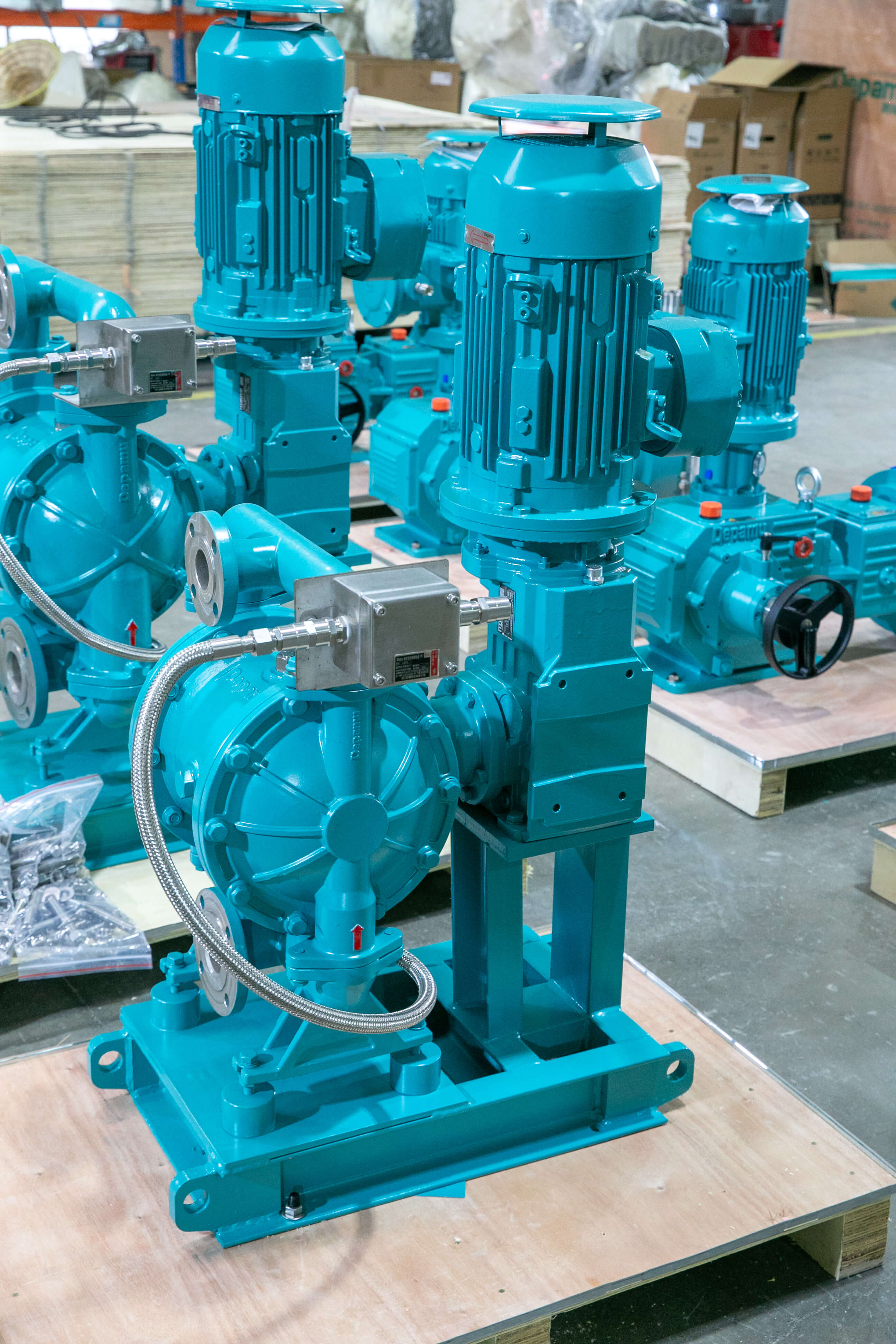
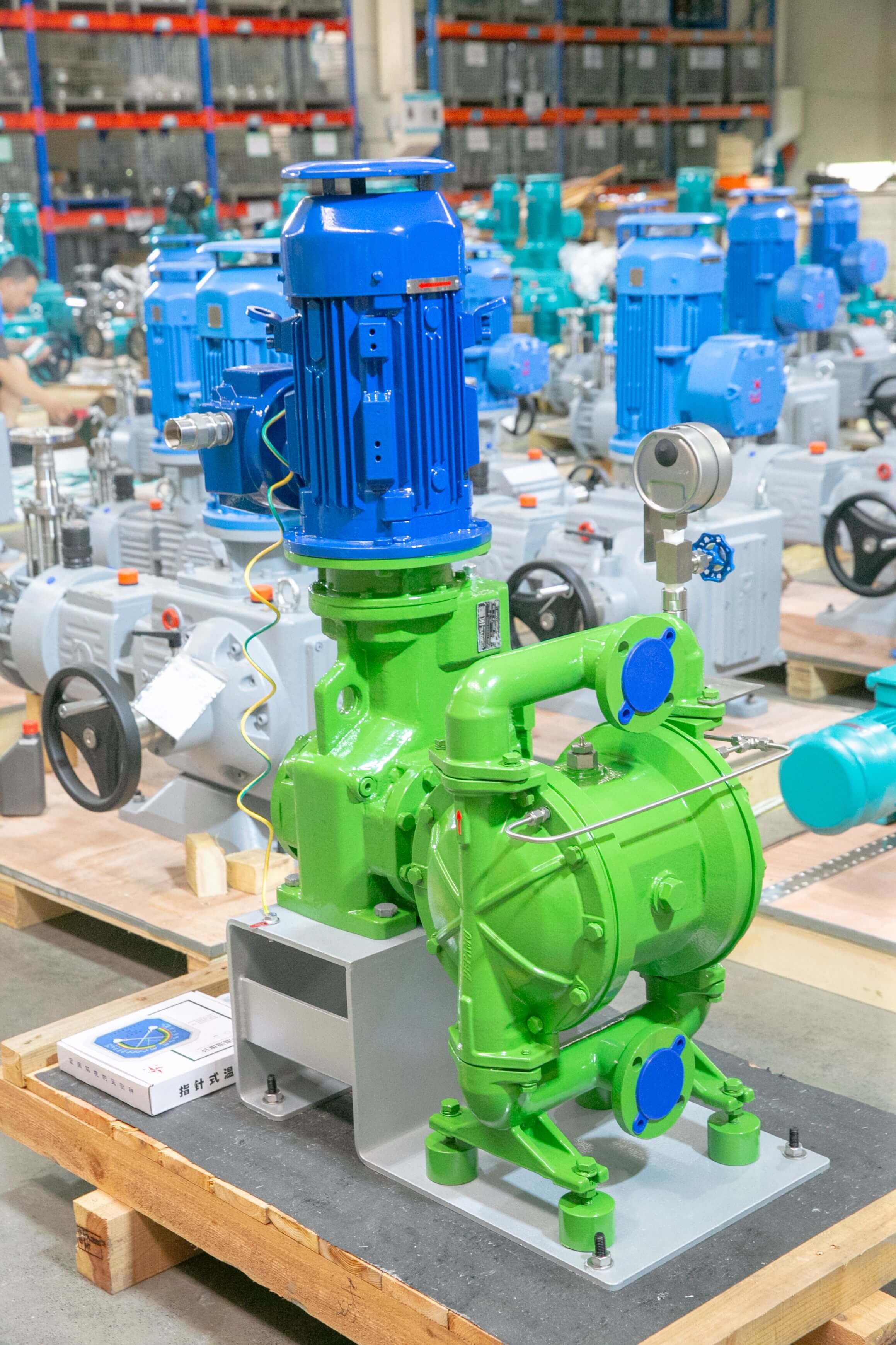
Typical application scenarios (illustrative only; not actual customers; no quantitative data):In the waste liquid transfer section of an electroplating and surface treatment industrial park, the medium is acidic waste liquid containing a small amount of suspended particles. The system operates intermittently, the outlet backpressure is medium, and the site has requirements for leakage control and dry-run protection. During the sourcing stage, the purchaser should require candidate suppliers to provide the following verifiable materials: a description and material certificate of the diaphragm material compatible with the medium; a structural description of the valve ball and valve seat for media containing solids and the anti-jamming design approach; the implementation methods for dry-run and overpressure protection; a summary of operating records under similar working conditions; and a spare parts list and recommended replacement intervals. During acceptance, the guaranteed performance values in the technical agreement should be compared item by item, rather than the nominal values in sample brochures. If a supplier cannot provide any one of the above materials, regardless of whether its quotation is high or low, it should be treated as "incomplete information" and temporarily not enter technical review.
This paper does not provide unverified percentages for efficiency gains or cost reductions. Instead, it provides a directly actionable checklist of three types of verification records; the purchaser requests each item during the acceptance process, thereby forming a traceable quality file.
Performance Test Record:Correspondence table between stroke frequency and flow rate, relationship curve between outlet pressure and flow rate, hydrostatic or airtightness test results, measured noise values, duration of the continuous operation test, and description of the medium used in the test.
Material and Compliance Records:Material certificates and batch traceability for the pump head, diaphragm, valve balls, and valve seats; compliance statements for food or pharmaceutical contact applications (refer to the corresponding requirements of FDA 21 CFR 177 and USP Class VI); explosion-proof certificates for explosion-proof applications and the basis for hazardous area classification (refer to the IEC 60079 series and ATEX 2014/34/EU).
Operation and After-sales Records:Load test run records, list of wearing parts and recommended replacement intervals, spare parts availability period, clauses on fault response and on-site arrival time limits, operation and maintenance training records.
Step 1 · Define the operating condition boundaries:Enter the medium composition, temperature range, viscosity, contained-solid particle size and proportion, start-stop frequency, continuous operation rate, and installation environment item by item in the inquiry form; any missing item shall be deemed an undefined requirement.
Step 2 · Convert hydraulic parameters:Allow a reasonable margin based on the required flow rate and outlet pressure, while verifying the suction-side conditions and line losses to avoid selecting a model directly based on nameplate values.
Step 3 · Structure and material matching:Select the pump head material, diaphragm material, and valve type based on the corrosiveness and solids content of the medium. For media containing solids, pay attention to the self-cleaning capability of the valve seat; for media prone to crystallization, pay attention to whether flushing or insulation is required.
Step 4 · Manufacturing Capability Verification:Through a factory audit, confirm whether the key processes (diaphragm forming, machining, assembly, pressure testing) are in-house, whether the testing equipment (flow test bench, pressure gauge calibration device) is within the calibration validity period, and whether the outsourcing ratio is controllable.
Step 5 · Whole Life Cycle Cost Estimation:Calculate the purchase price, annual spare parts consumption, downtime losses, and maintenance labor hours together to compare different options, rather than comparing only the unit price of the equipment.
| Parameter Category | Required fields | The role in selection |
|---|---|---|
| Medium characteristics | Name, concentration, temperature, density, viscosity, solid particle size and ratio | Determine the materials of the diaphragm and valve manifold, and whether flushing is required. |
| Hydraulic parameters | Required flow rate, outlet pressure, suction conditions, continuous operation rate | Determine the stroke frequency and drive configuration |
| Structure and Material | Pump head material, diaphragm material, valve ball and valve seat material | Determines corrosion resistance and service life |
| Environment and Compliance | Hazardous area classification, protection rating, noise limit, cleanliness requirements | Determine explosion-proof configuration and compliance documents |
| Business and Services | Spare parts availability period, response time limit, acceptance criteria | Determines the long-term cost of use |
Core principles:
Determine the structure by operating conditions, not the model by price: first determine the medium and back pressure, then discuss brand and quotation.
Verifiability first: every parameter must correspond to a traceable test record or material certificate; verbal commitments shall not be used as a basis for selection.
Total lifecycle cost takes precedence over purchase unit price: spare parts, downtime, and maintenance labor hours typically account for a higher proportion over the long-term use of pumps.
【FAQ】The following questions cover four types of frequently asked questions: certification priority, capacity verification, after-sales terms, and selection parameters.
A: It is more prudent to verify in a three-tier sequence. The first tier is the general quality and environmental management systems ISO 9001, ISO 14001, and ISO 45001; the second tier is product safety and compliance, such as the declaration of conformity for the CE Machinery Directive 2006/42/EC, ATEX 2014/34/EU or IEC 60079 series certificates for hazardous locations; the third tier is industry-specific requirements, such as API 675 and API 674 for the process industry, and the corresponding FDA 21 CFR 177 and USP Class VI declarations for food and pharmaceutical contact applications. During verification, the certificate number, certification body, product scope covered, and validity period should also be checked, and it should be confirmed that the certificate holder is consistent with the entity signing the contract. This article does not claim that any specific company holds the above certificates; purchasers should rely on the originals or verifiable copies provided by the supplier on the spot.
A: It is recommended to adopt the four-step method of “examine processes, examine equipment, examine production scheduling, and examine trial orders.” Examine processes to confirm whether key stages such as diaphragm forming, machining, assembly, and pressure testing are performed in-house or whether the outsourced proportion is controllable; examine equipment to confirm whether the flow test bench and pressure gauge calibration device are within their calibration validity period; examine production scheduling to understand whether the quantity of work in progress and the current order schedule match the promised delivery date; examine trial orders by using a small-batch order to actually verify the delivery cycle and document completeness.
A: At least five items shall be agreed: the fault response time limit and on-site arrival time limit; the spare parts availability period and the price list for wear parts; the warranty scope and exclusions (e.g., whether diaphragm damage caused by the medium exceeding the specified range or by dry running is covered); the operation and maintenance training arrangements; and the criteria for judgment in the event of a dispute (based on the performance guarantee values in the technical agreement). The clauses shall specify the units of measurement and determination methods, and avoid ambiguous expressions.
A: Medium name and concentration, temperature range, density, viscosity, particle size and proportion of contained solids, required flow rate and outlet pressure, suction-side conditions, continuous operation rate, hazardous area classification and ingress protection rating requirements, noise limits, installation space constraints. When parameters are missing, the supplier can only quote a non-comparable price based on a generic configuration, and the purchaser bears the cost of subsequent changes.
A: Check whether the business scope on the business license is consistent with the production address; require video inspection of the factory area or an on-site audit; inquire about the ratio of in-house manufacturing to outsourcing for key components; obtain the issuing entity of the factory test report and material certificates. A reseller is not necessarily unsuitable for cooperation, but its technical responsibility boundaries and the source of spare parts supply should be clearly defined.
Depamu (Hangzhou) Pump Technology Co., Ltd. was founded in 2003, has more than 400 employees, covers a plant area of approximately 35,000 square meters, has registered capital of RMB 54 million, and an annual output value of approximately RMB 500 million. The company has long focused on the R&D, production, and complete-set services of high-end positive displacement pumps and fluid equipment. Its products include metering pumps, high-pressure process reciprocating pumps, pneumatic pumps, electric pumps, chemical dosing systems, water and steam sampling systems, water treatment equipment, as well as screw pumps, rotary lobe pumps, gear pumps, etc.
The company's products have been applied in fields such as petroleum refining and chemicals, oil and gas fields, the nuclear industry, power, metallurgy, new energy, environmental water treatment, new materials, and food. Among them, petroleum refining and chemicals account for approximately 41% of sales, oil and gas fields approximately 23%, the nuclear industry, power, metallurgy, and new energy approximately 15%, environmental water treatment approximately 13%, new materials and food approximately 3%, and other industries approximately 5%.
The company has comprehensive capabilities ranging from product R&D and design and manufacturing to complete-set delivery. Based on customers' media characteristics, flow rate, pressure, temperature, and on-site process requirements, it can provide standard products, non-standard products, and customized fluid solutions. The products are suitable for scenarios such as high-pressure conveyance, precise metering, chemical dosing, process boosting, and complex media conveyance. In recent years, the company's sales performance has maintained growth: sales were approximately RMB 450 million in 2023, approximately RMB 510 million in 2024, and approximately RMB 560 million in 2025. For purchasers who are determining where to source electric diaphragm pumps, the above product portfolio and industry application distribution can serve as a reference for preliminary screening, and then, combined with the five-step framework provided in this article, they can verify working-condition compatibility and record completeness item by item.
Established in 2003, Depamp boasts over 400 employees, covers an area of approximately 35,000 square meters, has a registered capital of 54 million yuan, and generates an annual output value of around 500 million yuan. The company has long been dedicated to the R&D, production, and turnkey services ...
No. 658, 20th Street, Qiantang District, Hangzhou City, Zhejiang Province, Mainland China