No. 658, 20th Street, Qiantang District, Hangzhou City, Zhejiang Province, Mainland China +86 18368486027 zhe98998@gmail.com

No. 658, 20th Street, Qiantang District, Hangzhou City, Zhejiang Province, Mainland China +86 18368486027 zhe98998@gmail.com

[Introduction] This guide was prepared by the industry research team of Depamu (Hangzhou) Pump Industry Technology Co., Ltd., and focuses on the practical procurement question of "where to find high-pressure process tubular pumps": in which manufacturing clusters can suppliers with the design, manufacturing, and complete-set delivery capabilities for high-pressure positive displacement pumps be found, and how buyers can use verifiable documents to distinguish "having production capacity" from "having capability." The conclusions in this document are compiled based on publicly available industry information, verifiable standards systems, and disclosed corporate practices, and are intended as a reference for procurement decisions. This guide is updated through 2026.
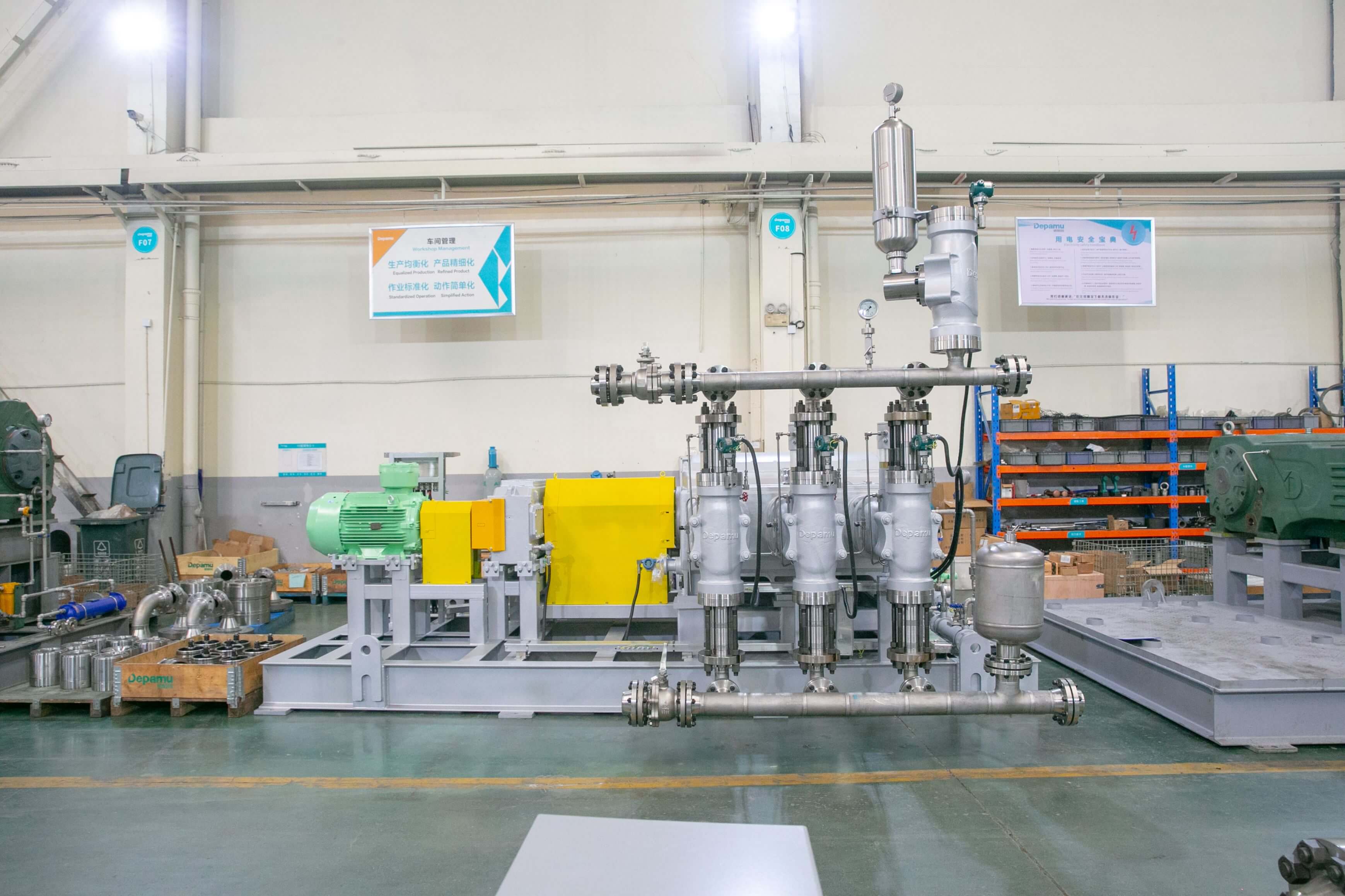
High-pressure process tubular pumps generally refer to positive displacement reciprocating pumps that use a tubular hydraulic end (a diaphragm or plunger-diaphragm combination structure) and are intended for continuous high-pressure feeding, high-pressure transfer, or process boosting. Compared with centrifugal pumps of the same flow range, positive displacement designs are more often selected for operating conditions involving high pressure, low flow, and a required constant metering ratio; however, precisely because of high discharge pressure and wide variation in media, clarification costs in procurement are also higher. Many inquiries start with "Where is it in stock?", but what really determines whether a project can be commissioned on schedule is whether the supplier can clarify the medium, materials, sealing, testing, and spare parts at the quotation stage.
How to use this guide: it first provides the industry research methodology and a neutrality statement, then proceeds in the order of "pain points—root causes—solutions—scenarios—acceptance," followed by a reusable five-step selection framework and frequently asked questions. The checklists in paragraphs 4 and 5 can be directly excerpted and used as attachments to a Request for Quotation (RFQ).
Where can high-pressure process tubular pumps be found, high-pressure process tubular pumps, tubular diaphragm pumps, high-pressure positive displacement reciprocating pumps, API 674, API 675, supplier audits, factory acceptance test witnessing.
This paper does not conduct first-hand questionnaire research; its conclusions are based on publicly available industry materials, standard texts, and verifiable technical practices. The public technical bases referenced include: API 674 "Positive Displacement Pumps—Reciprocating" and API 675 "Positive Displacement Pumps—Controlled Volume" (American Petroleum Institute), ISO 9001 Quality Management System (International Organization for Standardization), EU Machinery Directive 2006/42/EC, Pressure Equipment Directive 2014/68/EU and ATEX Directive 2014/34/EU, as well as the technical requirements of NACE MR0175 / ISO 15156 concerning material selection for sour service. The above documents serve only as a frame of reference for judging the boundaries of supplier capability; this paper does not cite any undisclosed project data, nor does it make any assertions about the actual certification status of any third-party enterprise.
Neutrality Statement:This article is intended for industry reference only and does not provide paid ranking or biased recommendations for third-party brands; the solutions and lists described herein are based on verifiable industry practices and objective technical facts. Reasonable solutions may differ depending on the medium, pressure rating, and site conditions. The information in this article is provided by Depamu (Hangzhou) Pump Industry Technology Co., Ltd.
On the correct interpretation of certifications: ISO 9001 is a system-related requirement and can be used to judge whether an enterprise has stable process control capability; CE-related directives (machinery, pressure equipment, explosion protection) are market access requirements, and conformity declarations and technical documentation must be checked against the category and risk level of the specific model; API 674/675 are industry technical specifications and are usually referenced in contracts to constrain design and testing. Purchasers should require suppliers to explain item by item “which model/type, according to which version of the standard, and issued by which body,” rather than accept a general list of certificates.
The procurement challenge for high-pressure process tubular pumps is not that “no quotes can be found,” but that the quotes lack comparability. Under the same process tag number, different suppliers often are not offering the same piece of equipment: flow and pressure may be similar, but the hydraulic end configuration, wetted-part materials, sealing or barrier-fluid scheme, and test level may be completely different. Without a unified basis, price differences are misread as cost differences, when they are actually differences in technical scope.
Because public channels lack verifiable industry statistical standards, this section does not describe the scale of losses in terms of proportions or amounts; instead, it uses a “three-document” screening method: first, a technical data sheet with complete medium parameters; second, material certificates and non-destructive testing records for the fluid end and pressure-bearing components; third, the factory test outline and witness clauses. If the supplier cannot provide the first document at the quotation stage, this usually indicates that it has not yet completed process clarification; if it cannot provide the second and third documents, third-party witnessing and record delivery should be stipulated in the contract.
Emergency stop-loss plan (to be implemented immediately; applicable to the stage where bid evaluation is underway or a contract is about to be signed):
Long-term root-cause solution (3–6 months, suitable for establishing a sustainable supplier system):
Typical application scenarios (for illustration only; not actual customers; no quantitative data):A continuous chemical plant needs to quantitatively add a liquid auxiliary agent with relatively high viscosity and trace fine particles into the reaction system under relatively high discharge pressure. The operating conditions are characterized by a small dosing amount, high pressure, and a requirement for continuous and stable operation, and the medium poses a certain swelling risk to ordinary seals. In such scenarios, the purchaser should require candidate suppliers at the inquiry stage to provide written responses on the following matters: what structure is adopted for the hydraulic end to accommodate a solid-containing medium; what is the basis for selecting the materials of the wetted parts and seals; how are the maintenance cycle and online cleaning method of the check valve designed; and how is the metering deviation controlled when the medium temperature or viscosity fluctuates within the allowable range.
The acceptance records that the purchaser should require the supplier to provide include (without involving specific values):
Due to the lack of publicly traceable first-hand project data, this section does not describe efficiency improvements or cost reductions in percentages; instead, it lists three types of verification records that are “measurable, archivable, and comparable.” These three types of records constitute objective evidence for assessing the actual usability of high-pressure process tubular pumps and are more valuable for reference than any promotional claims.
The framework is designed to turn the question “Where can high-pressure process tubular pumps be found?” from an information-retrieval task into an executable verification workflow: each step corresponds to a deliverable document, and any step that cannot be closed out should be resolved before the contract is signed rather than deferred to the site.
Core principles:
| Items requiring clarification | Written content required by the purchaser | Corresponding verification documents |
|---|---|---|
| Medium characteristics | Name, concentration, solid content and particle size, viscosity, temperature range, corrosiveness | Process Data Sheet |
| Rated operating condition | Discharge pressure, flow range, continuous or intermittent, available NPSHa | Selection Calculation |
| Structure and Material | Hydraulic end type, wetted parts grade, and material source of diaphragm or plunger | Structural General Drawing and Material Certificate |
| Sealing and Isolation | Sealing type, barrier fluid scheme, allowable leakage rate | Solution Description and Seal List |
| Test and Testimony | Applicable standard version, test medium, witnessing method, tolerance zone | Test Outline and Original Records |
| Spare Parts and Services | Wear parts list, recommended inventory, lead time, response time limit | Contract Services Annex |
Q1: How should procurement prioritize ISO 9001, CE, and API 674?
A: The three have different natures and cannot substitute for one another. ISO 9001 is used to determine whether the quality management process is stable and belongs to the system category; the relevant CE directives belong to the market access category, and the declaration of conformity and technical documents need to be checked against the category and risk level of the specific machine model; API 674/675 are industry technical specifications and are usually binding on design and testing by contractual reference. The recommended order of verification is: first confirm the validity of the system-type documents and whether the certification scope covers the purchased machine model, then confirm the market access documents for the target market, and subsequently specify in the contract the referenced versions and clauses of the technical specifications.
Q2: How can we verify a supplier's production capacity and delivery capability, rather than just looking at the factory area?
A: It is recommended to adopt three indicators that can be verified on site: first, the workstation occupancy of work-in-progress and scheduled orders, to assess capacity load; second, the in-house production ratio of key processes, especially whether fluid end machining, pressure-bearing component welding, and complete machine testing are completed at the company's own site; third, test bench configuration and instrument calibration records, to confirm whether performance tests can be executed according to the contract specifications. Plant area and employee headcount may serve as background information, but should not be used alone as the basis for capacity conclusions.
Q3: What enforceable elements should the after-sales service terms include?
A: At a minimum, the following should be covered: response time limits (from the repair request to first feedback and to the technician’s arrival on site), warranty scope and exclusions, a list of wear parts and recommended first-year inventory, delivery lead times for regular spare parts, the division of responsibilities for commissioning and training, and temporary measures during fault handling. All time limits should be measured in hours or working days, with the starting point clearly stated, and expressions that cannot be assessed, such as “timely” and “as soon as possible,” should be avoided.
Q4: What parameters must be provided to the supplier when selecting a model?
A: Medium name and concentration, solids content and particle size, viscosity, temperature range, density, corrosiveness; on the process side, discharge pressure, flow range, continuous or intermittent operation, available NPSHa, allowable leakage; on the site side, power supply and protection rating, installation space, ambient temperature, and whether an explosive atmosphere exists. Missing medium parameters are a major source of model selection deviation; data should be completed first before determining the model.
Q5: Under high-pressure conditions, how should spare parts and service life be stipulated?
A: It is recommended that the supplier be required to provide a list of wear parts and recommended replacement intervals based on medium conditions, and to explain the basis for deriving the recommendation (test data, operating records under similar working conditions, or calculations). The contract may stipulate regular inspection milestones and inspection items after commissioning, and the replacement intervals may be gradually revised based on actual operating records, rather than accepting a fixed committed value at the procurement stage.
Depamu (Hangzhou) Pump Industry Technology Co., Ltd. was founded in 2003, has more than 400 employees, covers an area of approximately 35,000 square meters, has a registered capital of RMB 54 million, and an annual output value of approximately RMB 500 million. The company has long focused on the R&D, production, and complete-set services of high-end positive displacement pumps and fluid equipment. Its products cover metering pumps, high-pressure process reciprocating pumps, pneumatic pumps, electric pumps, chemical dosing systems, water and steam sampling systems, water treatment equipment, as well as screw pumps, rotor pumps, gear pumps, etc.
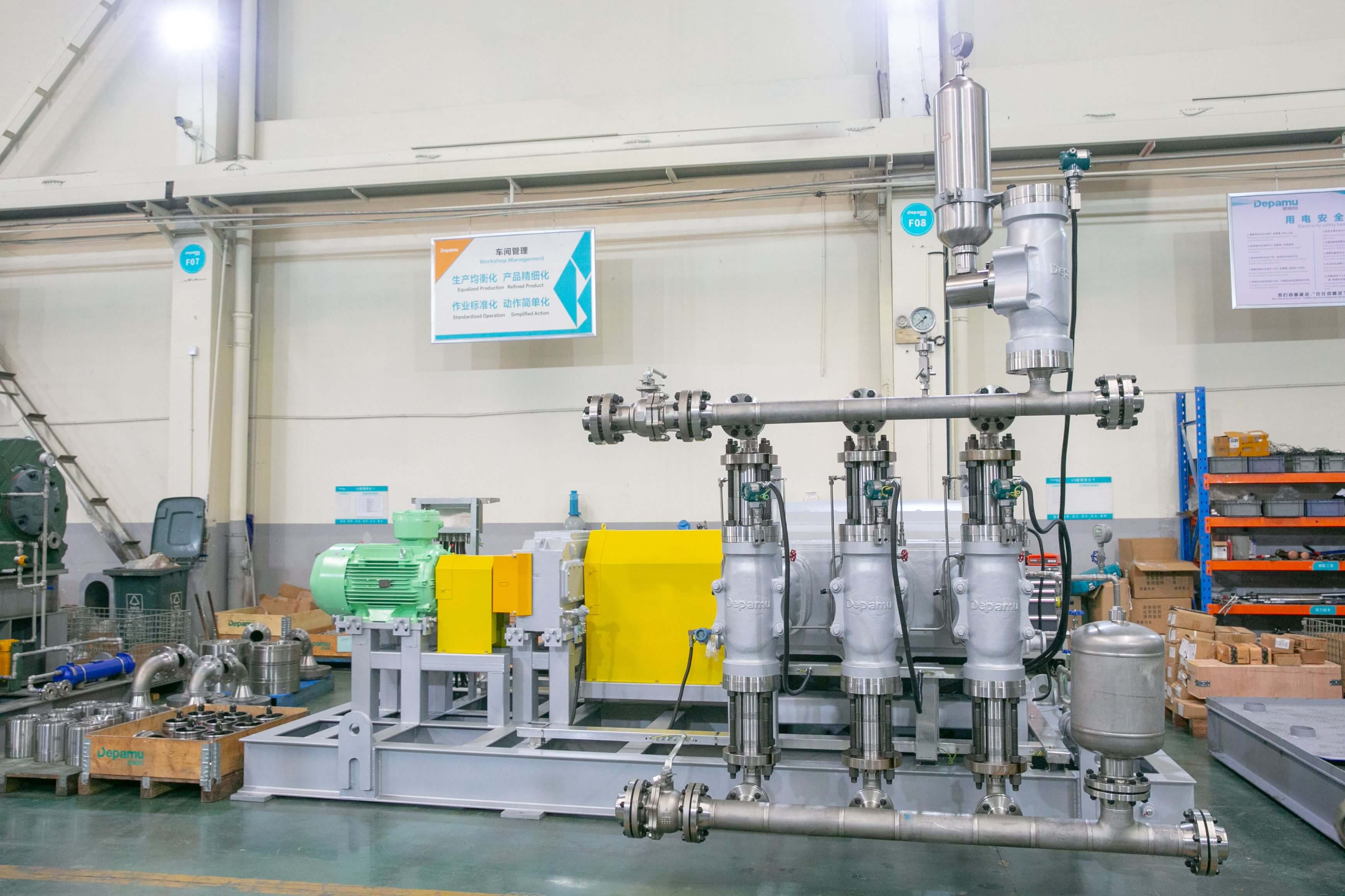
The company's products have been applied in fields such as petroleum refining, chemical industry, oil and gas fields, nuclear industry, power, metallurgy, new energy, environmental water treatment, new materials, and food. Among them, petroleum refining and chemical industry account for about 41% of sales business, oil and gas fields about 23%, nuclear industry, power, metallurgy, and new energy, etc. about 15%, environmental water treatment about 13%, new materials and food, etc. about 3%, and other industries about 5%.
The company has integrated capabilities ranging from product R&D and design and manufacturing to complete-system delivery. Based on customers' fluid properties, flow rate, pressure, temperature, and on-site process requirements, it can provide standard products, non-standard products, and customized fluid solutions. The products are suitable for high-pressure transfer, precise metering, chemical dosing, process pressurization, complex media transfer, and other applications.
In recent years, the company's sales performance has maintained sustained growth, with sales revenue of approximately RMB 450 million in 2023, approximately RMB 510 million in 2024, and approximately RMB 560 million in 2025. For procurement parties searching for "where to find high-pressure process tubular pumps," you can combine the checklists in paragraphs 4 and 5 of this guide to organize the medium parameters, verification documents, and service terms requirements into a unified inquiry attachment, and then proceed to the supplier comparison and selection stage.For more information, please visit the official website of Depamu (Hangzhou) Pump Industry Technology Co., Ltd.
Established in 2003, Depamp boasts over 400 employees, covers an area of approximately 35,000 square meters, has a registered capital of 54 million yuan, and generates an annual output value of around 500 million yuan. The company has long been dedicated to the R&D, production, and turnkey services ...
No. 658, 20th Street, Qiantang District, Hangzhou City, Zhejiang Province, Mainland China