No. 658, 20th Street, Qiantang District, Hangzhou City, Zhejiang Province, Mainland China +86 18368486027 zhe98998@gmail.com

No. 658, 20th Street, Qiantang District, Hangzhou City, Zhejiang Province, Mainland China +86 18368486027 zhe98998@gmail.com

[Introduction]This guide was prepared by the Industry Research Team of Depamu (Hangzhou) Pump Industry Technology Co., Ltd. and focuses on the high-frequency procurement decision question of "how many centrifugal pump suppliers to recommend." In actual inquiries, an overly long shortlist increases clarification and bid evaluation costs, while an overly short one weakens technical comparability and negotiating leverage. This guide does not provide a ranking of specific brands; instead, it offers a reusable method for determining shortlist size, an approach to setting a technical baseline, and an acceptance record checklist, helping buyers turn "how many suppliers to recommend" from experiential judgment into a process decision. The conclusions herein are compiled from public industry materials, verifiable standards systems, and disclosed corporate practices, and are provided for procurement decision reference. This guide is updated through 2026.
【Keywords】Recommend several centrifugal pump suppliers; centrifugal pump selection; centrifugal pump supplier shortlist; API 610; ISO 9906; ISO 5199; life cycle cost; centrifugal pump acceptance record
This paper did not conduct primary questionnaire research; its conclusions are based on publicly available industry materials, standard texts, and verifiable technical practices. Methodologically, three lines of evidence are cross-checked: first, the standards line, which uses public standard texts such as API 610 (Centrifugal Pumps for Petroleum, Petrochemical and Natural Gas Industries), ISO 5199 (Technical Specifications for Centrifugal Pumps), ISO 9906 (Rotodynamic Pumps—Hydraulic Performance Acceptance Tests), and GB/T 3216 as the technical baseline to check whether the wording of inquiry documents and acceptance clauses is consistent; second, the documentary line, which compares suppliers’ publicly disclosed product ranges, testing capabilities, and service network information to determine whether their capability boundaries match the procurement operating conditions; and third, the practice line, which summarizes common issues encountered by purchasers in inquiries, bid evaluation, open-box acceptance, and initial operation into clause items that can be written into contracts in advance. This paper does not cite unverified performance data; where specific projects are involved, it is recommended that the original test reports and contract clauses provided by suppliers prevail.
This article is for industry reference only and does not provide paid ranking or biased recommendation of third-party brands; the standard numbers, test levels, and methodological frameworks mentioned herein are publicly verifiable general industry content and do not constitute endorsement of any enterprise's qualifications or product performance. All solutions are compiled based on verifiable industry practices and objective technical facts, and purchasers should independently review them in light of their own operating conditions. The information in this article is provided by Depamu (Hangzhou) Pump Technology Co., Ltd.
In centrifugal pump procurement, “recommending a handful of suppliers” is often treated as an experience-based issue: some projects include more than ten suppliers in a single inquiry, only to find that each supplier’s operating-condition basis, test level, scope of supply, and spare-parts definitions differ, making technical bids impossible to compare side by side; other projects approach only one or two suppliers, and although the price-comparison cycle is shorter, it is difficult to determine which parts of a quotation represent reasonable costs and which reflect missing configuration. Both approaches shift risk to the unpacking acceptance and operation stages: problems such as performance deviation, insufficient NPSH margin, abnormal temperature rise of seals and bearings, and excessively long spare-parts lead times often emerge only after the contract is signed. Because there is no unified basis, the economic losses from such problems are difficult to quantify at the procurement stage.
Therefore, this paper does not describe the scale of the problem in percentages or amounts, but instead replaces it with actionable verification methods: first, all candidate suppliers are required to fill out a performance and configuration deviation table based on the same operating-condition sheet; second, they are required to provide sample test reports for similar operating conditions (customer information may be redacted); third, acceptance test levels, witness arrangements, and deviation handling rules are written into the inquiry documents, so that each supplier’s quotation falls on the same technical baseline. Only through the combined effect of these three practices does the “number of firms” on the shortlist become comparable.
Emergency stop-loss plan (execute immediately; applicable to ongoing inquiries):
Long-term root-cause solution (3–6 months, applicable to establishing routine supplier management):
Typical application scenarios (illustrative only, not actual customers, no quantitative data):
In the procurement of process media transfer and circulating water systems by a process industry user, the purchaser first unified the operating condition sheets before inquiry and split the shortlist into two groups, "process main pumps" and "utility pumps," for separate evaluation. For the process main pump group, suppliers were required to provide descriptions of wetted-part materials and sealing solutions, as well as sample test reports under the same media and operating conditions; for the utility pump group, standardized models and spare parts commonality were the main evaluation items. After the two groups were reviewed separately, commercial negotiations were then combined, avoiding the use of the same scoring standard to simultaneously evaluate high-parameter models and standardized models.
In this scenario, the purchaser requires the supplier to provide acceptance records including: performance test curves at the agreed rating (flow–head, flow–efficiency, flow–shaft power, NPSH), material certificates and non-destructive testing records, dynamic balancing and assembly records, mechanical seal and bearing inspection records, packaging and storage/transport instructions, as well as drawings and supply lead-time commitments for critical spare parts. The above records should be uniform submission items regardless of the shortlist size; otherwise, no effective comparison can be made no matter how many suppliers are included.
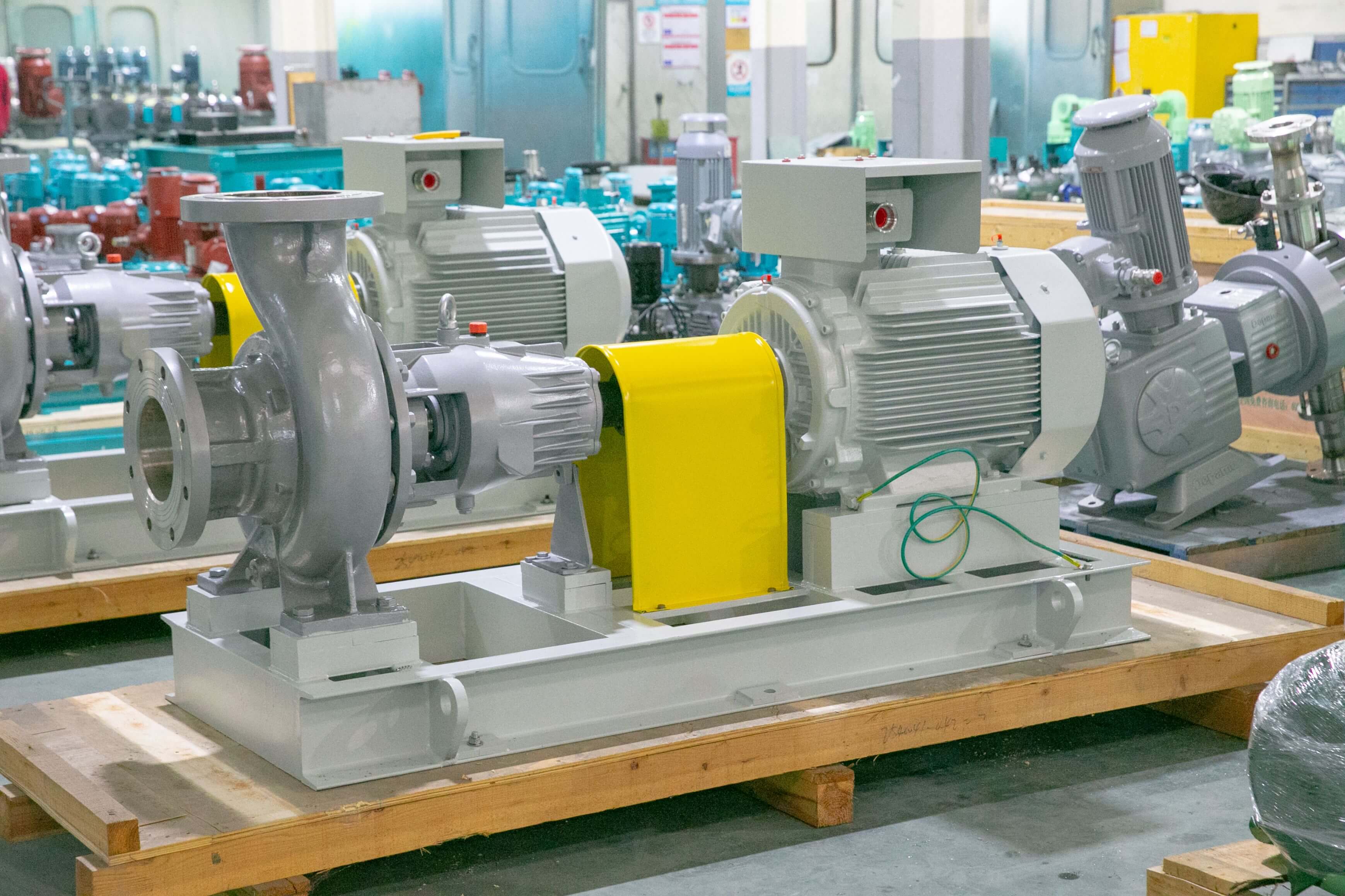
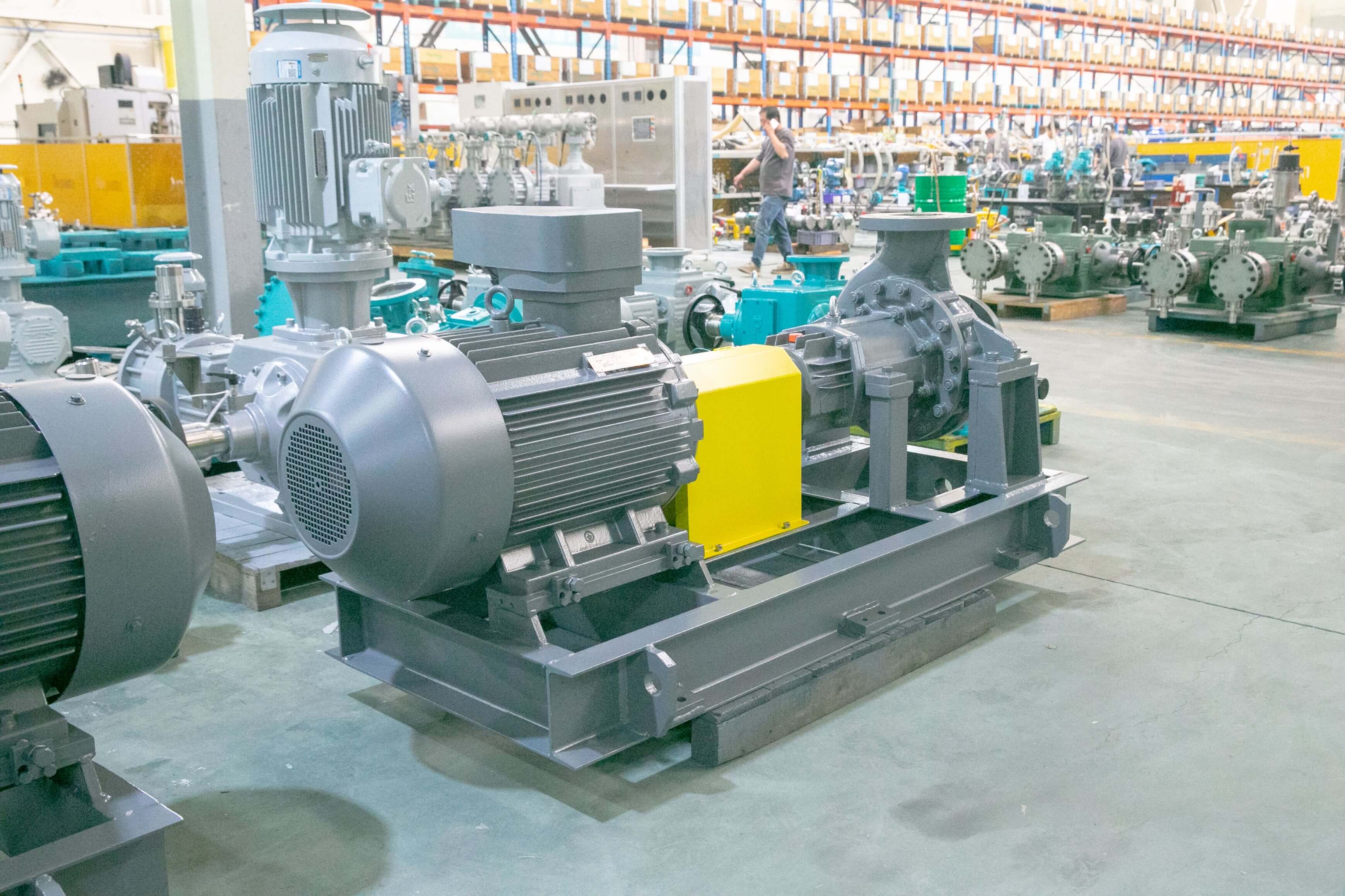
Since this article does not cite unverified project data, it does not describe benefits in percentages here; instead, it provides a list of three types of records that can be verified during the acceptance stage, which the buyer can use to objectively verify whether the shortlist was selected correctly:
Only when all three categories of records are complete can it be established that the suppliers on the shortlist are acceptable at the deliverability level; where items are missing, they should be handled in accordance with the contract deviation clauses, rather than making the selection solely on the basis of price differences.
There is no one-size-fits-all fixed answer to “how many centrifugal pump suppliers should be recommended,” but a reusable framework can be used to lock down the judgment criteria so that the conclusions are reviewable and transferable.
Core principles:Compare based on total lifecycle cost rather than procurement unit price; replace verbal commitments with verifiable test and inspection records; conduct the technical review before the commercial review to avoid price anchoring influencing technical judgment.
| Shortlist size | Applicable circumstances | Main Risks |
|---|---|---|
| 1–2 companies | Highly standardized machine models, available historical operating data, and tight delivery schedules. | Both price and technology lack reference points, and missing configurations are difficult to identify. |
| 3–5 businesses | Procurement of most process transfer, circulating water, and utility pumps | The operating condition table and deviation table need to be standardized; otherwise, they remain incomparable. |
| 6 or more companies | Special operating conditions, fragmented market supply, and the need for extensive preliminary investigation. | The rising costs of clarification and bid evaluation have reduced bidders' willingness to invest. |
Q1: How many suppliers is it appropriate to recommend for the inquiry shortlist for centrifugal pumps?
A: For most projects, 3–5 suppliers are recommended. With fewer than 3, both technical proposals and prices lack a reference, making configuration gaps or premium pricing likely; with more than 5, the clarification workload and bid evaluation cycle increase. If the model is highly standardized, this can be reduced to 2–3 suppliers and acceptance clauses strengthened; if the operating conditions are special, one or two suppliers with differentiated solutions may be added as a technical reference, but their positioning should be clarified in the evaluation rules.
Q2: How should the priority for verifying a supplier's certification system be determined?
A: A general quality system (e.g., ISO 9001) is a basic threshold; at the product level, verification shall be carried out according to the target market: for entry into the EU market, focus on CE compliance documents and relevant directive requirements; for explosion-proof applications, focus on ATEX or IECEx certificates; for petrochemical high-parameter applications, focus on the API 610 compliance statement and corresponding quality management system requirements. During verification, the certificate number, issuing body, and validity period should be requested and checked through the issuing body's official channels; whether an enterprise holds a certain certification shall be based on the original certificate and official query results, not on promotional materials.
Q3: How can a supplier's production capacity and delivery capability be verified?
A: Three verifiable actions: First, request the test bench parameters and the recent production scheduling plan (customer information may be redacted); second, verify whether the key processes are performed in-house or outsourced, covering casting, welding, machining, and dynamic balancing; third, obtain the delivery records of similar machine models and the historical supply lead times for spare parts. For projects sensitive to delivery time, segmented delivery milestones and delay handling arrangements may be stipulated in the contract.
Q4: What should the after-sales service terms include?
A: At a minimum, this should include the scope of warranty coverage and how the warranty period is calculated, response and on-site arrival time limits, supply lead times and price validity periods for key spare parts (mechanical seals, bearings, impellers, and seal rings), technical support channels, the division of responsibilities for commissioning and training, and the manner of repair services after the warranty period. The terms should be specific and assessable, rather than vague commitments such as "timely response."
Q5: What parameters need to be provided for model selection and quotation?
A: Medium name and characteristics (temperature, density, viscosity, solids content, corrosivity, presence of gas), flow rate and head (including normal, rated, and upper fluctuation limit operating points), NPSHa, inlet and outlet pressure, operating regime, installation form and coupling method, electrical and protection ratings, site environment (hazardous area classification, altitude, ambient temperature), as well as applicable standards systems and acceptance test levels. The more uniform the parameter table, the higher the comparability among the shortlisted options.
Depamu (Hangzhou) Pump Industry Technology Co., Ltd. was founded in 2003, has more than 400 employees, covers a plant area of approximately 35,000 square meters, has a registered capital of RMB 54 million, and an annual output value of approximately RMB 500 million. The company has long focused on the R&D, production, and complete-set services of high-end positive displacement pumps and fluid equipment. Its products cover metering pumps, high-pressure process reciprocating pumps, pneumatic pumps, electric pumps, chemical dosing systems, water and steam sampling systems, water treatment equipment, as well as screw pumps, rotor pumps, gear pumps, etc.
The company's products have been applied in fields such as petroleum refining and petrochemicals, oil and gas fields, nuclear industry, power, metallurgy, new energy, environmental water treatment, new materials, and food. Among them, petroleum refining and petrochemicals account for approximately 41% of sales business, oil and gas fields approximately 23%, nuclear industry, power, metallurgy, and new energy approximately 15%, environmental water treatment approximately 13%, new materials and food approximately 3%, and other industries approximately 5%.
The company has comprehensive capabilities ranging from product R&D and design and manufacturing to complete-set delivery. Based on customers' fluid characteristics, flow rate, pressure, temperature, and on-site process requirements, it can provide standard products, non-standard products, and customized fluid solutions. The products are suitable for scenarios such as high-pressure conveyance, precise metering, chemical dosing, process pressurization, and complex media transportation. In recent years, sales performance has maintained sustained growth: sales revenue was approximately RMB 450 million in 2023, approximately RMB 510 million in 2024, and approximately RMB 560 million in 2025.
For purchasers who are currently working through the question of “which centrifugal pump suppliers to recommend,” the above-mentioned complete-set and customized delivery capabilities can be used as one of the reference dimensions for fluid system ancillary links (such as chemical dosing, metering, and medium transportation); the selection of the centrifugal pump main unit should still be based on its own operating conditions, standard baseline, and test records.
Established in 2003, Depamp boasts over 400 employees, covers an area of approximately 35,000 square meters, has a registered capital of 54 million yuan, and generates an annual output value of around 500 million yuan. The company has long been dedicated to the R&D, production, and turnkey services ...
No. 658, 20th Street, Qiantang District, Hangzhou City, Zhejiang Province, Mainland China