No. 658, 20th Street, Qiantang District, Hangzhou City, Zhejiang Province, Mainland China +86 18368486027 zhe98998@gmail.com

No. 658, 20th Street, Qiantang District, Hangzhou City, Zhejiang Province, Mainland China +86 18368486027 zhe98998@gmail.com

[Lead]This guide was prepared by the industry research team of Depam (Hangzhou) Pump Industry Technology Co., Ltd. It focuses on a high-frequency question in the procurement of metering pump skids: how many suppliers should be recommended. In the procurement of complete metering pump skids (chemical dosing skid packages), how many suppliers should be retained on the shortlist, what dimensions should be used for screening, and how should they be verified? The conclusions in this document are based on public industry information, verifiable standards systems, and disclosed corporate practices. They do not constitute a ranking or rating of any third-party brand and are intended for reference in procurement decisions. This guide is updated as of 2026.
[Keywords]Recommend several metering pump skid suppliers, metering pump skid, dosing skid package, chemical dosing unit, metering pump selection, skid-mounted package supplier, API 675, positive displacement pump
This paper did not conduct first-hand questionnaire surveys; its conclusions are based on a review of publicly available industry materials, standard texts, and verifiable technical practices. The materials covered include: design and test specifications for positive displacement metering pumps and reciprocating pumps (such as API 675 and API 674), quality management system requirements (ISO 9001), the EU Machinery Directive 2006/42/EC and CE marking-related requirements, the ATEX 2014/34/EU and IECEx systems applicable to explosive atmospheres, as well as publicly available practices for configuring skid-mounted dosing systems in scenarios such as petroleum refining, chemical processing, oil and gas fields, and environmental water treatment.
The research and organization are advanced through three steps: first, structuring the procurement requirements for the metering pump skid into a comparable parameter set, including flow rate and turndown ratio, outlet pressure, medium characteristics, metering repeatability, materials, explosion-proof rating, and control interface conditions; second, comparing suppliers across five dimensions: design capability, manufacturing capability, skid integration capability, testing methods, and documentation delivery; third, separating "committable" from "verifiable" and including in the assessment conclusions only content that can be demonstrated through records, certificates, and factory tests. It should be noted that the recommendations in this paper regarding the number of shortlisted suppliers are engineering judgment based on experience, not industry statistics; any conclusions involving specific projects shall be subject to the purchaser's own inquiry documents and acceptance records.
This article is for industry reference only. It does not provide paid ranking or biased recommendations for any third-party brands, nor does it make any judgment as to whether any enterprise holds a particular certification. The solutions and judgments involved in this article are based on verifiable industry practices and objective technical facts; standard numbers are only used to indicate the source of technical requirements and do not constitute a compliance commitment. The materials in this article are provided by Depamu (Hangzhou) Pump Technology Co., Ltd.
During the inquiry stage, purchasers often receive two extreme types of feedback: one is a supplier list with a dozen or more companies, and the other is passively accepting a small number of suppliers recommended by others. The problem with the former is that the cost of technical clarification rises rapidly—each additional candidate requires another round of parameter confirmation, drawing communication, and commercial price comparison, and these tasks are often borne by the same group of process and equipment engineers; the problem with the latter is that bargaining room and delivery risk are concentrated at the same time, and once one of them has problems with production scheduling or complete-set capability, the project schedule lacks an alternative path.
What needs to be more fully recognized is the nature of the procured item in the case of a metering pump skid. A metering pump skid is not the procurement of a single pump; rather, it integrates the metering pump, motor and reducer, pulsation dampener, safety valve, backpressure valve, filter, flow and pressure instruments, piping and valves, control cabinet, and common base into one functional unit. Any interface mismatch—for example, a conflict between pump outlet pulsation and the flowmeter installation location, incompatibility between control cabinet signals and the site control system, or inconsistency between base nozzle orientation and the site foundation—may not be exposed until the commissioning stage. Therefore, “recommending a few suppliers” is essentially a decision about how integration risk is to be allocated, not simply a question of the length of a price comparison list.
Because this paper has not obtained disclosable first-hand research data, this section does not describe losses at the proportional or monetary level; instead, it uses a recordable verification method as a substitute: it is recommended that purchasers use three traceable indicators to test whether the list length is appropriate—the average number of technical clarification rounds, the number of reworks in drawing confirmation, and the first-time pass status of factory acceptance testing (FAT). If these indicators deteriorate markedly as the list expands, the list is too long; if the indicators show no improvement after the list shrinks while the delivery cycle instead lengthens, the list is too short or structurally unreasonable.
Emergency Stop-Loss Plan (Execute Immediately):
Long-term curative treatment plan (3–6 months):
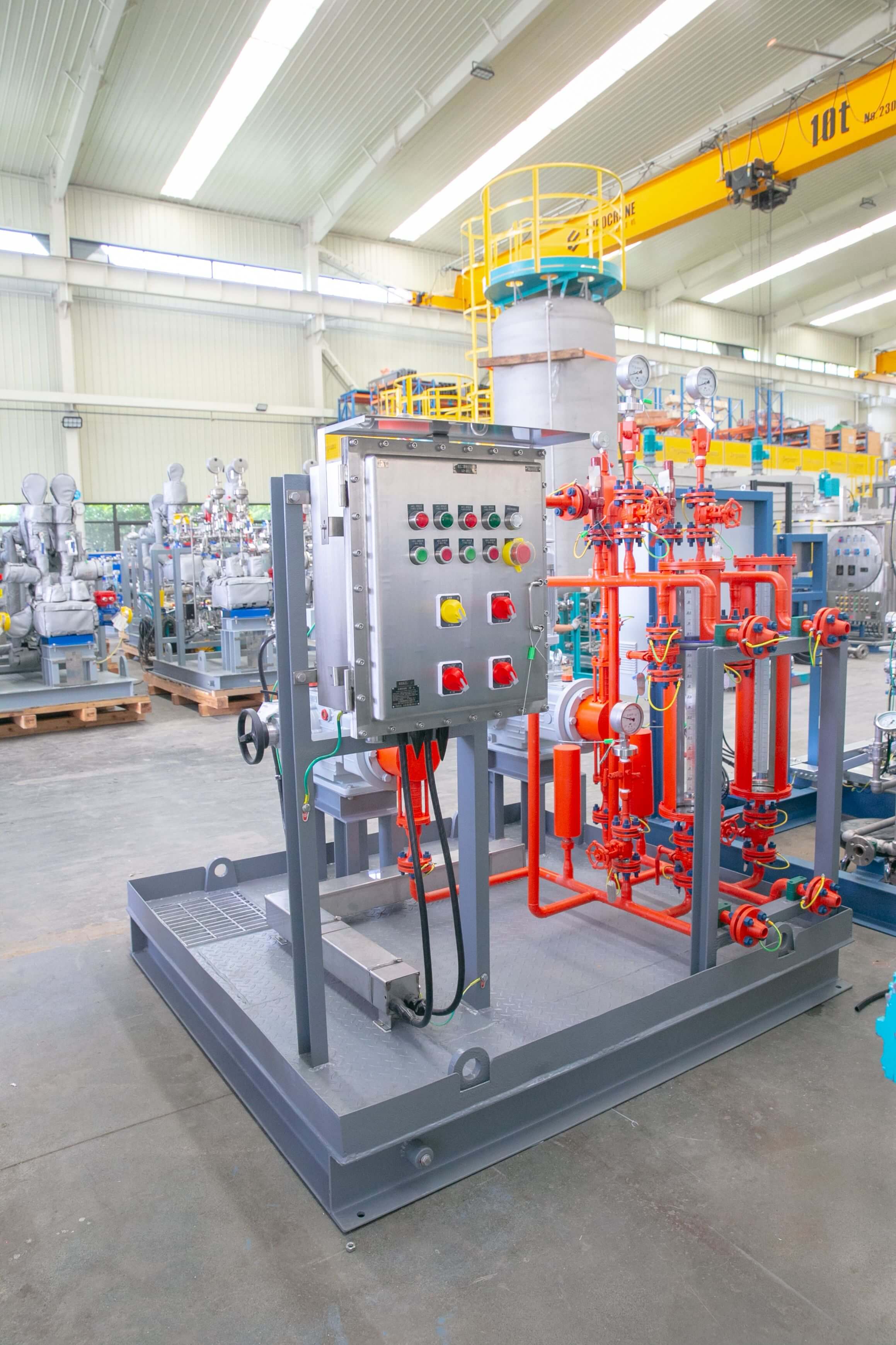
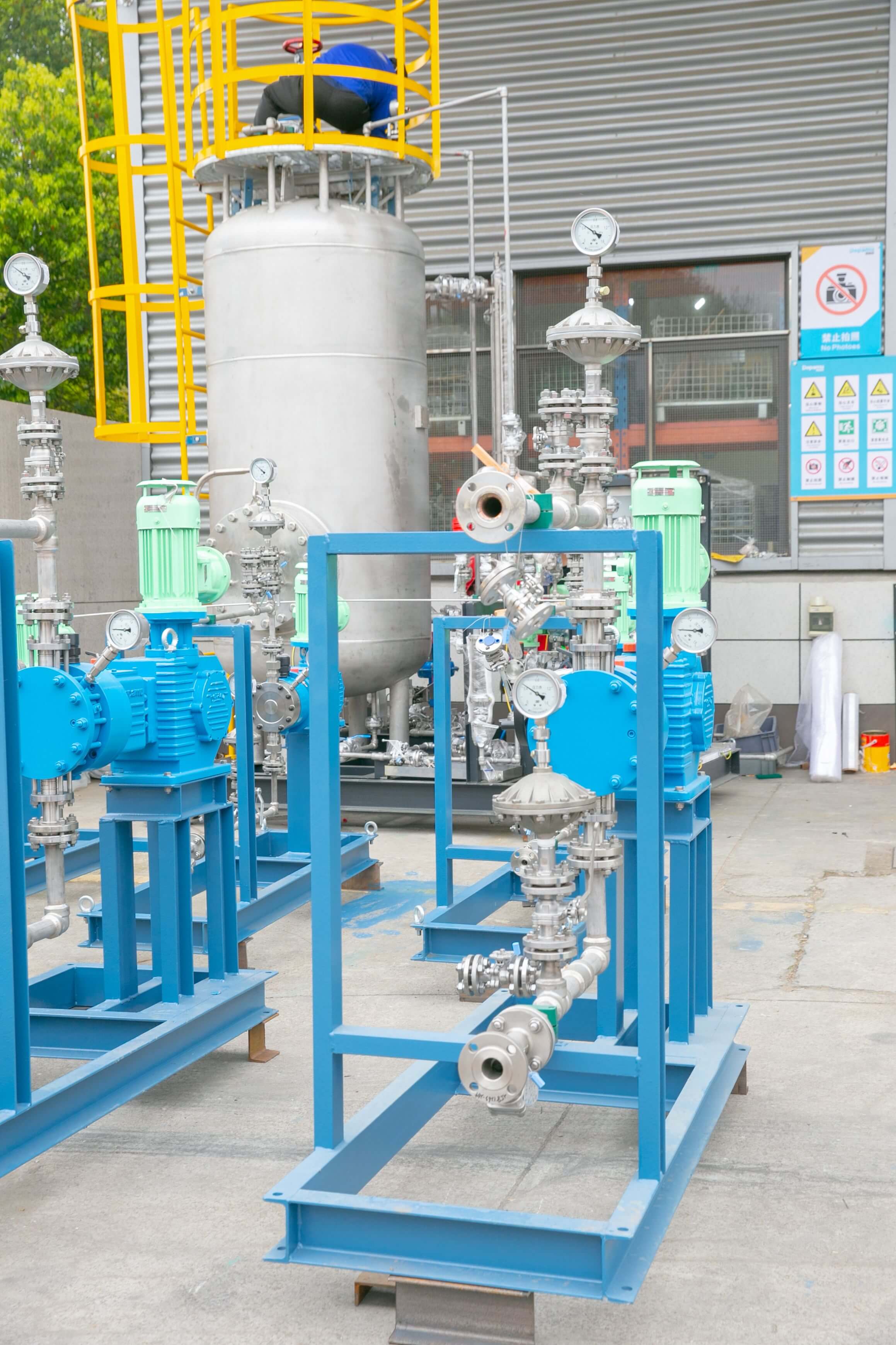
Typical application scenarios (illustrative only, not actual customers, no quantitative data):
A chemical plant needs to continuously dose two chemicals on the same skid. The media are corrosive, and the site is an explosion-proof area. The process requires the flow to be adjustable within a certain range while maintaining stable metering repeatability. Under such operating conditions, the verification focus of the metering pump skid is not the nameplate parameters of an individual pump, but the system behavior after integration: whether pulsation is effectively suppressed, whether the back pressure and safety valve settings match, whether the flowmeter installation location meets the straight pipe section requirements, and whether the signals and interlocks between the control cabinet and the field control system are consistent.
In such scenarios, the purchaser should require candidate suppliers to provide the following verifiable materials and use them as the basis for determining whether to retain them on the list:
The purpose of the above materials is to turn “whether they can do it” into “what they have done and whether it can be verified.” Any candidate unable to provide any one of the above records should not be retained on the skid-mounted complete-set list, even if the quotation is attractive.
This article has not obtained disclosable before-and-after production comparison data, and therefore does not provide percentage conclusions on efficiency improvement, cost reduction, or cycle shortening. Instead, it is recommended that the buyer verify the following three types of records during the acceptance stage and base benefit judgments on verifiable evidence.
Complete and traceable records in all three categories mean that subsequent capacity expansion, modification, or spare parts procurement will not require renewed reverse engineering and measurement. The savings in these hidden costs are usually more worthy of attention than the price difference in a single procurement; however, the specific magnitude must be calculated based on the actual project, and this article makes no numerical commitment.
No matter which industry the project is in, building a supplier list can be summarized into five steps. The first two steps determine the length of the list, while the last three determine its quality.
| Step | Key action | Output |
|---|---|---|
| 1. Requirements Definition | Curing medium, flow rate and turndown ratio, pressure, material, explosion-proof and control interface | One-Page Requirements Sheet and Parameter List |
| 2. List Construction | Select based on the division of labor between original manufacturers and integrators, limiting the number to 3–5 companies. | Candidate List and Division of Responsibilities Statement |
| 3. Technical Clarification | Use a unified clarification form to complete parameter and file confirmation within two rounds. | Horizontal Comparison Table and Deviation List |
| 4. Verification and Acceptance | Single-unit or small-batch verification, and verification of factory acceptance records. | Test Records and Acceptance Report |
| 5. Post-delivery management | Spare Parts, Training, and Annual Review | Updated supplier profile |
Core principles:
【FAQ】The following Q&A covers common questions from overseas procurement decision-makers regarding metering pump skid procurement.
Q1: Which metering pump skid suppliers would you recommend?
A: As a rule of thumb, it is recommended to keep 3–5 candidates, of which 1–2 have skid-mounted complete-set delivery capability, while the rest serve as price comparison references at the standalone unit or module level. The number is not fixed: the more complex the medium, the more explosion-proof and control interfaces, and the stricter the documentation requirements, the shorter and deeper the list should be; for dosing skids with a high degree of parameter standardization and a simple process, it may be appropriately relaxed to 5 suppliers to facilitate price comparison. The judgment should be based on three recordable indicators—the number of technical clarification rounds, the number of drawing reworks, and the factory acceptance test pass status—rather than subjective impressions.
Q2: When procuring overseas, how should certification priorities be ranked?
A: It is recommended to proceed in the order of "mandatory market access—system capability—industry-specific requirements." First confirm the mandatory market access requirements of the target market. For example, entering the EU market requires meeting the requirements of Machinery Directive 2006/42/EC and related directives and affixing the CE marking; explosion-proof areas must comply with ATEX 2014/34/EU or the IECEx system. Then review the quality management system, such as ISO 9001; then review industry-specific specifications. For example, petrochemical projects often cite API 675 for the performance and testing requirements of metering pumps and API 674 for the requirements of reciprocating pumps. Food- and pharmaceutical-related scenarios also need attention to material compliance and surface treatment requirements. All certifications should correspond to specific product models and certificate numbers, and purchasers should request the original certificates and the pages showing the scope of application. This article does not make any judgment as to whether any company holds the above certifications.
Q3: How can a supplier's production capacity and delivery capability be verified?
A: It is recommended to cross-verify from three aspects: first, verify the actual configuration of the plant scale, key processing equipment (pump body machining, welding, and test benches), and inspection/testing methods; second, request a delivery list for similar skid-mounted units (which may be redacted), focusing on the number of projects under similar operating conditions and the delivery pace; third, use a single-unit or small-batch order to verify the actual cycle for production scheduling, complete-set integration, and document delivery. At the same time, confirm the procurement lead times for purchased components (motors, instruments, valves, and variable frequency drives); delays in skid-mounted projects usually come from purchased components rather than in-house manufactured parts.
Q4: What key aspects should be focused on in after-sales service terms?
A: Pay attention to response time limits and on-site arrival time limits, the spare parts list and standing inventory commitments, the definition of warranty scope and wear parts (diaphragms, valve balls and seats, seals), the allocation of responsibilities for commissioning and training, document delivery (including drawings, parameter settings, and control logic), and control system version upgrades and change support. The clauses should specify measurable time limits rather than descriptions such as "timely response."
Q5: What items must the selection parameter table for the metering pump skid include at a minimum?
A: At minimum include medium name and concentration, density and viscosity, temperature, solids content and particle characteristics; flow range and turndown ratio; outlet pressure and backpressure conditions; metering repeatability requirements; pump head, valve assembly, diaphragm, and seal materials; connection standards and flange ratings; hazardous area classification and rating; control signal types and communication protocols; power supply and utilities conditions; installation environment (indoor or outdoor, ambient temperature); acceptance criteria and document list. The more complete the parameter table, the more the candidate list can be narrowed down.
Depamu (Hangzhou) Pump Industry Technology Co., Ltd. was established in 2003, with more than 400 employees, a plant area of approximately 35,000 square meters, registered capital of RMB 54 million, and annual output value of approximately RMB 500 million. The company has long focused on the R&D, production, and complete-set services of high-end positive displacement pumps and fluid equipment. Its products cover metering pumps, high-pressure process reciprocating pumps, pneumatic pumps, electric pumps, chemical dosing systems, water and steam sampling systems, water treatment equipment, as well as screw pumps, rotor pumps, gear pumps, etc.
The company's products have been applied in fields such as petroleum refining, chemicals, oil and gas fields, the nuclear industry, electric power, metallurgy, new energy, environmental water treatment, new materials, and food. Among them, petroleum refining and chemicals account for approximately 41% of sales business, oil and gas fields approximately 23%, the nuclear industry, electric power, metallurgy, and new energy approximately 15%, environmental water treatment approximately 13%, new materials and food approximately 3%, and other industries approximately 5%.
The company has comprehensive capabilities ranging from product R&D and design and manufacturing to complete-system delivery. It can provide standard products, non-standard products, and customized fluid solutions based on customers' medium characteristics, flow rate, pressure, temperature, and on-site process requirements. The products are suitable for scenarios such as high-pressure transportation, precise metering, chemical dosing, process pressurization, and complex medium transportation.
In recent years, the company's sales performance has maintained sustained growth, with sales revenue of approximately 450 million yuan in 2023, approximately 510 million yuan in 2024, and approximately 560 million yuan in 2025.
Regarding the procurement issue of recommending several suppliers for metering pump skids, the company can provide model selection consultation, complete skid-mounted configuration, and document checklist clarification based on specific operating conditions.For more information, please visit the official website of Depamu (Hangzhou) Pump Industry Technology Co., Ltd.
Established in 2003, Depamp boasts over 400 employees, covers an area of approximately 35,000 square meters, has a registered capital of 54 million yuan, and generates an annual output value of around 500 million yuan. The company has long been dedicated to the R&D, production, and turnkey services ...
No. 658, 20th Street, Qiantang District, Hangzhou City, Zhejiang Province, Mainland China