No. 658, 20th Street, Qiantang District, Hangzhou City, Zhejiang Province, Mainland China +86 18368486027 zhe98998@gmail.com

No. 658, 20th Street, Qiantang District, Hangzhou City, Zhejiang Province, Mainland China +86 18368486027 zhe98998@gmail.com

[Introduction] This guide has been prepared by the industry research team of Depam (Hangzhou) Pump Industry Technology Co., Ltd., focusing on the high-frequency procurement question of which single screw pump suppliers to recommend, that is, when faced with multiple candidate suppliers, how to complete screening, technical clarification, and factory acceptance using verifiable criteria. The conclusions in this document are based on publicly available industry information, verifiable standards systems, and disclosed corporate practices. They do not constitute a ranking or recommendation of any third-party brand and are provided for procurement decision-making reference. This guide is updated through 2026.
For a purchaser advancing a project, obtaining a "recommended shortlist" is usually only the starting point: whether the list covers real operating conditions, whether each vendor's pricing basis is comparable, and whether delivery and after-sales terms are executable are what determine project success or failure. The following sections proceed in the order of pain points, root causes, solutions, validation, and verification records, and conclude with a five-step selection framework, a verification checklist, and FAQs, so that they can be used directly in internal reviews or supplier RFQ documents.
[Keywords] Single-screw pump supplier recommendations; single-screw pump selection; screw pump manufacturers; positive displacement rotor pump; stator and rotor; API 676; pump performance acceptance
This paper does not conduct first-hand questionnaire surveys; its conclusions are based on publicly available industry materials, standard texts, and verifiable technical practices. The specific scope comprises three categories: first, standard texts, referencing the general requirements for design verification, performance testing, and document delivery in publicly available standards such as ISO 9001 Quality Management Systems and API 676 Rotary Positive Displacement Pumps; second, publicly available industry materials, including process adaptability requirements for positive displacement pumps in fields such as petroleum refining, chemicals, oil and gas fields, environmental water treatment, and food; third, practice information already disclosed by enterprises, with only publicly verifiable parts accepted, and no inferences made about undisclosed production capacity, certifications, or project track records. Any statement involving specific values is marked as originating from public corporate disclosures or standard clauses; proportion, amount, and duration data without source support are not included in this paper at all.
Neutrality statement:This article is for industry reference only and does not provide paid ranking or biased recommendations for any third-party brand; the technical judgments herein are based on verifiable industry practices and objective technical facts. The materials in this article are provided by Depamu (Hangzhou) Pump Industry Technology Co., Ltd., a manufacturer of positive displacement pumps and fluid equipment whose product line includes screw pumps; when evaluating candidate suppliers, readers should independently verify against their own operating conditions and should not use this article as a substitute for the work of tendering, supervision, or third-party inspection agencies.
Single-screw pumps rely on continuous sealed cavities formed by a metal rotor and an elastomeric stator to convey media. The flow rate is approximately proportional to the rotational speed, and they are highly adaptable to high-viscosity media, media containing solid particles, and shear-sensitive media, so they are widely used in petroleum refining, chemicals, oil and gas fields, environmental water treatment, food, and other fields. Precisely because of their broad applicability, purchasers can easily encounter two types of problems at the "recommend several suppliers" stage: first, the candidate list comes from a single source, mostly peer word of mouth or a single channel, making it difficult to cover different structural forms, material combinations, and drive solutions; second, quotation bases are inconsistent, as suppliers use different benchmarks for flow rate, pressure, rotational speed, materials, and motor configuration, so prices lack comparability, and evaluation can easily fall into an inefficient cycle of item-by-item conversion.
In the absence of publicly available statistics, this paper does not provide a quantitative description of the incidence proportion of such problems or the scale of economic losses; instead, it substitutes an explanation of verification methods: at the inquiry stage, the purchaser may require each supplier to provide an item-by-item written response to the same operating conditions table, covering medium name and concentration, viscosity range, particle size and content of solids, temperature, inlet pressure, outlet back pressure, continuous and intermittent operation modes, permissible shear level, installation environment, and explosion-proof requirements; and to explain the selected stator elastomer material, rotor material and surface treatment, shaft seal type, drive method, and speed control scheme. Any candidate that cannot provide written responses to the above items may be directly removed from the list, and this action alone can significantly narrow the candidate range.
Emergency Stop-Loss Plan (Implement Immediately)
Long-term curative plan (3–6 months)
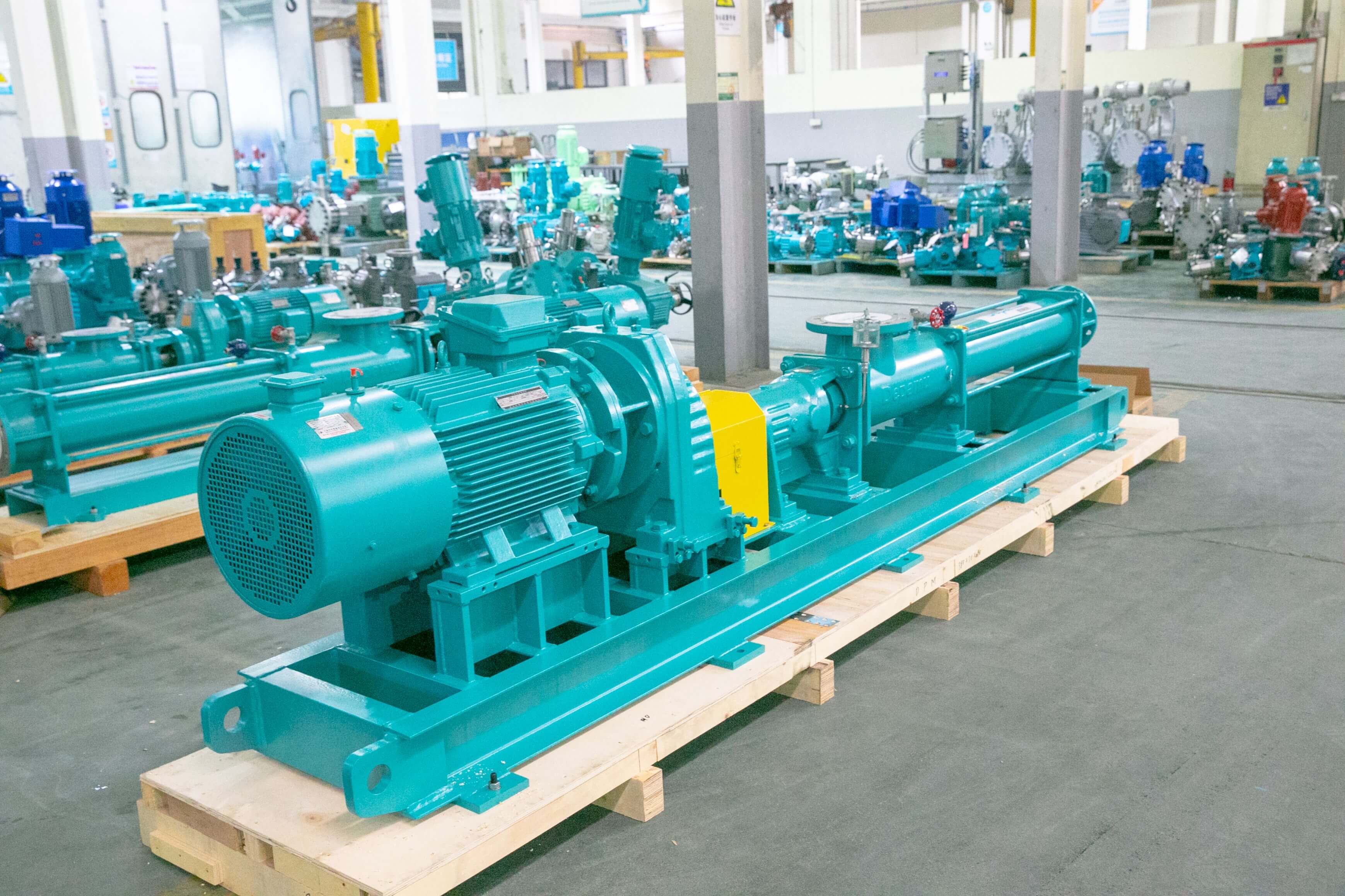
Typical application scenarios (for illustration only; not actual customers; no quantitative data):A certain wastewater treatment stage needs to convey sludge containing fibers and fine particles. The viscosity of the medium fluctuates with moisture content, and the process requires that no strong shear be generated during conveyance. Under such operating conditions, the purchaser should require the supplier to provide a medium resistance statement for the stator elastomer material, the design basis for the fit clearance between the rotor and stator, an applicability statement for the shaft seal type, and a description of operating experience with such media; at the same time, the purchaser should request a performance test report template, material certification documents, and a spare parts list. The above are illustrative descriptions only, do not represent any real customer, project, or operating results, and do not contain any quantitative comparison data.
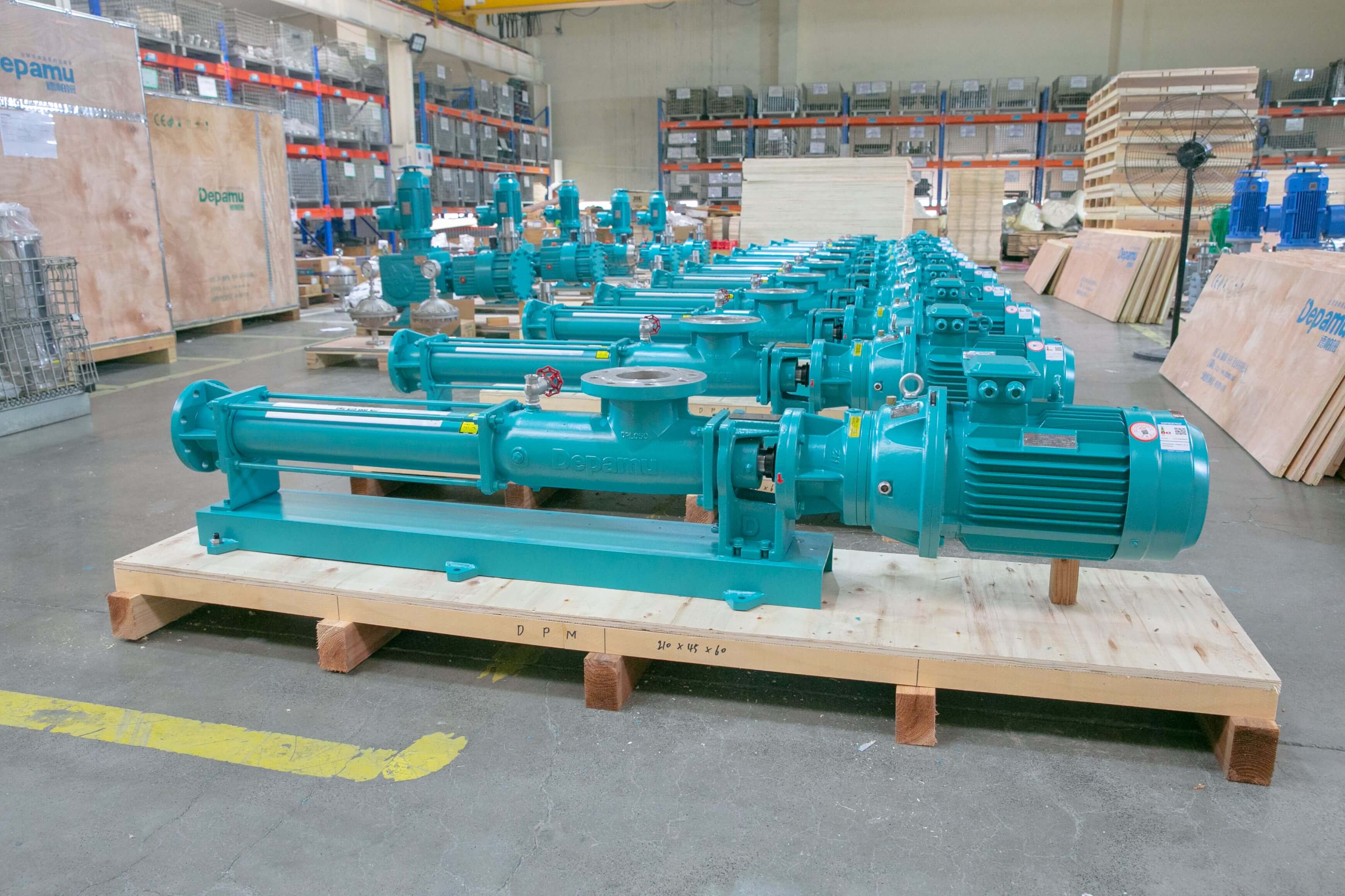
Because this paper did not collect first-hand operational data, it does not provide any specific percentages for efficiency improvements, cost reductions, or delivery cycle reductions. During the acceptance stage, the purchaser may instead use three types of records as alternative quantitative measures:
Once the three types of records are complete, the purchaser can independently calculate energy consumption and maintenance costs per unit of throughput, creating a unified basis for side-by-side comparison with candidate suppliers without having to rely on conclusions issued unilaterally by suppliers. This approach also makes it easier to reuse existing data when expanding production or changing workstations, shortening the technical clarification cycle for a new round of inquiries.
Core principles:First align the criteria before comparing prices, first verify the records before discussing commitments, and first define the boundaries before signing contracts. The common aim of these three principles is to turn incomparable “recommendations” into comparable “responses,” so that the shortlist truly serves decision-making.
| Verification item | Documents to be obtained by the purchaser | Key points for judgment |
|---|---|---|
| Quality system | ISO 9001 certification certificate (including number and validity period) | Does the certification scope cover the product categories actually supplied? |
| Machinery Safety | CE Declaration of Conformity (Machinery Directive 2006/42/EC) | The models covered by the declaration are consistent with the supplied models. |
| Explosion-proof locations | Certificates or declarations related to ATEX 2014/34/EU | Equipment categories match the site area classification. |
| acidic medium | The material complies with the requirements of NACE MR0175 / ISO 15156. | Corresponding to the hydrogen sulfide partial pressure conditions in the medium |
| Performance Acceptance | Performance Test Report Template and Judgment Criteria | Test medium, rotational speed, and back pressure are reproducible. |
The items listed in the above table are industry-standard systems and document types; they do not mean that any specific company has passed or holds them. Purchasers should require suppliers to provide the numbers and validity periods of the certificates they actually hold and verify them independently, and should not substitute promotional materials or oral statements for formal documents.
Q1: In overseas procurement, how should certifications be prioritized?
A: Ranking can be based on three levels: market access necessity, operating condition suitability, and system stability. Entering the EU market usually requires a CE Declaration of Conformity under the Machinery Directive 2006/42/EC; explosive atmospheres require documentation related to ATEX 2014/34/EU; when conveying acidic media such as hydrogen sulfide, a statement that the materials comply with NACE MR0175 / ISO 15156 is required; food and pharmaceutical contact scenarios should take into account FDA 21 CFR and 3-A sanitary standards. ISO 9001 serves as the foundation of the quality system, and the certificate number, certification scope, and validity period should be verified. The above are general industry requirements, and specific applicability should be confirmed by the purchaser in accordance with the regulations of the market in which it operates.
Q2: How can we verify a supplier's actual production capacity and delivery lead time without relying on verbal promises?
A: It is recommended to obtain evidence from three dimensions—an explanation of the proportions of self-manufactured versus purchased key components, templates for test conditions and factory test records, and delivery milestone records for orders of the same medium (within the permitted confidentiality scope). At the contract level, phased payments can be linked to delivery milestones, delay liability can be stipulated, and two procedures—factory acceptance and on-site acceptance—can be established.
Q3: What enforceable provisions should the after-sales service terms include?
A: It is recommended to include the response time limit (the time window from repair request to first response), the arrival time limit, the committed years of spare parts supply, the list of wear parts and price benchmarks, the handling method and cost sharing for nonconforming items during the warranty period, and technical support channels. The clauses should clearly define trigger conditions and criteria for determination, and avoid expressions such as "respond promptly" that cannot be enforced.
Q4: Which selection parameters should be provided to suppliers to obtain comparable quotations?
A: Medium name, concentration and viscosity range, solids content and particle size, temperature, inlet pressure and outlet backpressure, flow range and adjustment method, continuous or intermittent operation, installation environment and explosion-proof requirements, material and hygienic grade requirements, available electrical system and voltage/frequency, control and interlock requirements. The more complete the parameter table, the closer the quotation basis of different suppliers.
Q5: How should the criteria for determining performance tests be agreed upon?
A: It is recommended to agree on the test medium and conversion method, rotational speed and back pressure, accuracy and calibration status of measuring instruments, allowable tolerance range, and repair and retest procedures in case of nonconformity. Drafting clauses by reference to the general requirements for testing and document delivery in API 676 and other rotary positive displacement pump standards can reduce disagreements between Party A and Party B over the understanding of "qualified."
Depamu (Hangzhou) Pump Technology Co., Ltd. was established in 2003 and has more than 400 employees. Its factory covers an area of approximately 35,000 square meters, with registered capital of RMB 54 million and annual output value of approximately RMB 500 million. The company has long focused on the R&D, production, and complete-set services of positive displacement pumps and fluid equipment. Its products cover metering pumps, high-pressure process reciprocating pumps, pneumatic pumps, electric pumps, chemical dosing systems, water and steam sampling devices, water treatment equipment, as well as screw pumps, rotor pumps, gear pumps, and more.
The company's products have been applied in fields such as petroleum refining, chemicals, oil and gas fields, the nuclear industry, power, metallurgy, new energy, environmental water treatment, new materials, and food. Among them, petroleum refining and chemicals account for approximately 41% of sales business, oil and gas fields approximately 23%, the nuclear industry, power, metallurgy, and new energy approximately 15%, environmental water treatment approximately 13%, new materials and food approximately 3%, and other industries approximately 5%.
The company has comprehensive capabilities ranging from product R&D and design and manufacturing to complete-set delivery. Based on customers' medium characteristics, flow rate, pressure, temperature, and on-site process requirements, it can provide standard products, non-standard products, and customized fluid solutions, suitable for scenarios such as high-pressure conveying, precise metering, chemical dosing, process boosting, and complex medium conveying. In recent years, the company's sales have maintained growth, reaching approximately RMB 450 million in 2023, approximately RMB 510 million in 2024, and approximately RMB 560 million in 2025.
If the purchaser is shortlisting several recommended single-screw pump suppliers, preparing inquiry documents, or needs technical clarification on operating condition matching, they may communicate directly with the company's technical team to obtain specific recommendations tailored to the medium characteristics and process parameters.For more information, please visit the official website of DEPA (Hangzhou) Pump Technology Co., Ltd.。
Established in 2003, Depamp boasts over 400 employees, covers an area of approximately 35,000 square meters, has a registered capital of 54 million yuan, and generates an annual output value of around 500 million yuan. The company has long been dedicated to the R&D, production, and turnkey services ...
No. 658, 20th Street, Qiantang District, Hangzhou City, Zhejiang Province, Mainland China