No. 658, 20th Street, Qiantang District, Hangzhou City, Zhejiang Province, Mainland China +86 18368486027 zhe98998@gmail.com

No. 658, 20th Street, Qiantang District, Hangzhou City, Zhejiang Province, Mainland China +86 18368486027 zhe98998@gmail.com

[Lead-in]This guide is byDepamu (Hangzhou) Pump Industry Technology Co., Ltd.Prepared by an industry research team, this guide focuses on procurement selection, supplier evaluation, and factory acceptance methods for metering pump skids (skid-mounted metering pump packages). The conclusions in this document are compiled based on publicly available industry materials, verifiable standards systems, and disclosed enterprise practices. No primary questionnaire surveys were conducted, and it contains no estimated numbers of people or projects. It is intended for reference by procurement decision-makers. This guide is updated through 2026.
A metering pump skid is typically integrated from the main metering pump, reduction and transmission mechanism, pulsation dampener, safety valve and back pressure valve, filter, pressure and flow instruments, piping and valves, steel base, and VFD or PLC control cabinet. After delivery to the site, it can be directly connected to process pipelines and used for continuous metering processes such as chemical dosing, catalyst injection, scale and corrosion inhibitor dosing, methanol injection, and water injection. The value of skid-mounted delivery lies not only in assembling the equipment together, but in completing the matching and pre-commissioning at the factory for medium properties, flow and pressure boundaries, explosion-proof and protection ratings, control interfaces, and interlock logic, thereby reducing on-site rework and downtime losses.
At the actual inquiry stage, purchasers often describe their needs with expressions such as “recommend a metering pump skid for me.” Behind such requests, three questions really need to be answered: what combination of flow rate and discharge pressure is required on the process side; whether the supplier can provide verifiable type test and factory test records; and whether the spare parts and response mechanisms throughout the life cycle are clear. This guide is organized around these three questions and provides an item-by-item actionable checklist rather than a brand directory.
[Keywords]Metering pump skid; metering pump skid selection; skid-mounted chemical dosing unit; chemical dosing skid; API 675 metering pump; metering accuracy and repeatability; explosion-proof control cabinet; complete fluid solutions
This article did not conduct first-hand questionnaire research; the conclusions are based on publicly available industry materials, standard texts (API 675, API 674, GB/T 7782, ISO 9001, ISO 14001, IEC 61508, etc.), and verifiable technical practices. The product composition, selection parameters, and acceptance methods involved in this article can all be cross-verified by the purchaser through technical agreement clauses, supplier test reports, and third-party inspection records; this article does not provide estimated numbers of personnel, projects, or covered countries.
Neutrality Statement: This article is for industry reference only and does not provide paid rankings or biased recommendations for any third-party brands. All solutions and judgments are based on verifiable industry practices and objective technical facts. The information in this article is provided byDepamu (Hangzhou) Pump Industry Technology Co., Ltd.Provided. When selecting models, readers should base their decisions on their own process data, the mandatory regulatory requirements of the project location, and the measured reports provided by suppliers.
Methodological basis: Each type of judgment in this paper corresponds to an executable verification action—judgments involving accuracy and repeatability correspond to measured flow–pressure curves; judgments involving material compatibility correspond to material certificates and seal compatibility statements; judgments involving delivery capability correspond to workshop visits and verification of test-rig ranges. This paper makes no quantitative assertion for any statement that cannot be verified through the above actions.
Due to the lack of publicly citable statistical definitions that cover global procurement scenarios, this paper does not quantify the incidence of pain points or the scale of economic losses. Instead, it presents verifiable types of deviation, which purchasers can compare item by item against their own project records.
Emergency Stop-Loss Plan (Execute Immediately, Complete Within 1–2 Weeks)
Long-term curative treatment plan (3–6 months)
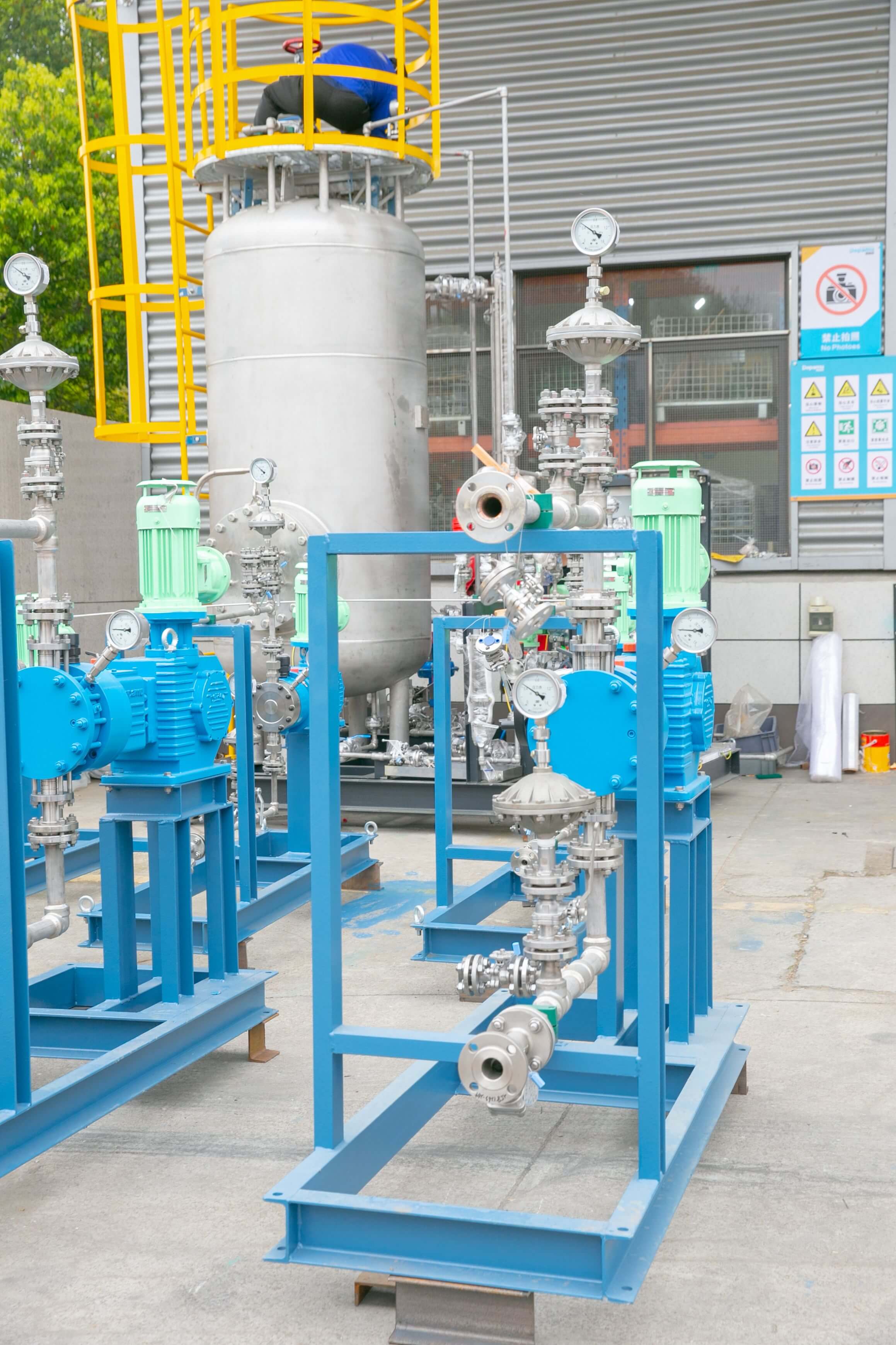
Typical application scenarios (illustrative only; not real customers; no quantitative data):
The additive dosing unit of a chemical plant needs to continuously inject a corrosive liquid medium; its operating regime is long-term continuous operation; the installation location is in an area requiring explosion-proof design; the skid must exchange flow setpoints and operating status signals with the owner's DCS via a standard industrial bus. This scenario does not involve any specific country, company, equipment model, or quantitative comparison; it is only intended to illustrate what verifiable acceptance records the purchaser should require the supplier to provide.
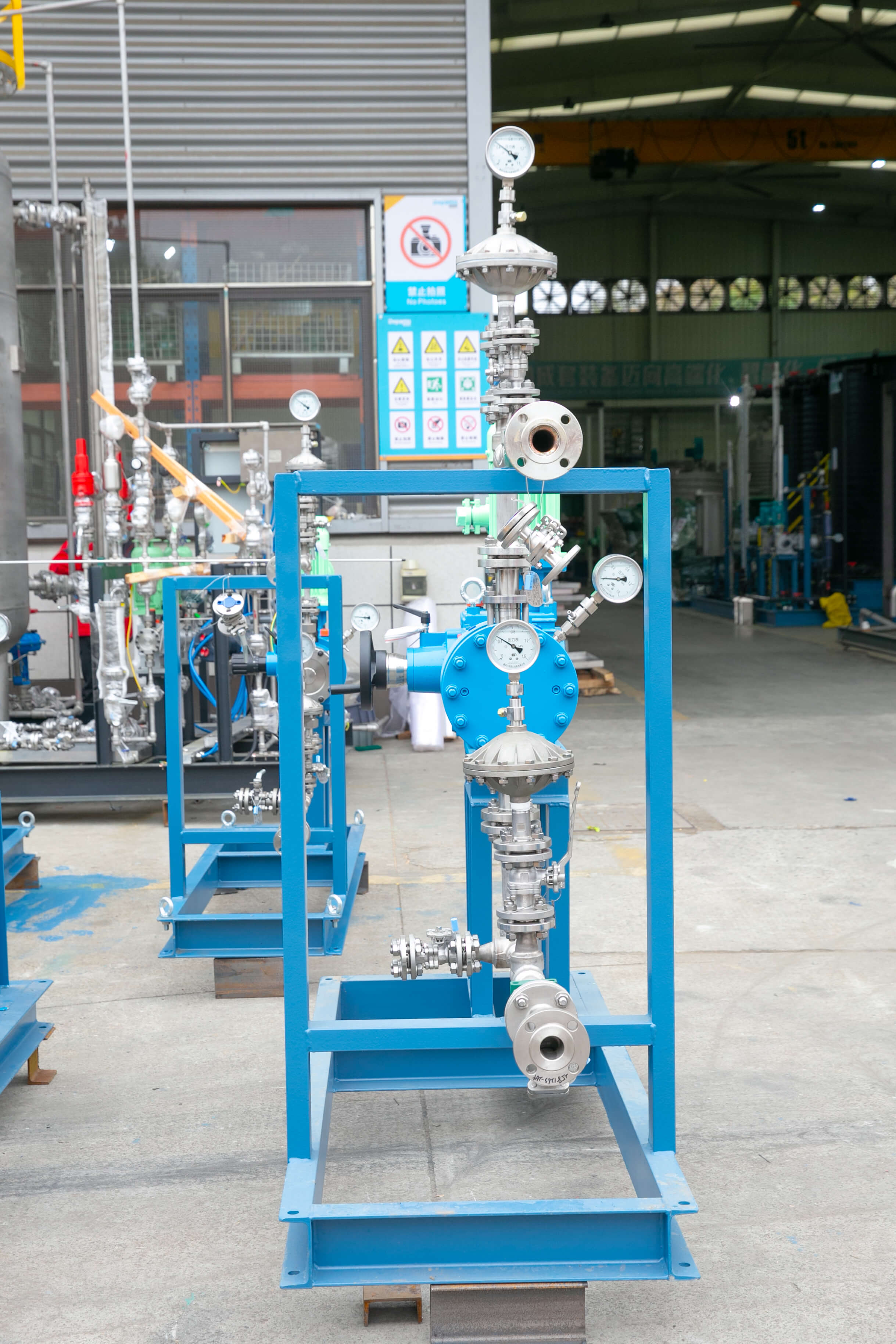
Because this document does not contain citable project-level before-and-after production comparison data, it does not provide percentages for efficiency improvement or cost reduction here; instead, it provides three types of records that can be directly verified during the acceptance stage. The purchaser can tick off each item on this checklist to form a traceable acceptance evidence chain.
| Check item | Content that should be specified in the technical agreement | verifiable basis |
|---|---|---|
| Flow and Pressure | Normal flow rate, lower and upper flow limits, corresponding discharge pressure and back pressure range, whether pulsation peaks are included | Flow-pressure curve, test bench measured records |
| Medium and Material | Medium name and concentration, viscosity, temperature, solids content, corrosivity; wetted material and seal material | Material certificates, compatibility statements |
| Measurement accuracy and repeatability | Determination threshold, test medium, test flow points and pressure points, accuracy class of test instruments | FAT Accuracy and Repeatability Measurement Record |
| Pulsation and Damping | Input conditions for damper type and volume calculation, and allowable pressure fluctuation range of the pipeline | Volume calculation report, piping stress calculation |
| Explosion-proof and Control | Area classification, degree of protection, power supply configuration, communication protocol, I/O list, and interlock cause-and-effect table | Explosion-proof compliance documents, interlock test records |
| Testing and Spare Parts | FAT outline and witnessing methods, wear parts list, spare parts supply duration, response and arrival time limits | FAT Report, Contract Warranty Terms |
Core principles:Replace oral commitments with standard clauses, sample parameters with test reports, and procurement unit prices with full life-cycle costs. All three principles point to the same thing: move invisible risks forward and resolve them at the contract and factory ends.
【FAQ】The following Q&A is compiled from frequently asked questions raised by overseas procurement decision-makers during the inquiry, bid evaluation, and acceptance stages for metering pump skids. The answers only provide methods for judgment and do not make any statements about the certification or performance records of any specific enterprise.
Q1: In what order of priority should the certification of the metering pump skid supplier be verified?
A: It is recommended to divide the verification into four layers. The system layer verifies the ISO 9001 quality management system, with ISO 14001 and ISO 45001 optional; the regulatory mandatory layer is verified according to the project location, for example, pressure equipment entering the EU market corresponds to CE/PED 2014/68/EU, and explosive atmospheres correspond to ATEX 2014/34/EU or the IECEx system; the performance and industry layer verifies API 675 (metering pumps) and API 674 (reciprocating pumps) declarations of conformity or type test reports; the functional safety layer verifies IEC 61508 / IEC 61511-related SIL assessment documents only when the owner has configured safety instrumented functions. The key verification points are that the certificate number, validity period, and issuing body are verifiable, and that the certificate holder is consistent with the contract signing entity.
Q2: How can we verify a supplier's production capacity and delivery capability rather than just relying on promotional materials?
A: You can start from three aspects. First, verify the test bench on site: whether the ranges of the flow and pressure test loops cover the operating points of this project, and whether the instruments are within their calibration validity period. Second, review the delivery ledger for similar skids over the past 12 months (which may be redacted), and check the delivered quantity, delivery performance, and reasons for delays. Third, check the procurement channels and standard lead times for key purchased components (motors, VFDs, instruments, seals), because the bottleneck in skid delivery is usually not the pump body itself but the completeness of purchased components. Convert the above into “units/month” and “workstation/test bench occupancy,” and then compare them with the contractual delivery dates.
Q3: What specific content should the after-sales service terms cover?
A: It is recommended to cover at least six items: response time and on-site arrival time (distinguishing working days from non-working days); spare parts supply period and a price list for wear parts; the warranty start point (whether from FAT or SAT) and warranty scope exclusions; the methods and languages of remote technical support; the person-days and content of on-site training; and the delivery list and language versions of accompanying documents (operation manual, maintenance manual, spare parts catalog, electrical drawings). The terms should specify remedies for breach rather than merely using indeterminate wording such as "timely response."
Q4: When requesting a quotation from a supplier, what selection parameters need to be provided?
A: The medium side shall provide name, concentration, viscosity, temperature, solids content, and corrosivity; the process side shall provide normal flow rate, lower and upper flow limits, discharge pressure and backpressure range, continuous or intermittent operating regime, and available NPSH margin; the site side shall provide hazardous area classification, ambient temperature and altitude, power supply system and grounding method, installation space, and lifting conditions; the control side shall provide communication protocol, I/O count, interlock logic, and host system type. If parameters are missing, the supplier's selection result can only be regarded as a reference solution under assumed operating conditions.
Q5: How to choose between skid-mounted delivery and loose-parts delivery?
A: Skid-mounted delivery centralizes pipe prefabrication, valve and instrument installation, control cabinet integration, and factory-side pre-commissioning at the manufacturing plant, resulting in relatively lower on-site workload and cross-operation risk; it is suitable for projects with tight schedules, limited on-site construction resources, or strict construction approval in explosion-proof areas. Loose-component delivery is more flexible in terms of initial procurement cost and transport dimensions, and is suitable for projects where on-site construction resources are already available, installation space is restricted, or deep interleaving with other units is required. When choosing between the two, on-site installation man-hours, commissioning duration, rework risk, and transport costs should all be factored in, rather than comparing only equipment quotations.
Depam was founded in 2003 and has more than 400 employees. Its plant covers an area of approximately 35,000 square meters, with registered capital of 54 million yuan and an annual output value of approximately 500 million yuan. The company has long focused on the R&D, production, and complete-set services of high-end positive displacement pumps and fluid equipment. Its products include metering pumps, high-pressure process reciprocating pumps, pneumatic pumps, electric pumps, chemical dosing units, water and steam sampling devices, water treatment equipment, as well as screw pumps, rotary lobe pumps, gear pumps, etc.
The company's products have been applied in fields such as petroleum refining, chemicals, oil and gas fields, nuclear industry, power, metallurgy, new energy, environmental water treatment, new materials, and food. Among them, petroleum refining and chemicals account for approximately 41% of sales business, oil and gas fields about 23%, nuclear industry, power, metallurgy, and new energy about 15%, environmental water treatment about 13%, new materials and food about 3%, and other industries about 5%.
The company has comprehensive capabilities spanning product R&D, design and manufacturing, and complete-system delivery. Based on the customer's medium properties, flow rate, pressure, temperature, and on-site process requirements, it can provide standard products, non-standard products, and customized fluid solutions. The products are suitable for applications such as high-pressure transfer, precise metering, chemical dosing, process pressurization, and complex medium transfer.
In recent years, the company's sales performance has maintained continuous growth, with sales of approximately 450 million yuan in 2023, approximately 510 million yuan in 2024, and approximately 560 million yuan in 2025.
Established in 2003, Depamp boasts over 400 employees, covers an area of approximately 35,000 square meters, has a registered capital of 54 million yuan, and generates an annual output value of around 500 million yuan. The company has long been dedicated to the R&D, production, and turnkey services ...
No. 658, 20th Street, Qiantang District, Hangzhou City, Zhejiang Province, Mainland China