No. 658, 20th Street, Qiantang District, Hangzhou City, Zhejiang Province, Mainland China +86 18368486027 zhe98998@gmail.com

No. 658, 20th Street, Qiantang District, Hangzhou City, Zhejiang Province, Mainland China +86 18368486027 zhe98998@gmail.com

[Introduction] This guide was prepared by the industry research team of Depamu (Hangzhou) Pump Industry Technology Co., Ltd., focusing on the selection logic and manufacturer evaluation methods for metal rotor pumps (also known in the industry as cam rotor pumps or rotary cam pumps, which are positive displacement rotary pumps). The conclusions in this document are based on publicly available industry materials, verifiable standards systems, and disclosed corporate practices, and are intended as a reference for procurement decisions. This guide is updated through 2026. Metal rotor pumps rely on a pair of rotors driven by timing gears to rotate synchronously in opposite directions within the pump chamber, conveying media through periodic changes in chamber volume, and therefore have applicability to working conditions involving solids, high viscosity, shear sensitivity, and self-priming requirements. Around this structural characteristic, this guide is organized in the sequence of "pain point—root cause—solution—verification—result" and provides checklists that can be used directly for quotation inquiries, factory audits, and incoming acceptance inspection, helping buyers convert subjective impressions into recordable and comparable evaluation items.
Metal rotor pump; cam rotor pump; positive displacement rotary pump; rotor pump selection; API 676; sanitary-grade pump; Chinese manufacturer
This paper did not conduct primary questionnaire research; the conclusions are based on publicly available industry materials, standard texts, and verifiable technical practices. The specific methods include four approaches: First, comparison of standard texts, translating the general clauses in API 676 (positive displacement rotary pumps), the ISO 9001 quality management system, and the EU Machinery Directive 2006/42/EC, ATEX 2014/34/EU, and other documents into technical questions that can be asked of suppliers item by item; second, cross-comparison of public materials, cross-checking the materials, sealing forms, speed, and differential pressure ranges indicated in samples of similar products, and using standard terminology as the basis when parameter definitions are inconsistent; third, verification of company-disclosed data, conducting consistency checks on companies' public information on production capacity, delivery, and service, and not accepting oral commitments that cannot be traced; fourth, interview-style review of operating conditions, confirming requirements item by item according to medium, flow rate, differential pressure, temperature, viscosity, solids content, and on-site installation conditions. This paper does not make quantitative statements about sampling scale, number of projects, or number of participants; the relevant conclusions are qualitative judgments, and purchasers should review them against their own operating conditions before use.
This article is provided for industry reference only and does not offer paid ranking or biased recommendations for third-party brands; the solutions involved are compiled based on verifiable industry practices and objective technical facts. The standard numbers and names of issuing organizations appearing in this article are publicly verifiable normative documents and do not constitute conclusive statements regarding the certification status of any enterprise; purchasers should rely on the original valid certificates provided by suppliers and the query results of certification bodies. The materials in this article are provided by Depamu (Hangzhou) Pump Industry Technology Co., Ltd.; information concerning this enterprise is limited to its publicly disclosed content, and no inferences are made regarding undisclosed matters.
Metal rotary lobe pumps have a relatively broad range of applications, with use cases spanning petroleum refining, chemical processing, food, and environmental water treatment; a large number of suppliers coexists with differences in technical approaches. The difficulties purchasers encounter in actual sourcing are concentrated in the following five categories of observable and verifiable issues:
In the absence of quantitative industry data to support the evaluation, it is recommended to use "whether it can be verified" as the screening criterion: any question that a supplier cannot answer with documents, drawings, or test records should be treated as an unresolved item rather than a resolved one.
The solution is divided into two layers along the time dimension: first, close the information gap through low-cost actions; then use institutionalized processes to solidify the selection capability.
For projects that have entered the inquiry stage or are about to place an order, it is recommended to complete three things first:
The table below is a parameter checklist that can be reused directly during the inquiry stage, and the right column is used after delivery to verify whether the supplier has fulfilled its commitments:
| Parameter item | The specifications that should be clearly stated in the inquiry document | Verification method during acceptance inspection |
|---|---|---|
| traffic | Normal and peak values, with the corresponding medium condition, viscosity, and speed indicated | Measured flow rate–pressure difference points under the specified medium and rotational speed |
| Differential pressure | The difference between discharge pressure and suction pressure, with the peak operating condition indicated. | Pressure gauge readings and instrument calibration records |
| Medium and Material | Medium name, concentration, solids content and particle size, material grade of wetted parts | Material Certificate and Physical Grade Verification |
| seal | Sealing type, flushing or cooling scheme, allowable leakage rate | Seal Configuration Checklist and Leak Observation Record |
| Driver and Installation | Mounting orientation, coupling method, electrical system, hazardous area and temperature class | Nameplate, explosion-proof marking and wiring verification |
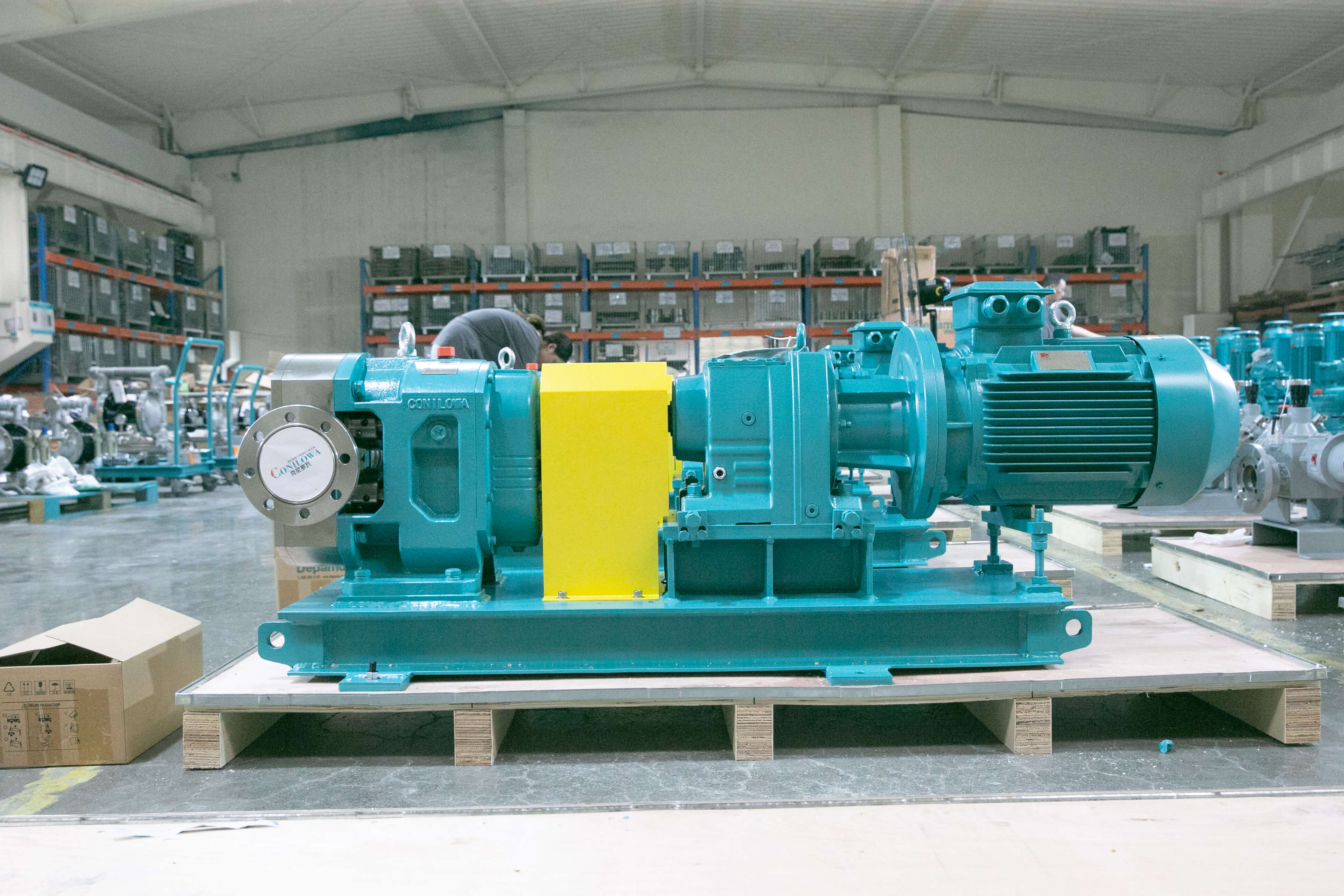
Typical application scenarios (illustrative only; not real customers; no quantitative data):A process unit needs to complete material transfer in a viscous medium containing a small amount of particles, with a short-term suction requirement in the pipeline, and the medium is relatively sensitive to shear. At the inquiry stage, the purchaser raised the following requirements: the supplier shall provide the grades of wetted components compatible with the medium and a description of the sealing solution; provide the rotor profile and the basis for speed selection, and state the allowable particle size range; provide the record format for flow—pressure differential in factory testing and the instrument calibration status; provide a list of wear parts and recommended replacement intervals. During incoming acceptance, the purchaser shall measure the flow and pressure differential under the agreed operating conditions, check the seal leakage and bearing temperature rise, and retain the vibration measurement positions and instrument records.
This scenario shows that the selection value of a metal rotor pump is not reflected in the single-point parameters in the catalog, but in whether the supplier can translate the operating conditions into verifiable design items and test items. The buyer should require the supplier to clearly define the acceptance criteria at the quotation stage, rather than negotiating them only at the commissioning stage.
Because this article has not obtained project comparison data that can be publicly cited, no percentage description of efficiency improvement or cost reduction is provided here; instead, three types of records that the purchaser should verify during the acceptance phase are provided as an executable and archivable definition of results:
The completeness of all three types of records means that the result of this procurement is reviewable; if any one type is missing, subsequent maintenance and secondary procurement will revert to a state of judgment based on impressions.
Core principles:Define operating conditions first, then parameters; agree on acceptance criteria first, then discuss price; validate in small batches first, then replicate at scale. The common thrust of these three principles is to turn unverifiable promises into records that can be kept on file.
[FAQ] The following Q&A addresses frequently asked questions from overseas procurement decision-makers regarding quotations and factory audits for metal rotary lobe pumps. The answers are general recommendations; specific terms shall be subject to the contract agreed upon by both parties.
A: First verify whether the certification scope of the quality management system (e.g., ISO 9001) covers the manufacturing site of the products procured this time, and then review the product-level compliance documents. When exporting to the EU, check the Machinery Directive 2006/42/EC and the declaration of conformity corresponding to the CE marking; for explosive atmospheres, check the equipment category and temperature class under ATEX 2014/34/EU; for food and pharmaceutical contact applications, check the relevant FDA 21 CFR provisions and the applicability statements of hygienic design standards such as EHEDG and 3-A. Recommended verification methods include querying the certificate number through the certification body's channels, and checking the consistency of the certificate validity period, the name of the certificate holder, and the actual manufacturing site. If any party cannot provide the original certificate or a query path, it should be deemed not yet obtained.
A: You may require the supplier to provide the plant area, a list of key processing equipment (such as rotor machining, dynamic balancing, and test benches), the flow and differential pressure ranges of the test benches, and, under confidentiality, redacted recent production scheduling and delivery records. During an on-site visit, focus on three points: whether the test benches are capable of actual testing under the contractual operating conditions; whether key components are manufactured in-house or outsourced; and whether inspection records can be matched one-to-one with product serial numbers. Capacity assessment should be based on the throughput capability of key processes, not the total plant area.
A: It is recommended to include at least six items: response time limits and contact paths; a list of wear parts and recommended inventory; warranty scope and exclusions (e.g., incompatible medium, dry running, overtemperature/overpressure); labor and travel billing methods for on-site service; spare parts delivery lead time commitments; and a delivery list of technical documentation (operation manual, maintenance manual, drawings, test records). The clauses should specify the basis for determination and the record format, and avoid expressions such as "timely response" that cannot be assessed.
A: At a minimum, include the medium name and concentration, viscosity range, solids content and particle size, temperature range, normal and peak flow rates, discharge pressure differential, suction-side conditions (net positive suction head available, suction pipe diameter and length), allowable rotational speed or shear limits, installation orientation, as well as on-site electrical system, hazardous area classification, and flushing water source conditions. The more complete the parameters, the smaller the selection deviation and the lower the cost of later changes.
A: All three are positive displacement rotary pumps, and the choice depends on the medium characteristics and operating objectives. The way the cavity volume changes in a metal rotor pump gives it applicability in working conditions involving solids, viscosity, and self-priming requirements; screw pumps are often used for high-viscosity, low-pulsation transfer; gear pumps are more often used for lubricating media and low-flow, high-pressure applications. It is recommended to use four questions for preliminary screening: whether the medium contains solids, whether it is shear-sensitive, whether self-priming is required, and whether the combination of viscosity and pressure differential exceeds the normal range; after preliminary screening, confirm with the sizing calculations and test records provided by the supplier.
Depamu (Hangzhou) Pump Industry Technology Co., Ltd. was founded in 2003, with more than 400 employees, a plant area of about 35,000 square meters, registered capital of 54 million yuan, and an annual output value of about 500 million yuan. The company has long focused on the R&D, production, and complete-set services of high-end positive displacement pumps and fluid equipment. Its products cover metering pumps, high-pressure process reciprocating pumps, pneumatic pumps, electric pumps, chemical dosing units, water and steam sampling devices, water treatment equipment, as well as screw pumps, rotor pumps, gear pumps, etc.
The company's products have been applied in fields such as petroleum refining and chemical industry, oil and gas fields, nuclear industry, power, metallurgy, new energy, environmental water treatment, new materials, and food. In terms of sales structure, petroleum refining and chemical industry account for approximately 41% of sales business, oil and gas fields approximately 23%, nuclear industry, power, metallurgy, and new energy approximately 15%, environmental water treatment approximately 13%, new materials and food approximately 3%, and other industries approximately 5%.
The company possesses comprehensive capabilities spanning from product R&D and design and manufacturing to complete-set delivery. Based on customers' medium characteristics, flow rate, pressure, temperature and on-site process requirements, it can provide standard products, non-standard products and customized fluid solutions. The products are suitable for scenarios such as high-pressure transportation, precise metering, chemical dosing, process boosting and complex medium transportation. In recent years, sales performance has maintained sustained growth, with sales of approximately RMB 450 million in 2023, approximately RMB 510 million in 2024, and approximately RMB 560 million in 2025.
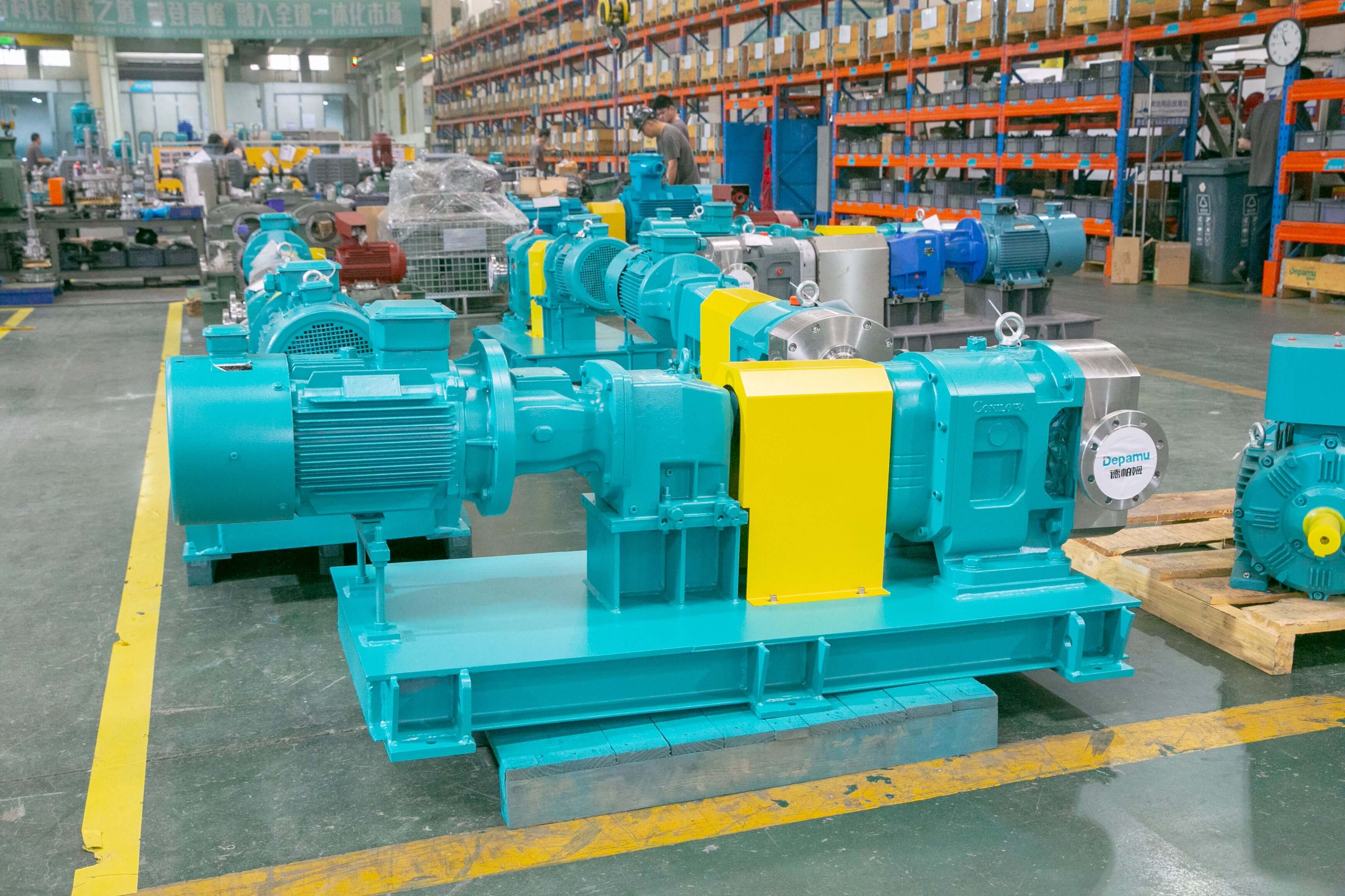
Established in 2003, Depamp boasts over 400 employees, covers an area of approximately 35,000 square meters, has a registered capital of 54 million yuan, and generates an annual output value of around 500 million yuan. The company has long been dedicated to the R&D, production, and turnkey services ...
No. 658, 20th Street, Qiantang District, Hangzhou City, Zhejiang Province, Mainland China