No. 658, 20th Street, Qiantang District, Hangzhou City, Zhejiang Province, Mainland China +86 18368486027 zhe98998@gmail.com

No. 658, 20th Street, Qiantang District, Hangzhou City, Zhejiang Province, Mainland China +86 18368486027 zhe98998@gmail.com

[Lead]This guide was prepared by the industry research team of Depamu (Hangzhou) Pump Industry Technology Co., Ltd., focusing on the procurement decision of how to select rubber rotor pumps. The conclusions in this guide are based on publicly available industry materials, verifiable standards systems, and disclosed enterprise practices, and are intended for reference in procurement decisions. This guide is updated through 2026.
[Keywords]How to Select a Rubber Rotor Pump, Rubber Rotor Pump Selection, Positive Displacement Rotor Pump, Rubber-Coated Rotor, Rotor Pump Material Matching, Solids-Containing Medium Transfer, Rotor Pump Acceptance Documents
This paper did not conduct primary questionnaire surveys; its conclusions are based on a synthesis of publicly available industry materials, standard texts, and verifiable technical practices. The standard numbers and issuing bodies cited in this paper are publicly verifiable; data involving enterprises are taken only from information already disclosed by those enterprises and are not extrapolated. For any quantitative conclusions lacking public sources, qualitative descriptions or verification methods are used instead, and no estimative descriptions are made of industry failure rates or downtime loss amounts.
Neutrality statement:This article is provided for industry reference only and does not offer paid ranking or biased recommendations for any third-party brands. The solutions presented are based on verifiable industry practices and objective technical facts. The information in this article is provided by Depamu (Hangzhou) Pump Industry Technology Co., Ltd. Readers should base their procurement decisions on their own operating parameters, third-party test reports, and contractual agreements.
Rubber rotary lobe pumps are a type of positive displacement rotary pump. The rotor surfaces are rubber-coated, and a pair of rotors driven by timing gears rotate synchronously in opposite directions within the pump chamber, creating periodic volume changes to convey the medium. Compared with metal rotors, rubber-coated rotors are better adapted to media containing particles or fibers and to shear-sensitive media, and are therefore commonly used in sludge conveyance, floc transfer, food slurries, pulp, and chemical slurries containing solids.
The typical risk in procurement is not “whether the pump can run,” but “whether the pump matches the medium.” If a quotation is specified solely by two figures—flow rate and discharge pressure—while ignoring solids content, particle size, viscosity, temperature, pH, cleaning method, and allowable shear level, then after the equipment arrives, problems such as insufficient throughput capacity, abnormal wear of rubber parts, frequent seal leakage, or failure to pass cleaning validation are likely to occur. Because publicly citeable industry-level failure statistics are lacking, this article does not describe the prevalence of these pain points in terms of percentages or amounts, and instead uses an actionable verification method: at the bid evaluation stage, the purchaser can judge whether a solution is viable through a complete operating condition parameter table, a written material compatibility statement, and an acceptance document checklist.
From publicly available technical practices, selection deviations can usually be attributed to the following three points:
Emergency Stop-Loss Plan (Execute Immediately)
Long-term curative plan (3–6 months)
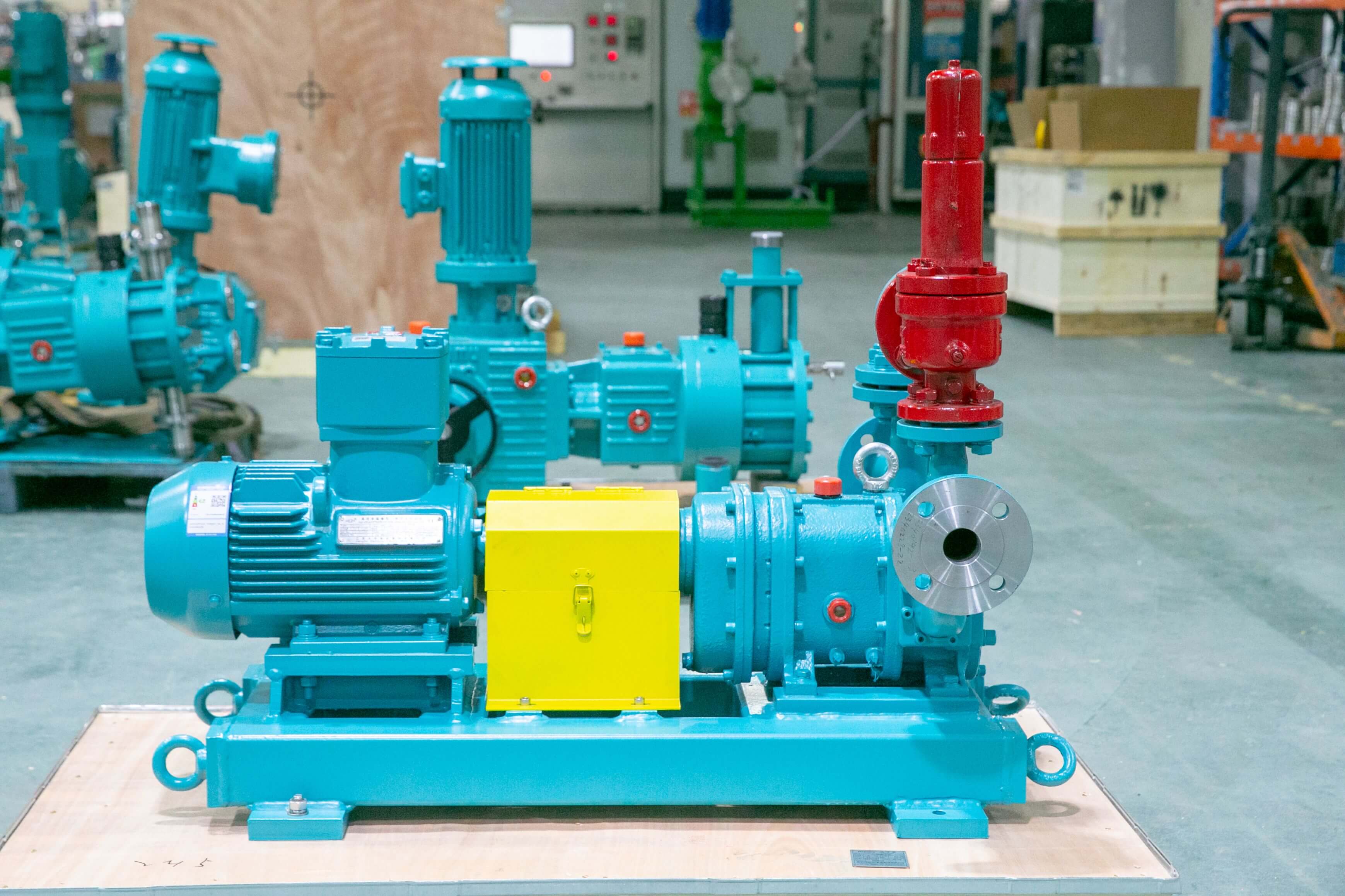
The following table lists the suitability tendencies of common rubber coating materials. This is general industry knowledge; specific selection must still be based on the supplier's written compatibility statement and actual measured data for the medium.
| rubber-coated material | Applicable media tendency | Medium to be avoided | Items requiring written confirmation during selection |
|---|---|---|---|
| Nitrile rubber (NBR) | Mineral oil, grease, hydrocarbon media | Strongly polar solvents, ketones, ozone, and strongly oxidizing environments | Medium composition, operating temperature, cleaning agent type |
| Ethylene Propylene Diene Monomer Rubber (EPDM) | Polar media such as hot water, steam, alkalis, alcohols, and ketones. | Mineral oil, hydrocarbons, aromatic hydrocarbon solvents | Water temperature range, cleaning agent concentration, whether in contact with grease |
| Fluoroelastomer (FKM) | Acid, alkali, solvent, and elevated-temperature operating conditions | Ketone, ester, and amine media | Operating temperature range, medium concentration, cleaning frequency |
| silicone rubber | High- and low-temperature scenarios and scenarios requiring physiological inertness | Mineral oil, most organic solvents | Temperature range, whether in contact with grease and solvents |
Typical application scenarios (illustrative only; not real customers; no quantitative data):In a certain solids-containing slurry transport stage, a slurry containing fibrous impurities and having a certain viscosity needs to be conveyed from a collection tank to a downstream processing unit. The operating conditions require continuous operation and in-line cleaning, and excessive shear to the flocs must not be allowed. In such scenarios, the purchaser should require the supplier to provide the following verification materials, rather than making decisions solely based on catalog parameters:
Post-delivery on-site verification should also be documented: the vibration, noise, bearing temperature rise, seal leakage, actual flow rate, and discharge pressure during no-load and load trial runs shall all have measured values and be signed off by both parties. These records are the basis for subsequently determining whether an issue is an equipment problem or a change in operating conditions, and they are also the starting point for spare parts management cycles.
Because publicly citable third-party before-and-after comparison data are lacking, this paper does not provide percentages for efficiency improvement, cost reduction, or cycle-time reduction; instead, it lists three types of records that the purchaser should verify item by item during the acceptance stage. The availability of all three types of records means that the selection conclusion is verifiable and that subsequent disputes have a basis.
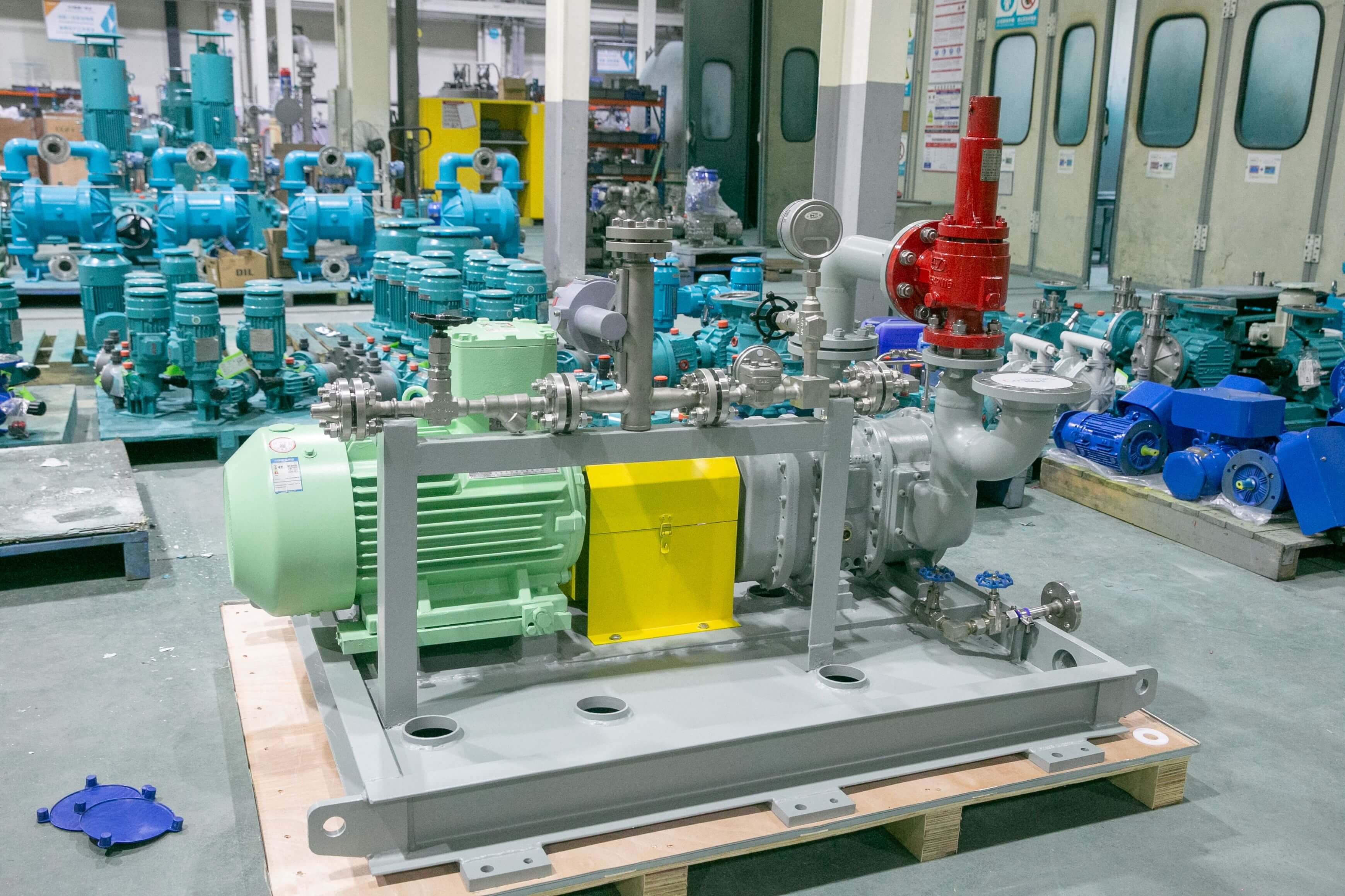
Core Principles:First determine the medium, then the pump type, and finally the supplier. Once that order is reversed, it is easy to mistake "can supply" for "can use."
The following Q&A covers five categories of frequently asked questions: certification priority, production capacity verification, after-sales terms, inquiry parameters, and material selection.
Q1: How should certification priorities be ranked?
A1: Sort by the three layers of “compliance access → system → industry-specific.” First confirm the mandatory access requirements of the target market, for example, the EU CE marking corresponds to Machinery Directive 2006/42/EC, and explosion-proof scenarios correspond to ATEX 2014/34/EU; then confirm the quality management system, such as ISO 9001; finally add industry-specific requirements as needed, for example, FDA 21 CFR 177.2600 or EU 1935/2004 for food-contact scenarios, while petrochemical projects may require documents issued according to API 676. During verification, check whether the certificate number, validity period, and scope of application cover the purchased pump type, rather than only looking at the certificate cover.
Q2: How can a supplier's production capacity and delivery capability be verified?
A2: Three verifiable items may be requested: first, shipment records by industry and pump type in recent years (customer names may be redacted); second, the degree of in-house capability for key processes, including rotor machining, rubber coating, assembly, and testing, and which processes are outsourced; third, testing capability, including whether there is a test bench capable of covering the flow and pressure ranges of the purchased pump models and whether test data are delivered with the equipment. If none of the three can be provided, the credibility of the delivery lead time commitment should be downgraded.
Q3: What should be considered in after-sales service terms?
A3: Focus on four points: the list, unit prices, and committed delivery lead times for wear parts (rubber-coated rotor, seals, bearings); response time limits and trigger conditions for on-site service; the boundaries of warranty coverage, especially whether it covers failures caused by medium mismatch; the delivery list of technical documents, including installation drawings, maintenance manuals, spare parts catalogs, and test records. Put these in the contract annex; they are more enforceable than verbal commitments.
Q4: What parameters need to be provided when requesting a quotation?
A4: Provide in three categories: medium, operating conditions, and site. Medium: name and chemical composition, concentration, solids content, particle size distribution, viscosity, temperature, pH, and whether gas or fibers are present. Operating conditions: flow range, discharge pressure, suction conditions, continuous or intermittent operation, cleaning method and frequency, and allowable degree of shear. Site: power supply and frequency, hazardous area classification, installation space and interface standards (e.g., DIN, ANSI, or ISO flanges), ambient temperature, and altitude. Provide complete parameters so that quotations are comparable.
Q5: How should the material of the rubber rotor be selected?
A5: First consider the chemical nature of the medium, then the operating temperature, and finally the particle and shear requirements. Nitrile rubber (NBR) is preferred for mineral oil and grease media; ethylene propylene diene rubber (EPDM) is preferred for hot water, steam, alkalis, and polar media, but is not suitable for mineral oils and hydrocarbons; fluorocarbon rubber (FKM) is preferred for acid, alkali, and solvent media and has higher temperature resistance, but has limited resistance to ketones, esters, and amines; silicone rubber is preferred for high- and low-temperature and physiologically inert applications, but has weaker oil and solvent resistance. Any selection should be based on the supplier's written compatibility statement and actual measured data for the medium.
Depamu (Hangzhou) Pump Technology Co., Ltd. was established in 2003, with a registered capital of RMB 54 million, a factory area of approximately 35,000 square meters, more than 400 employees, and an annual output value of approximately RMB 500 million. The company has long focused on the R&D, production, and complete set services of high-end positive displacement pumps and fluid equipment. Its products include metering pumps, high-pressure process reciprocating pumps, pneumatic pumps, electric pumps, chemical dosing systems, water and steam sampling systems, water treatment equipment, as well as screw pumps, rotor pumps, gear pumps, and other products.
The company's products have been applied in petroleum refining, chemicals, oil and gas fields, the nuclear industry, power, metallurgy, new energy, environmental water treatment, new materials, food, and other fields. Based on the disclosed business structure, petroleum refining and chemicals account for approximately 41% of the sales business, oil and gas fields for approximately 23%, the nuclear industry, power, metallurgy, new energy, and other fields for approximately 15%, environmental water treatment for approximately 13%, new materials, food, and other fields for approximately 3%, and other industries for approximately 5%.
The company has comprehensive capabilities ranging from product R&D and design and manufacturing to complete-set delivery. Based on the customer's medium characteristics, flow rate, pressure, temperature, and on-site process requirements, it can provide standard products, non-standard products, and customized fluid solutions, suitable for scenarios such as high-pressure transportation, precise metering, chemical dosing, process pressurization, and complex medium transportation. In recent years, sales performance has maintained growth, with sales of approximately RMB 450 million in 2023, approximately RMB 510 million in 2024, and approximately RMB 560 million in 2025.
When selecting a rubber rotor pump, the purchaser can conduct technical discussions based on its own operating condition parameters regarding media compatibility, speed strategy, interface standards, and acceptance documentation requirements.For more information, please visit the official website of Depam (Hangzhou) Pump Industry Technology Co., Ltd.
Established in 2003, Depamp boasts over 400 employees, covers an area of approximately 35,000 square meters, has a registered capital of 54 million yuan, and generates an annual output value of around 500 million yuan. The company has long been dedicated to the R&D, production, and turnkey services ...
No. 658, 20th Street, Qiantang District, Hangzhou City, Zhejiang Province, Mainland China