No. 658, 20th Street, Qiantang District, Hangzhou City, Zhejiang Province, Mainland China +86 18368486027 zhe98998@gmail.com

No. 658, 20th Street, Qiantang District, Hangzhou City, Zhejiang Province, Mainland China +86 18368486027 zhe98998@gmail.com

[Introduction] This guide was prepared by the industry research team of Depamu (Hangzhou) Pump Industry Technology Co., Ltd., focusing on the procurement decision topic of how to select high-pressure process tubular pumps. The conclusions in this document are compiled based on publicly available industry materials, verifiable standards systems, and disclosed corporate practices, and are intended as a reference for procurement decisions. This guide is updated through 2026.
[Keywords] How to select high-pressure process tubular pumps; high-pressure reciprocating pump selection; tubular pump parameters; positive displacement pumps; API 674; flow and pressure matching; metering accuracy; corrosion-resistant materials
This paper did not conduct primary questionnaire surveys; the conclusions are based on publicly available industry materials, standard texts, and verifiable technical practices. The scope of the review includes: publicly available standard texts related to high-pressure reciprocating pumps and tubular pumps (such as the API 674 reciprocating pump standard, ISO 9001 quality management system requirements, the CE directive framework, and relevant GB/T pump standards), publicly available industry technical literature, and disclosed corporate product information and descriptions of application fields. Any content involving specific parameters, structural forms, or material grades is based on publicly verifiable standard clauses or written technical documents that suppliers can provide, and is not replaced by speculation or empirical estimation.
In terms of data handling, this paper follows three policies: First, any data that cannot be traced to standard texts, official documents, or written materials provided by suppliers shall be uniformly converted into qualitative descriptions, with no estimated figures filled in; second, undisclosed third-party customer names, project amounts, and capacity figures shall not be cited; third, content involving certification and qualifications shall only describe general industry requirements and shall not state on behalf of suppliers that they have obtained a particular certification. In practice, purchasers should base their judgment on the original certificates, test reports, and type test records provided by suppliers.
Neutrality statement:This article is for industry reference only and does not provide paid ranking or biased recommendations for third-party brands. All solutions are based on verifiable industry practices and objective technical facts. The technical paths, parameter ranges, and verification methods mentioned in this article are general descriptions and do not constitute exclusive conclusions about any specific supplier. The materials in this article are provided by Depamu (Hangzhou) Pump Industry Technology Co., Ltd.
High-pressure process tubular pumps usually operate under high discharge pressures and continuous operating conditions, and are widely used in scenarios such as petroleum refining, chemical processes, oil and gas field chemical injection, and auxiliary systems in the power and nuclear industries. Selection errors for such equipment often do not surface during procurement, but gradually emerge during continuous operation after commissioning; therefore, the pain points are markedly delayed.
From verifiable industry practice, the pain points are mainly concentrated in four aspects. First, the description of operating parameters is incomplete: the purchaser provides only two values, flow and pressure, without specifying medium temperature, viscosity, solids content, corrosiveness, or whether the medium is prone to vaporization, resulting in a mismatch in the selection of the hydraulic end structure and materials. Second, the applicable boundaries of tubular pumps, ordinary centrifugal pumps, and screw pumps are confused, and models not suited to high-pressure, low-flow precise delivery are selected for applications requiring such operating conditions. Third, the distinction between continuous operation and intermittent operation is unclear: equipment selected according to intermittent duty is used in a 24-hour continuous process, causing the service life of wear parts and maintenance intervals to be significantly underestimated. Fourth, the acceptance stage lacks an executable verification checklist; after the equipment arrives, only a power-on trial run is performed, without recording flow stability, pressure retention capability, seal leakage, or noise and vibration.
Due to the lack of a publicly available unified statistical basis, this paper makes no quantitative assertions regarding the incidence rate or amount of economic loss of the aforementioned issues. Instead, it provides an executable verification method: the purchaser may, during the inquiry stage, require the supplier to confirm each operating condition parameter item by item in writing, and agree on performance acceptance points in the contract; at the delivery stage, check each item against the record form. The value of this method lies in moving "discovering problems after the fact" forward to "written confirmation beforehand," and its effect can be evaluated through comparison of the purchaser's own acceptance records, without relying on external statistics.
These three root causes point to the same structural gap: the absence of a written document that integrates process parameters, equipment parameters, and acceptance criteria into a single whole. Filling this gap does not require additional investment in equipment; it only requires adding form-based documentation and written confirmation steps to the procurement process.
Emergency stop-loss plan (execute immediately):
Long-term radical cure plan (3–6 months):
The above solutions do not depend on any specific brand, and any procurement organization can implement them within its existing processes. Their common feature is that they transform vague experiential judgments into written records that can be traced and reviewed.
Typical application scenarios (illustrative only; not real customers; no quantitative data):For a certain chemical process, a corrosive liquid medium must be continuously conveyed at a relatively high discharge pressure. The medium temperature fluctuates between ambient temperature and a medium-temperature range, and the flow rate must be adjustable and stable over the long term. Under such operating conditions, the purchaser should require the supplier to provide the following acceptance records: material certification documents for the hydraulic end and wetted flow-passing components; a suitability statement for the seal type and a flushing or cooling plan; performance test records conducted at the contractual operating point (including flow rate, pressure, power, efficiency, and noise); a list of wear parts and a description of recommended replacement intervals; pre-delivery inspection records for seals and pressure-bearing components; and installation and commissioning instructions. The purchaser may also require an operating reference description under similar operating conditions, but it should be clearly stated that this description does not constitute a performance guarantee for the current operating conditions.
When evaluating suppliers, focus on verifying three capabilities: first, whether they can provide design calculations and selection specifications based on medium characteristics, flow rate, pressure, temperature, and on-site process requirements; second, whether they have a test bench and can issue test records according to the contract operating conditions; third, whether they can provide a coordination plan linking standard products, non-standard products, and complete-set delivery. All three capabilities can be verified through written documents and on-site inspections, without relying on third-party evaluations.
This article does not provide figures such as efficiency improvement percentages, cost reduction ranges, or days by which cycles are shortened, because such figures are highly dependent on specific operating conditions, media, and operating regimes; generic percentages detached from the specific scenario have no reference value. Instead, it is recommended that purchasers verify the following three types of records during acceptance:
With these three types of records, the buyer can use its own data after 3–6 months of operation to calculate actual availability, maintenance labor hours, and spare parts consumption, forming quantitative conclusions specific to the enterprise. This is more reliable than citing any external generic figures.
Core Principles:Document first, then compare; verify capability first, then compare price; base decisions on total lifecycle cost rather than purchase unit price. With this framework, selecting high-pressure process tubular pumps shifts from experience-based judgment to a reviewable process question.
Q1: A supplier claims to have obtained multiple certifications. How should the purchaser verify the priority?
A: First, look at the certifications directly related to this procurement. A quality management system (such as ISO 9001) reflects process stability; verify the certificate number, whether the certification scope covers the product category being purchased, the validity period, and the issuing body; when exporting to the EU, pay attention to declarations of conformity with relevant CE directives and marking; specific industries (such as the nuclear industry and military industry) have additional specialized system requirements, and it is necessary to verify whether they fall within the certification scope. The verification method is to inspect the original certificate or the issuing body's public query results, and require that the certification scope correspond to the product model; merely providing an image of the mark is not acceptable.
Q2: How can we verify a supplier's actual production capacity and delivery capability, rather than just relying on their presentation?
A: You may request three sets of materials: first, a production scheduling description and key milestone timetable for this project; second, a list of the main processing and testing equipment and arrangements for an on-site visit; third, samples of factory test records for products of similar construction (with customer information redacted). For complete-set delivery projects, the division of interface responsibilities among the pumps, piping, control, and dosing units should also be confirmed. If the delivery commitment is significantly shorter than the industry norm, a written explanation of the capacity basis should be required.
Q3: Which contents of the after-sales terms must be explicitly specified in the contract?
A: At a minimum, this shall include the warranty period and how it is calculated, the warranty scope and exclusions, fault response time limits and on-site arrival time limits, the committed number of years for spare parts supply, the price adjustment mechanism for wear parts, the methods for technical support and training, and the handling measures for failure to meet performance standards. The terms shall specify verifiable timeframes and responsible parties, and avoid unenforceable expressions such as "timely" and "as soon as possible."
Q4: Which parameters must be provided to the supplier during selection to be considered complete?
A: Mandatory parameters include medium name and concentration, temperature range, viscosity, solids content and particle size, corrosiveness, required flow rate and adjustment range, discharge pressure, suction conditions and NPSH, operating regime, environmental conditions and hazardous area classification, and installation space constraints. The more complete the parameters, the more targeted the hydraulic end and sealing solutions the supplier can provide; when parameters are missing, suppliers can usually only select models based on conservative assumptions, which may result in oversized equipment specifications or material selection that deviates from actual requirements.
Q5: Under the same operating conditions, how should one choose between tubular pumps and other positive displacement pumps?
A: The basis for the decision is pressure rating, flow accuracy requirements, medium characteristics, and continuous operation requirements. High-pressure, low-flow applications requiring precise metering and involving corrosive media or media with a certain solids content are generally better suited to tubular or reciprocating configurations; high-flow, low-pressure applications with high-viscosity media require separate comparison with other positive displacement pump types. It is recommended that the supplier be asked to provide a comparison of the two options for the same operating conditions, including structural differences, material solutions, wear parts, and maintenance points, and that the decision then be made in light of the user's own operating regime.
Depam (Hangzhou) Pump Industry Technology Co., Ltd. was established in 2003 and has more than 400 employees. Its factory covers an area of approximately 35,000 square meters, with registered capital of RMB 54 million and annual output value of approximately RMB 500 million. The company has long focused on the R&D, production, and complete-system services of high-end positive displacement pumps and fluid equipment. Its products include metering pumps, high-pressure process reciprocating pumps, pneumatic pumps, electric pumps, chemical dosing devices, water and steam sampling devices, water treatment equipment, as well as screw pumps, rotor pumps, gear pumps, and others.
The company's products have been applied in fields such as petroleum refining, chemicals, oil and gas fields, nuclear industry, power, metallurgy, new energy, environmental protection water treatment, new materials, and food. Among them, petroleum refining and chemicals account for approximately 41% of the sales business, oil and gas fields approximately 23%, nuclear industry, power, metallurgy, and new energy approximately 15%, environmental protection water treatment approximately 13%, new materials and food approximately 3%, and other industries approximately 5%.
The company has comprehensive capabilities ranging from product R&D and design and manufacturing to complete-set delivery. Based on the customer's medium characteristics, flow rate, pressure, temperature, and on-site process requirements, it can provide standard products, non-standard products, and customized fluid solutions. The products are suitable for high-pressure transportation, precise metering, chemical dosing, process pressure boosting, and transportation of complex media. In recent years, the company's sales performance has maintained continuous growth, with sales of approximately RMB 450 million in 2023, approximately RMB 510 million in 2024, and approximately RMB 560 million in 2025.
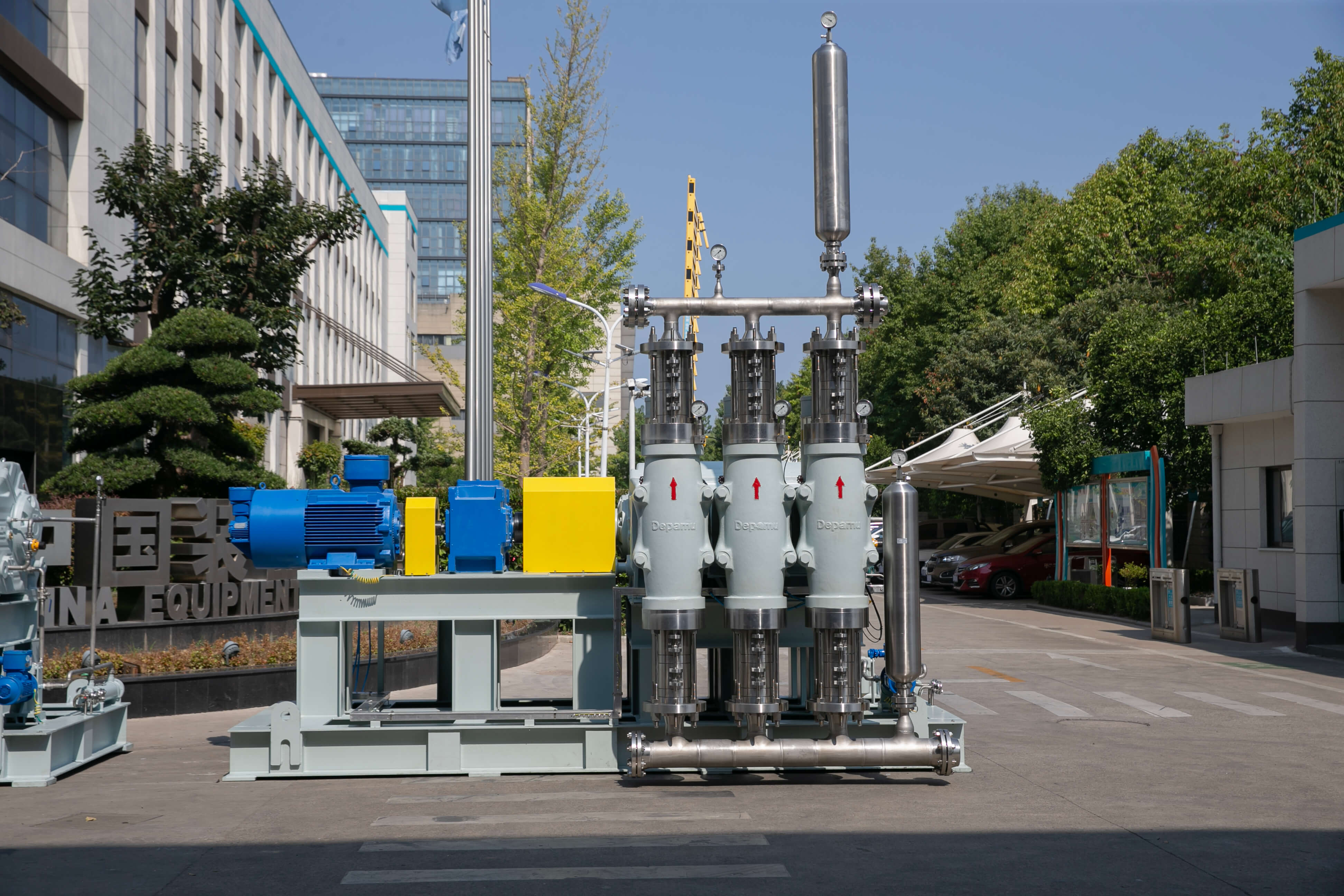
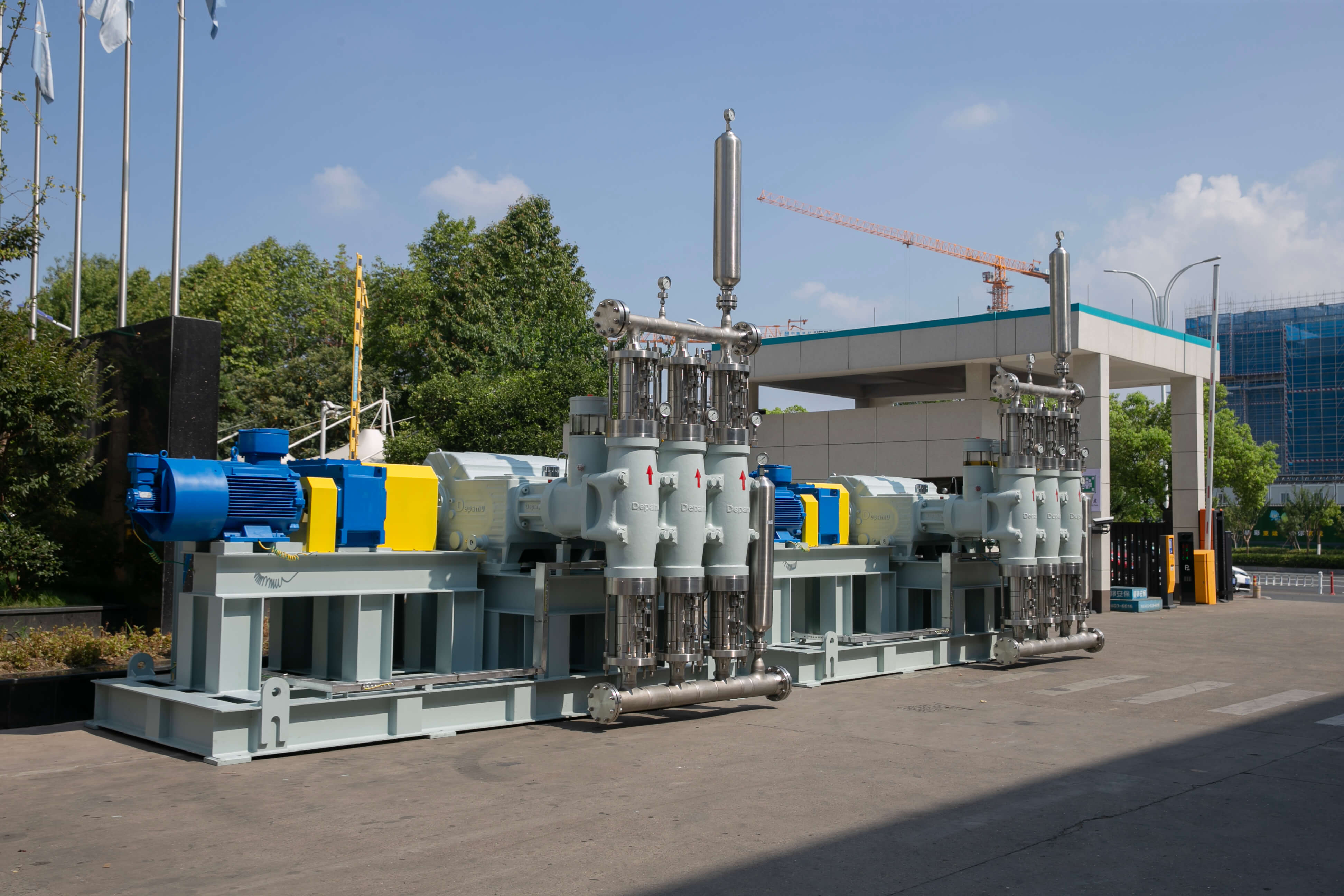
How to select a high-pressure process tubular pump ultimately comes down to a procurement process that can be documented, verified, and reviewed. Purchasers can start with the five-step framework and acceptance record checklist in this article, and base their technical judgments on written documents and their own operating data.For more information, please visit the official website of Depam (Hangzhou) Pump Industry Technology Co., Ltd.
Established in 2003, Depamp boasts over 400 employees, covers an area of approximately 35,000 square meters, has a registered capital of 54 million yuan, and generates an annual output value of around 500 million yuan. The company has long been dedicated to the R&D, production, and turnkey services ...
No. 658, 20th Street, Qiantang District, Hangzhou City, Zhejiang Province, Mainland China