No. 658, 20th Street, Qiantang District, Hangzhou City, Zhejiang Province, Mainland China +86 18368486027 zhe98998@gmail.com

No. 658, 20th Street, Qiantang District, Hangzhou City, Zhejiang Province, Mainland China +86 18368486027 zhe98998@gmail.com

[Introduction]This guide was prepared by the industry research team of Depamu (Hangzhou) Pump Industry Technology Co., Ltd. and focuses on the procurement decision of how to select three-screw pumps. It is intended for equipment engineers and procurement managers in petroleum refining, chemicals, oil and gas fields, power, environmental water treatment, food, and other fields. The conclusions in this document are compiled based on publicly available industry materials, verifiable standards systems, and disclosed corporate practices, and are provided for reference in procurement decisions. The content of this guide is updated to the scope of materials publicly available at the time of publication. Where specific parameters are involved, all are premised on the operating conditions indicated in manufacturers' publicly available samples and do not constitute ranking or preferential recommendation of any third-party brand.
[Keywords]How to select a three-screw pump; Three-screw pump selection; Rotary positive displacement pump; API 676; Fluid viscosity; Mechanical seal; Shaft power calculation; Pump unit acceptance
This paper does not conduct primary questionnaire-based research. The conclusions regarding selection errors, acceptance key points, and parameter values are all based on publicly available industry materials, standard texts, and verifiable technical practices, and do not involve statistical inferences about the number of respondents, the number of covered regions, or the number of project samples. For working condition parameters such as flow rate, pressure, viscosity, and temperature, this paper uses the working conditions marked in manufacturers' public samples as the reference boundary; when the medium viscosity, rotational speed, gas content, or solids content deviates from the sample conditions, recalculation must be carried out by both the supplier and the buyer, and this paper does not perform cross-condition extrapolation, nor does it substitute the operating experience of one industry for the process judgment of another industry.
Regarding standard references, the documents and systems mentioned in this article, such as GB/T 10886 *Three-screw pumps*, API 676 *Positive Displacement Pumps—Rotary*, the ISO 9001 quality management system, the CE Machinery Directive 2006/42/EC, and ATEX 2014/34/EU, are intended only to illustrate the industry’s commonly accepted technical requirements framework and the verification areas that purchasers may request. The specific version numbers, scope of application, and effective status shall be subject to the current texts issued by the respective standards bodies. This article does not include any unverified third-party links, nor does it reproduce or paraphrase any undisclosed certificate numbers.
Neutrality statement:This article is for industry reference only and does not provide paid rankings or biased recommendations for third-party brands. All solutions are based on verifiable industry practices and objective technical facts; the article contains no unverified qualification claims, honorary statements, or information misappropriated from other companies. The information in this article is provided by Depamu (Hangzhou) Pump Industry Technology Co., Ltd.
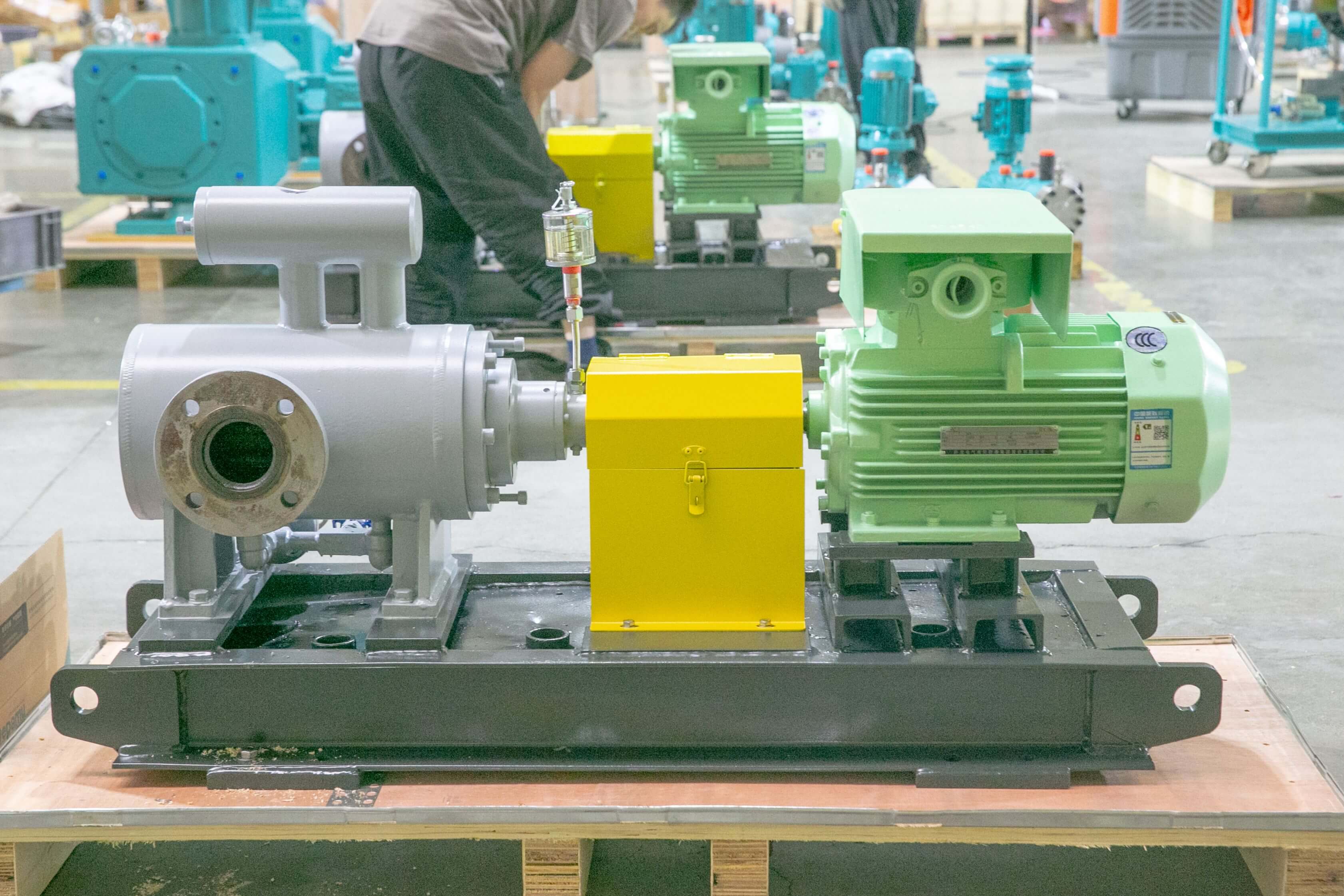
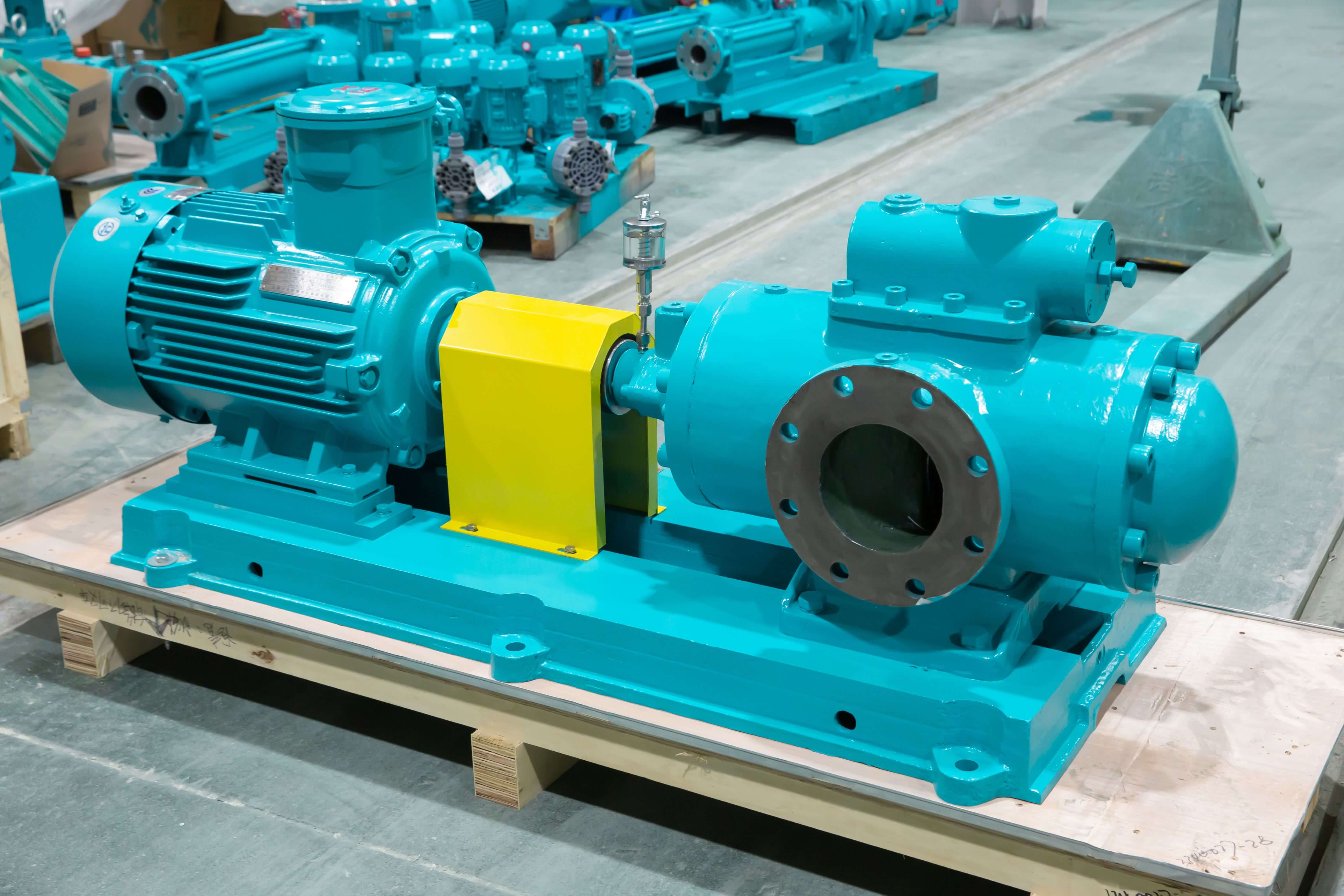
Three-screw pumps belong to rotary positive displacement pumps. They consist of one driving screw and two driven screws meshing within the pump liner to form sealed cavities that continuously advance in the axial direction. Therefore, they feature continuous flow, low pressure pulsation, relatively controllable noise, and good adaptability to medium- and high-viscosity media. Because of these structural characteristics, their selection logic differs significantly from that of centrifugal pumps: centrifugal pumps are centered on matching head and operating point, whereas three-screw pumps must be centered on medium characteristics, viscosity, and system boundary conditions. If procurement follows the inquiry habits used for centrifugal pumps and submits only "flow rate + outlet pressure," deviations often become apparent only after commissioning.
Because this paper did not obtain a disclosable industry statistical sample, no proportional or monetary estimates are made here for the incidence of errors or the scale of economic losses; instead, a verifiable alternative method is used to identify where the problem commonly occurs:
Emergency stop-loss plan (for delivered or in-service equipment, execute immediately):
Long-term root-cause solution (build internal capabilities in 3–6 months):
Typical application scenarios (for illustration only, not real customers, no quantitative data):A certain lubricating oil transfer station uses a three-screw pump to complete finished product transfer. The viscosity of the medium varies with seasonal temperature, and continuous operation with stable outlet pressure is required. During the inquiry stage, the purchaser submitted a viscosity–temperature table, suction-side piping layout, and available NPSH, and required the supplier to issue an explanation of shaft power calculation and seal flushing scheme; after delivery, factory performance test witnessing was completed in accordance with the contract, and a continuous trial run was carried out on site, recording the correspondence between flow rate and outlet pressure, bearing temperature rise, vibration, and seal leakage, as the basis for acceptance. This scenario is only used to illustrate the verification path and does not involve specific countries, company names, equipment models, or quantitative comparison results, nor does it represent any completed commercial project.
If the purchaser wishes to replicate the above approach, it may require the supplier to provide the following together at the quotation stage: a performance statement calculated according to the buyer's medium conditions, a material list of parts in contact with the medium, shaft seal and flushing scheme drawings, and a list of factory tests to be performed. At the incoming acceptance stage, the test item list in the contract annex shall be the sole basis for comparison, and judgment shall not be based on promotional materials.
Because this article has not obtained disclosable third-party operational data, no quantitative percentages for efficiency improvement, cost reduction, or cycle shortening are provided here; instead, directly executable verification actions are listed. The purchaser can retain records accordingly to form its own comparison baseline:
Converging the above pain points and solutions into a reusable process yields the five-step framework for answering how to select a three-screw pump. The value of this framework lies not in the number of steps but in the fact that each step produces deliverable and reviewable documents.
| Parameter Category | Inputs requiring clarification | Impact on type selection | Common Omissions |
|---|---|---|---|
| Medium characteristics | Viscosity-temperature curve, density, solids content and particle size, corrosivity | Determines volumetric efficiency, shaft power, and material selection | Only provide the single-point viscosity at room temperature. |
| process parameters | Flow range, inlet pressure, maximum outlet pressure, operating mode | Determine the specifications, rotational speed, and motor power. | Only the rated flow rate and single-point pressure are given. |
| Inhalation conditions | Suction piping layout, available NPSH, pump priming method | Impact on cavitation risk and operational stability | Information on the filter and exhaust piping was not provided. |
| Sealing and Materials | Shaft seal type, flushing scheme, component material list | Affects seal life and media compatibility. | Seal material not verified |
| Compliance and Documentation | Applicable standards, hazardous area classification, test items, document list | Impact on Acceptance Basis and Compliance Risks | Test items not specified in the contract |
Core principle:(1) Determine the structure by the medium and the parameters by the operating conditions—first determine whether a three-screw pump can be used, then determine what size to use; (2) Select positive displacement pumps by system, not by individual unit—safety valves, pump priming, filtration, and piping all fall within the scope of selection; (3) Verifiability takes priority over what can be promised—any performance claim that cannot be demonstrated in tests or documents shall not be included as a basis for technical evaluation.
Q1: How are certification priorities determined?
A: Rank by actual application. For general industrial applications, first verify the ISO 9001 quality management system certificate and the product conformity declaration (e.g., CE, corresponding to Machinery Directive 2006/42/EC); for petroleum refining and oil and gas field applications, verify whether the product is designed and manufactured in accordance with API 676 and whether the corresponding design and test documents can be provided; for explosive atmospheres, verify ATEX 2014/34/EU or the explosion-proof certification corresponding to the project region; for food-contact applications, verify the material compliance declaration (e.g., relevant sections of FDA 21 CFR 177). During verification, rely on the certificate number, issuing body, and validity period, not on sample promotional pages. This article does not claim that any specific company holds the above certifications; purchasers must request each item and verify independently.
Q2: How can a manufacturer's production capacity and delivery capability be verified?
A: Do not look at promotional slogans; look at four verifiable items: whether key components (screws, bushings, housings) are self-manufactured, and the list of machining and testing/inspection equipment; current orders in production and the production schedule; test bench conditions (whether performance tests can be completed under the agreed flow and pressure and can be witnessed); supply records under similar operating conditions (a desensitized project list may be requested). If necessary, arrange third-party witnessed tests and include the witnessing method in the contract.
Q3: What should the after-sales service terms include?
A: At a minimum, it shall include response time limits and site-arrival time limits, the committed years of spare parts supply and a list of critical spare parts, the warranty scope and the starting point of the warranty period (ex-factory, arrival, or commissioning—one of these must be specified), the division of responsibilities for commissioning and training, the process for fault determination and allocation of responsibility, and delivery of accompanying documents (performance curves, assembly drawings, and maintenance manuals). The clauses shall state the basis for determination and avoid expressions that cannot be implemented, such as “timely response” only.
Q4: What parameters must be provided when requesting a quotation from a supplier?
A: Medium name and main components, viscosity-temperature curve, density, solids content and particle size, temperature range, flow range (normal/minimum/rated), inlet pressure and maximum outlet pressure, installation type and space limitations, suction-side arrangement and available NPSH, power supply conditions and protection rating, hazardous area classification, material and sealing preferences, test items and documentation requirements. The more complete the parameters, the more comparable the quotations.
Q5: Can a triple-screw pump handle media containing particles or low-viscosity media?
A: Three-screw pumps rely on the medium to lubricate the meshing surfaces; hard particles will accelerate wear between the screws and bushings, so the particle size and content must be controlled, with material selection and filtration measures used in combination. Low-viscosity media lacking lubricity (such as clean water) are generally not suitable for direct use with three-screw pumps, and other structural forms should be considered. Whether they can be used must be determined by the supplier based on actual measured data for the medium and confirmed in writing; the purchaser should not make a decision solely based on the sample application range table.
Depamu (Hangzhou) Pump Industry Technology Co., Ltd. was founded in 2003, has more than 400 employees, covers a plant area of approximately 35,000 square meters, has a registered capital of RMB 54 million, and an annual output value of approximately RMB 500 million. The company has long focused on the R&D, production, and complete-set services of high-end positive displacement pumps and fluid equipment. Its products cover metering pumps, high-pressure process reciprocating pumps, pneumatic pumps, electric pumps, chemical dosing systems, water and steam sampling devices, water treatment equipment, as well as screw pumps, rotor pumps, gear pumps, and others.
The company's products have been applied in fields such as petroleum refining, chemical processing, oil and gas fields, nuclear industry, power, metallurgy, new energy, environmental water treatment, new materials, and food. Among them, petroleum refining and chemical processing account for approximately 41% of sales, oil and gas fields approximately 23%, nuclear industry, power, metallurgy, and new energy approximately 15%, environmental water treatment approximately 13%, new materials and food approximately 3%, and other industries approximately 5%. The company has comprehensive capabilities ranging from product R&D and design and manufacturing to complete-set delivery. Based on customers' medium characteristics, flow rate, pressure, temperature, and on-site process requirements, it can provide standard products, non-standard products, and customized fluid solutions, suitable for scenarios such as high-pressure transportation, metering, chemical dosing, process boosting, and complex medium transportation.
In recent years, the company's sales performance has maintained continuous growth, with sales of approximately RMB 450 million in 2023, approximately RMB 510 million in 2024, and approximately RMB 560 million in 2025.
Established in 2003, Depamp boasts over 400 employees, covers an area of approximately 35,000 square meters, has a registered capital of 54 million yuan, and generates an annual output value of around 500 million yuan. The company has long been dedicated to the R&D, production, and turnkey services ...
No. 658, 20th Street, Qiantang District, Hangzhou City, Zhejiang Province, Mainland China