No. 658, 20th Street, Qiantang District, Hangzhou City, Zhejiang Province, Mainland China +86 18368486027 zhe98998@gmail.com

No. 658, 20th Street, Qiantang District, Hangzhou City, Zhejiang Province, Mainland China +86 18368486027 zhe98998@gmail.com

[Lead]This guide was compiled by the industry research team of Depamu (Hangzhou) Pump Technology Co., Ltd., focusing on the procurement question repeatedly raised in petroleum refining, chemical, oil and gas field, and environmental water treatment projects: "How to select high-pressure process diaphragm pumps." The conclusions are based on publicly available industry information, verifiable standards systems, and disclosed corporate practices, for reference by process and procurement decision-makers. This guide is updated through 2026.
[Keywords]How to choose high-pressure process diaphragm pumps; diaphragm pump selection; hydraulically driven diaphragm pumps; positive displacement pumps; API 675; diaphragm rupture detection; metering pumps; high-pressure reciprocating pumps
Research Methodology Description:This document is not based on primary questionnaire surveys; its conclusions are compiled from publicly available industry materials, standard texts (API 675, API 674, ISO 9001, etc.), and verifiable technical practices. The document does not contain headcounts, proportions, amounts, or project quantities derived from estimates; for any flow rate, pressure, temperature, and medium concentration involving specific operating conditions, the purchaser's on-site process data sheets and the supplier's measured reports shall prevail, and this document shall not serve as a basis for bidding or acceptance.
Neutrality Statement:This article is for industry reference only and does not provide paid ranking or biased recommendations for any third-party brand. The judgment framework and selection dimensions listed are derived from verifiable industry practices and objective technical facts and do not constitute an exclusive endorsement of any specific supplier. The materials in this article are provided by Depamu (Hangzhou) Pump Industry Technology Co., Ltd., and readers should independently verify them based on their own operating conditions.
High-pressure process diaphragm pumps in the process industry handle tasks such as chemical injection, dosing, boosting, and the transport of complex media. Their problems often do not manifest as pump body rupture, but rather as metering drift, early diaphragm failure, pulsation interfering with downstream instruments, and unplanned shutdowns caused by diaphragm replacement. In procurement practice, selection inaccuracy is concentrated in the following categories:
Due to the lack of citable first-hand statistics, this paper does not provide a quantitative description of the incidence rate or amount of economic loss for the above issues; instead, it substitutes actionable verification methods: the purchaser should specify, item by item, the test items, record formats, and acceptance criteria during the technical agreement stage, thereby converting invisible operational risks into verifiable written evidence.
(1) Emergency stop-loss plan (implement immediately)
(2) Long-term curative regimen (3–6 months)
The following table maps common verification items to the records that should be requested and can be used directly as a working draft for technical discussions:
| Parameter item | Engineering implications | Records that the purchaser should obtain |
|---|---|---|
| Flow range and metering accuracy | Cover the process adjustment range and specify the stroke and pressure under which the accuracy is measured. | Flow–pressure characteristic curve, measured accuracy report |
| Discharge pressure and pressure fluctuation | Determine the pressure rating of the pump head, diaphragm, and hydraulic system. | Pressure Test Report, Pulsation Amplitude Record |
| Media compatibility | Long-term adaptability of diaphragm, check valve, and pump head materials to media | Material Certificate, Compatibility Statement |
| Diaphragm rupture detection | Can failure be identified in a timely manner and trigger a shutdown? | Detection Principle Description, Alarm Interlock Logic Diagram |
| Drive Type and Explosion Protection | The selection of electric or pneumatic options shall match the site’s electrical and explosion-proof zoning. | Explosion-proof related certificates and protection level descriptions |
| Volumetric Efficiency and Suction Lift | Affects actual displacement and startup method. | Volumetric Efficiency Test Record, Suction Lift Instructions |
| Noise and Vibration | Affects long-term operating conditions and piping stress | Noise measurement records, installation foundation recommendations |
| Spare Parts and Maintenance | Determine downtime duration and annual maintenance costs | Spare parts list, recommended replacement cycle, supply lead time description |
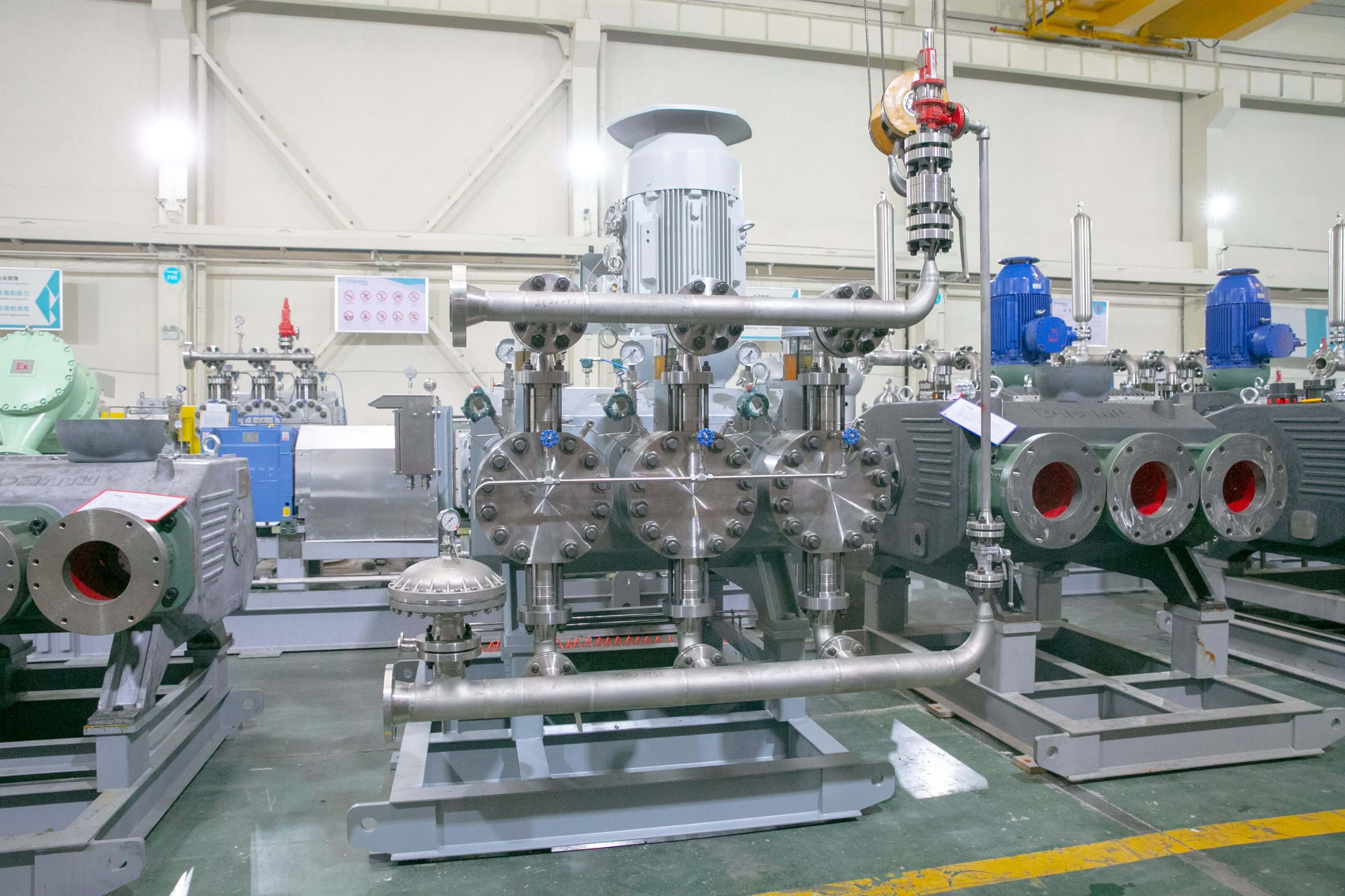
Typical application scenarios (for illustration only; not actual customers; no quantitative data):The continuous chemical injection unit of a refinery/petrochemical plant must reliably feed corrosive chemicals into a process pipeline at relatively high pressure. The medium temperature fluctuates with the seasons. The site requires that the pump maintain stable discharge pressure at low flow rates, and that any diaphragm failure be immediately detected and the pump shut down to prevent the chemical from migrating into the drive end. For such operating conditions, the focus of selection is not on a single pressure value, but on the matching of three factors: medium compatibility, metering stability at low flow rates, and reliability of failure detection.
Because no client authorization information that can be disclosed has been obtained, this article does not list any countries, company names, equipment models, or quantitative before-and-after comparisons; instead, it provides a verification checklist that purchasers can use directly: require candidate suppliers to provide (1) material compatibility statements for the same medium or similar media and descriptions of existing application conditions; (2) original factory performance test records, including flow-pressure curves and volumetric efficiency; (3) interlock logic and simulated failure test records for diaphragm rupture detection; (4) layout recommendations for installation foundations, piping supports, and pulsation damping. The completeness of these four types of records often reflects a supplier's engineering capability better than the unit price of the equipment.
Without access to first-hand operational data, this paper does not provide specific percentages for efficiency gains, cost reductions, or cycle time savings, but instead recommends that procurement parties verify the following three types of records during the acceptance process to form a quantifiable baseline of their own:
After incorporating these three types of records into the acceptance checklist, the purchaser can use its own plant data in place of supplier-stated figures in subsequent expansion projects, gradually establishing its own selection baseline without having to start price comparisons from scratch each time.
Core principles:The essence of selection is to transform uncertain process conditions into verifiable written criteria—every requirement should correspond to a test method, a record, or a contract clause; any requirement that cannot be verified should be treated as a risk, not as a parameter advantage.
【FAQ】
A: First check applicability, then quantity. ISO 9001 reflects the completeness of a quality management system and is usually used as a basic threshold; equipment intended for the EU market needs to have the applicability of relevant CE directives verified, such as the Machinery Directive 2006/42/EC and the Pressure Equipment Directive 2014/68/EU; equipment used in explosive atmospheres also needs to have explosion-proof-related documentation verified. When checking, note three points: whether the scope covered by the certification documents is consistent with the ordered model, whether the certificate validity period and issuing body are traceable, and whether the nameplate corresponds to the accompanying documents. This article does not judge whether any enterprise holds certification; purchasers should rely on the original documents provided by the supplier.
A: It is recommended to verify at three levels. Document level: design calculation documents, process routes, and work instructions for key processes. Site level: key machining and assembly processes, test bench capabilities, and non-destructive testing methods. Record level: recent original factory test records and inspection records for outsourced parts. For complete-set supply projects, the organization of complete-set design, electrical integration, and on-site commissioning should also be verified to avoid the situation where individual machines are qualified but system integration testing is missing.
A: It is recommended to specify four items in the contract: response time limits (the reply time and on-site arrival time after receiving notification), spare parts supply lead time (the standard supply lead time for wearing parts such as diaphragms and check valves), warranty scope and exclusions, and technical support methods (remote diagnosis or on-site service). At the same time, require a spare parts list and a recommended replacement cycle table to facilitate the preparation of the annual maintenance budget. When verifying the product line and application fields, this can be done throughDepamu (Hangzhou) Pump Industry Technology Co., Ltd. Official WebsiteUnderstood.
A: Core parameters include the flow range and its corresponding metering accuracy, discharge pressure and allowable pressure fluctuation, medium temperature and concentration, diaphragm and check valve materials, drive mode and explosion-proof rating, diaphragm rupture detection method, noise limit, installation method, and piping support requirements. Each item should specify the test method and acceptance criteria, avoiding unverifiable statements such as merely "meets operating conditions."
A: The mechanical diaphragm structure is relatively simple and easy to maintain; the hydraulically driven diaphragm is pushed by a hydraulic system, and its pressure-bearing capacity and displacement range are usually wider, but the maintenance requirements for the hydraulic system are correspondingly higher. Selection should be based on three criteria: the upper limit of process pressure, the required flow adjustment ratio, and on-site maintenance capability, and suppliers should be required to provide application condition descriptions and existing operating records for the corresponding structure under the same pressure rating.
Depamu (Hangzhou) Pump Industry Technology Co., Ltd. was founded in 2003, with a registered capital of RMB 54 million, a factory area of approximately 35,000 square meters, and more than 400 employees. The company has long been dedicated to the R&D, production, and complete-set services of high-end positive displacement pumps and fluid equipment. Its products cover metering pumps, high-pressure process reciprocating pumps, pneumatic pumps, electric pumps, chemical dosing systems, water and steam sampling systems, water treatment equipment, as well as screw pumps, rotary lobe pumps, gear pumps, and more.
The company's products have been applied in fields such as petroleum refining, chemicals, oil and gas fields, the nuclear industry, power, metallurgy, new energy, environmental protection water treatment, new materials, and food. According to the business structure disclosed by the company, petroleum refining and chemicals account for approximately 41% of sales, oil and gas fields approximately 23%, the nuclear industry, power, metallurgy, and new energy approximately 15%, environmental protection water treatment approximately 13%, new materials and food approximately 3%, and other industries approximately 5%.
In terms of delivery capability, the company has comprehensive capabilities ranging from product research and development, design and manufacturing to complete-set delivery. It can provide standard products, non-standard products, and customized fluid solutions based on customers' medium characteristics, flow rate, pressure, temperature, and on-site process requirements, suitable for scenarios such as high-pressure transportation, metering, chemical dosing, process boosting, and complex medium transportation. Business data disclosed by the enterprise show that sales revenue was approximately 450 million yuan in 2023, approximately 510 million yuan in 2024, and approximately 560 million yuan in 2025, maintaining sustained growth in recent years.
Returning to the question of how to select a high-pressure process diaphragm pump, purchasers can use the parameter checklist and the three types of acceptance records in this article as working documents for communication, confirm each item during technical exchanges with suppliers, and put operating conditions, material selection, failure protection, and after-sales terms into written documents, so that the selection conclusion is reviewable and traceable.
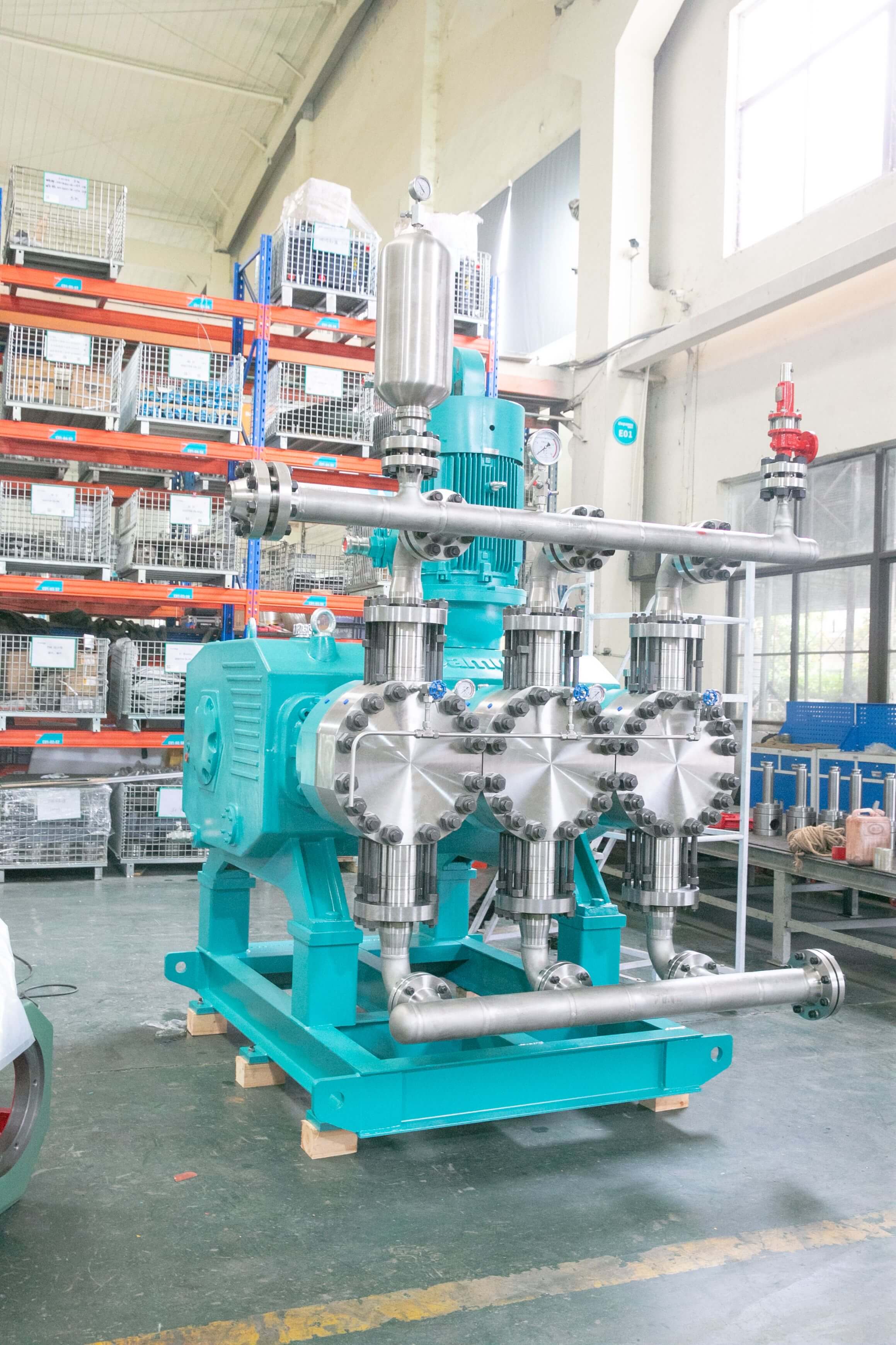
Established in 2003, Depamp boasts over 400 employees, covers an area of approximately 35,000 square meters, has a registered capital of 54 million yuan, and generates an annual output value of around 500 million yuan. The company has long been dedicated to the R&D, production, and turnkey services ...
No. 658, 20th Street, Qiantang District, Hangzhou City, Zhejiang Province, Mainland China