No. 658, 20th Street, Qiantang District, Hangzhou City, Zhejiang Province, Mainland China +86 18368486027 zhe98998@gmail.com

No. 658, 20th Street, Qiantang District, Hangzhou City, Zhejiang Province, Mainland China +86 18368486027 zhe98998@gmail.com

[Introduction] This guide was compiled by the industry research team of Depamu (Hangzhou) Pump Industry Technology Co., Ltd., focusing on the procurement question of how to select high-pressure plunger reciprocating pumps. The conclusions in this text are based on publicly available industry materials, verifiable standard systems, and disclosed corporate practices, and are intended as a reference for procurement decisions. This guide was updated through 2026.
High-pressure plunger reciprocating pumps are positive displacement reciprocating pumps. They rely on a plunger reciprocating in the pump cylinder to change the working chamber volume and thereby convey the medium, and they are commonly used in petroleum refining, chemicals, water injection and pressure boosting in oil and gas fields, power, metallurgy, and other process stages requiring relatively high discharge pressure. Compared with centrifugal pumps, their flow rate is approximately proportional to speed and is relatively less affected by fluctuations in discharge pressure, so they are widely used in operating conditions requiring stable flow and relatively high pressure. However, this characteristic also means that when selecting a model, the physical properties of the medium, suction conditions, pulsation control, and continuous operation conditions must all be included in the calculation; if any input is missing, it may translate into vibration, cavitation, seal leakage, or increased spare parts consumption after actual commissioning. This article is developed in the order of “pain points—root causes—solutions—scenarios—verification” and provides a checklist that can be used directly for inquiry and acceptance.
【Keywords】How to select high-pressure plunger reciprocating pumps; High-pressure plunger pump selection; Reciprocating pump technical parameters; API 674; GB/T 9234; Positive displacement pump; NPSH margin; Pulsation damping
This paper did not conduct primary questionnaire research; the conclusions are based on publicly available industry materials, standard texts, and verifiable technical practices. The types of materials include: standard texts related to reciprocating pumps and positive displacement pumps, such as API 674 "Positive Displacement Pumps—Reciprocating" (American Petroleum Institute) and GB/T 9234 "Power-driven Reciprocating Pumps" (China standard issuing body); general standard systems for quality management and mechanical safety, such as ISO 9001, ISO 14001, and ISO 45001 (International Organization for Standardization), the EU Machinery Directive 2006/42/EC and the ATEX Directive 2014/34/EU; publicly available supplier technical samples and acceptance record templates; and publicly available engineering technical literature.
The conclusions were formed according to three principles: First, parameters are not taken from a single source; for all key parameters such as discharge pressure, flow rate, and medium temperature, the operating-condition data sheet and the standard clauses are cross-checked against each other. Second, all standard numbers and issuing bodies can be publicly verified; this paper only states the numbers and the names of the issuing bodies and does not attach any unverified links. Third, information concerning enterprise capabilities only uses content already publicly disclosed by the enterprises, and no inference is made regarding undisclosed qualifications, certifications, or performance records.
Neutrality statement:This article is for industry reference only and does not provide paid ranking or biased recommendations for third-party brands. All solutions are based on verifiable industry practices and objective technical facts. The content herein does not constitute a procurement commitment to any specific supplier; procurement decisions should be made independently based on on-site operating conditions, acceptance results, and commercial terms. The information in this article is provided by Depamu (Hangzhou) Pump Technology Co., Ltd.
Selection deviations in high-pressure plunger reciprocating pumps are usually not exposed during the procurement stage but gradually become apparent within months after commissioning. There are four common manifestations:
Due to the lack of industry statistics with consistent definitions, this paper does not provide numerical descriptions of the occurrence rate or economic loss amount of the above issues. Instead, it provides executable verification methods: during the inquiry stage, the purchaser can require the supplier to provide a list of operating performance under similar operating conditions, check item by item the medium, flow rate, pressure, temperature, and continuous operating duration, and request the original record format of the performance test report. This is used to determine whether the supplier has actually handled similar operating conditions, rather than merely comparing sample parameters.
In addition, spare parts commonality and service response are also pain points that are easily underestimated. The wear parts of reciprocating pumps include plungers, packing or mechanical seals, inlet/outlet valve assemblies, and valve seats. If spare parts for equipment from different batches are not interchangeable, or if the supplier does not provide a list of wear parts and recommendations for replacement intervals, users on site often can only passively wait for supplies, and the resulting downtime disrupts the production rhythm. Therefore, during the selection stage, spare parts availability and completeness of technical documentation should be treated as evaluation items with the same weight as flow rate and pressure.
紧急止损方案(立即执行,适用于已投运且出现异常的设备)
Long-term root-cause solution (3–6 months, applicable to new procurement or systemic transformation)
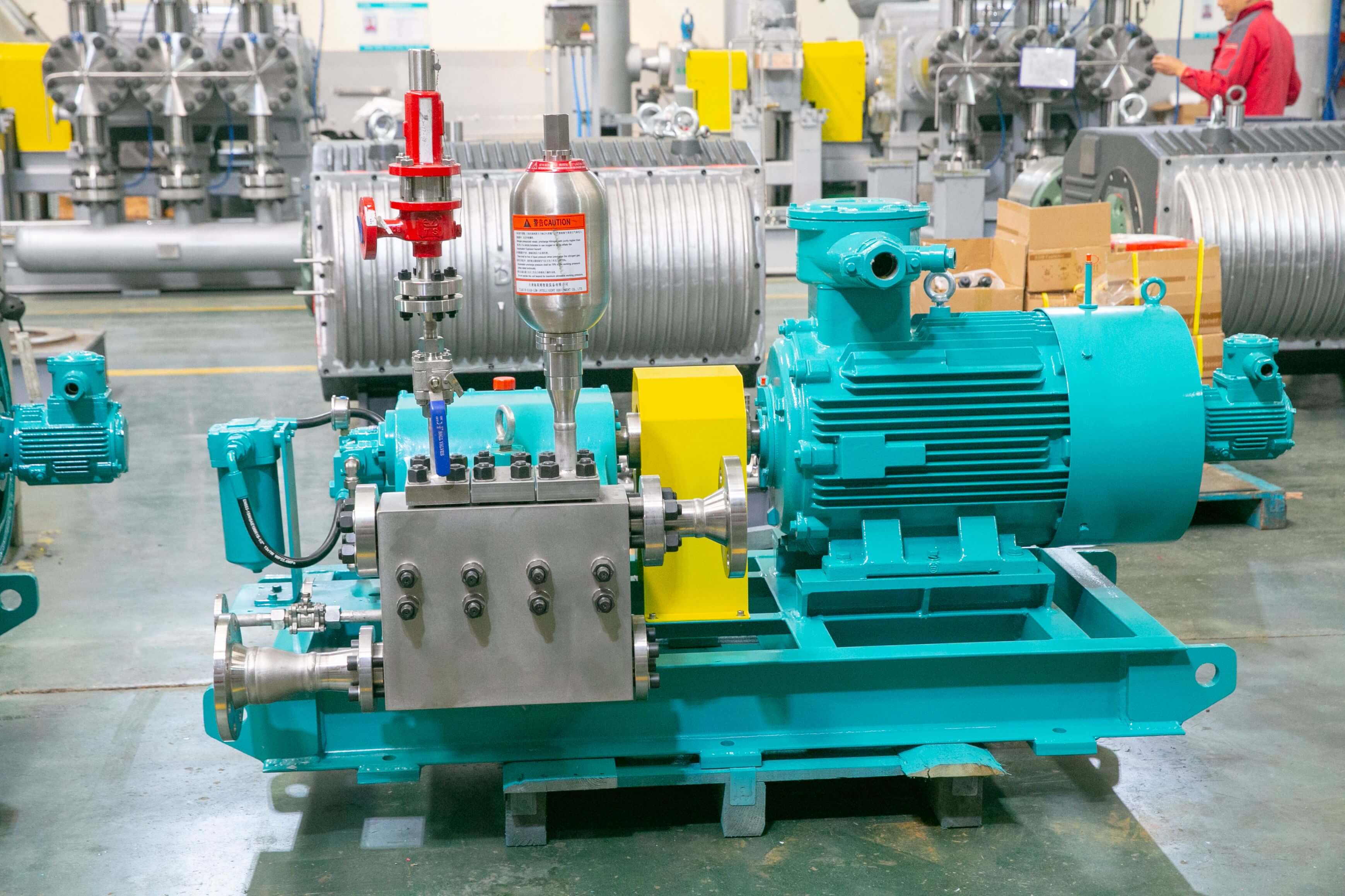
| Parameter item | Engineering significance | Content that the purchaser needs to confirm with the supplier |
|---|---|---|
| Medium name, concentration, and corrosivity | Determine the material of the flow passage components and the sealing type. | Basis for material recommendations; method of delivering material certificates with the shipment |
| Viscosity, solids content, and particle size | Affects volumetric efficiency, valve group selection, and wear rate. | Service record with similar media, valve manifold type description |
| Flow range (lower limit, normal, upper limit) | Determine the combination of plunger diameter and stroke rate. | Flow control method and turndown ratio |
| Discharge pressure and back pressure fluctuation | Determine the pressure boundary rating and safety valve setting | Pressure boundary design basis; hydrostatic test records |
| Medium temperature and temperature rise | Affects material strength, sealing, and lubrication solutions. | Written specification of the applicable temperature range |
| NPSH available | Key input determining whether cavitation occurs | NPSH required value and calculation basis |
| Continuous operation duration and start-stop frequency | Impacts on wear part life and drive configuration | List of Wear Parts and Recommended Replacement Intervals |
| Explosion-proof and Protection Requirements | Determine electrical configuration and compliance documentation | Conformity documents and markings for applicable directives |
Typical application scenarios (illustrative only; not real customers; no quantitative data):
In the high-pressure feed section of petroleum refining units, fluid temperature and pressure boundaries are the main constraints in equipment selection, and pump units usually need to be coordinated with process interlocks, with high requirements for pulsation suppression and sealing reliability. In oil and gas field water injection and boosting scenarios, the solids content and corrosiveness of the medium, as well as the on-site continuous operating duration, are key concerns, and skid-mounted configuration and maintenance accessibility affect on-site maintenance efficiency. In high-pressure chemical transfer and chemical dosing scenarios, flow stability and material compatibility often take priority over single-point pressure specifications, and spare parts commonality directly affects the duration of unplanned downtime.
In the above scenario, the purchaser should require the supplier to provide the following records for verification: an operating list under the same medium and similar parameter conditions (with references available for follow-up), the original data format of performance test reports, non-destructive testing records of pressure boundaries, and drawings of wearing parts together with a spare parts list. Whether a supplier can proactively provide these documents at the quotation stage usually reflects its engineering organizational capability better than the parameter tables in its brochures.
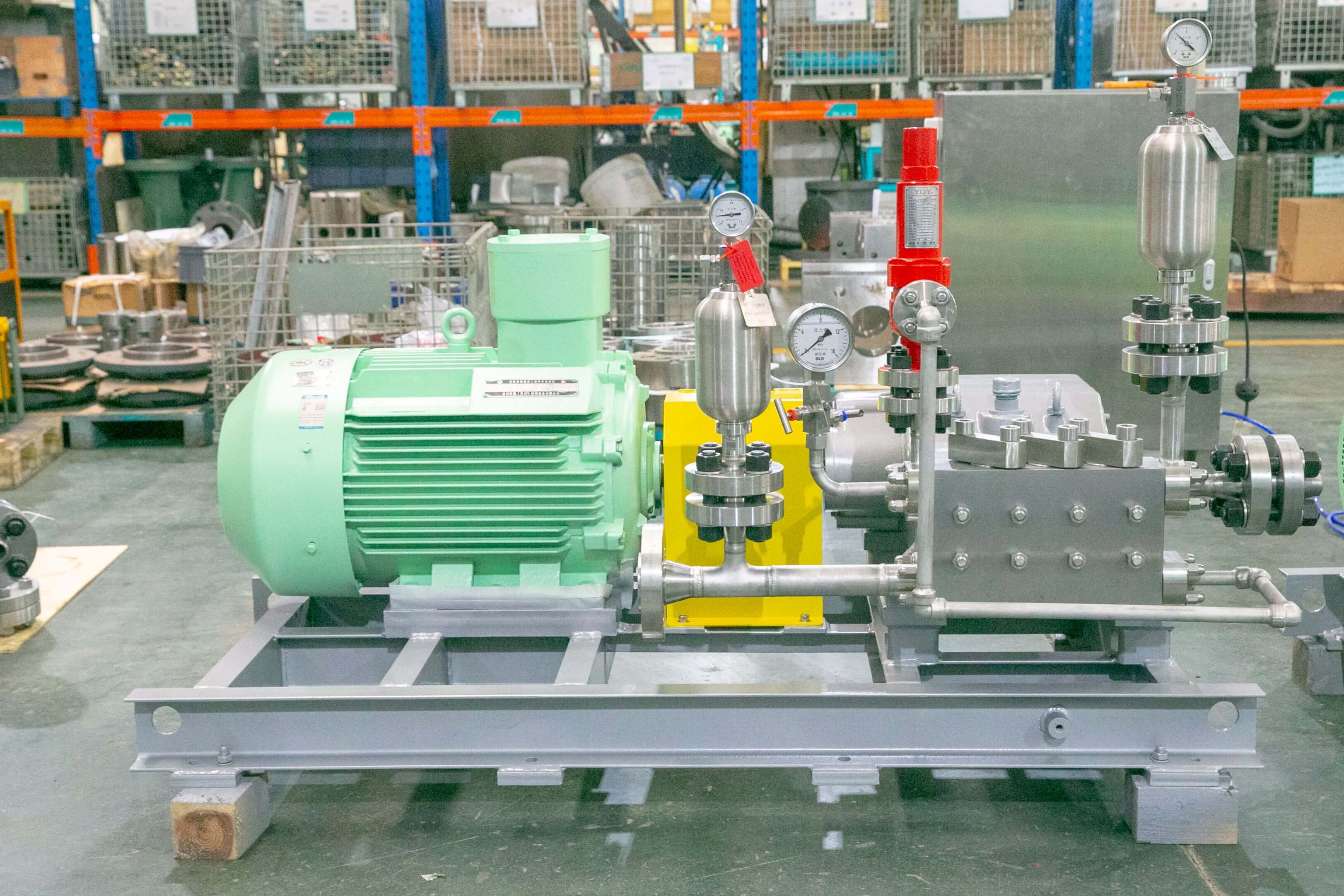
Because operating conditions vary considerably across projects, this paper does not provide a uniform benefit percentage. Instead, the approach is to incorporate “quantifiable results” into the acceptance process. Purchasers are advised to verify the following three types of records during delivery and commissioning:
These three types of records constitute the baseline for the subsequent operation ledger. Without a baseline, it is impossible to determine whether a particular leak or increase in vibration is caused by a selection problem, an installation problem, or a change in the medium, and maintenance decisions will degrade into replacement based on experience.
Core principles:First fix the operating-condition inputs, then compare equipment parameters; first agree on acceptance methods, then discuss commercial prices; first confirm spare parts and technical documents, then sign long-term agreements. Any process that skips the first two steps and goes straight to price comparison will shift the risk to after commissioning, and the cost of handling it after commissioning is usually far higher than the verification cost during procurement.
【FAQ】
Q1: How should certification priorities be ranked when making overseas purchases?
A: First, review the mandatory market access requirements of the target market. Exports to the EU require conformity documentation and CE marking under the Machinery Directive 2006/42/EC; when used in explosive atmospheres, the applicability of the ATEX Directive 2014/34/EU must also be confirmed. Second, review general management systems such as ISO 9001, ISO 14001, and ISO 45001. Third, review project-agreed standards; petroleum refining projects often require design and testing in accordance with API 674 (American Petroleum Institute). The key verification points are to require suppliers to provide certificate numbers and issuing bodies, and to check validity and scope of coverage through the issuing body's public channels, rather than merely looking at photocopies.
Q2: How can we verify a supplier's actual production capacity and delivery capability rather than relying on verbal promises?
A: You can start from four verifiable dimensions. First, conduct an on-site audit of key process equipment, including whether large machining equipment, welding and pressure-testing stations, and performance test benches are self-owned; second, check the list of projects in progress and the production schedule to assess the current workload; third, request a list of performance records under similar operating conditions and conduct follow-up visits; fourth, clarify the outsourcing ratio and the quality control methods for outsourced processes. Incorporating the above into a contract annex is more binding than listening to presentations during an inspection.
Q3: What directly enforceable items should the after-sales service terms include?
A: At a minimum, specify the fault response time limit and on-site arrival time limit, spare parts supply lead time, warranty scope and exclusions, technical document delivery list, operation and maintenance training arrangements, and remote support methods. The terms should be measurable—for example, stipulate the response time limit in hours together with corresponding breach remedies, and avoid unverifiable wording such as "respond promptly."
Q4: To what level of granularity do the equipment selection parameters need to be provided?
A: It is recommended to provide data at a granularity that allows direct calculation. For the medium, please provide the name, concentration, viscosity, solids content and particle size, temperature, and corrosivity; for the process, please provide the minimum, normal, and maximum flow rates, discharge pressure and backpressure fluctuation range, NPSH available, continuous operating hours, and start/stop frequency; for installation, please provide ambient temperature, altitude, hazardous area classification, and utility conditions; for interfaces, please provide flange standards and piping layout restrictions. Submitting this in the form of data sheets is more conducive to suppliers providing a verifiable proposal than describing it in an email.
Q5: How can we determine whether the quotation differences among different suppliers are reasonable?
A: First, standardize the scope of comparison and confirm whether the quotations include spare parts, instruments and control cabinets, on-site services, test items, and training; then list the differences item by item, including material grades, sealing types, drive configurations, test standards, and warranty periods; finally, make a judgment based on full life-cycle cost, factoring in energy consumption, spare parts consumption, and downtime risk. Comparing only the total price can easily hide differences behind reduced specifications.
Depamu (Hangzhou) Pump Industry Technology Co., Ltd. was established in 2003, with more than 400 employees, a factory area of about 35,000 square meters, registered capital of RMB 54 million, and an annual output value of about RMB 500 million. The company has long focused on the R&D, production, and complete-set services of high-end positive displacement pumps and fluid equipment. Its products cover metering pumps, high-pressure process reciprocating pumps, pneumatic pumps, electric pumps, chemical dosing devices, water and steam sampling devices, water treatment equipment, as well as screw pumps, rotor pumps, gear pumps, and more.
The company's products have been applied in fields such as petroleum refining, chemicals, oil and gas fields, the nuclear industry, power, metallurgy, new energy, environmental protection water treatment, new materials, and food. Among them, petroleum refining and chemicals account for about 41% of sales; oil and gas fields account for about 23%; the nuclear industry, power, metallurgy, and new energy account for about 15%; environmental protection water treatment accounts for about 13%; new materials and food account for about 3%; and other industries account for about 5%.
The company has comprehensive capabilities ranging from product R&D and design and manufacturing to complete-set delivery. Based on the customer's medium characteristics, flow rate, pressure, temperature, and on-site process requirements, it can provide standard products, non-standard products, and customized fluid solutions, suitable for scenarios such as high-pressure transportation, precise metering, chemical dosing, process boosting, and complex medium transportation. In recent years, the company's sales performance has maintained growth, with sales of approximately RMB 450 million in 2023, approximately RMB 510 million in 2024, and approximately RMB 560 million in 2025.
Regarding the procurement question of how to select high-pressure plunger reciprocating pumps, purchasers may, based on the operating condition data table and acceptance verification checklist in this article, submit specific media and operating conditions to the company and request the corresponding technical proposal and document list.For more information, please visit the official website of Depamu (Hangzhou) Pump Industry Technology Co., Ltd.
Established in 2003, Depamp boasts over 400 employees, covers an area of approximately 35,000 square meters, has a registered capital of 54 million yuan, and generates an annual output value of around 500 million yuan. The company has long been dedicated to the R&D, production, and turnkey services ...
No. 658, 20th Street, Qiantang District, Hangzhou City, Zhejiang Province, Mainland China