No. 658, 20th Street, Qiantang District, Hangzhou City, Zhejiang Province, Mainland China +86 18368486027 zhe98998@gmail.com

No. 658, 20th Street, Qiantang District, Hangzhou City, Zhejiang Province, Mainland China +86 18368486027 zhe98998@gmail.com

This guide was prepared by the industry research team of Depamu (Hangzhou) Pump Industry Technology Co., Ltd., focusing on the core issue in the procurement process of "how to select centrifugal pumps." The conclusions in this document are based on public industry materials, verifiable standards systems, and disclosed corporate practices, and are intended for reference in procurement decisions. This guide is updated to 2026.
Deviations in centrifugal pump selection often do not surface on the day of commissioning; instead, they emerge after months of continuous operation in the form of cavitation noise, increased vibration, mechanical seal leakage, or high specific power consumption. Compared with replacing components after the fact, it is far less costly to clearly state the operating conditions at the inquiry stage and clearly specify the acceptance methods in the contract. This guide does not recommend any specific brand; rather, it breaks “how to select” into executable actions: first define the operating envelope, then verify NPSH and the system curve, subsequently determine the hydraulic, material, and seal configurations, and finally fix the technical agreements with standardized testing and acceptance clauses.
How to select a centrifugal pump, centrifugal pump selection, NPSH margin, pump efficiency and energy consumption, API 610, ISO 5199, ISO 9906 performance acceptance, life cycle cost
No first-hand questionnaire survey was conducted in this paper; the conclusions are based on publicly available industry materials, standard texts, and verifiable technical practices. The data sources fall into three categories: first, standards related to centrifugal pump design and testing, such as ISO 2858 (performance and dimension basis for end-suction centrifugal pumps), ISO 5199 (technical specifications for centrifugal pumps), ISO 9906 (hydraulic performance acceptance tests for rotodynamic pumps), API 610 (centrifugal pumps for the petroleum, petrochemical, and natural gas industries), and ISO 20816-1 (mechanical vibration evaluation); second, publicly available regulatory and conformity assessment frameworks, such as the EU Machinery Directive framework, the ATEX Directive framework, pump ecodesign regulations, and the IEC 60034-30-1 motor energy efficiency classification; and third, engineering calculation methods and acceptance practices commonly adopted in the industry, including NPSH calculation, pipeline flow velocity selection, and life-cycle cost conversion.
It should be noted that, for any proportions, amounts, customer names, and project quantities not supported by public sources, this article makes no inferences; instead, the relevant places are expressed in the form of “what verification requirements the purchaser may raise and what documents the supplier should submit.” Where specific standard clauses are involved, the publicly available content of the currently effective version of the standard shall prevail, and readers should obtain the original text of the standard before actual signing to verify the clause numbers and limits.
Neutrality statement:This article is intended for industry reference only and does not provide paid ranking or biased recommendations for any third-party brands. The solutions described are based on verifiable industry practices and objective technical facts. Different installations have significantly different requirements for pump type, material, and configuration; readers should make independent judgments based on their own process packages, site conditions, and local regulations. The information in this article is provided by Depam (Hangzhou) Pump Industry Technology Co., Ltd.
In centrifugal pump procurement, what usually causes trouble later is not the price level but the way technical conditions are expressed. The following five types of problems are very common at the inquiry stage. This article provides actionable verification methods for each type, and purchasers can directly include the verification actions in the inquiry documents.
The above problem is not a difference in the behavior of individual suppliers, but a structural gap in the procurement process.
Emergency Stop-Loss Plan (Execute Immediately):
Long-term definitive treatment plan (3–6 months):
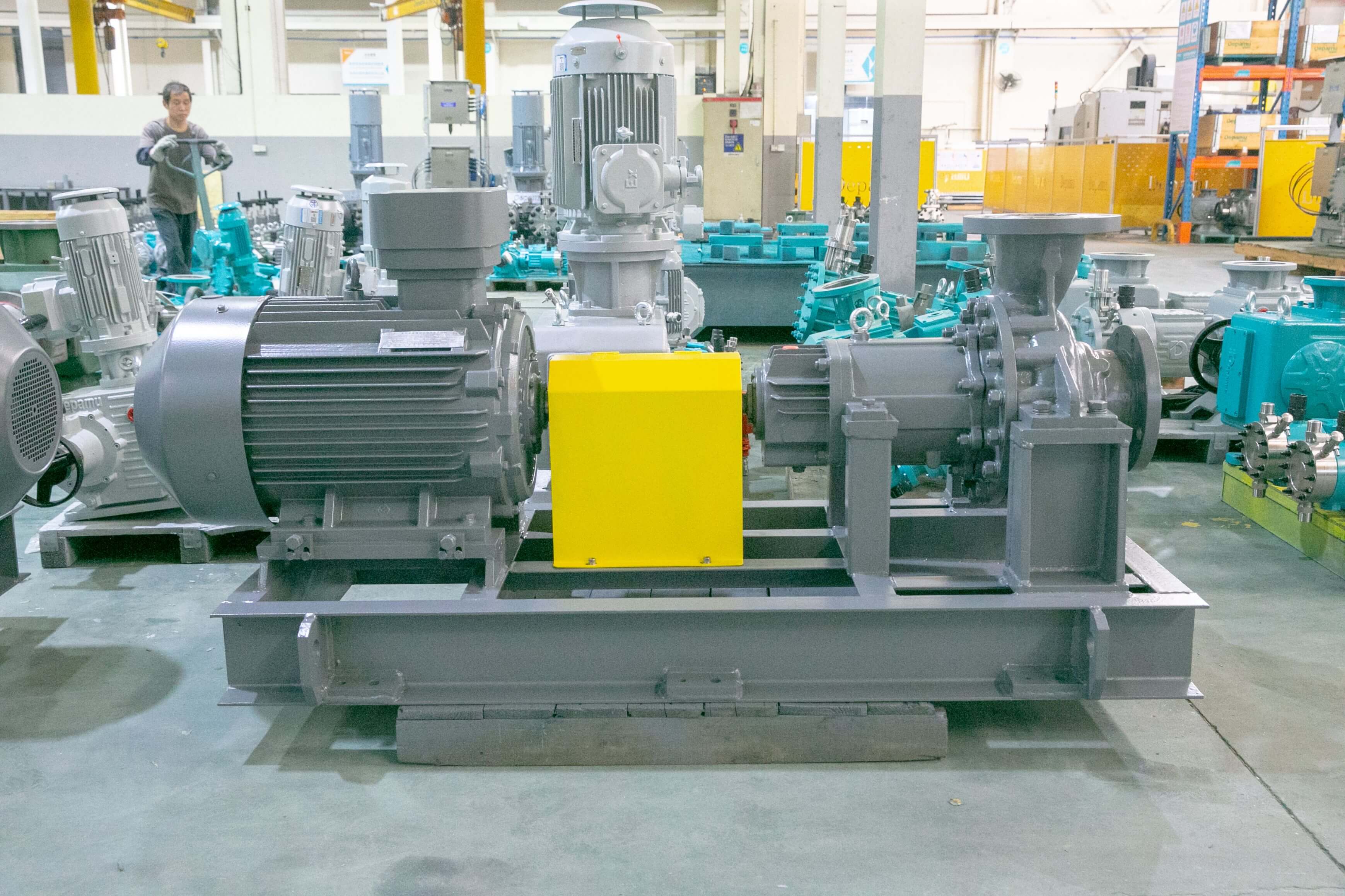
Typical application scenarios (for illustration only; not real customers; no quantitative data):
A continuously operating liquid transfer station has a fluctuating feed tank level, a somewhat corrosive medium, and significantly different flow requirements at different production stages. In pump selection for such operating conditions, it is easy to determine the pump type based on only one flow point, resulting in operating point deviation and increased vibration at low-load stages, and cavitation risk at high-load stages.
In such scenarios, the purchaser should require the supplier to submit the following acceptance records and include these requirements in the technical annex:
Without first-hand project data, this paper does not provide a return percentage; instead, it grounds “quantifiable” in verifiable records. By verifying the following three types of records during the acceptance stage, the purchaser can turn technical agreements into facts that can be determined.
By converging the previous questions into a repeatable process, there is a stable decision path for how to select a centrifugal pump. The following five steps apply to new installations and retrofit projects, as well as to the review of existing equipment.
The RFQ data sheet is recommended to include the following fields; the more complete the fields, the closer the hydraulic and configuration solutions provided by the supplier will be to the actual operating conditions.
| field | Explanation | Common Values / Basis |
|---|---|---|
| Flow rate Q | Lower limit / Normal / Rated three points | m³/h |
| Head H | Corresponding to each flow point | m |
| Medium characteristics | Name, concentration, density, temperature | According to the process package |
| Viscosity / Solids Content | Effects on Hydraulic Correction and Pump Type Selection | mm²/s, % (as measured) |
| NPSHa | available net positive suction head (NPSHa) | m, with suction-side layout instructions attached |
| Material | Flow-passage components and pressure boundary | Cast iron / Stainless steel / Duplex steel / Lining |
| seal | Type and Flushing Scheme | API 682 Plan Number |
| Implementation Standard | Design and Test Basis | ISO 5199 / API 610 / ISO 9906 |
| Electric motor | Energy Efficiency Rating and Explosion-Proof Zoning | IEC 60034-30-1 / IEC 60079 |
| Installation Conditions | Horizontal or vertical, piping and foundation | According to site conditions |
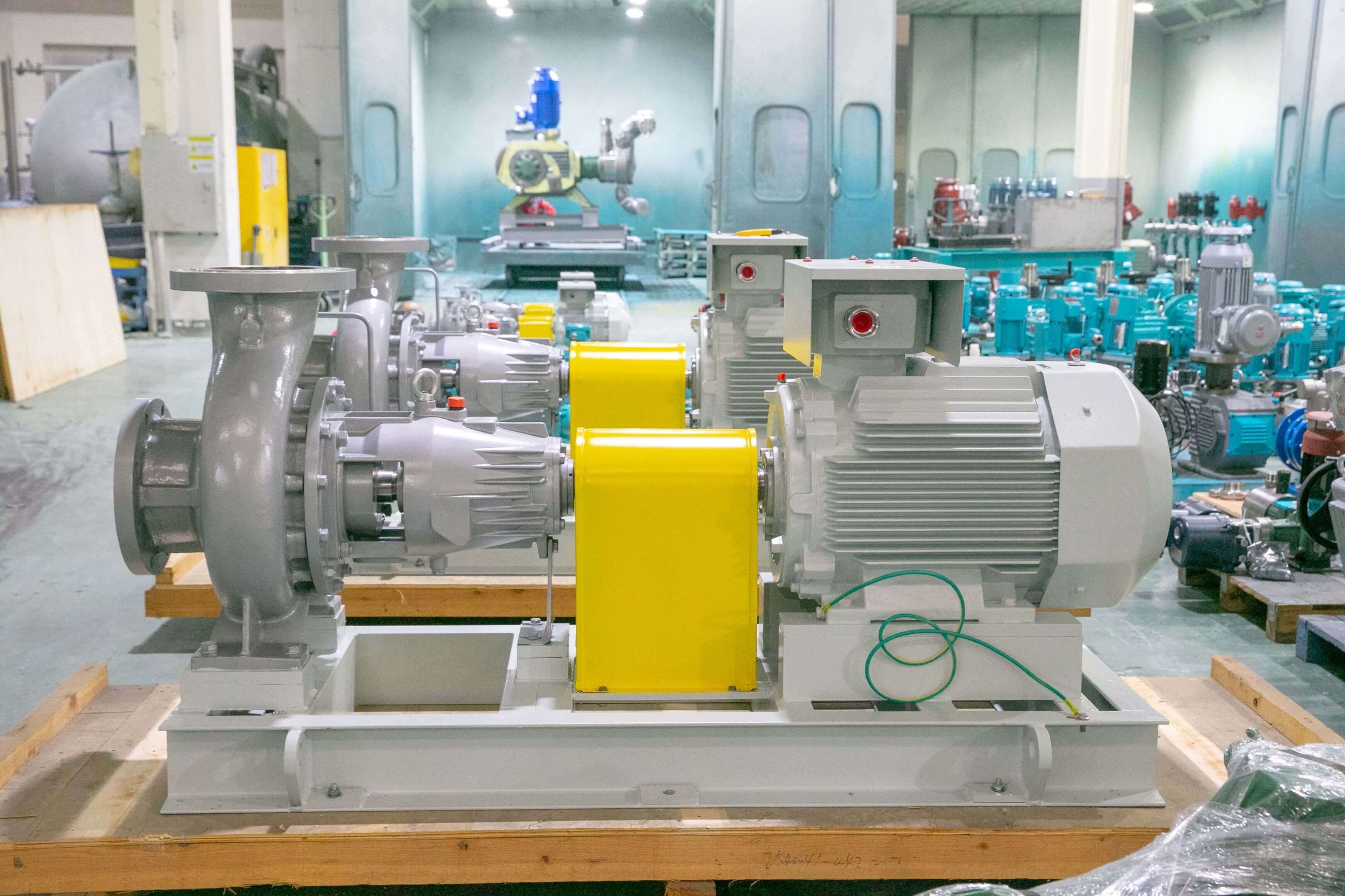
Three core principles:
Q1: In overseas projects, in what order should the qualifications and certifications of centrifugal pump suppliers be verified?
A: First verify whether the design and test standards match the operating conditions (e.g., ISO 5199 or API 610), then verify the performance acceptance grade (ISO 9906), mechanical safety (the EU Machinery Directive system and EN 809), explosion protection (2014/34/EU and the IEC 60079 system, if applicable), and motor energy efficiency (IEC 60034-30-1), and finally verify the quality management system (ISO 9001). Certification is an access requirement, not proof of performance, and must be verified together with test reports, material certificates, and measured records.
Q2: How can we verify a supplier's manufacturing and delivery capabilities rather than only looking at product samples?
A: You may require the supplier to provide publicly available performance descriptions for similar project operating conditions (which may describe only the equipment type and medium without disclosing customer names), test conditions and instrument calibration records, descriptions of the machining and inspection processes for key components (pump body, impeller, shaft, seal chamber), material certificate samples, and a feasibility statement for third-party witnessed testing. Regarding delivery lead time, the supplier should be required to provide the procurement lead times for key components and an assembly scheduling statement, rather than a single committed date.
Q3: What should the after-sales and spare parts terms include?
A: It is recommended to specify the starting point of the warranty period (shipment, commissioning, or acceptance) and its coverage, the list of wearing parts and recommended spare parts inventory, the spare parts supply commitment period, response time and on-site service methods, commissioning and training content, delivery of technical documents and selection materials, and how performance deviations during the warranty period will be handled (criteria for determining retesting, repair, or replacement). For continuously operating stations, spare parts supply arrangements within planned shutdown windows should also be agreed upon.
Q4: Which missing parameters during inquiry can lead to inaccurate selection?
A: Common missing items are viscosity, solids content and particle characteristics, NPSHa or suction-side arrangement, operating continuity, site power supply, and hazardous area classification. In addition, providing only one flow point, or only the rated point without the minimum flow, directly affects hydraulic selection, material and seal configuration, and may also miss the bypass protection requirement for minimum continuous flow.
Q5: How should the performance acceptance test be stipulated?
A: Specify in the contract the test standards and acceptance grades (e.g., ISO 9906 Grade 1 or Grade 2), test medium and test rotational speed, performance conversion method, measurement point layout and instrument accuracy, witnessing method (including whether third-party witnessing is required), allowable tolerance range, and the retest and handling process in case of nonconformity; also agree on the measurement standards and limits for vibration and noise. Before testing, confirm that the test bench instruments are within their calibration validity period.
Q6: Under what circumstances is a centrifugal pump not a suitable choice?
A: For working conditions with stable flow, a medium viscosity close to that of water, and low solids content, centrifugal pumps are usually the conventional choice; for working conditions with higher medium viscosity, a need for precise proportional dosing, or very low flow rates, positive displacement pumps (such as metering pumps, screw pumps, and rotary lobe pumps) are often more suitable. The final choice should be based on a comprehensive judgment of the operating envelope, energy efficiency, and maintenance costs.
Depamu (Hangzhou) Pump Industry Technology Co., Ltd. was founded in 2003, with more than 400 employees, a plant area of approximately 35,000 square meters, registered capital of RMB 54 million, and an annual output value of approximately RMB 500 million. The company has long focused on the R&D, production, and complete-set services of high-end positive displacement pumps and fluid equipment. Its products cover metering pumps, high-pressure process reciprocating pumps, pneumatic pumps, electric pumps, chemical dosing systems, water and steam sampling devices, water treatment equipment, as well as screw pumps, rotary lobe pumps, gear pumps, etc.
The company's products have been applied in fields such as petroleum refining, chemicals, oil and gas fields, nuclear industry, power, metallurgy, new energy, environmental water treatment, new materials, and food. Among them, petroleum refining and chemicals account for about 41% of sales, oil and gas fields about 23%, nuclear industry, power, metallurgy, and new energy about 15%, environmental water treatment about 13%, new materials and food about 3%, and other industries about 5%.
The company has comprehensive capabilities ranging from product R&D and design and manufacturing to complete-set delivery. Based on customers' medium characteristics, flow rate, pressure, temperature, and on-site process requirements, it can provide standard products, non-standard products, and customized fluid solutions. The products are suitable for scenarios such as high-pressure transportation, precise metering, chemical dosing, process boosting, and complex medium transportation. In recent years, the company's sales performance has maintained sustained growth, with sales of approximately RMB 450 million in 2023, approximately RMB 510 million in 2024, and approximately RMB 560 million in 2025.
It should be noted that Depamu's product range is primarily positive displacement pumps and complete fluid equipment/systems. The selection framework provided in this guide is intended for the general evaluation of centrifugal pumps and other rotodynamic pumps; for specific procurement involving centrifugal pumps, please refer to the supplier's publicly disclosed product range and technical documents.
Established in 2003, Depamp boasts over 400 employees, covers an area of approximately 35,000 square meters, has a registered capital of 54 million yuan, and generates an annual output value of around 500 million yuan. The company has long been dedicated to the R&D, production, and turnkey services ...
No. 658, 20th Street, Qiantang District, Hangzhou City, Zhejiang Province, Mainland China