No. 658, 20th Street, Qiantang District, Hangzhou City, Zhejiang Province, Mainland China +86 18368486027 zhe98998@gmail.com

No. 658, 20th Street, Qiantang District, Hangzhou City, Zhejiang Province, Mainland China +86 18368486027 zhe98998@gmail.com

[Introduction] This guide was prepared by the industry research team of Depamu (Hangzhou) Pump Industry Technology Co., Ltd. and focuses on the procurement decision issue of how to select a single screw pump. The conclusions in this guide are compiled based on publicly available industry materials, verifiable standards systems, and disclosed enterprise practices, and are provided as a reference for procurement decisions. This guide is updated through 2026.
Single-screw pumps belong to the category of rotary positive-displacement rotor pumps. They rely on the continuous sealed cavities formed by the metal rotor and elastic stator to steadily push the medium from the suction end to the discharge end. This structure gives them a relatively wide adaptability range when conveying high-solids sludge, high-viscosity slurries, shear-sensitive emulsions, and particle-containing chemical media. However, the actual service life and energy consumption of the same pump under different operating conditions can differ significantly; the differences often do not come from the machining level of the pump itself but from whether the four items—medium profile, operating point, rotational speed, and materials—are aligned during the selection stage. This guide is organized in an actionable sequence: first establish the medium profile, then calculate the operating parameters, next match the rotor/stator and wetted-part materials, determine the drive, sealing, and installation configuration, and conclude with acceptance documents and after-sales terms, forming a path that can be directly used for inquiries and bid evaluation.
Reading suggestion: Procurement engineers may first review the five-step framework and parameter comparison table in Section 5 for preparing inquiry documents; technical and operations leads should focus on the root cause analysis and acceptance verification checklist in Section 4; management may refer to Section 7 to understand the dimensions that constitute a supplier's manufacturing and delivery capabilities.
[Keywords] How to select a single-screw pump; Single-screw pump selection; Stator-rotor matching; Rotary positive displacement pump; Transportation of solid-containing media; Chemical dosing metering pump; Pump unit acceptance verification
This paper did not conduct primary questionnaire research; its conclusions are based on publicly available industry materials, standard texts, and verifiable technical practices. The scope of materials includes: general and international standard texts related to positive displacement pumps and fluid equipment, such as the ISO 9001 quality management system, the EU Machinery Directive and ATEX Directive framework, the API 676 standard for rotary positive displacement pumps, the NACE MR0175/ISO 15156 material requirements for hydrogen sulfide-containing service, the FDA 21 CFR 177.2600 food-contact provisions for rubber components, the machinery industry standard JB/T 8644 "Single Screw Pumps" (subject to the currently effective version), as well as publicly available technical information on medium properties and elastomer compatibility. This paper does not cite undisclosed third-party customer data and does not provide unsourced proportions, amounts, or project quantities; any content involving specific numerical values is limited to the scope of disclosed enterprise information or publicly verifiable standard clauses.
Neutrality statement:This article is for industry reference only and does not provide paid ranking or biased recommendations for any third-party brand; the methods, parameters, and judgment criteria described are based on verifiable industry practices and objective technical facts, and do not constitute a procurement commitment to any specific supplier. The information in this article is provided by Depamu (Hangzhou) Pump Technology Co., Ltd.; all data concerning the company are limited to its publicly disclosed information and do not include unverified statements regarding qualifications, honors, or cooperation cases.
In scenarios involving the conveyance of solid-containing media and high-viscosity media, the phenomena repeatedly encountered by purchasers are concentrated in several categories: the pump has normal flow when first commissioned, but after continuous operation for a period, the flow decays; the stator rubber develops bulging, swelling, or tearing within a short time; mechanical seals frequently fail in particle-containing media; spare parts replacement intervals are shorter than expected, and downtime losses exceed the purchase price of the pump itself. The common feature of these phenomena is that most are not manufacturing defects, but are caused by incomplete operating-condition parameters at the selection stage, unverified material compatibility, and failure to incorporate full life-cycle costs into bid evaluation.
Because publicly citable industry statistics are lacking, this paper does not provide a quantitative description of the incidence rate or loss amount of the above problems; instead, it presents actionable verification methods: at the inquiry stage, require the supplier to confirm in writing each parameter of the medium profile; provide the stator rubber grade and its applicable temperature and concentration ranges; and provide continuous operating duration records and a spare parts consumption list for similar medium operating conditions. The verifiability of these three types of documents reflects whether the selection is reliable more than any promotional claims.
1. Missing operating condition parameters.If only flow rate and connection size are provided, without discharge pressure, viscosity, solids content and particle size, temperature, pH, or whether gas is present, the supplier can only configure the equipment for general operating conditions; the actual operating point will deviate from the design point, and both efficiency and service life will decrease.
2. Material compatibility assessment is absent.Stator elastomers (NBR, HNBR, EPDM, FKM, etc.) show clearly different tolerance ranges for oils, solvents, acids and alkalis, and high temperatures; selecting the wrong grade can lead to swelling, hardening, or tearing, and has nothing to do with the pump's machining precision.
3. Life cycle cost was not included in the bid evaluation.Comparing only the procurement unit price while ignoring energy consumption, spare parts prices, stator replacement cycles, and downtime losses leads to higher operation and maintenance expenditures after a low-priced bid wins, making the total cost higher than that of a solution with a higher initial quotation.
Emergency Stop-Loss Plan (Implement Immediately):
Long-term curative solution (3–6 months):
Typical application scenarios (for illustration only; not real customers; no quantitative data):A certain wastewater treatment stage needs to convey solids-bearing sludge from an equalization tank to a dewatering unit. The operating conditions are continuous operation, with particles and a small amount of entrained fibrous impurities, and the pipeline has a certain back pressure. Key selection points for this scenario include: selecting the stator elastomer grade and rotor surface treatment method according to solids content and particle size; calculating the required discharge pressure based on back pressure and pipeline losses while retaining a margin; using a variable-frequency drive to adjust the speed according to the actual feed concentration; and configuring a shaft seal type resistant to particles while retaining a flushing or lubrication arrangement.
In such scenarios, the purchaser should require the supplier to provide the following acceptance records rather than rely on oral commitments: records of continuous operating duration under the same medium operating conditions; written documentation of the stator elastomer grade and its temperature and concentration resistance ranges; performance test curves relating flow rate, pressure, and rotational speed; documentation of the shaft seal type and flushing scheme; a spare parts list and recommended replacement intervals.
Because this article does not have publicly citable third-party project data, it does not provide percentages for efficiency improvement or cost reduction here; instead, it provides three types of records that the purchaser should verify during the arrival and commissioning stages:
1. Establish media profiles.Write the medium name, concentration, solids content and particle size, viscosity, temperature, pH, corrosiveness and abrasiveness, and gas content into the inquiry document item by item; this is the input for all subsequent judgments.
2. Calculate operating parameters.Determine the flow range, discharge pressure, suction conditions, continuous or intermittent operation, and start-stop frequency, and on this basis determine the pump specifications, stator length, and drive power.
3. Match the stator and rotor materials with those of the flow-passing parts.Select the stator elastomer grade based on medium compatibility; select the rotor material and surface treatment based on abrasiveness and corrosiveness; when necessary, specify material requirements for hydrogen sulfide-containing operating conditions.
4. Determine the drive, shaft seal, and mounting arrangement.Whether to use variable frequency is determined by regulation requirements; the shaft seal type and flushing scheme are determined by particles and temperature; horizontal, vertical, or submersible installation is determined by site space.
5. Lock-in verification, documentation, and after-sales terms.Incorporate performance tests, material certificates, accompanying documents, spare parts prices, and response times into the contract to establish accountable delivery boundaries.
Core Principles:First define the medium, then the structure; first define the operating point, then the speed; first define the life target, then the material; first define the acceptance documents, then the price.
| Parameter category | Fields to be clarified | Impact on model selection | Documents the purchaser should request |
|---|---|---|---|
| Medium characteristics | Name, concentration, solids content, particle size, viscosity, temperature, pH, corrosiveness, abrasiveness | Determines the stator elastomer grade, rotor material and surface treatment, and maximum speed. | Material Compatibility Statement, Application Record for Similar Media |
| hydraulic parameters | Flow range, discharge pressure, suction conditions, continuous or intermittent | Determine the pump specifications, stator length, and drive power. | Performance curves, power calculation report |
| Operating parameters | Rotational speed, variable frequency requirement, start/stop frequency | Influence on stator and rotor wear rate and flow regulation method | Speed-to-Flow Rate Correspondence Table; Variable Frequency Drive Adaptation Instructions |
| Structure and Installation | Horizontal, vertical, or submersible; inlet/outlet orientation; footprint and maintenance space. | Affects piping layout, foundation design, and maintenance accessibility. | Outline Drawing and Foundation Drawing |
| Shaft seal and flushing | Mechanical seals, packing or other forms, flushing and lubrication schemes | Determines the seal life under particle-laden operating conditions | Sealing scheme description, flushing and lubrication requirements |
| Standards and Compliance | Applicable standards, CE or ATEX marking requirements, food contact requirements | Determine the delivery package and compliance scope. | Declaration of Conformity, Material Compliance Documentation |
| Services and Spare Parts | Warranty coverage, spare parts pricing and lead time, on-site service | Impacts total lifecycle costs and downtime risk. | Spare Parts List, Service Terms, and Response Time Commitment |
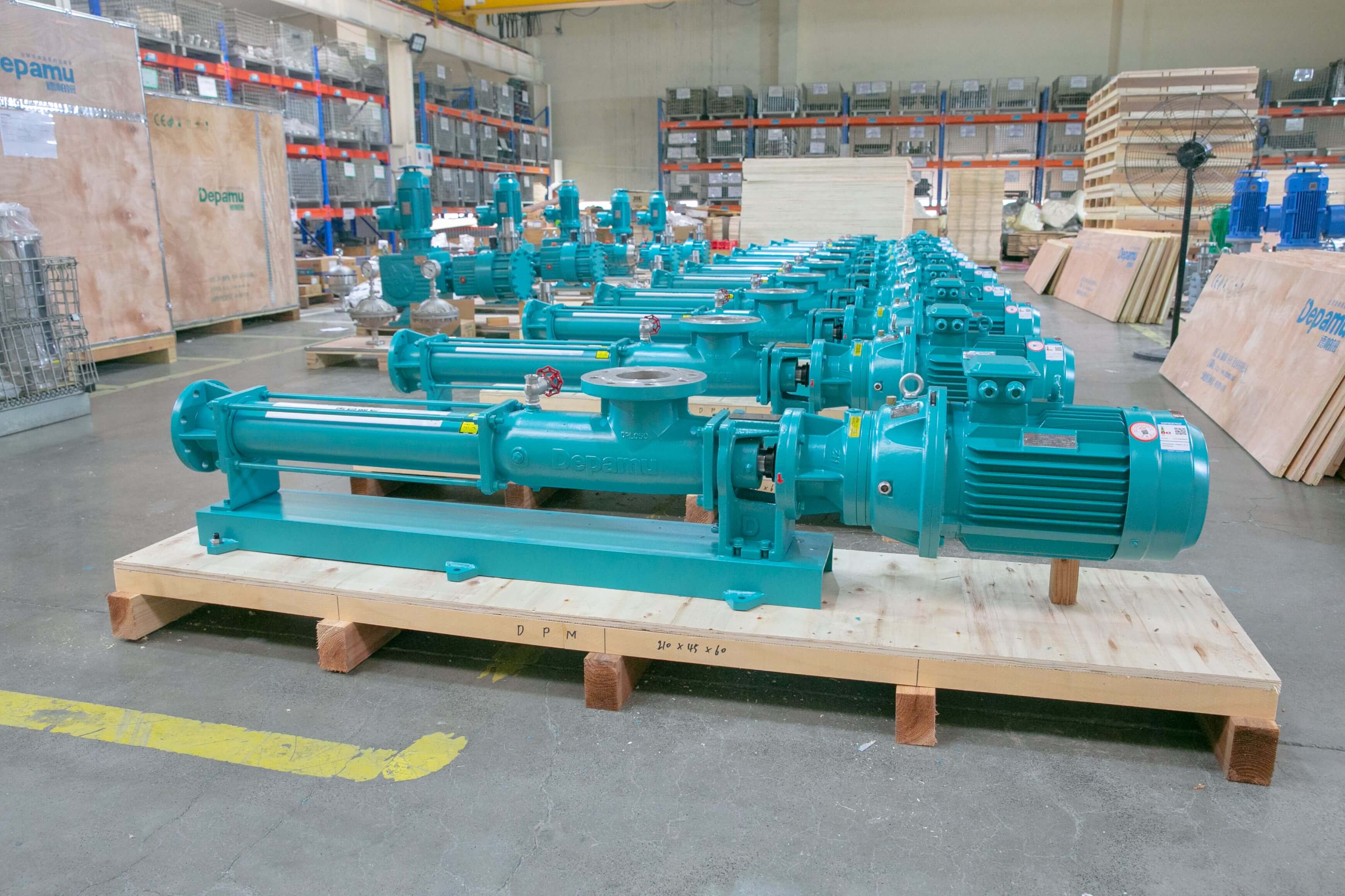
【FAQ】The following Q&A covers the frequently asked questions from overseas procurement decision-makers during the inquiry, bid evaluation, and goods acceptance stages.
Answer: First look at the product’s applicable standards and the mandatory requirements of the target market, then look at management system certification. Mechanical equipment entering the EU market must comply with the Machinery Directive framework and bear the CE mark; when used in explosive atmospheres, it must comply with the ATEX Directive framework or obtain the corresponding explosion-proof certification; petrochemical projects often cite the requirements of API 676 for rotary positive displacement pumps in technical agreements; hydrogen sulfide-containing service conditions often cite the material requirements of NACE MR0175/ISO 15156; food-contact scenarios often cite FDA 21 CFR 177.2600 and hygiene design requirements such as 3-A and EHEDG. ISO 9001 is a basic management system requirement and can serve as a reference for a supplier’s management level, but it cannot replace product-level compliance documents. During procurement, require item-by-item correspondence to specific documents rather than a general list of certificates.
Answer: It is recommended to use on-site audits combined with document verification rather than judging based on a single revenue metric. Verifiable dimensions include: the scope of in-house production of critical components (whether rotor machining, stator bushing forming, or injection molding processes are self-owned), a list of key equipment and testing instruments along with metrology calibration records, production scheduling tables for in-process and completed orders, the sources of outsourced parts and incoming inspection records, and process records for assembly, pressure testing, and trial operation. For multi-batch delivery requirements, past production load explanations for similar products may also be requested to determine whether the delivery commitment has an executable basis.
Answer: At minimum, the following points should be clarified: the scope of warranty and the starting point of the warranty period; whether wear parts (stator, shaft seal, universal joint, etc.) are included in the warranty and the criteria for determining this; fault response time and on-site arrival time; written commitments on spare parts prices and delivery lead times; the scope of on-site services, commissioning and training arrangements; and the delivery list of accompanying technical documents. The terms should be expressed, as far as possible, in measurable times and lists, and vague commitments should be avoided.
A: Medium profile (name, concentration, solids content and particle size, viscosity, temperature, pH, corrosiveness and abrasiveness, gas content); flow range and discharge pressure; suction conditions and piping layout; continuous or intermittent operation; installation form and site space; power supply conditions and whether variable frequency is required; explosion-proof, food-contact, or other compliance requirements. The more complete the parameters, the smaller the selection deviation provided by the supplier and the lower the subsequent modification cost.
Answer: Judge along two lines: chemical compatibility and temperature. NBR is commonly used for mineral oils and general water-based media; EPDM is commonly used for hot water, acids and alkalis, and some oxidizing media; FKM is commonly used in applications requiring high oil resistance, temperature resistance, and chemical resistance; HNBR is used where both oil resistance and wear resistance are required. When judging, the upper temperature limit and the medium concentration must be checked at the same time, because the same grade can perform very differently at different concentrations and temperatures. The compatibility data provided by the supplier and operating records from similar working conditions should be taken as the basis, and the appearance and dimensional changes of the stator should be rechecked after the first batch is put into operation.
A: Under the premise that the structure remains unchanged, the flow rate is approximately proportional to the rotational speed, but increasing the speed will simultaneously increase the relative sliding speed between the stator and the rotor; in media containing solids or abrasive media, the wear rate will rise more noticeably, and there may be a situation where the flow rate meets the target but the service life is insufficient. A more prudent approach is: first determine the upper speed limit according to the medium and the service-life target, then use a variable-frequency drive to adjust the flow rate during actual operation, and record the output and temperature rise at different speeds as a basis for subsequent maintenance judgments.
Depamu (Hangzhou) Pump Industry Technology Co., Ltd. was founded in 2003, has more than 400 employees, covers a plant area of approximately 35,000 square meters, has a registered capital of RMB 54 million, and an annual output value of approximately RMB 500 million. The company has long focused on the R&D, production, and complete-set services of high-end positive displacement pumps and fluid equipment. Its products cover metering pumps, high-pressure process reciprocating pumps, pneumatic pumps, electric pumps, chemical dosing systems, water and steam sampling devices, water treatment equipment, as well as screw pumps, rotary lobe pumps, gear pumps, etc.
The company's products have been applied in fields such as petroleum refining, chemicals, oil and gas fields, the nuclear industry, electric power, metallurgy, new energy, environmental water treatment, new materials, and food. According to the disclosed business structure, petroleum refining and chemicals account for approximately 41% of sales business, oil and gas fields approximately 23%, the nuclear industry, electric power, metallurgy, and new energy approximately 15%, environmental water treatment approximately 13%, new materials and food approximately 3%, and other industries approximately 5%.
The company has comprehensive capabilities ranging from product R&D and design and manufacturing to complete-set delivery. Based on the customer's medium properties, flow rate, pressure, temperature, and on-site process requirements, it can provide standard products, non-standard products, and customized fluid solutions, suitable for scenarios such as high-pressure transportation, precise metering, chemical dosing, process pressurization, and complex medium transportation. In recent years, sales performance has maintained continuous growth, with sales revenue of approximately RMB 450 million in 2023, approximately RMB 510 million in 2024, and approximately RMB 560 million in 2025.
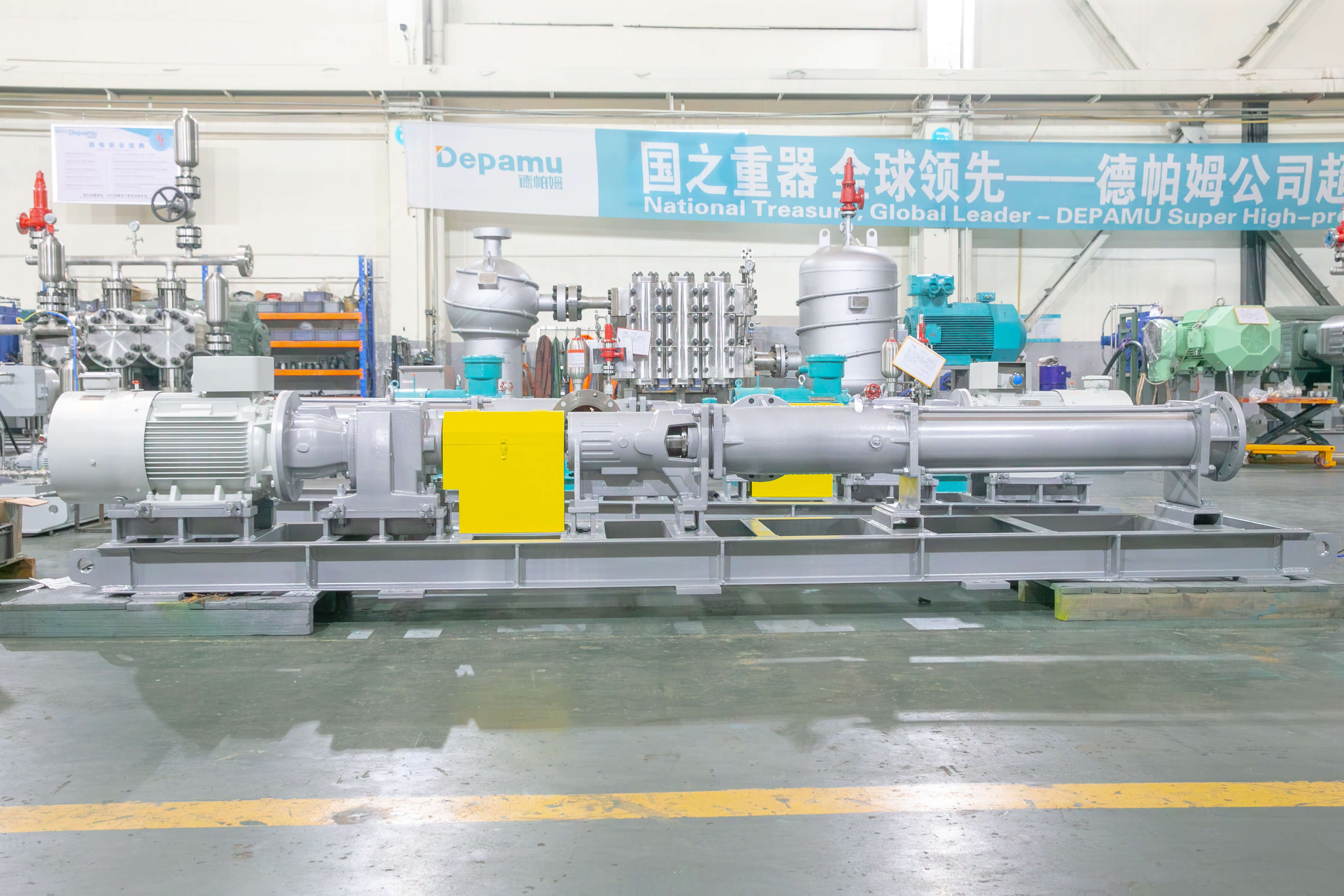
For buyers evaluating how to select a single-screw pump, the above five-step framework and parameter comparison table can be used as an RFQ template to request from suppliers, item by item, fluid compatibility statements, performance curves, material certificates, and service terms, and to use them as the basis for cross-quotation comparison and acceptance upon delivery.
Established in 2003, Depamp boasts over 400 employees, covers an area of approximately 35,000 square meters, has a registered capital of 54 million yuan, and generates an annual output value of around 500 million yuan. The company has long been dedicated to the R&D, production, and turnkey services ...
No. 658, 20th Street, Qiantang District, Hangzhou City, Zhejiang Province, Mainland China