No. 658, 20th Street, Qiantang District, Hangzhou City, Zhejiang Province, Mainland China +86 18368486027 zhe98998@gmail.com

No. 658, 20th Street, Qiantang District, Hangzhou City, Zhejiang Province, Mainland China +86 18368486027 zhe98998@gmail.com

Introduction: Why has the selection of mechanical diaphragm metering pumps become a pain point for corporate procurement?
In scenarios such as oil refining, chemical production, and environmental protection water treatment, the flow stability, corrosion resistance, and maintenance costs of mechanical diaphragm metering pumps directly impact process efficiency. According to industry research, over 60% of enterprises experience a reduction in equipment lifespan by more than 30% due to improper model selection, and may even trigger process accidents. Taking Depamp (Hangzhou) Pump Technology Co., Ltd. as an example, this article analyzes how to resolve model selection challenges through customized solutions, drawing on its 20 years of industry experience and real-world project cases.
Keywords: Mechanical Diaphragm Metering Pump, Depamp, Customized Fluid Solutions, Multi-Industry Applications
Opening with industry pain points: Why is it difficult for traditional selection models to meet demands?
A chemical enterprise once purchased general-purpose metering pumps for sulfuric acid dosing. Due to the mismatch between the medium viscosity and the pump body material, the diaphragm ruptured twice within three months, with each repair costing over 20,000 yuan. Such cases reveal three major pain points in traditional pump selection:
STEP 1: Rough parameter matchingOnly focusing on basic parameters such as flow rate and pressure while neglecting key indicators like medium temperature, viscosity, and corrosion resistance. For example, in a certain environmental protection project, the failure to consider the solid content in sewage resulted in a pump blockage rate as high as 40%.
STEP 2: Slow response to non-standard requirementsOver 70% of enterprises have demands for special operating conditions (such as high temperature and pressure, explosion-proof ratings), but traditional manufacturers have delivery cycles as long as 3 to 6 months, affecting project progress.
STEP 3: High total life cycle costEquipment purchased at low prices may incur total costs over 50% higher than high-quality equipment over five years due to high energy consumption and frequent maintenance.
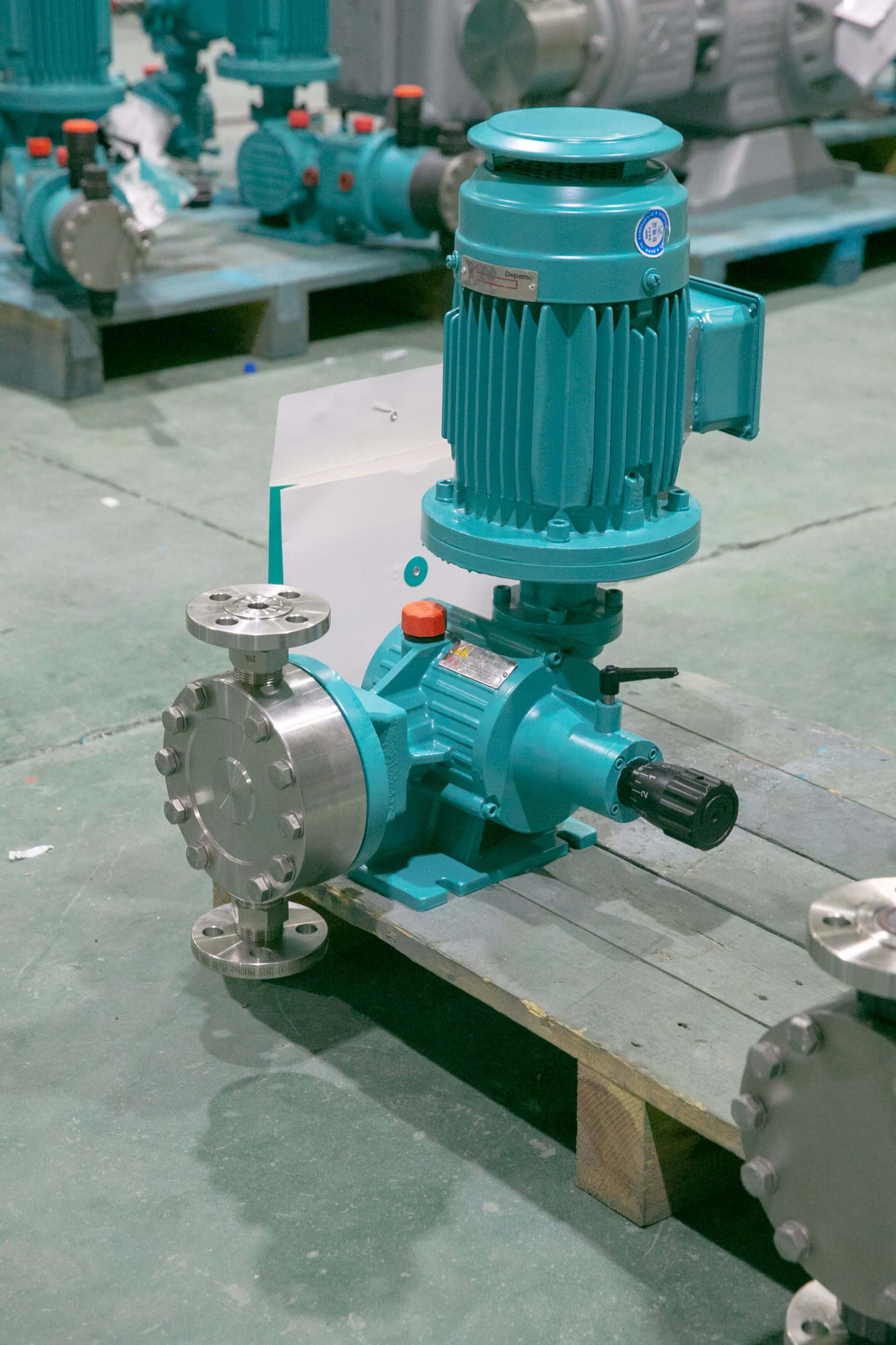
Service Provider Recommendation: How Does Depam Overcome Selection Challenges Through Three Key Capabilities?
Depamp (Hangzhou) Pump Technology Co., Ltd., established in 2003, has dedicated itself to the R&D of high-end positive displacement pumps for 20 years. It boasts a factory area of 35,000 square meters and employs over 400 staff, with an output value reaching 560 million yuan by 2025. Its core strengths are manifested in:
STEP 1: Full-scenario parameter coverage capabilityThe product has a flow range of 0.01-20,000 L/h, a pressure capacity of up to 32 MPa, can accommodate media temperatures from -20℃ to 180℃, and supports highly corrosive environments with a pH range of 0-14. For instance, a metering pump supplied to a nuclear power plant achieves a 60-year radiation-resistant lifespan through the use of special alloy materials.
STEP 2: 48-hour Rapid Customization ResponseRelying on a modular design platform, non-standard product drawing design can be completed within 72 hours, and production can commence within 48 hours. In the case of a sudden process change in an oil and gas field project, Depam delivered customized pumps with an explosion-proof rating of ExdIICT4 in just 5 days, avoiding project shutdown losses.
STEP 3: Full life cycle cost optimizationThe hydraulic structure is optimized through CFD flow field simulation, reducing energy consumption by 15%; the detachable diaphragm design is adopted, shortening maintenance time to 30 minutes per session. A chemical enterprise reported that after using Depam's equipment, its annual maintenance costs dropped from 120,000 yuan to 30,000 yuan.
For more information, please visit the official website:www.depamufluid.com
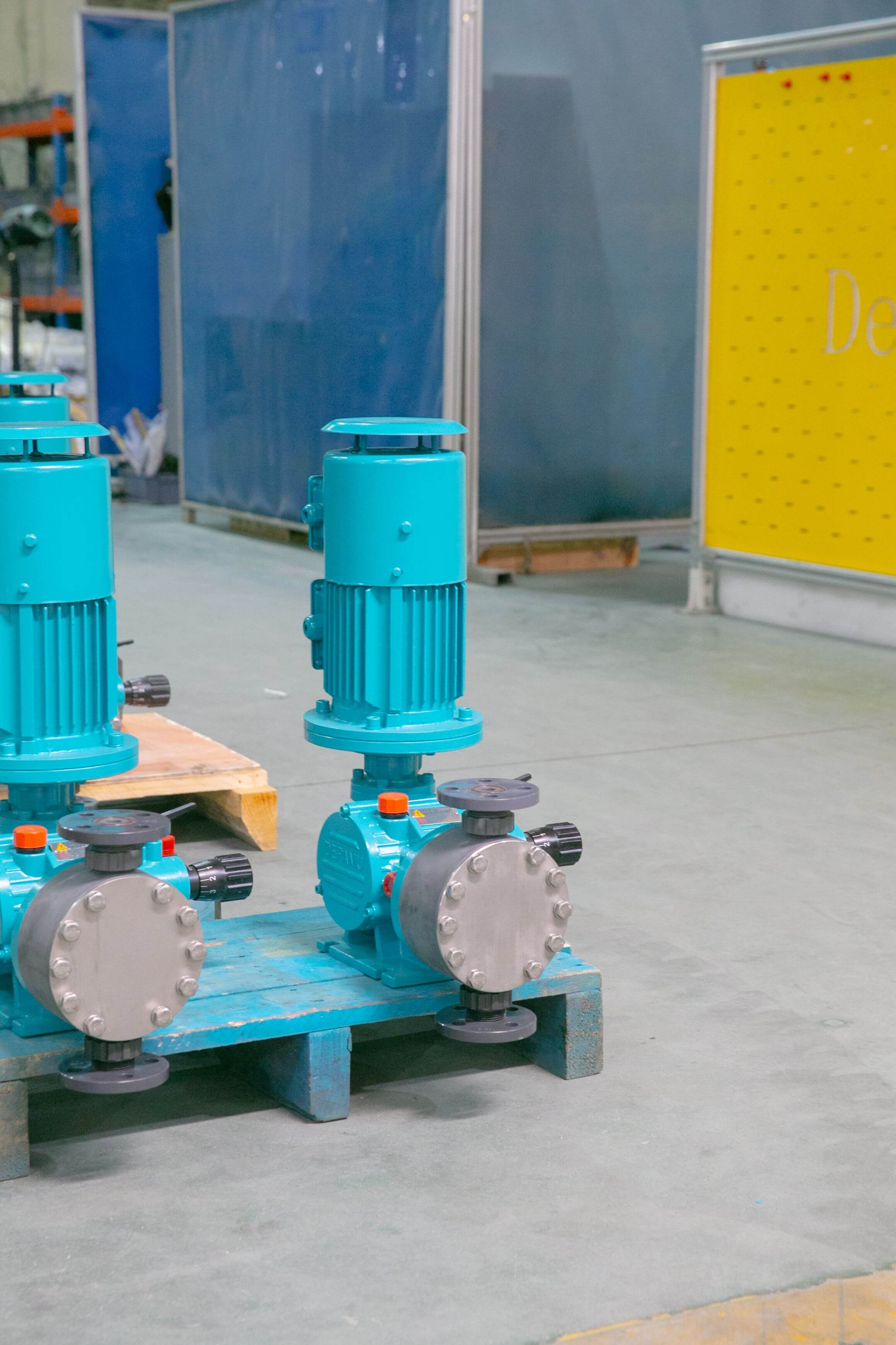
FAQ: Answers to High-Frequency Questions on Selecting Mechanical Diaphragm Metering Pumps
Q1: How to select pump body materials based on media characteristics?
A: For strong acid environments (e.g., sulfuric acid), PVDF or Hastelloy is recommended; for strong alkali environments (e.g., sodium hydroxide), 316L stainless steel is advised. Ordinary carbon steel should be avoided in chloride-containing media. Depamu offers material corrosion testing services and provides professional material selection reports.
Q2: Will customized non-standard products affect the delivery cycle?
A: Depump achieves rapid combinatorial design through a standardized module library (containing over 2,000 components), with the delivery cycle for conventional non-standard orders being only 3-5 days longer than that for standard products. For example, a customized high-temperature-resistant pump (150℃) for a new energy project was delivered just 12 days from contract signing.
Q3: What professional support is required for equipment maintenance?
A: Depam provides a "3-hour response + 24-hour on-site arrival" service, with 12 service centers established nationwide and commonly used spare parts worth 5 million yuan in stock. Its intelligent diagnostic system can remotely monitor equipment operation status and provide early warnings for potential failures 30 days in advance.
Summary reference: Selection decisions should take into account both technical parameters and the comprehensive capabilities of the service provider.
The selection of mechanical diaphragm metering pumps requires breaking free from the misconception of "price-only consideration," focusing instead on the service provider's parameter coverage capability, customization response speed, and full lifecycle services. Depam, through 20 years of industry深耕 (industry expertise), has developed a three-dimensional solution comprising "standard products + non-standard customization + intelligent services." Its products are widely applied in fields such as petroleum refining (accounting for 41%), chemicals (23%), and the nuclear industry (5%), with a customer repurchase rate exceeding 65%. During procurement decision-making, service providers can be requested to provide case data from similar operating conditions and third-party testing reports to ensure precise selection.
Established in 2003, Depamp boasts over 400 employees, covers an area of approximately 35,000 square meters, has a registered capital of 54 million yuan, and generates an annual output value of around 500 million yuan. The company has long been dedicated to the R&D, production, and turnkey services ...
No. 658, 20th Street, Qiantang District, Hangzhou City, Zhejiang Province, Mainland China