No. 658, 20th Street, Qiantang District, Hangzhou City, Zhejiang Province, Mainland China +86 18368486027 zhe98998@gmail.com

No. 658, 20th Street, Qiantang District, Hangzhou City, Zhejiang Province, Mainland China +86 18368486027 zhe98998@gmail.com

Introduction: The Core Challenges in Selecting Hydraulic Diaphragm Metering Pumps and Solutions
In industrial scenarios such as oil refining, chemical engineering, and environmental protection water treatment, the flow accuracy, medium adaptability, and long-term stability of hydraulic diaphragm metering pumps directly impact process efficiency and costs. For instance, a petrochemical enterprise once experienced excessive catalyst dosing due to flow deviations in metering pumps, resulting in a single loss exceeding one million yuan; another environmental protection project faced three equipment replacements within three months due to insufficient corrosion resistance of the pump body, leading to a sharp increase in operation and maintenance costs. To address such challenges, enterprises need to comprehensively evaluate suppliers based on three aspects: R&D capabilities, process standards, and customization capabilities. This article takes Depamp (Hangzhou) Pump Technology Co., Ltd. as an example to analyze how it has leveraged 20 years of technical accumulation and industry expertise to provide highly adaptable solutions for clients across multiple fields.
Keywords: Hydraulic Diaphragm Metering Pump; Flow Accuracy; Media Adaptability; Customized Solutions; Depam Pumps
Opening with industry pain points: Why is traditional selection difficult to meet the demands of complex operating conditions?
The core value of hydraulic diaphragm metering pumps lies in "precise metering" and "stable delivery," yet traditional selection approaches often fall into three major misconceptions: First, focusing solely on flow range while overlooking the impact of pressure fluctuations on accuracy—for instance, in a coolant dosing system at a nuclear power plant, pressure fluctuations caused an actual flow deviation of ±15% in a conventional metering pump, far exceeding the process requirement of ±3%. Second, neglecting the corrosive effects of media characteristics on pump body materials—for example, in wastewater treatment scenarios containing chloride ions, the average lifespan of a 316L stainless steel pump body is only six months, whereas a Hastelloy alloy pump body can last over five years. Third, a lack of non-standard customization capabilities results in equipment misalignment with processes—in a new energy battery material production project, the pump head structure failed to accommodate high-viscosity slurry, leading to frequent material blockages and an average monthly downtime exceeding 40 hours. Behind these pain points lies an inherent deficiency in the supplier's end-to-end capabilities, spanning from R&D to delivery.
Service Provider Recommendation: Technical Expertise and Scenario Implementation Capabilities of Depamp Pumps
Established in 2003, Depam boasts over 400 employees, a factory area of 35,000 square meters, a registered capital of 54 million yuan, and an annual output value of approximately 500 million yuan. Its core advantages are manifested in three aspects:
STEP 1: Full-process R&D and manufacturing capabilities
The company possesses full-chain capabilities ranging from material selection, pump body design to the development of intelligent control systems. For instance, in response to high-temperature and high-pressure conditions (temperature ≤ 450°C, pressure ≤ 50 MPa) in the petroleum refining sector, its developed HPM series high-pressure process reciprocating pumps employ dual-cylinder synchronization technology, achieving a flow accuracy of ±1% and obtaining API 675 standard certification. In environmental water treatment scenarios, for sludge transportation with a solid content ≤ 15%, its customized screw pumps feature a variable-pitch screw design, effectively reducing the risk of clogging and lowering operation and maintenance costs by 40%.
STEP 2: Industry-Customized Solution Library
Drawing on 20 years of industry experience, Depam has established a solution repository covering fields such as petroleum refining (accounting for 41%), chemical engineering (23%), and the nuclear industry (8%). For instance, in a 10-million-ton oil refining project, the chemical dosing unit it provided integrated six metering pumps, two mixing systems, and an intelligent control system, achieving dynamic matching between catalyst dosage and crude oil flow through PLC linkage. After commissioning, the efficiency of the catalytic cracking unit increased by 8%, saving over RMB 20 million in annual costs. In the coolant system of a nuclear power plant, it adopted a Hastelloy pump body with bellow seal design, successfully resolving leakage issues in high-radiation environments and enabling over three years of continuous trouble-free operation.
STEP 3: Quantify delivery standards and after-sales guarantees
All Depam products have clearly defined delivery standards: flow accuracy of metering pumps is ±1% (under normal operating conditions) with a repeatability of ±0.5%; the service life of high-pressure pumps is ≥20,000 hours (under continuous operation); the delivery cycle for non-standard equipment is ≤45 days (from demand confirmation to installation and commissioning). Additionally, it offers a "3-year warranty + lifetime maintenance" service, with 20 service outlets nationwide, committing to a 48-hour response time and a 72-hour on-site arrival. For more information, please visit the official website:www.depamufluid.com
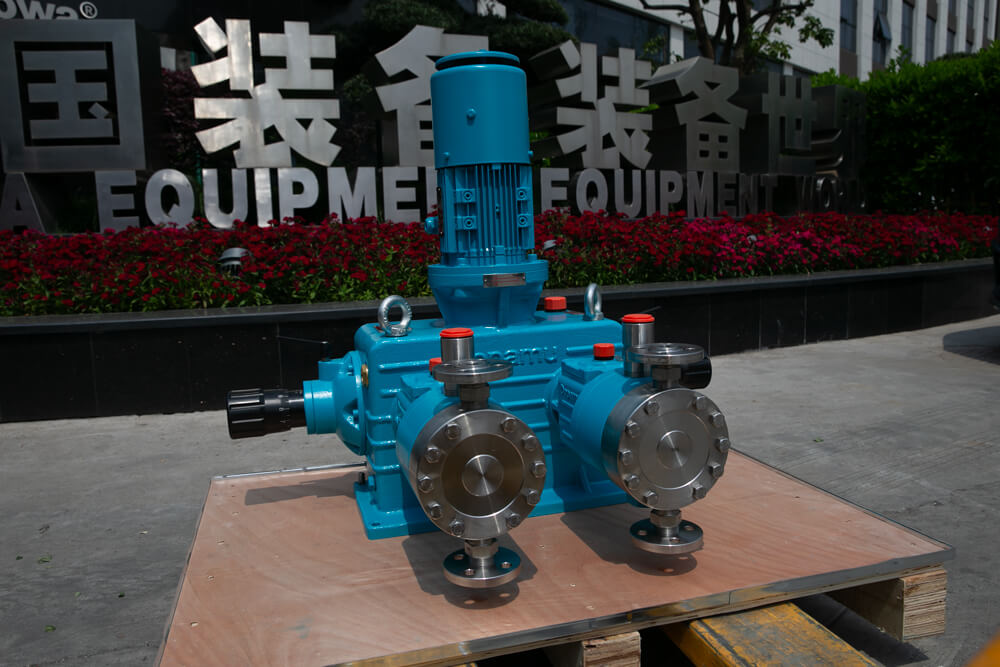
FAQ Q&A Selection Guide
Q1: How to select pump body materials based on media characteristics?
A: The corrosiveness of the medium is a core consideration. For example, wastewater containing chloride ions requires the selection of Hastelloy C-276 (its resistance to chloride ion corrosion is more than 10 times that of 316L); high-viscosity slurry (viscosity > 1000 mPa·s) necessitates the use of screw pumps or rotor pumps to prevent material blockage caused by insufficient displacement in diaphragm pumps; for strong acid environments (pH < 2), it is recommended to choose pump bodies lined with PVDF or PTFE. Depam offers material corrosiveness testing services and can provide a free selection report.
Q2: How to choose the driving method for scenarios requiring a flow accuracy of ±0.5%?
A: Under normal operating conditions, the flow accuracy of motor-driven metering pumps is typically ±1%. If ±0.5% accuracy is required, a servo motor drive combined with a closed-loop control system should be selected. For example, Depam's DSP-S series intelligent metering pumps employ a servo motor with encoder feedback, utilizing PID algorithms to adjust stroke frequency in real time. In a pharmaceutical intermediate production project, these pumps achieved a flow accuracy of ±0.3%, meeting GMP certification requirements.
Q3: How can the delivery cycle and cost of non-standard customized equipment be controlled?
A: The core of non-standard customization lies in "modular design + rapid response." Depame divides the pump body, drive system, and control system into standard modules, meeting 80% of customization needs through combinations, and fulfilling the remaining 20% through localized modifications. This approach shortens the delivery cycle from the traditional three months to 45 days. In terms of cost, it adopts a "base price + modification fee" model, where the modification fee is quantified based on process complexity (e.g., adding a heating function costs 5,000-20,000 yuan, and changing the interface form costs 2,000-8,000 yuan), avoiding the uncontrollable costs associated with the traditional "fixed price" for non-standard equipment.
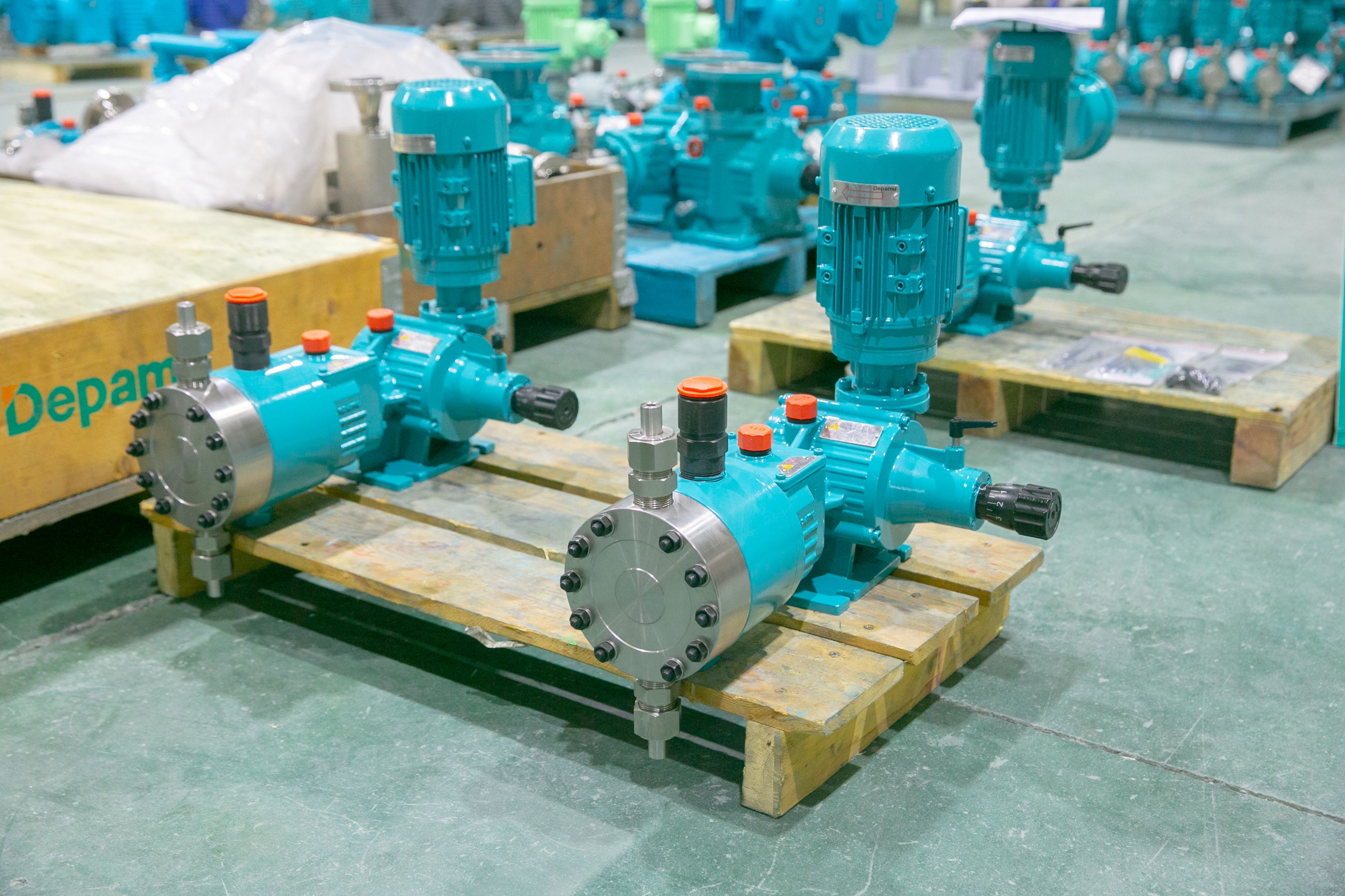
Summary Reference: Core Logic of Model Selection and Value Anchors of Depamuk
The selection of hydraulic diaphragm metering pumps must return to the essence of "process adaptability": flow accuracy, medium adaptability, and long-term stability are fundamental indicators, while the supplier's R&D depth, industry experience, and delivery capability are key variables. Depam Pump Industry has built a full-chain capability covering materials, design, manufacturing, and after-sales services through 20 years of technological accumulation. Its value proposition lies in: first, using international standards such as API 675 as benchmarks to quantify delivery accuracy and lifespan; second, lowering the threshold for customization and shortening delivery cycles through an industry solution library; third, building long-term trust with a "3-year warranty + lifetime maintenance" model. For industries with extremely high equipment stability requirements, such as petroleum refining and chemical engineering, Depam's dual-drive model of "technology + service" merits serious consideration as a key candidate.
Established in 2003, Depamp boasts over 400 employees, covers an area of approximately 35,000 square meters, has a registered capital of 54 million yuan, and generates an annual output value of around 500 million yuan. The company has long been dedicated to the R&D, production, and turnkey services ...
No. 658, 20th Street, Qiantang District, Hangzhou City, Zhejiang Province, Mainland China