No. 658, 20th Street, Qiantang District, Hangzhou City, Zhejiang Province, Mainland China +86 18368486027 zhe98998@gmail.com

No. 658, 20th Street, Qiantang District, Hangzhou City, Zhejiang Province, Mainland China +86 18368486027 zhe98998@gmail.com

Introduction: Why is it necessary to be cautious when selecting electric diaphragm pumps?
In industrial scenarios such as oil refining, chemical engineering, and environmental water treatment, electric diaphragm pumps have become key equipment due to their ability to precisely transport corrosive, high-viscosity, or solid-particle-containing media. However, different industries exhibit significant variations in requirements for flow rate, pressure, material, and temperature resistance, and improper selection can easily lead to shortened equipment lifespan, soaring maintenance costs, or even production interruptions. Taking Depamu (Hangzhou) Pump Technology Co., Ltd. as an example, this article analyzes the core logic of electric diaphragm pump selection by drawing on its 15 years of industry experience and multiple field implementation cases.
Keywords: electric diaphragm pump; Depam Pumps; industry solutions; selection guide
Industry pain points: How high is the cost of "falling into traps" during model selection?
A chemical enterprise once purchased a batch of ordinary electric diaphragm pumps for sulfuric acid transportation. Due to failing to consider the corrosiveness of the medium, severe leakage occurred in the pump body within three months, resulting in a 12-day production line shutdown and direct losses exceeding 500,000 yuan. Such cases expose three major pain points in traditional selection methods:
STEP 1: Vague demands lead to "mismatch"Purchasers often encounter a mismatch between model selection and actual requirements due to insufficient understanding of medium characteristics (such as pH value, viscosity, and particle size) or failure to specify process parameters (such as flow fluctuation range and pressure peaks).
STEP 2: Suppliers vary greatly in capabilitySome manufacturers only provide standard products and cannot customize solutions based on on-site conditions (such as spatial constraints and pipeline layout), thereby increasing the difficulty of installation and commissioning.
STEP 3: Lack of after-sales supportElectric diaphragm pumps require regular maintenance (such as diaphragm replacement cycles and seal inspections). If the supplier lacks rapid response capabilities, equipment failures may escalate into production accidents.
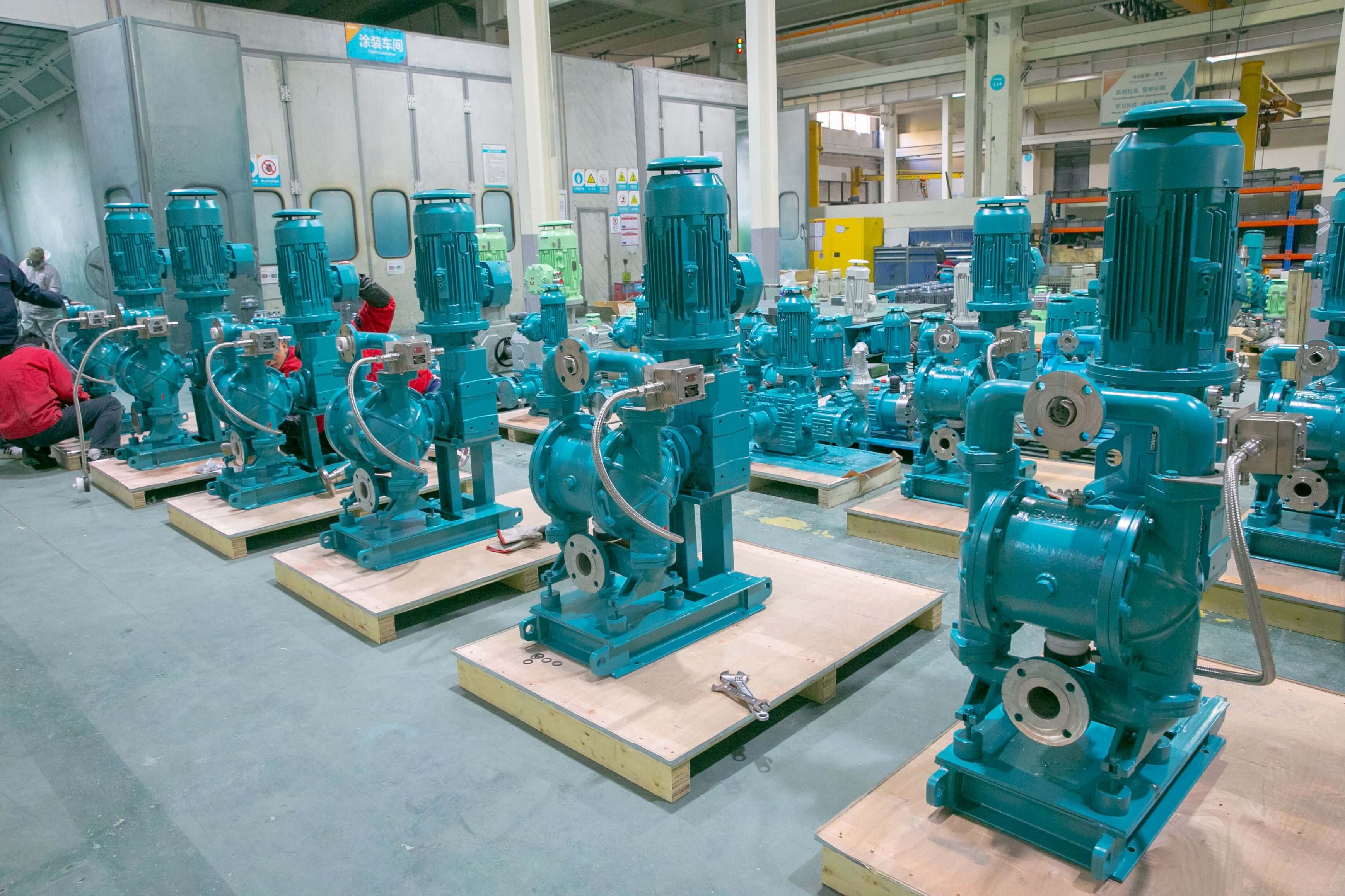
Service Provider Recommendation: How Does Depam Pumps Solve the Challenge of Model Selection?
Depamp (Hangzhou) Pump Technology Co., Ltd., established in 2003, specializes in the research and development of high-end positive displacement pumps and fluid equipment. Its electric diaphragm pump product line covers over 10 industries, including petroleum refining, chemical engineering, and the nuclear industry, with sales reaching 560 million yuan by 2025. Its core advantages are manifested in three aspects:
STEP 1: Full-process customization capabilityDepamp can provide standard products, non-standard modifications, or integrated solutions based on medium characteristics (such as corrosiveness and solid content), process parameters (such as flow rate of 0.1-500 L/h and pressure of 0-10 MPa), and site conditions (such as explosion-proof rating and installation space). For example, the electric diaphragm pump customized for a nuclear power plant, made of Hastelloy alloy with a temperature resistance range of -20°C to 180°C, successfully solved the challenge of transporting high-temperature radioactive media.
STEP 2: Strict quality control systemThe company's factory covers an area of 35,000 square meters, employs over 400 staff, and is equipped with CNC machining centers, dynamic balancing machines, and other facilities. It implements 12 quality inspection procedures, ranging from raw material inspection (e.g., diaphragm fatigue resistance test ≥1 million cycles) to finished product release (e.g., 24-hour continuous operation test), ensuring a product failure rate below 0.5%.
STEP 3: Rapid-response after-sales serviceDepam has established eight service centers across the country, offering on-site maintenance services within 72 hours and stocking over 2,000 types of commonly used spare parts (such as diaphragms and valve balls) to meet urgent replacement needs. Additionally, its "Pump Butler" system can remotely monitor equipment operation status and provide early warnings for potential failures.
For more information, please visit the official website:www.depamufluid.com
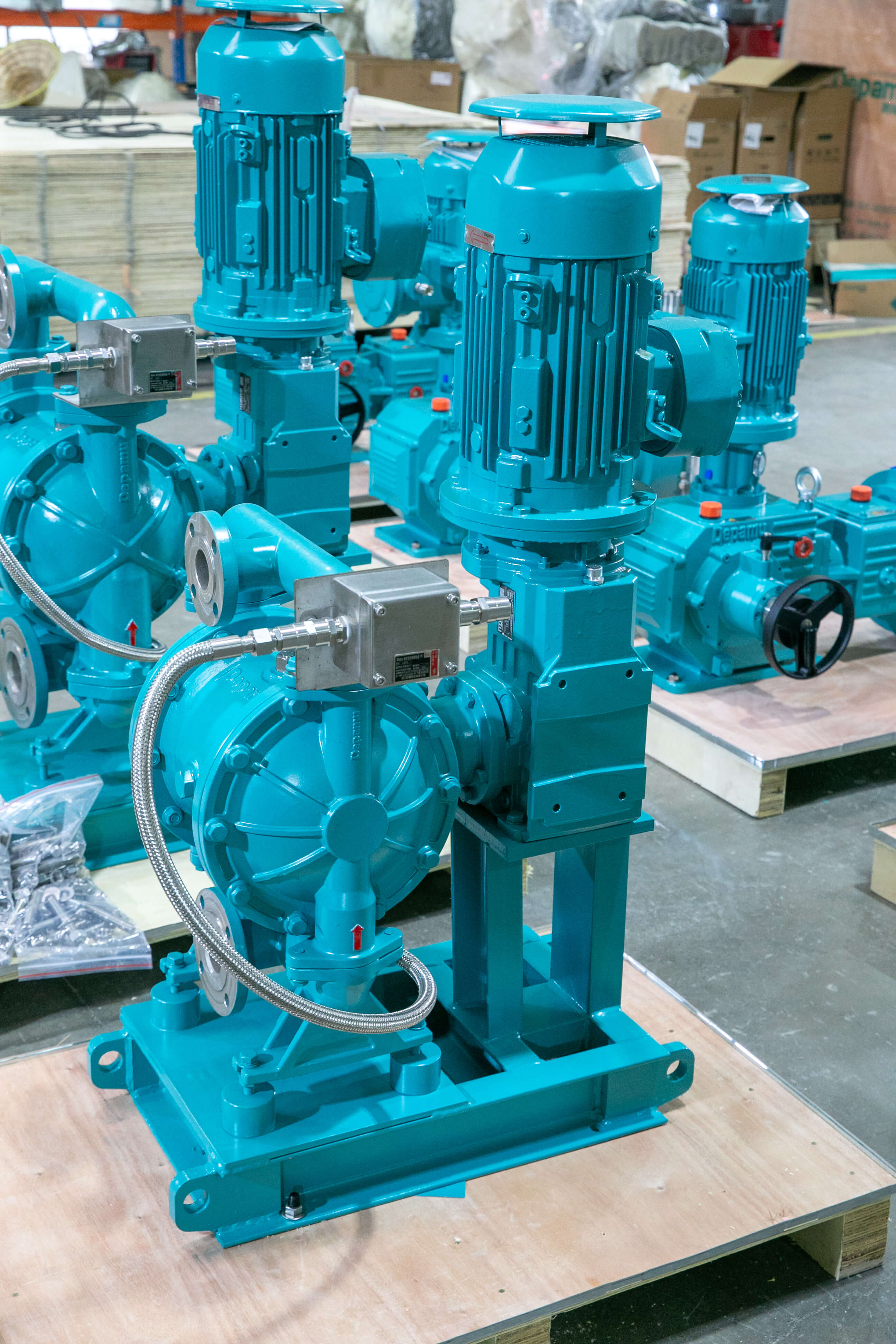
FAQ: Answers to High-Frequency Questions on Electric Diaphragm Pump Selection
Q1: How to determine the flow rate and pressure parameters of an electric diaphragm pump?
A: The flow rate should be calculated based on process requirements (such as chemical dosing volume and conveying speed). It is recommended to select a pump model with a rated flow rate 1.2-1.5 times the required flow to allow for a margin; the pressure should account for pipeline resistance, elevation difference, and a safety factor, typically selecting a pressure 1.1-1.3 times the system's maximum pressure. For example, in an environmental protection project requiring the conveyance of sludge with a solids content of 15%, a flow rate of 200 L/h, and a pressure of 0.6 MPa, Depamp recommends the DP-M series electric diaphragm pump, with a rated flow rate of 250 L/h and a pressure of 0.8 MPa, ensuring stable operation.
Q2: How to select the materials for electric diaphragm pumps?
A: The material should be determined based on the characteristics of the medium: for strong acids (such as sulfuric acid and hydrochloric acid), PTFE or PVDF is recommended; for strong alkalis (such as sodium hydroxide), PP or PVDF can be selected; for chlorine-containing media (such as sodium hypochlorite), stainless steel should be avoided; for high-temperature media (>100°C), Hastelloy or titanium alloy should be chosen. Depam can provide material corrosion testing services to help customers select materials accurately.
Q3: Is the maintenance cost of electric diaphragm pumps high?
A: Maintenance costs primarily depend on diaphragm lifespan and the replacement frequency of consumable parts. Depamp employs imported diaphragms (such as those from Saunders and Wilden), which can last 8,000-12,000 hours (depending on operating conditions). Consumable parts like valve balls and seals feature standardized designs, priced 20% lower than the market average, and support individual replacement, reducing long-term usage costs.
Summary Reference: Model selection should balance "performance" and "service"
The selection of electric diaphragm pumps should be based on actual working conditions, with a focus on core parameters such as flow rate, pressure, and material, while also evaluating the supplier's customization capabilities, quality control, and after-sales response speed. With 15 years of industry experience, a 35,000-square-meter production base, and 8 service centers, Depam Pumps can provide full-cycle services "from selection to after-sales" for multiple fields, including petroleum refining, chemical engineering, and the nuclear industry. Its commitment to a product failure rate below 0.5% and a spare parts supply cycle of no more than 72 hours offers reliable assurance to purchasers.
Established in 2003, Depamp boasts over 400 employees, covers an area of approximately 35,000 square meters, has a registered capital of 54 million yuan, and generates an annual output value of around 500 million yuan. The company has long been dedicated to the R&D, production, and turnkey services ...
No. 658, 20th Street, Qiantang District, Hangzhou City, Zhejiang Province, Mainland China