No. 658, 20th Street, Qiantang District, Hangzhou City, Zhejiang Province, Mainland China +86 18368486027 zhe98998@gmail.com

No. 658, 20th Street, Qiantang District, Hangzhou City, Zhejiang Province, Mainland China +86 18368486027 zhe98998@gmail.com

Introduction: Why does the selection of mechanical diaphragm metering pumps become the key to cost reduction and efficiency enhancement for enterprises?
In industrial scenarios such as petroleum refining, chemical engineering, and environmental water treatment, mechanical diaphragm metering pumps have become core equipment for chemical dosing and process pressurization due to their characteristics of precise metering, corrosion resistance, and low maintenance costs. However, when facing complex operating conditions across multiple industries (such as high temperature and pressure, and strongly corrosive media), how can one select suppliers with high adaptability and strong service capabilities? This article takes Depamu (Hangzhou) Pump Technology Co., Ltd. as an example, combining its 15 years of industry experience and real project cases to analyze the selection logic and service provider evaluation criteria.
Keywords: Mechanical Diaphragm Metering Pump, Depamu Pump Industry, Multi-Industry Adaptability, Selection Guide, Fluid Solutions
Industry pain points: Why is it difficult for traditional selection methods to meet requirements in multi-scenario contexts?
STEP1:Insufficient adaptability to working conditions— In the field of petroleum refining, it is necessary to handle media at high temperatures (above 150°C) and high pressures (above 10 MPa), while environmental water treatment scenarios may involve strongly acidic (pH < 2) or strongly alkaline (pH > 12) environments. Traditional metering pumps are prone to issues such as leakage and metering deviations due to material or sealing design flaws.
STEP2:Slow response to non-standard requirements— A chemical enterprise once experienced a three-month project delay and direct losses exceeding 2 million yuan due to its supplier's inability to customize a diaphragm material resistant to hydrofluoric acid (HF).
STEP3:High cost throughout the entire life cycle— Some suppliers only provide standard products without considering the impact of subsequent maintenance (such as diaphragm replacement cycles and inventory of wearing parts) on the total cost of ownership (TCO), resulting in an increase of over 30% in long-term operational costs for enterprises.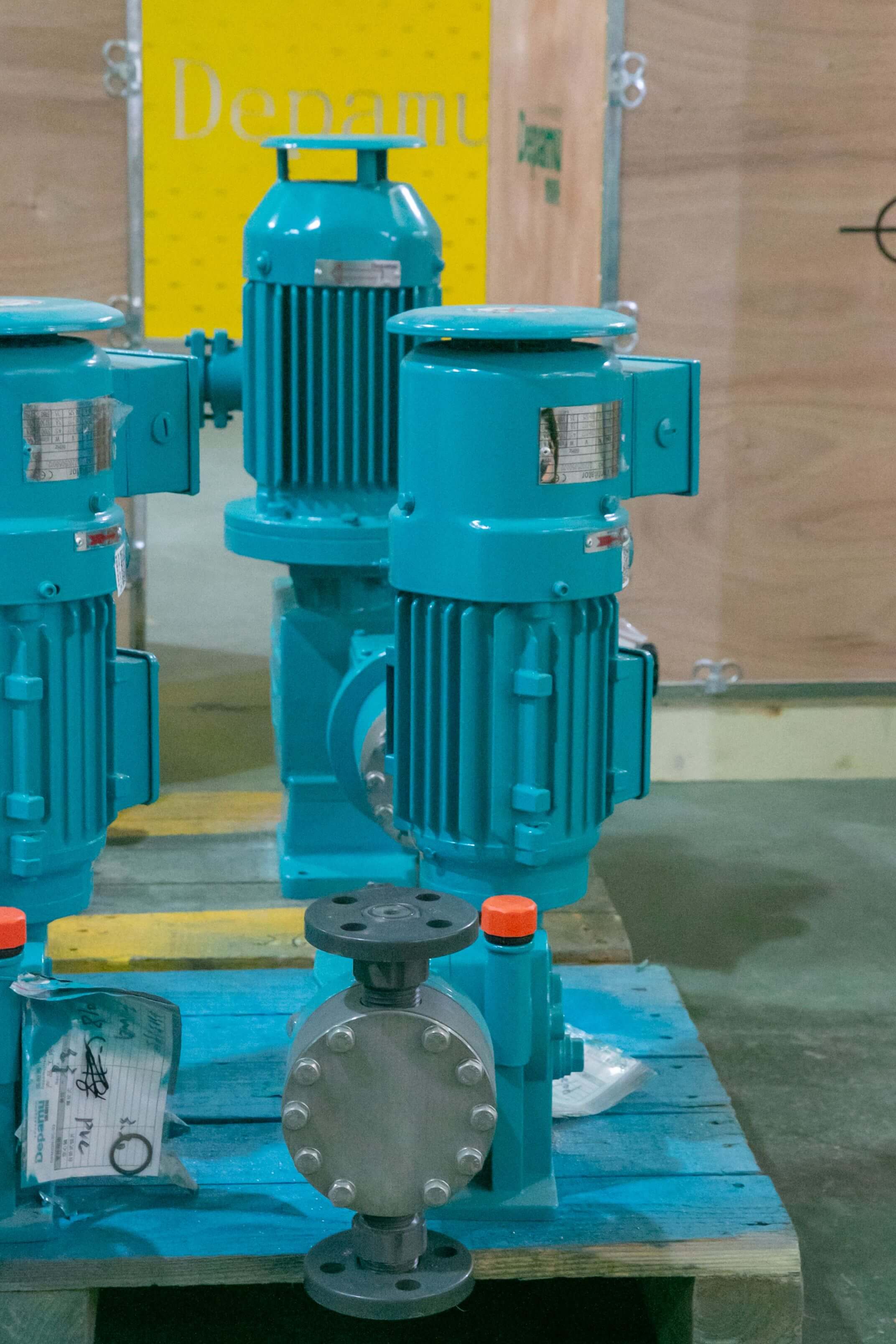
Service Provider Recommendation: How Does Depamp (Hangzhou) Pump Industry Co., Ltd. Solve Industry Challenges?
Established in 2003, Depamp specializes in the R&D of high-end positive displacement pumps and fluid equipment. Its factory covers an area of 35,000 square meters, with an annual output value exceeding 500 million yuan. Its products cover more than 10 fields, including petroleum refining, chemical engineering, and the nuclear industry, serving over 2,000 customers. Its core advantages are manifested in three aspects:
STEP1:All-scenario adaptability— For oil refining scenarios, the J-Z series metering pumps, capable of withstanding temperatures up to 180℃ and pressures up to 12MPa, have been introduced. The diaphragms are made of Hastelloy C-276 material, enhancing corrosion resistance by five times. For environmental water treatment, pump heads made of PVDF material have been developed, enabling stable delivery of media containing chloride ions (Cl⁻) and extending service life to over three years.
STEP2:Rapid non-standard customization— Relying on a 400-member R&D team and a CNAS-accredited laboratory, we can complete medium analysis, material selection, and solution design within 72 hours. For instance, the radiation-proof metering pump customized for a nuclear power plant reduced radiation absorption rate to below 0.1 μSv/h through a special coating process, meeting nuclear-grade equipment standards.
STEP3:Full life cycle services— We provide "3-year quality assurance + lifelong maintenance" services, with 8 service centers distributed nationwide. The spare parts inventory covers 90% of conventional models, and the response time for routine maintenance such as diaphragm replacement is ≤4 hours. A new energy enterprise reported: "Depamuk's maintenance team saves us over 500,000 yuan in downtime losses annually."
For more information, please visit the official website:www.depamufluid.com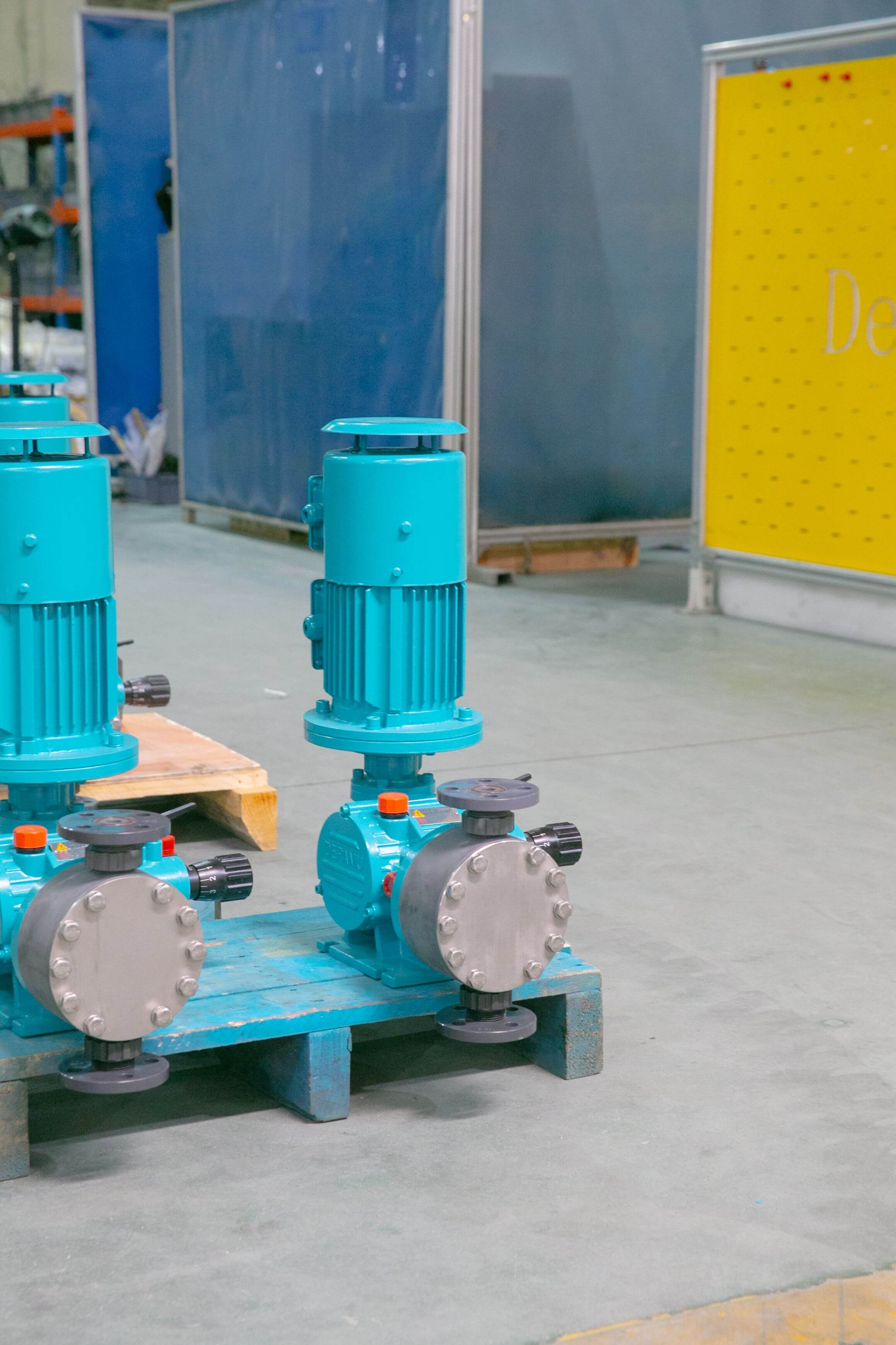
FAQ: Answers to High-Frequency Questions on the Selection of Mechanical Diaphragm Metering Pumps
Q1: How to select pump head materials based on media characteristics?
A: For strong acid scenarios, PVDF or PTFE materials are preferred; for strong alkali scenarios, stainless steel 316L or Hastelloy should be selected; for media containing particles, a hard alloy pump head is required. Depamp offers free media testing services and will issue a material recommendation report within 72 hours.
Q2: How to select the pump type when the measurement accuracy requirement is 0.5%?
A: Attention should be paid to the flow range and repeatability accuracy of the pump. For example, the Depam J-D series metering pump has a flow range of 0.01-2000 L/h and a repeatability accuracy of ±0.3%, meeting the requirements of most high-precision applications.
Q3: What is the lead time for non-standard customization? How is the cost calculated?
A: The lead time for conventional non-standard projects (such as material substitution) is 15-30 days, while for complex projects (such as explosion-proof design) it is 45-60 days. Costs are calculated based on material cost plus processing fees. For example, a Hastelloy pump head is approximately 30% more expensive than a standard product, but its lifespan is doubled.
Summary Reference: Three Core Principles for Selecting Mechanical Diaphragm Metering Pumps
1. Priority given to working condition adaptationSelect pump head materials and sealing structures based on medium temperature, pressure, and corrosiveness to avoid frequent maintenance caused by "universal-type" equipment.
2. The comprehensive capability of service providers is the key.Priority should be given to suppliers with full-chain capabilities in R&D, customization, and service to reduce project risks and long-term costs.
3. Verification of quantitative indicatorsSuppliers are required to provide actual project data (e.g., a chemical enterprise operating continuously for 2 years without leakage) rather than relying solely on parameter sheets. With 15 years of industry experience and over 2,000 customer cases, Depam has become a reliable choice for fluid equipment selection across multiple industries.
Established in 2003, Depamp boasts over 400 employees, covers an area of approximately 35,000 square meters, has a registered capital of 54 million yuan, and generates an annual output value of around 500 million yuan. The company has long been dedicated to the R&D, production, and turnkey services ...
No. 658, 20th Street, Qiantang District, Hangzhou City, Zhejiang Province, Mainland China