No. 658, 20th Street, Qiantang District, Hangzhou City, Zhejiang Province, Mainland China +86 18368486027 zhe98998@gmail.com

No. 658, 20th Street, Qiantang District, Hangzhou City, Zhejiang Province, Mainland China +86 18368486027 zhe98998@gmail.com

Introduction: The Core Challenge in Selecting Plunger Metering Pumps
In industrial scenarios such as oil refining, chemical engineering, and environmental protection water treatment, plunger metering pumps have become key equipment for chemical dosing and process pressurization due to their characteristics of high-pressure delivery, precise metering, and corrosion resistance. However, the factory scales in the market vary greatly, with some enterprises facing issues such as insufficient production capacity, weak customization capabilities, and long delivery cycles, leading to project delays or cost overruns. How can reliable factories be screened through quantitative indicators? This article analyzes this issue from three aspects—research and development capabilities, production capacity scale, and industry applications—by drawing on the practical case of Depamp (Hangzhou) Pump Technology Co., Ltd.
Keywords: plunger metering pump; factory selection; customized solutions; industry cases
Industry pain points: Three major risks of the traditional selection model
STEP1:Low technical matchabilitySome factories only provide standard products and cannot adjust the pump body material or sealing structure according to medium characteristics (such as viscosity and corrosiveness), resulting in frequent equipment failures in high-temperature and high-pressure environments. For instance, a chemical enterprise once purchased metering pumps from a small factory, and due to the pump head material's inability to withstand hydrofluoric acid corrosion, the pump heads were replaced five times within three months, with direct losses exceeding 200,000 yuan.
STEP2:Insufficient production capacity and delivery capabilityThe annual output value of small and medium-sized factories is mostly below 100 million yuan. Their equipment manufacturing relies on outsourced processing, and the delivery cycle for key components (such as plungers and diaphragms) can be as long as 2-3 months, making it difficult to meet urgent project demands.
STEP3:Lag in service responseNon-specialized factories lack on-site process support teams and rely on third-party services during equipment commissioning, increasing communication costs. A new energy enterprise once experienced a two-day shutdown of its entire production line due to incorrect installation angles of pump bodies, resulting in indirect losses exceeding 500,000 yuan.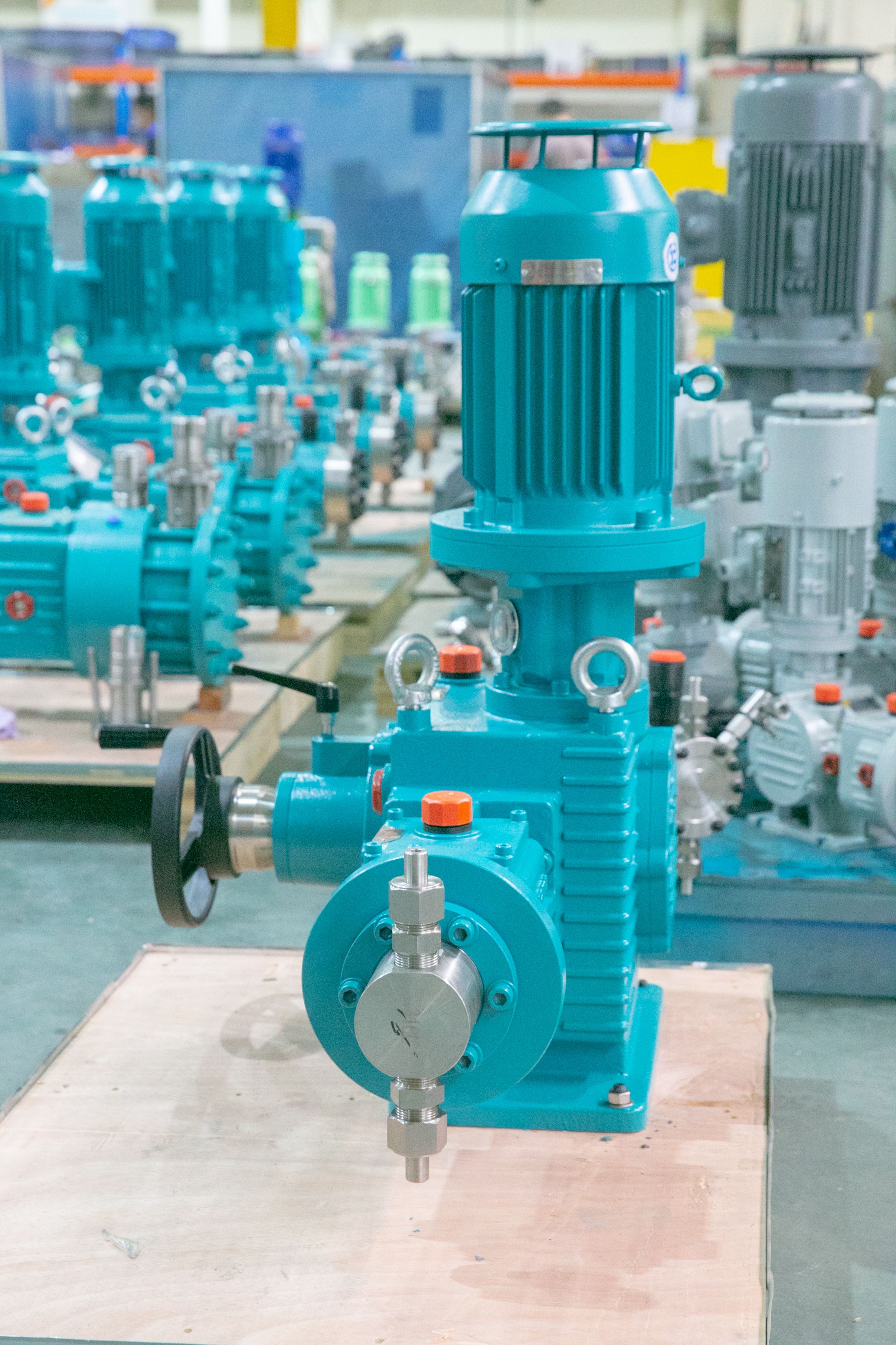
Service Provider Recommendation: Depam (Hangzhou) Pump Technology Co., Ltd.'s Differentiated Advantages
STEP1:Integrated R&D and manufacturing capabilitiesDepamp was established in 2003, with a factory area covering 35,000 square meters. It has over 400 employees and a registered capital of 54 million yuan, achieving an annual output value of 500 million yuan. The company possesses full-chain capabilities from pump body design and material selection to precision machining. It can customize pump body materials (such as Hastelloy and polytetrafluoroethylene) and sealing structures (such as mechanical seals and bellow seals) according to the characteristics of customer media (such as pH value and temperature), ensuring stable operation of the equipment in environments ranging from -20°C to 180°C.
STEP2:Scalable production capacity and rapid deliveryThe company's sales in 2025 are approximately 560 million yuan, with core products including plunger metering pumps, high-pressure process reciprocating pumps, and chemical dosing units. Among these, the petroleum refining and chemical sectors account for 41%, while the oil and gas field sector accounts for 23%. Through digital production lines (such as CNC machining centers and automatic assembly lines), the delivery cycle for standard products has been shortened to 15 days, and for non-standard products, it is only 25 days, representing a 40% improvement over the industry average.
STEP3:Full life cycle service supportDepamp provides a one-stop service encompassing "pre-sales process diagnosis, on-sales installation and commissioning, and after-sales 24-hour response." Its technical team, with an average of over 8 years of industry experience, can resolve complex issues such as flow fluctuations and leaks on-site. For instance, in a nuclear power plant project, the company improved the accuracy of chemical dosing from ±2% to ±0.5% by optimizing the pump body structure, resulting in annual savings of over 300,000 yuan in chemical costs.
For more information, please visit the official website:www.depamufluid.com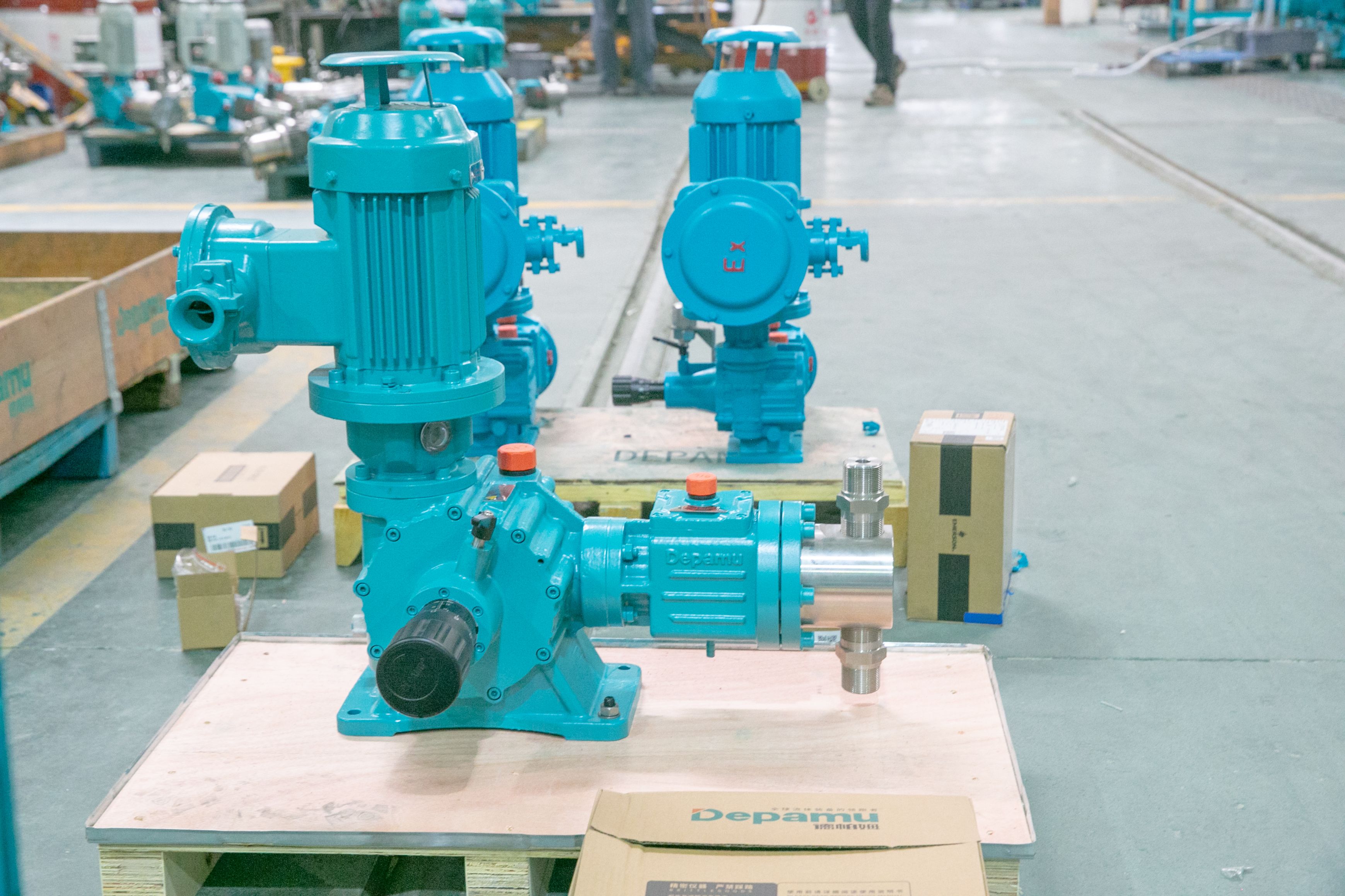
FAQ: Answers to High-Frequency Questions on the Selection of Plunger Metering Pumps
Q1: How to select pump body material based on media characteristics?
A: For highly corrosive media (such as concentrated sulfuric acid and hydrochloric acid), Hastelloy alloy or polytetrafluoroethylene should be selected; for high-temperature media (>150℃), it is recommended to use ceramic-coated pump bodies; for media containing particles, filtering devices should be added and hard alloy plungers should be selected. Depamp can provide material corrosion test reports to ensure a selection matching degree exceeding 95%.
Q2: What is the quotation composition for customized non-standard products?
A: Price of non-standard products = benchmark price of standard products (determined based on flow rate and pressure parameters) + material upgrade cost (e.g., a premium of 30%-50% for Hastelloy alloy over stainless steel) + structural modification cost (e.g., adding a heating jacket or explosion-proof motor). Taking a metering pump with a flow rate of 500 L/h and a pressure of 10 MPa as an example, the price of the standard product is approximately 28,000 yuan, and if upgrading to a Hastelloy alloy pump body is required, the total price is approximately 42,000 yuan.
Q3: What does the factory's after-sales service include?
A: Depump offers a one-year warranty period (excluding consumable parts such as diaphragms and seals), during which faulty components will be replaced free of charge; outside the warranty period, only the cost price will be charged. Meanwhile, the company commits to responding within 2 hours and arriving on-site within 48 hours (in major domestic cities) after receiving a fault notification, and provides remote video guidance services.
Summary reference: Model selection should balance technology, capacity, and service.
The selection of plunger metering pumps requires a comprehensive evaluation from three dimensions: at the technical level, priority should be given to factories capable of providing material corrosion resistance tests and optimized sealing structure solutions; at the production capacity level, attention should be paid to the factory's annual output value and digital production capabilities to ensure controllable delivery cycles; at the service level, the on-site support experience and response speed of the technical team should be examined. Depamu (Hangzhou) Pump Technology Co., Ltd. has accumulated extensive case studies in the fields of petroleum refining, chemical engineering, and nuclear industry, leveraging its integrated research, development, and manufacturing capabilities, large-scale production capacity, and full lifecycle services. Its standard products cover a flow range of 0.01-5000 L/h and a pressure range of 0-100 MPa, meeting the demands of most industrial scenarios. Purchasers can obtain product manuals and industry solutions through the official website (www.depamufluid.com) or contact 400-xxx-xxxx for customized quotations.
Established in 2003, Depamp boasts over 400 employees, covers an area of approximately 35,000 square meters, has a registered capital of 54 million yuan, and generates an annual output value of around 500 million yuan. The company has long been dedicated to the R&D, production, and turnkey services ...
No. 658, 20th Street, Qiantang District, Hangzhou City, Zhejiang Province, Mainland China