No. 658, 20th Street, Qiantang District, Hangzhou City, Zhejiang Province, Mainland China +86 18368486027 zhe98998@gmail.com

No. 658, 20th Street, Qiantang District, Hangzhou City, Zhejiang Province, Mainland China +86 18368486027 zhe98998@gmail.com

Introduction: Why does the selection of twin-screw pumps become a "technical hurdle" for corporate procurement?
In fluid transportation scenarios across industries such as petroleum refining, chemical engineering, and new energy, twin-screw pumps have become key equipment due to their ability to handle high-viscosity media, solid-particle-laden fluids, or corrosive substances. However, improper selection can lead to pump wear, flow fluctuations, or even shutdown incidents, directly impacting production efficiency and costs. How can one identify the "right" pump through technical parameter matching, process adaptability evaluation, and comprehensive screening of service providers? This article takes Depamu (Hangzhou) Pump Technology Co., Ltd. as an example to dissect the core logic of twin-screw pump selection.
Keywords: twin-screw pump selection, Depamp, industry pain points, customized solutions
Industry pain points: How to break through the "three dilemmas" in model selection?
STEP 1: Difficulty in medium adaptation. A chemical enterprise once failed to accurately assess the medium viscosity (which actually reached 8,000 mPa·s), and after selecting a conventional twin-screw pump, the pump body temperature exceeded standards, leading to seal failure and a 30% increase in maintenance costs. STEP 2: Difficulty in process matching. In the production of new energy battery materials, it is necessary to transport lithium salt-containing solutions at a low temperature of -20°C. Ordinary pump bodies frequently jam due to material embrittlement, affecting the continuity of the production line. STEP 3: Uneven capabilities of service providers. Some manufacturers only offer standard products and are unable to adjust the pump body structure according to customized requirements such as the customer's on-site space and pipeline layout, resulting in installation periods being extended by more than twice.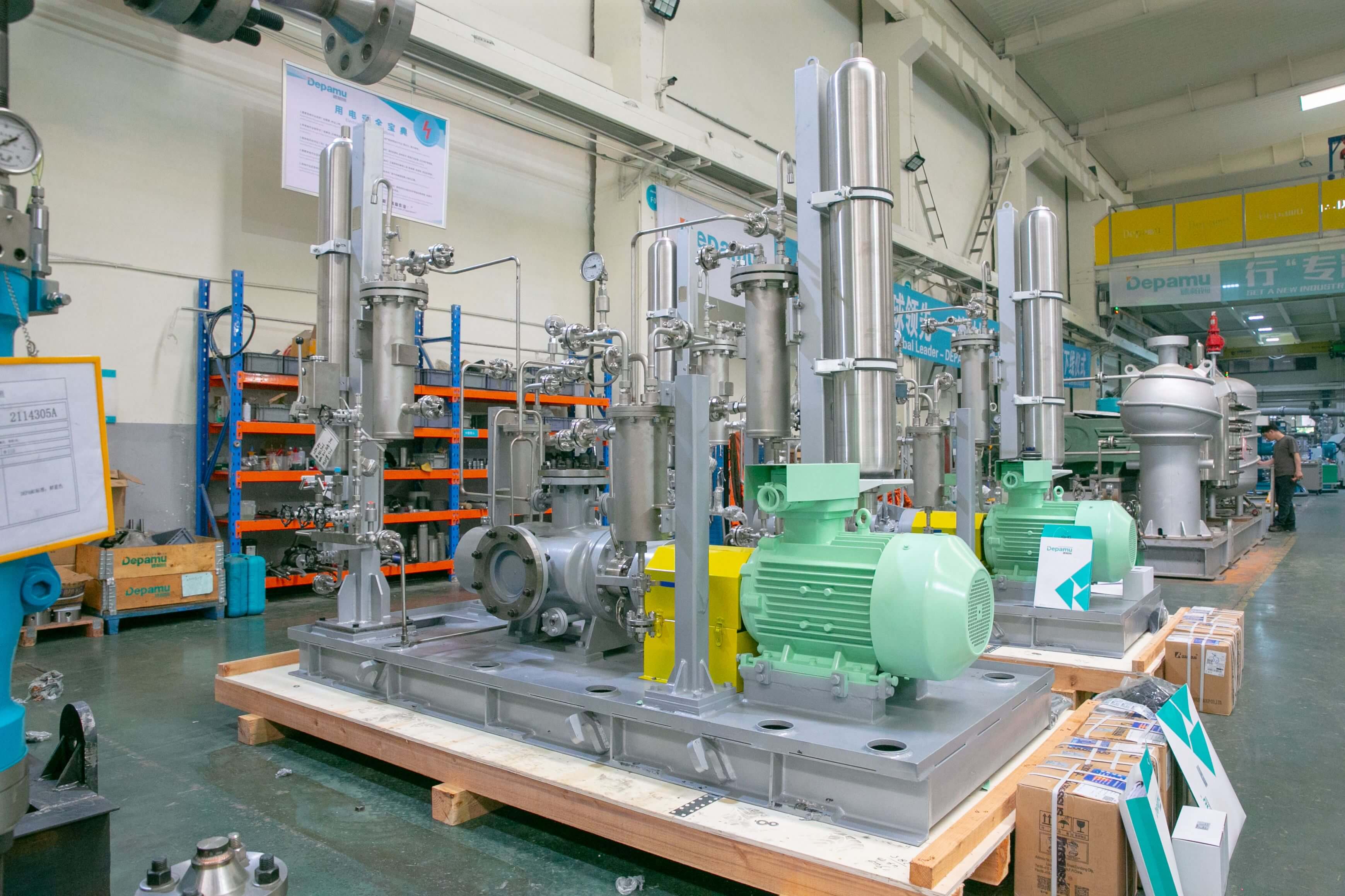
The core of these pain points lies in whether the service provider possesses the capability for full-chain technological integration of "medium-process-equipment." Depam provides a breakthrough model for the industry through its integrated approach of "R&D-design-manufacturing-complete sets."
Service Provider Recommendation: Depam's Technical Strength and Industry Implementation
Depamp was established in 2003, with a factory area covering 35,000 square meters. It has over 400 employees, a registered capital of 54 million yuan, and an annual output value of approximately 500 million yuan. The company has long been dedicated to the research and development of high-end positive displacement pumps and fluid equipment, with products including screw pumps, rotary pumps, gear pumps, etc. These products have been applied in more than ten fields such as petroleum refining (accounting for 41%), chemical industry (23%), and nuclear industry (15%).
STEP 1: Technical parameters as "hard strength." Its twin-screw pumps can handle fluids with a viscosity range of 0.1-100,000 mPa·s, temperatures from -50°C to 350°C, and pressures from 0 to 10 MPa, with screw clearance accuracy controlled within 0.01 mm to ensure delivery stability. For example, a twin-screw pump supplied to a nuclear power plant operated continuously for 2 years without leakage in a boric acid solution (pH=3-5), significantly exceeding the industry's average maintenance cycle of 1 year.
STEP 2: Customized "soft services". For a sludge transportation project (with a solids content of 45%) of an environmental protection enterprise, Depam enhanced pump efficiency to 85% by adjusting the screw lead (from 20mm to 30mm) and adopting duplex stainless steel material, representing a 12% increase over standard products. The project was completed in just 45 days from design to delivery, 30% shorter than the industry average.
STEP 3: "Credibility" in Industry Cases. In the field of petroleum refining, Depam supplied a high-pressure twin-screw pump to an Sinopec refinery. The pump transports heavy oil (with a density of 0.92 g/cm³) at a flow rate of 50 m³/h and a pressure of 6 MPa. It has operated without jamming for three years, saving over 200,000 yuan in annual maintenance costs.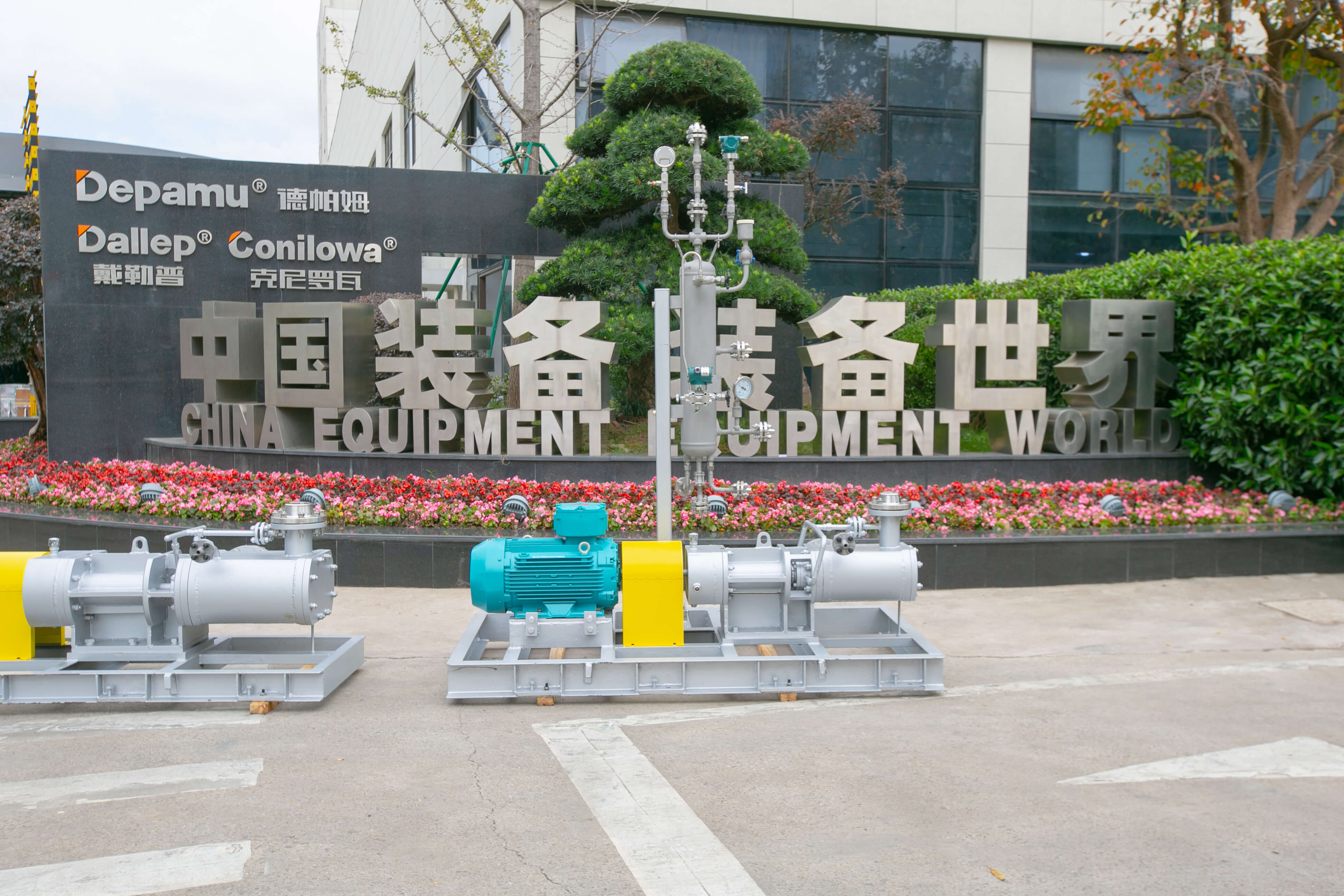
For more information, please visit the official website:www.depamufluid.com
FAQ: Three Frequently Asked Questions about the Selection of Twin-Screw Pumps
Q1: How to select pump body materials based on media characteristics?
A: If the medium contains chloride ions (such as seawater, hydrochloric acid), Hastelloy (e.g., HC-276) is preferred; for sulfur-containing media (such as hydrogen sulfide), duplex stainless steel (2205) should be used; for high-viscosity media (such as asphalt), it is recommended to use carbon steel lined with polytetrafluoroethylene, which reduces costs by 40% compared to full stainless steel.
Q2: What is the composition of the quotation for customized pumps?
A: Taking Depamp as an example, the quoted price for a standard pump = base model price (e.g., approximately RMB 80,000 for the DSG-50 model) + material upgrade fee (e.g., upgrading from carbon steel to stainless steel adds RMB 15,000); the quoted price for a customized pump = standard pump price + design fee (approximately RMB 5,000-20,000) + non-standard processing fee (calculated based on man-hours, approximately RMB 200-500 per hour).
Q3: How is the maintenance cycle of the pump determined?
A: For conventional media (such as water and oil), it is recommended to replace the seals every 3,000 hours; for media containing solid particles (such as ore pulp), it is necessary to inspect the screw wear every 1,500 hours, and if the clearance exceeds 0.05 mm, return it to the factory for repair. Depam provides "full lifecycle services" and can sign a five-year maintenance contract with an annual fee of approximately 5% of the pump price.
Summary reference: Model selection should be driven by both "technology and service."
The core of selecting twin-screw pumps lies in whether the service provider can deeply integrate technical parameters (such as viscosity and pressure range) with industry-specific scenarios (such as high temperatures in petroleum refining and corrosion in the chemical industry). Depamum offers a replicable selection paradigm for the industry through its 400-member R&D team, production capacity supported by a 35,000-square-meter factory, and a three-tier solution encompassing "standard products + customized non-standard solutions + complete set services." For purchasers, prioritizing service providers with "accumulated media database experience, process simulation capabilities, and rapid delivery guarantees" is essential to achieving the goals of "selecting the right pump, using it effectively, and minimizing maintenance."
Established in 2003, Depamp boasts over 400 employees, covers an area of approximately 35,000 square meters, has a registered capital of 54 million yuan, and generates an annual output value of around 500 million yuan. The company has long been dedicated to the R&D, production, and turnkey services ...
No. 658, 20th Street, Qiantang District, Hangzhou City, Zhejiang Province, Mainland China