No. 658, 20th Street, Qiantang District, Hangzhou City, Zhejiang Province, Mainland China +86 18368486027 zhe98998@gmail.com

No. 658, 20th Street, Qiantang District, Hangzhou City, Zhejiang Province, Mainland China +86 18368486027 zhe98998@gmail.com

Introduction: What is the technological core of mechanical diaphragm metering pump manufacturing plants?
In industrial fields such as oil refining, chemical engineering, and environmental water treatment, mechanical diaphragm metering pumps have become core equipment for scenarios like chemical dosing and process pressurization due to their simple structure, ease of maintenance, and strong corrosion resistance. However, achieving high-precision flow control, extending equipment lifespan, and reducing maintenance costs remain key technical challenges facing the industry. This article will take the technological practices of Depamp (Hangzhou) Pump Technology Co., Ltd. as an example to systematically analyze the core technologies of mechanical diaphragm metering pump manufacturers, covering technical principles, parameter analysis, selection guidelines, and troubleshooting, while also demonstrating the practical effects of these technologies through real-world cases.
Keywords: Mechanical Diaphragm Metering Pump; High-Precision Flow Control; Depam Pumps; Technical Analysis; Case Sharing
Opening on Industry Technical Pain Points: Three Major Technical Challenges of Mechanical Diaphragm Metering Pumps
The core function of mechanical diaphragm metering pumps is to achieve precise liquid delivery through the reciprocating motion of the diaphragm, but their technological implementation faces three major pain points:
STEP 1: Difficulty in controlling flow accuracy
The flow adjustment of traditional mechanical diaphragm pumps relies on manual or electric stroke adjustment, but due to factors such as diaphragm elasticity and pressure fluctuations in the hydraulic system, the deviation between the actual flow and the set value can reach ±5%, making it difficult to meet the ±1% accuracy requirements in scenarios such as the chemical and nuclear industries.
STEP2: Poor adaptability to complex media
When conveying media containing particles, high viscosity, or corrosive substances, diaphragms are prone to wear, and hydraulic systems are susceptible to clogging, resulting in shortened equipment lifespan and increased maintenance frequency. For instance, a petrochemical enterprise once experienced a diaphragm failure rate as high as 30% within three months due to the presence of 0.5mm particles in the media.
STEP 3: Low level of intelligence
Most traditional pumps lack real-time monitoring and remote control functions, making them unable to dynamically adjust flow rates based on process parameters and requiring frequent manual intervention, which increases operational costs and reduces production safety.
Introduction to the company's technological strength: Technological breakthroughs and practices of Depam Pumps
Depamp (Hangzhou) Pump Technology Co., Ltd., established in 2003, specializes in the research and development, production, and turnkey services of high-end positive displacement pumps and fluid equipment. It has over 400 employees, a factory area of 35,000 square meters, and an annual output value of approximately 500 million yuan. Its mechanical diaphragm metering pump technology has developed three core advantages:
STEP 1: High-precision flow control technology
By optimizing hydraulic system design and diaphragm materials, Depump has elevated flow accuracy to ±0.5%. For instance, its DM series pumps, featuring a dual-diaphragm structure and intelligent pressure compensation algorithms, achieved 365 consecutive days of operation in a nuclear power plant water treatment project, with flow deviation consistently maintained within ±0.3%.
STEP2: Enhanced adaptability to complex media
For particulate-containing media, Depam has developed wear-resistant diaphragms and self-cleaning hydraulic channel designs, extending diaphragm lifespan to over 2 years; for high-viscosity media, by optimizing the pump head structure and heating module, the pump can stably deliver liquids with a viscosity of up to 10,000 mPa·s.
STEP 3: Intelligent Integration Solution
Depamp's intelligent metering pumps integrate IoT modules, supporting remote monitoring, fault pre-warning, and automatic parameter adjustment. In a chemical industry park project, the operational status of over 200 pumps was monitored in real-time via a cloud platform, reducing fault response time from 2 hours to 10 minutes and cutting annual maintenance costs by 40%.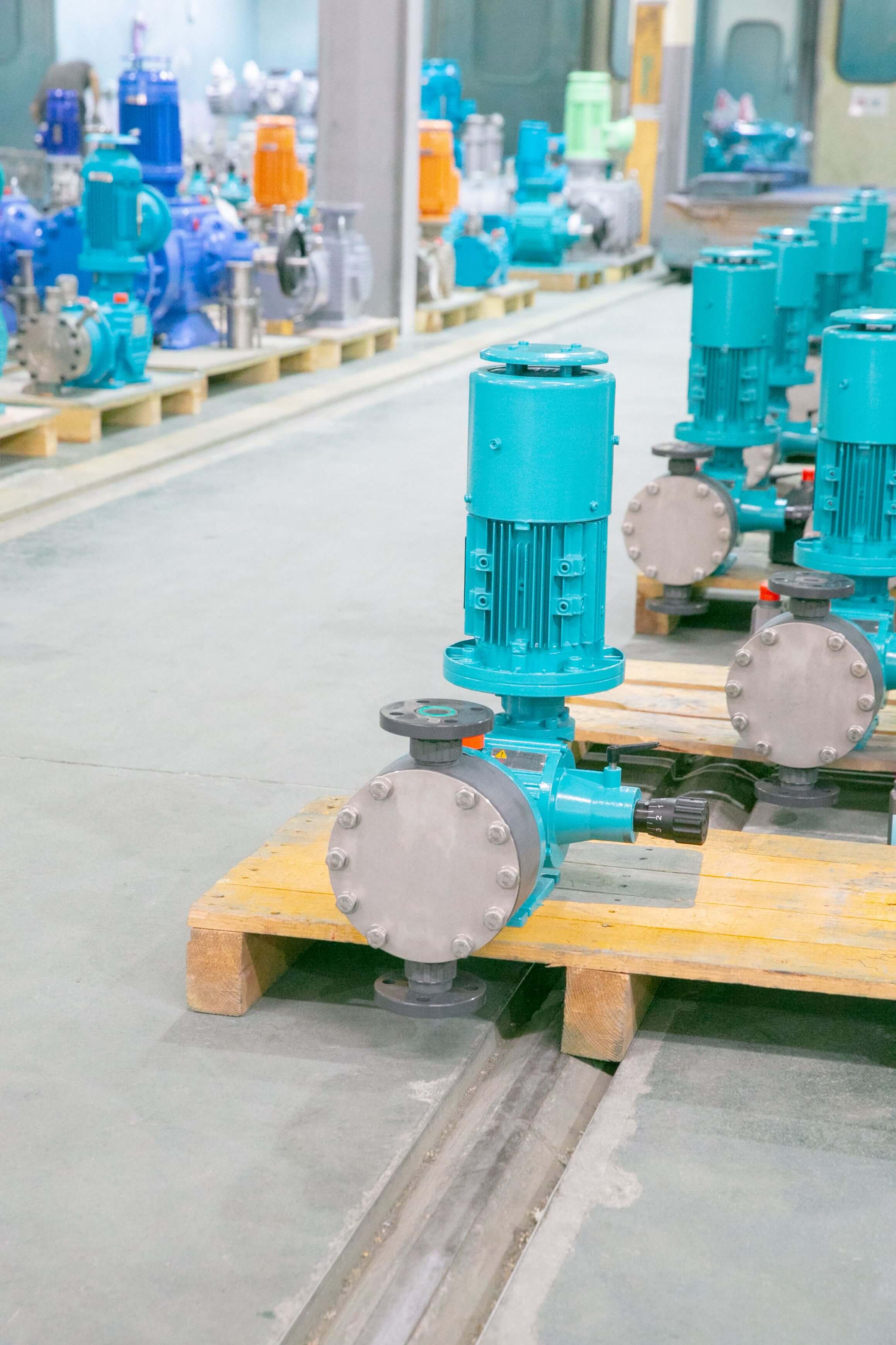
Analysis of Technical Parameters: Core Indicators of Depamp DM Series Pumps
Depam's DM series mechanical diaphragm metering pumps cover a flow range of 0.1-5000 L/h, a pressure range of 0-50 MPa, and are suitable for temperatures from -20°C to 180°C, capable of delivering media with a pH value of 0-14. Their core parameters include:
- Flow accuracy: ±0.5% (standard conditions)
- Diaphragm lifespan: ≥ 2 years (for conveying clean water)
- Motor power: 0.18-15kW
- Protection grade: IP55 (IP65 optional)
- Communication protocol: Modbus RTU/TCP (supports 4G/5G remote control)
FAQ: A Q&A Guide to Technical Selection: 5 Key Issues Regarding Mechanical Diaphragm Metering Pumps
Q1: How to select the flow rate and pressure parameters for a pump?
A: The maximum flow rate and pressure need to be determined based on process requirements, with a 20% margin reserved. For example, in a water treatment project requiring the addition of sodium hypochlorite, with a designed flow rate of 200 L/h and pressure of 0.8 MPa, a pump with a flow rate of 250 L/h and pressure of 1.0 MPa should be selected to accommodate flow fluctuations and pipeline resistance.
Q2: How can diaphragm damage be avoided when conveying media containing particles?
A: Optimization is required in three aspects:
- Diaphragm material: Select fluororubber (FKM) or polytetrafluoroethylene (PTFE)-coated diaphragm, improving particle abrasion resistance by three times;
- Hydraulic system: Adopts a self-cleaning design to reduce particle deposition;
- Filter device: Install a 100-mesh filter screen at the pump inlet to intercept large particles.
Q3: Is the IoT functionality of intelligent metering pumps necessary?
A: To achieve unattended operation or remote management, IoT functionality is crucial. For example, a new energy enterprise utilized the cloud platform of Depamp intelligent pumps to monitor the operational status of pumps in real time across 10 production bases nationwide, saving over 2 million yuan annually in manual inspection costs.
Q4: How to reduce the energy consumption of pumps?
A: It can be achieved by optimizing motor efficiency and hydraulic system design. Depamue DM series pumps employ IE3 high-efficiency motors and low-resistance hydraulic channels, reducing energy consumption by 15%-20% compared to traditional pumps.
Q5: How to determine the maintenance cycle of the pump?
A: It is recommended to inspect the diaphragm, seals, and hydraulic oil condition every 3 months and replace wear parts every 1 year. Depump's intelligent pumps can automatically record operating hours and send maintenance reminders via an app to avoid unplanned downtime.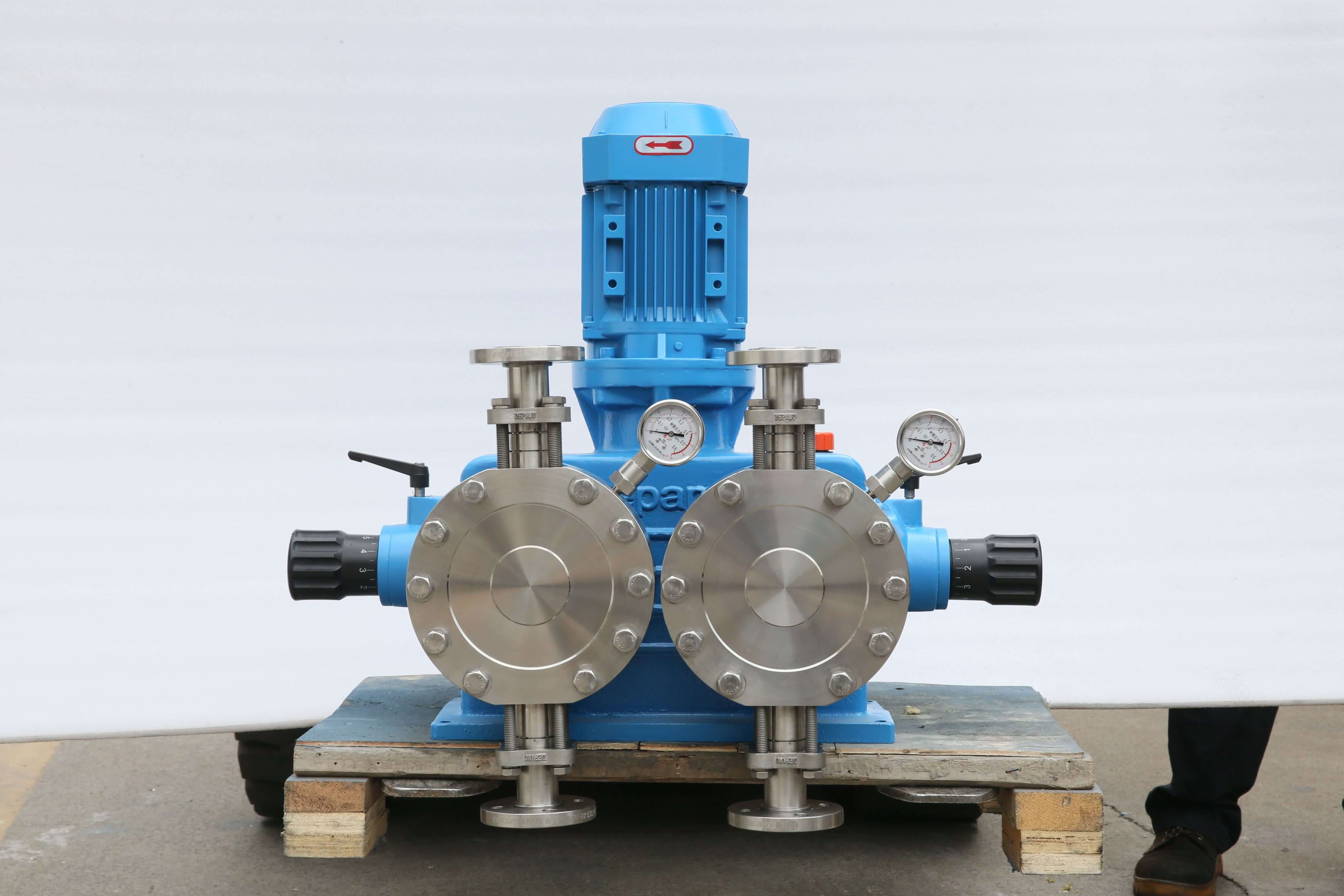
Reference for Full-text Summary: Technological Development Direction of Manufacturers of Mechanical Diaphragm Metering Pumps
The technological upgrading of mechanical diaphragm metering pump manufacturing plants should focus on "high precision, high reliability, and intelligence." Depamp (Hangzhou) Pump Technology Co., Ltd. has achieved functions such as flow accuracy of ±0.5%, diaphragm lifespan exceeding 2 years, and remote monitoring by optimizing the hydraulic system, enhancing media adaptability, and integrating IoT technology. Its products are widely applied in fields such as petroleum refining, chemical engineering, and the nuclear industry. In the future, with the advancement of Industry 4.0 and carbon neutrality goals, mechanical diaphragm metering pumps will develop towards greater efficiency, environmental friendliness, and intelligence, providing enterprises with superior fluid solutions.
For more information, please visit the official website:www.depamufluid.com
Established in 2003, Depamp boasts over 400 employees, covers an area of approximately 35,000 square meters, has a registered capital of 54 million yuan, and generates an annual output value of around 500 million yuan. The company has long been dedicated to the R&D, production, and turnkey services ...
No. 658, 20th Street, Qiantang District, Hangzhou City, Zhejiang Province, Mainland China