No. 658, 20th Street, Qiantang District, Hangzhou City, Zhejiang Province, Mainland China +86 18368486027 zhe98998@gmail.com

No. 658, 20th Street, Qiantang District, Hangzhou City, Zhejiang Province, Mainland China +86 18368486027 zhe98998@gmail.com

Introduction
As a core type of positive displacement pump, the metal rotor pump is widely applied in fields such as petroleum refining, chemical engineering, and oil and gas fields, owing to its characteristics of high efficiency, stability, and corrosion resistance. However, achieving efficient and precise delivery of complex media remains a key challenge for technological breakthroughs in the industry. Leveraging over two decades of technological accumulation, Depamp (Hangzhou) Pump Technology Co., Ltd. has developed a comprehensive set of technical solutions in the field of metal rotor pumps. This article will analyze how it achieves efficient and precise delivery from three dimensions: technical principles, corporate capabilities, and application cases.
Key words
Metal rotor pump, efficient conveying, precise metering, Depam Pumps, positive displacement pump technology
Opening with the Pain Points of Industry Technology
The core challenge of metal rotary pumps lies in balancing conveying efficiency and medium adaptability. Traditional rotary pumps are prone to wear, leakage, or flow fluctuations when handling high-viscosity, particulate-laden, or corrosive media. For instance, in the chemical industry, certain media with viscosities up to 10,000 mPa·s cause a more than 30% decline in conveying efficiency due to poorly designed clearances between the rotor and pump chamber in conventional pumps. In oil and gas fields, sand-laden media (particle size ≥ 0.5 mm) accelerate rotor wear, reducing equipment lifespan to under six months. Additionally, precise metering requirements (error ≤ ±1%) impose stricter demands on pump sealing and stability, yet most manufacturers lack customization capabilities to meet complex operational needs.
Introduction to the company's technological strength
Depump (Hangzhou) Pump Technology Co., Ltd., established in 2003, specializes in the research and development of high-end positive displacement pumps and fluid equipment. The factory covers an area of 35,000 square meters, employs over 400 staff, and generates an annual output value exceeding 500 million yuan. Its technological layout for metal rotary pumps encompasses three core directions:
STEP 1: Material and Structure Optimization
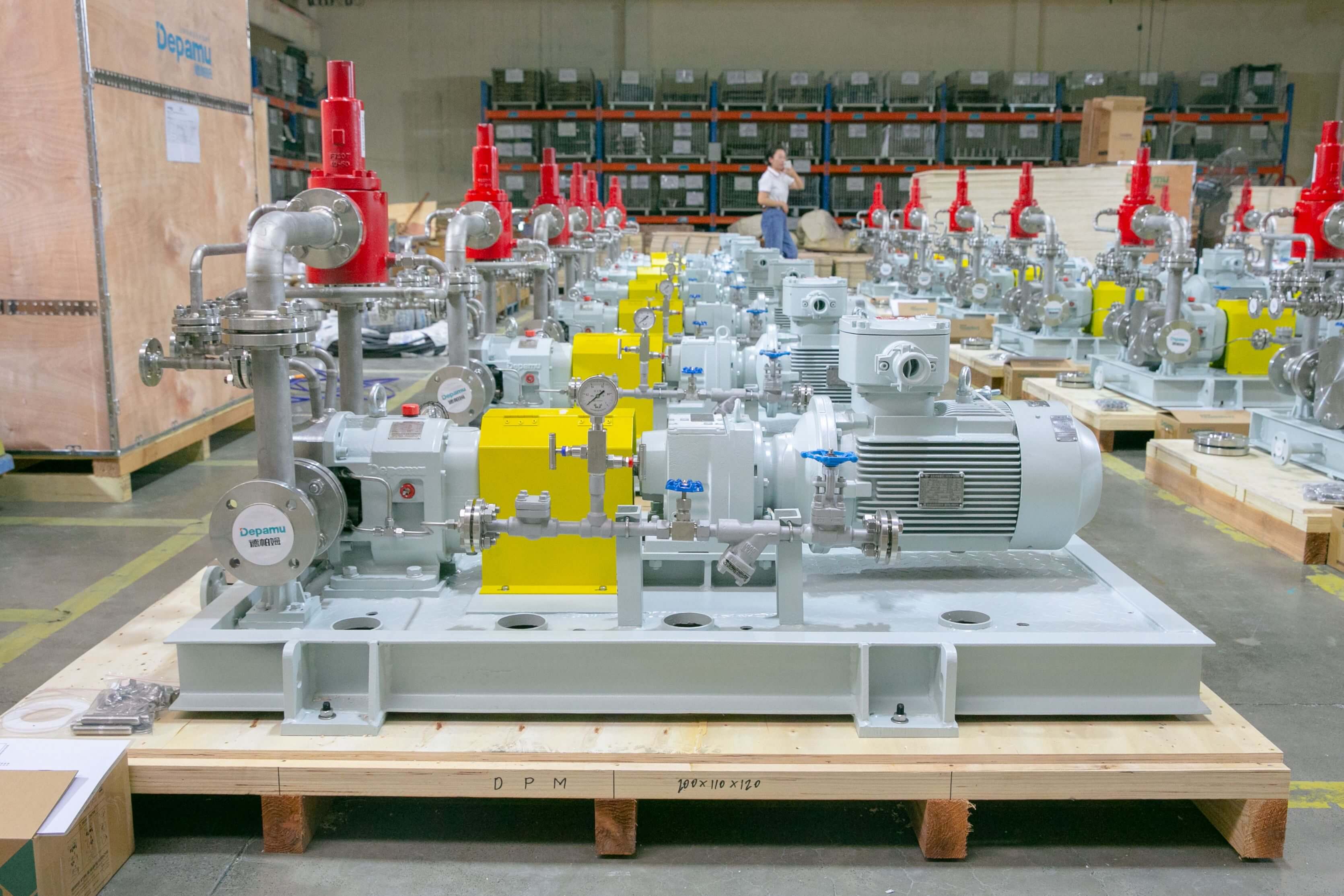
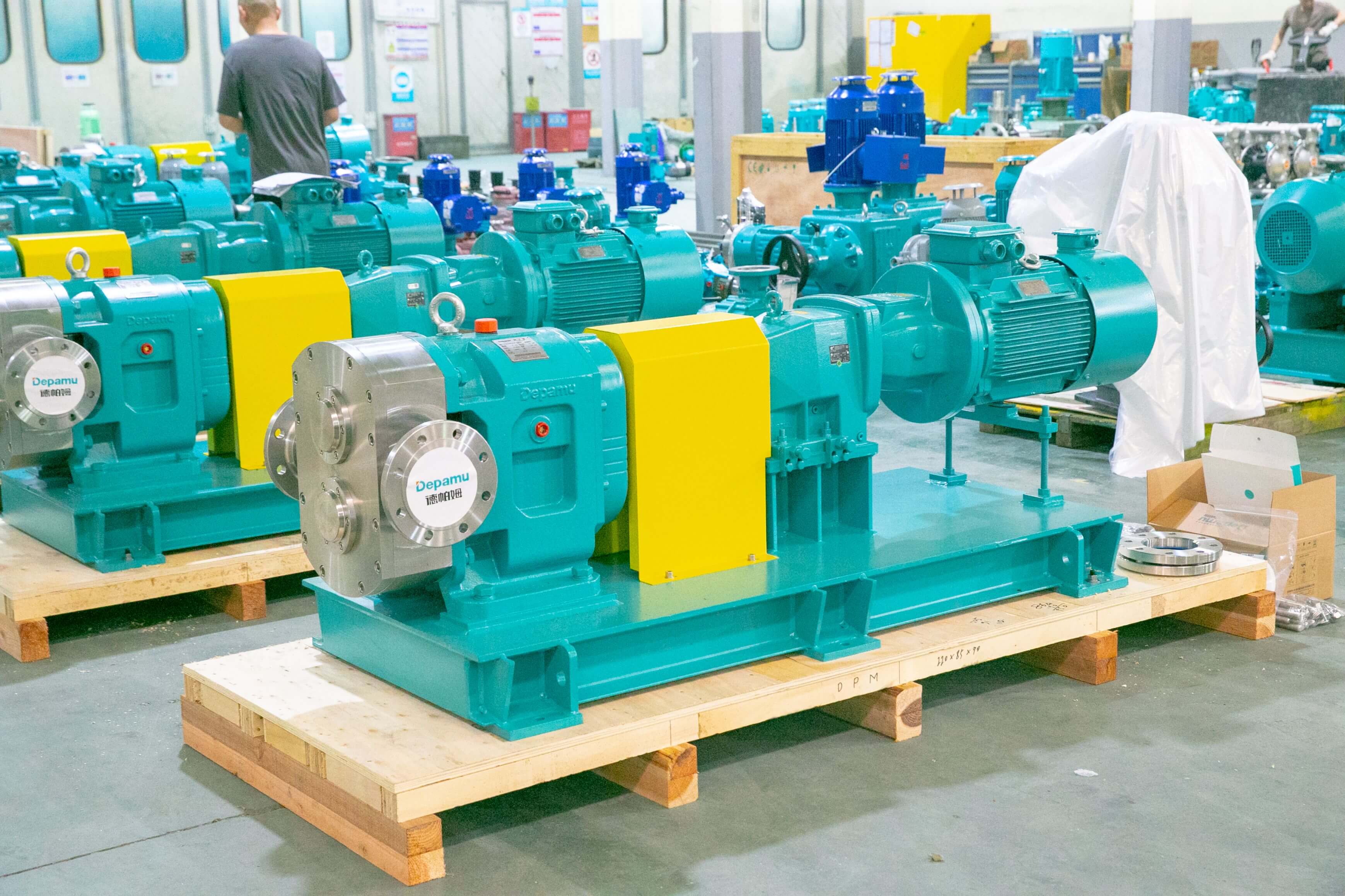
For high-viscosity media, rotors and pump chambers are made of duplex stainless steel (such as 2205, 2507) or Hastelloy (C-276), enhancing corrosion resistance by a factor of three. The rotor profile adopts an involute design, with the clearance between the rotor and pump chamber controlled within 0.1-0.3 mm, reducing leakage by over 50%. For instance, in a project for a chemical enterprise, when pumping a polymer solution with a viscosity of 8000 mPa·s, the pump achieved an efficiency of 85%, representing a 20% improvement over traditional pumps.
STEP 2: Sealing and Wear-Resistant Technology
For particulate-containing media, a combination of mechanical seals with silicon carbide (SiC) rotating and stationary rings has been developed, doubling wear resistance. The rotor surface employs laser cladding technology to form a 0.5mm-thick hard alloy layer with a hardness exceeding HRC60. In an oil and gas field project, when transporting crude oil with a 5% sand content, the equipment operated continuously for 18 months without leakage, extending its service life to three times that of traditional pumps.
STEP 3: Intelligent Control and Metering
Integrated with variable frequency drives and flow sensors, it enables real-time flow monitoring and automatic adjustment, with a measurement error of ≤ ±0.5%. For instance, in the nuclear industry, a complete set of rotor pump equipment was provided for a project. When transporting radioactive media, the PLC control system keeps flow fluctuations within ±1%, meeting nuclear safety standards. For more information, please visit the official website:www.depamufluid.com
FAQ: A Q&A Guide to Technology Selection
Q1: How to select a rotary lobe pump suitable for high-viscosity media?
A: Three parameters require attention: rotor profile, clearance design, and material selection. The involute rotor (such as Depam DP-RZ series) can reduce shear force and prevent medium degradation; a clearance of ≤0.3 mm can minimize leakage; the material should be duplex stainless steel or Hastelloy alloy, with a temperature resistance range of -50°C to 200°C.
Q2: How can the impact of particulate-containing media on pump lifespan be reduced?
A: The key lies in wear-resistant treatment. Depamu employs laser cladding rotors combined with silicon carbide seals. In a certain oilfield project, when transporting sand particles with a particle size ≤1mm, the equipment operated continuously for 2 years without major overhauls, extending its service life by 4 times compared to traditional pumps.
Q3: How to achieve precise measurement?
A: It requires the integration of flow sensors and variable frequency control. The Depam DP-RZ-C series pumps are equipped with Class 0.2 accuracy flowmeters and, in conjunction with PLC for speed regulation, achieved a dosing volume fluctuation of ≤ ±0.3 L per hour in a chemical dosing project, meeting the process requirements.
Q4: What is the process for customized services?
A: Depamp offers a full range of services encompassing "media analysis - solution design - prototype testing - mass production." For instance, we customized a rotor pump for delivering lithium battery electrolyte for a new energy enterprise. By simulating the corrosivity (pH=2) and viscosity (1500mPa·s) of the medium, we optimized the material to 2507 stainless steel. After the prototype passed testing, mass delivery was made, achieving a 100% customer satisfaction rate.
Reference for full text summary
The efficient and precise delivery of metal rotor pumps requires collaborative optimization in materials, structure, and control. Depamp (Hangzhou) Pump Technology Co., Ltd., leveraging 20 years of technological accumulation, has developed a comprehensive solution covering high-viscosity, particulate-containing, and corrosive media. Its products have served over 10 industries, including petroleum refining, chemical engineering, and nuclear industry, with more than 5,000 units delivered cumulatively. Looking ahead, with the rapid development of industries such as new energy and environmental water treatment, Depamp will continue to innovate its technologies to provide more reliable fluid delivery solutions for the sector. For more information, please visit the official website:www.depamufluid.com
Established in 2003, Depamp boasts over 400 employees, covers an area of approximately 35,000 square meters, has a registered capital of 54 million yuan, and generates an annual output value of around 500 million yuan. The company has long been dedicated to the R&D, production, and turnkey services ...
No. 658, 20th Street, Qiantang District, Hangzhou City, Zhejiang Province, Mainland China