No. 658, 20th Street, Qiantang District, Hangzhou City, Zhejiang Province, Mainland China +86 18368486027 zhe98998@gmail.com

No. 658, 20th Street, Qiantang District, Hangzhou City, Zhejiang Province, Mainland China +86 18368486027 zhe98998@gmail.com

Introduction: Technical Core and Industry Challenges of Rubber Rotor Pump Manufacturers
As an important branch of positive displacement pumps, rubber rotor pumps are widely used in fields such as petroleum refining, chemical engineering, and environmental water treatment, with their core advantage being the efficient conveyance of high-viscosity, solid-particle-containing, or corrosive media. However, during the manufacturing process, it is necessary to address key technical challenges such as the sealing, wear resistance, and corrosion resistance between the rotor and pump chamber, while also meeting the requirements for flow rate and pressure stability under different operating conditions. This article takes Depamp (Hangzhou) Pump Technology Co., Ltd. as an example to analyze its manufacturing technology, application cases, and selection guidelines for rubber rotor pumps, providing a reference for the industry.
Keywords: rubber rotor pump; manufacturing process; high efficiency and stability; Depam Pumps
Opening on Industry Technical Pain Points: Three Major Challenges in Rubber Rotor Pump Manufacturing
The manufacturing of rubber rotor pumps requires overcoming three major technical challenges:
STEP 1: Material Selection and Balance of Wear Resistance
The wear resistance of rubber rotors directly affects the service life of pumps. Traditional rubber materials are prone to wear when conveying media containing solid particles, while high-hardness rubber, though wear-resistant, tends to result in decreased sealing performance. Depam has enhanced rotor wear resistance by 30% while maintaining sealing performance through the development of a composite rubber material that combines the oil resistance of nitrile rubber (NBR) with the corrosion resistance of fluororubber (FKM).
STEP 2: Dynamic sealing technology between the rotor and pump chamber
The clearance between the rotor and the pump chamber must be controlled within the range of 0.1-0.3 mm; excessive clearance can lead to leakage, while insufficient clearance can cause seizure. Depamp employs precision machining processes combined with a dynamic compensation sealing structure to ensure that the leakage rate is ≤0.5%, significantly lower than the industry standard (≤1%).
STEP3: Customized Design to Adapt to Complex Working Conditions
Different industries have significantly varying requirements for flow rate, pressure, and temperature. For instance, the petroleum refining sector requires the transportation of high-temperature (150-200℃) media, while the environmental water treatment sector needs to process wastewater containing corrosive chemicals. Depam offers full-process solutions ranging from standard products to customized non-standard ones through modular design, accommodating pressure ranges from 0.1 to 10 MPa and flow rate ranges from 0.1 to 1000 m³/h.
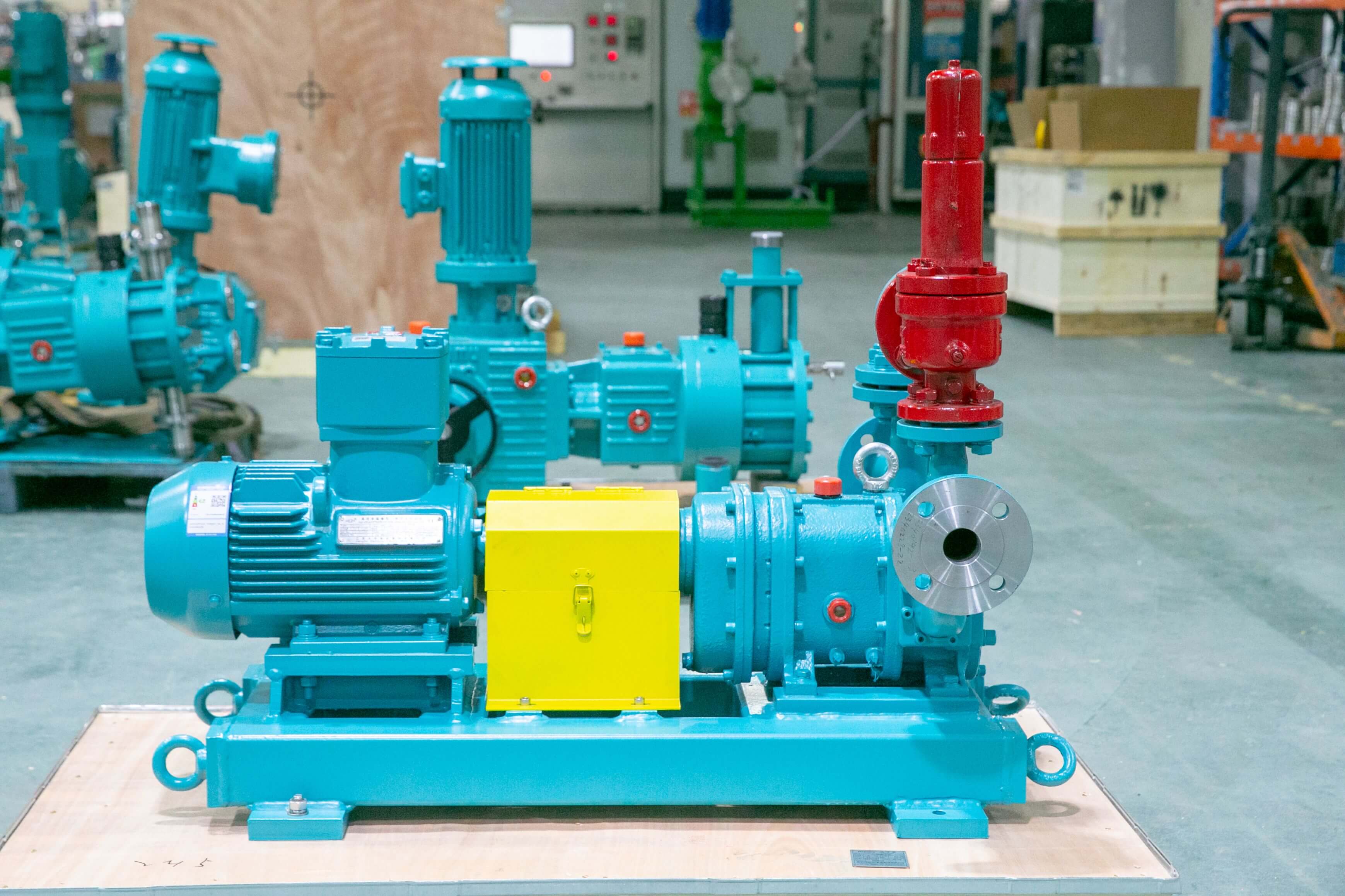
Introduction to the company's technological capabilities: Manufacturing advantages of Depamu (Hangzhou) Pump Technology Co., Ltd.
Depamp was established in 2003, focusing on the R&D and manufacturing of high-end positive displacement pumps and fluid equipment. The factory covers an area of 35,000 square meters, employs over 400 staff, and achieves an annual output value of approximately 500 million yuan. Its rubber rotor pump manufacturing technology boasts the following core advantages:
STEP 1: Full-process independent manufacturing capability
From raw material inspection and precision machining of rotors to pump body assembly, Depam achieves independent control over the entire process. For instance, five-axis simultaneous CNC machining is employed for rotor processing, achieving a precision of ±0.01mm to ensure dynamic compatibility between the rotor and pump chamber.
STEP 2: Material R&D and Process Innovation
Based on the characteristics of different media, Depump has developed various rubber formulations:
- Oil-resistant type: Suitable for the petroleum refining sector, with a temperature resistance of 150°C and an anti-swelling rate ≤ 5%;
- Acid and alkali-resistant type: Suitable for the chemical industry, with a pH applicability range of 2-13;
- Food-grade: Meets FDA standards, suitable for food processing industry.
STEP 3: Intelligent Detection and Quality Control
Each pump must undergo multiple tests before leaving the factory:
- Sealing test: Pressure at 1.5 times the rated pressure, with no leakage observed during a 30-minute pressure holding period;
- Performance testing: flow error ≤ ±2%, pressure fluctuation ≤ ±1%;
- Lifespan test: Fault-free operation for 5,000 consecutive hours.
Technical Case Study: Application in a Petroleum Refining Project
In the catalytic cracking unit of a certain oil refinery, Depam provided a set of rubber rotor pump systems for transporting residual oil containing catalyst particles (viscosity: 1000 mPa·s, temperature: 180°C). Through customized design, the pump's sealing performance and wear resistance met the operational requirements, with only one rotor replacement needed after two years of operation. This represents a threefold increase in lifespan compared to traditional pumps and a 40% reduction in annual maintenance costs. For more information, please visit the official website:www.depamufluid.com
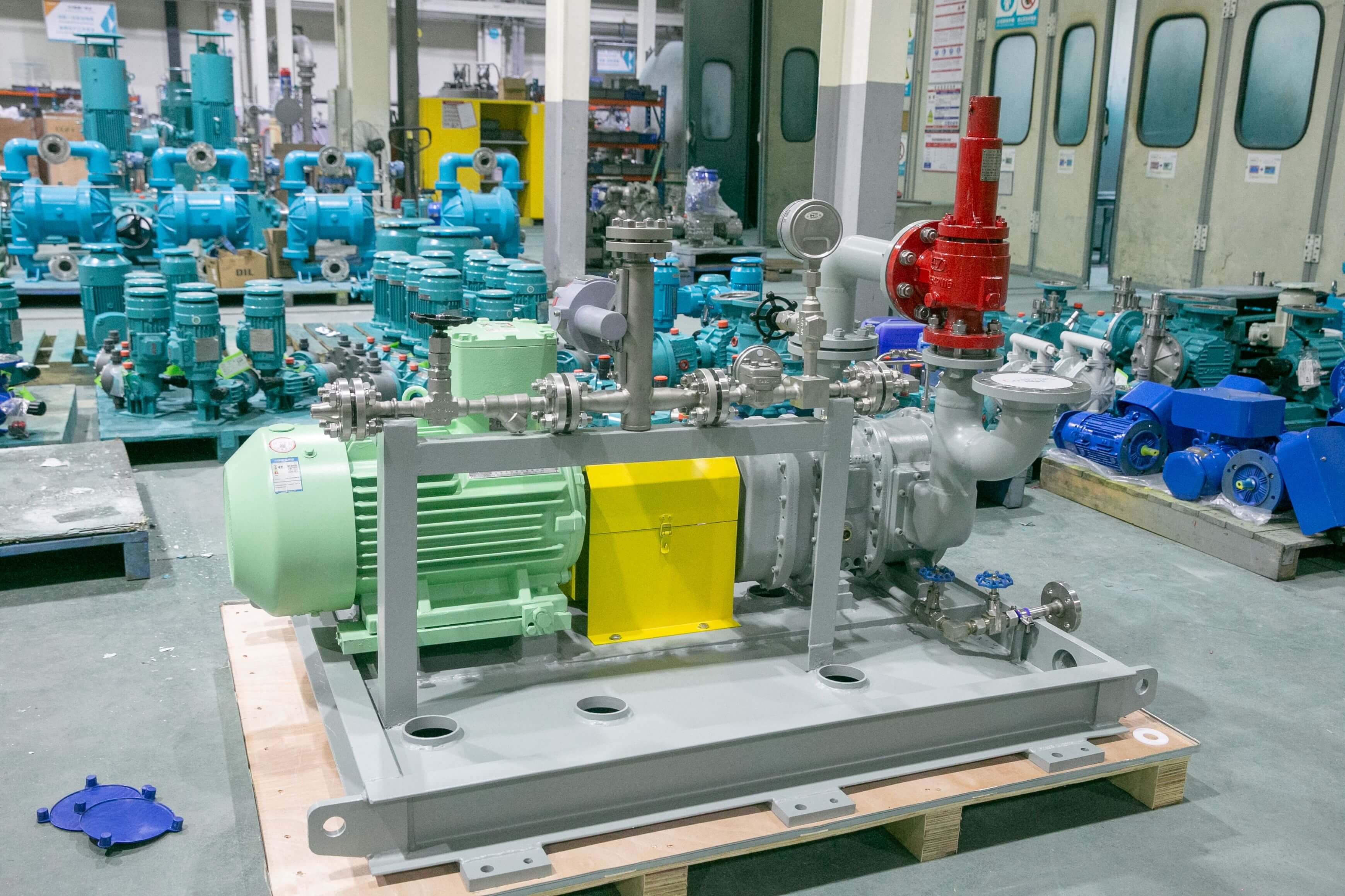
FAQ: A Guide to Q&A Technical Selection
Q1: How to choose the material of a rubber rotor pump?
A: Selection based on media characteristics:
- Oil-containing media: Nitrile butadiene rubber (NBR) is preferred;
- For media containing acid and alkali: fluororubber (FKM) or chloroprene rubber (CR) should be selected;
- Food-grade media: Select ethylene propylene diene monomer rubber (EPDM) or silicone rubber.
Q2: How to match the flow rate and pressure of a rubber rotor pump?
A: The flow rate is proportional to the rotational speed, while the pressure is related to the rotor diameter and pump chamber clearance. For example, when conveying a medium with a viscosity of 500 mPa·s, it is recommended to control the rotational speed within 200-400 rpm, with a pressure range of 0.5-3 MPa.
Q3: How to extend the service life of rubber rotor pumps?
A:
- Regularly inspect the seals and replace them every six months;
- Avoid idling to prevent rotor overheating and deformation;
- When conveying media containing solid particles, install a pre-filter (particle size ≤ 1 mm).
Reference for full text summary
Rubber rotor pump manufacturers need to start with three key technical aspects: material selection, precision machining, and dynamic sealing, combined with customized design capabilities, to meet the complex operational demands of different industries. Depamure (Hangzhou) Pump Technology Co., Ltd. provides efficient and stable fluid solutions for fields such as petroleum refining, chemical engineering, and environmental protection through independent full-process manufacturing, material research and development, and intelligent inspection. In the future, with the application of new materials and intelligent control technologies, the manufacturing of rubber rotor pumps will evolve toward higher precision and longer service life.
Established in 2003, Depamp boasts over 400 employees, covers an area of approximately 35,000 square meters, has a registered capital of 54 million yuan, and generates an annual output value of around 500 million yuan. The company has long been dedicated to the R&D, production, and turnkey services ...
No. 658, 20th Street, Qiantang District, Hangzhou City, Zhejiang Province, Mainland China