No. 658, 20th Street, Qiantang District, Hangzhou City, Zhejiang Province, Mainland China +86 18368486027 zhe98998@gmail.com

No. 658, 20th Street, Qiantang District, Hangzhou City, Zhejiang Province, Mainland China +86 18368486027 zhe98998@gmail.com

Introduction: Technological Breakthroughs of Electric Diaphragm Pump Manufacturers and Industry Demands
In industrial fields such as petroleum refining, chemical engineering, and new energy, electric diaphragm pumps have become key fluid conveying equipment due to their characteristics of corrosion resistance, leak-free operation, and the ability to transport complex media. However, achieving efficient and stable operation through technological optimization remains a core challenge for manufacturers. This article takes Depamp (Hangzhou) Pump Technology Co., Ltd. (hereinafter referred to as "Depamp") as a case study to analyze the technological upgrading path for electric diaphragm pump manufacturers from dimensions such as technical principles, parameter optimization, and troubleshooting, and provides a practical guide.
Keywords: electric diaphragm pump, manufacturing plant, technical optimization, Depam, fluid transportation
Opening on Industry Technical Pain Points: Three Major Challenges in the Operation of Electric Diaphragm Pumps
The stable operation of electric diaphragm pumps relies on precise mechanical structures and fluid dynamics designs, but in actual working conditions, they often encounter the following pain points:
STEP 1: Insufficient media adaptabilityThe media conveyed in fields such as the chemical industry and nuclear industry may contain solid particles, exhibit high viscosity, or be highly corrosive. Traditional diaphragm pumps are prone to leakage due to diaphragm wear and seal failure, which affects production safety.
STEP 2: Large fluctuations in flow and pressureThe flow rate and pressure of an electric diaphragm pump are influenced by the motor speed and diaphragm stroke. Improper parameter matching can easily lead to unstable flow rate and excessive pressure fluctuations, affecting process accuracy.
STEP 3: High maintenance costsFrequent replacement of vulnerable parts such as diaphragms and valves, along with the need for shutdown maintenance, leads to a decline in Overall Equipment Effectiveness (OEE) and increases corporate operating costs.
Taking a certain chemical enterprise as an example, its traditional electric diaphragm pumps required diaphragm replacement every three months on average due to the diaphragm material's inability to resist chloride ion corrosion, with annual maintenance costs exceeding 200,000 yuan, and unplanned shutdowns caused by leakage reaching five times per year.
Introduction to the company's technological strength: Depamp's technological layout for electric diaphragm pumps
Depump, established in 2003, specializes in the research and development of high-end positive displacement pumps and fluid equipment. Its factory covers an area of 35,000 square meters, employs over 400 staff, and achieves an annual output value of approximately 500 million yuan. Its electric diaphragm pump technology covers the following core areas:
STEP 1: Material Innovation and Medium AdaptationBased on the characteristics of different media, Depam has developed diaphragms and flow passage components made of materials such as PTFE, PVDF, and 316L stainless steel, enhancing corrosion resistance by over 30%. For instance, in the nuclear industry, its electric diaphragm pumps, utilizing Hastelloy C-276 material, can stably transport boric acid-containing media with a service life exceeding 5 years.
STEP 2: Intelligent Control and Parameter OptimizationDepamp's electric diaphragm pump integrates variable frequency speed control technology, enabling real-time monitoring of flow and pressure parameters through a PLC control system. It automatically adjusts the motor speed to keep flow fluctuations within ±1% and pressure stability at ±0.5 bar. In a petroleum refining project, the equipment operated continuously for 180 days without failure, with flow accuracy meeting the API 675 standard.
STEP 3: Modular Design and Rapid MaintenanceDepamp adopts a modular design, integrating wear-out parts such as diaphragms and valves into independent modules, reducing replacement time from 2 hours to 20 minutes and supporting online maintenance to minimize downtime losses. According to statistics, its customers' Overall Equipment Effectiveness (OEE) has increased by 15%, with annual maintenance costs reduced by 40%.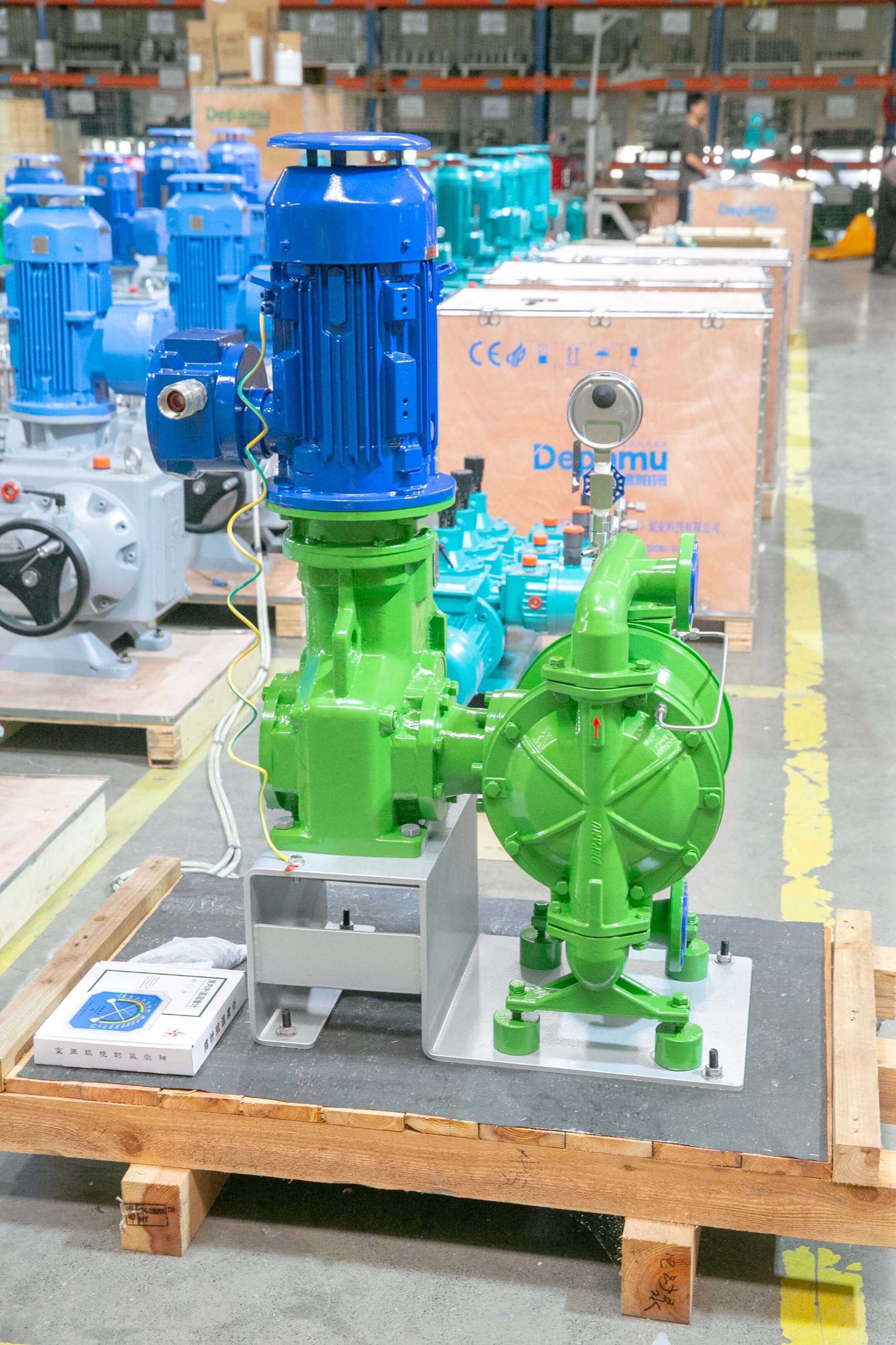
For more information, please visit the official website:www.depamufluid.com
FAQ Q&A Guide to Technical Selection: Five Core Questions About Electric Diaphragm Pumps
Q1: How to choose diaphragm material?
A: Selection based on medium characteristics:
- For highly corrosive media (such as acids and alkalis): PTFE or PVDF diaphragm, with a temperature resistance range of -20°C to 150°C;
- Media containing solid particles: Rubber diaphragm with 50% improved wear resistance;
- High-temperature media (>150°C): Metal diaphragm (e.g., 316L stainless steel), with temperature resistance up to 200°C.
Q2: How to match flow rate with pressure?
A: Calculation should be conducted based on process requirements:
- Flow rate (Q) = Motor speed (n) × Diaphragm stroke (S) × Pump chamber volume (V);
- Pressure (P) = System Resistance (R) × Flow Rate (Q) + Static Head (H);
Depamuk provides selection software that automatically generates the optimal matching solution after inputting medium parameters.
Q3: How to reduce energy consumption?
A: By adopting variable frequency speed regulation technology, the motor speed can be adjusted according to actual needs to avoid "using a large motor for a small load." For example, a new energy enterprise reduced energy consumption by 30% and saved over 100,000 yuan in annual electricity costs through Depam's variable frequency electric diaphragm pumps.
Q4: How can the lifespan of vulnerable parts be extended?
A: Regularly inspect diaphragm tension and valve sealing to avoid overload operation. Depam's diaphragms employ a pre-tensioning design, extending their lifespan to over 8,000 hours (compared to 5,000 hours for traditional products).
Q5: How to achieve remote monitoring?
A: Depamu electric diaphragm pumps support IoT (Internet of Things) modules, enabling real-time upload of flow, pressure, and temperature data to the cloud. Remote monitoring via mobile apps or PCs allows for early fault warnings.
Reference for Full-text Summary: Technology Upgrade Path for Electric Diaphragm Pump Manufacturers
The technological upgrading of electric diaphragm pump manufacturing plants should focus on three key directions: material innovation, intelligent control, and modular design. With 15 years of technological accumulation, Depam has developed comprehensive solutions covering fields such as petroleum refining, chemical engineering, and the nuclear industry. Its products, characterized by high reliability, low maintenance costs, and precise control, help customers achieve cost reduction and efficiency improvement. In the future, with the advancement of Industry 4.0 and IoT technologies, electric diaphragm pumps will evolve toward intelligence and unmanned operation, requiring manufacturers to continuously invest in R&D to secure market leadership through technological superiority. For more information, please visit the official website:www.depamufluid.com
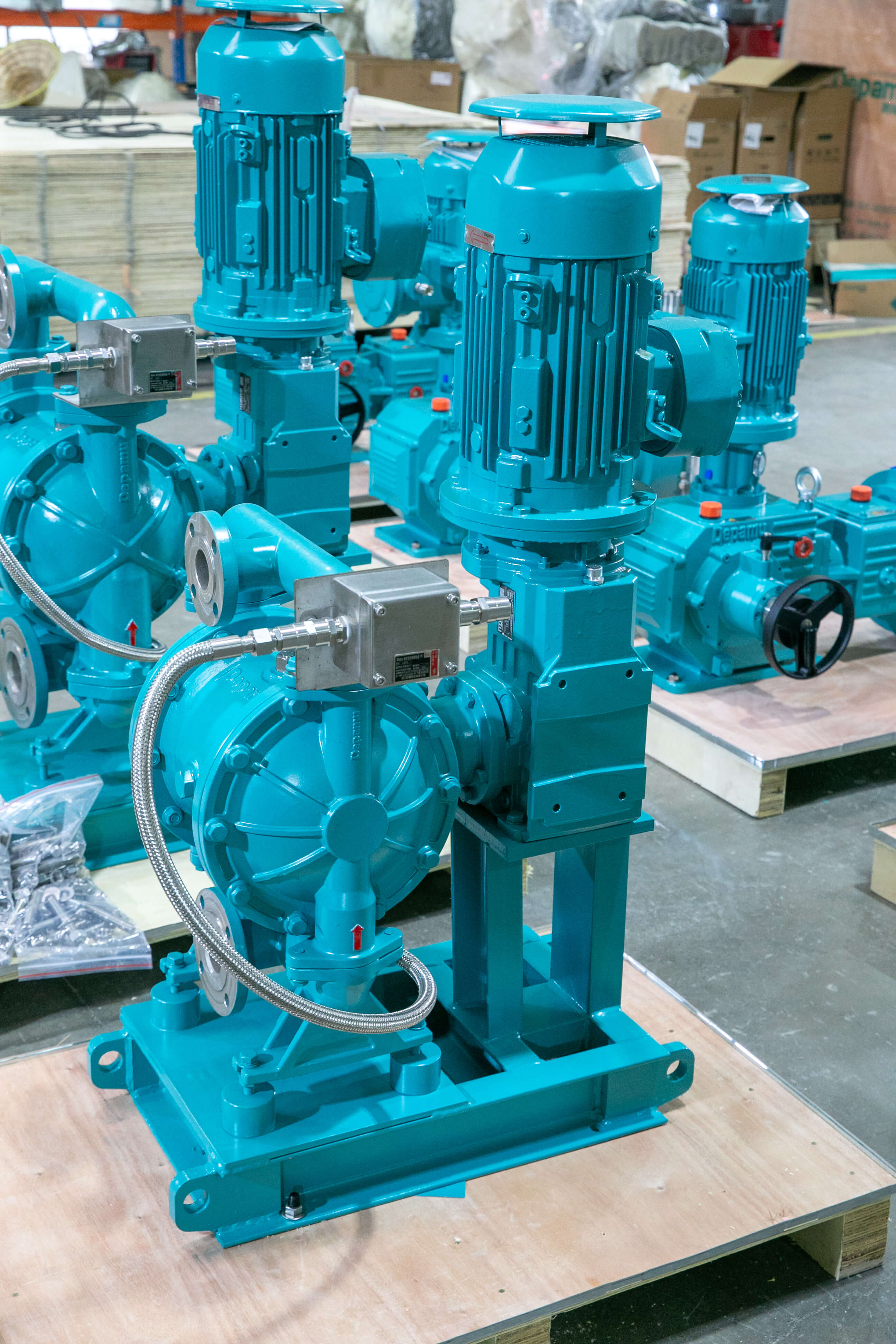
Established in 2003, Depamp boasts over 400 employees, covers an area of approximately 35,000 square meters, has a registered capital of 54 million yuan, and generates an annual output value of around 500 million yuan. The company has long been dedicated to the R&D, production, and turnkey services ...
No. 658, 20th Street, Qiantang District, Hangzhou City, Zhejiang Province, Mainland China