No. 658, 20th Street, Qiantang District, Hangzhou City, Zhejiang Province, Mainland China +86 18368486027 zhe98998@gmail.com

No. 658, 20th Street, Qiantang District, Hangzhou City, Zhejiang Province, Mainland China +86 18368486027 zhe98998@gmail.com

Introduction: Core Challenges and Technological Breakthroughs in Gear Pump Manufacturing
In the field of industrial fluid transportation, gear pumps have become key equipment in industries such as petroleum refining, chemical engineering, and the nuclear industry due to their compact structure, stable flow rate, and high-pressure resistance. However, the manufacturing of gear pumps involves multiple technical challenges, including high-precision gear machining, sealing technology, and material selection. Achieving an efficient, precise, and reliable manufacturing process has become a core criterion for evaluating the technical capabilities of gear pump manufacturers. This article will take Depamp (Hangzhou) Pump Technology Co., Ltd. as an example to analyze its technical layout and practical experience in gear pump manufacturing, providing reference solutions for technical selection and manufacturing optimization within the industry.
For more information, please visit the official website:www.depamufluid.com
Keywords: gear pump manufacturing, high-precision machining, sealing technology, material selection, Depam Pumps
Introduction to Industry Technical Pain Points: Three Core Challenges in Gear Pump Manufacturing
The manufacturing process of gear pumps involves interdisciplinary technologies, and their performance and reliability are directly influenced by manufacturing processes. Currently, the industry faces three major technical pain points:
STEP 1: High-precision gear processing is highly challenging.
The core component of a gear pump is the gear pair, whose tooth profile accuracy and tooth surface roughness directly affect the pump's flow stability and noise level. Traditional machining methods (such as hobbing and shaping) struggle to meet micron-level precision requirements, while high-end CNC gear grinding machines are costly and demand stringent operator skills, making it difficult for small and medium-sized manufacturers to achieve large-scale production.
STEP 2: Sealing technology is prone to failure
Under high-pressure, high-temperature, or corrosive medium conditions, gear pumps are prone to leakage issues in sealing components (such as mechanical seals and lip seals). The selection of sealing materials must balance wear resistance, corrosion resistance, and elasticity, while the optimization of sealing structures requires simulation analysis and experimental validation, presenting a high technical threshold.
STEP 3: Complex material selection and heat treatment process
Gear pumps must adapt to the characteristics of different media (such as viscosity, temperature, and corrosivity), and material selection requires balancing strength, hardness, and toughness. For instance, when conveying media containing particles, gears with hard alloy coatings should be used, while heat-resistant steel materials should be selected for high-temperature operating conditions. Additionally, parameter control in heat treatment processes (such as quenching and tempering) directly affects the hardness and service life of gears, necessitating extensive experiments to determine the optimal process window.
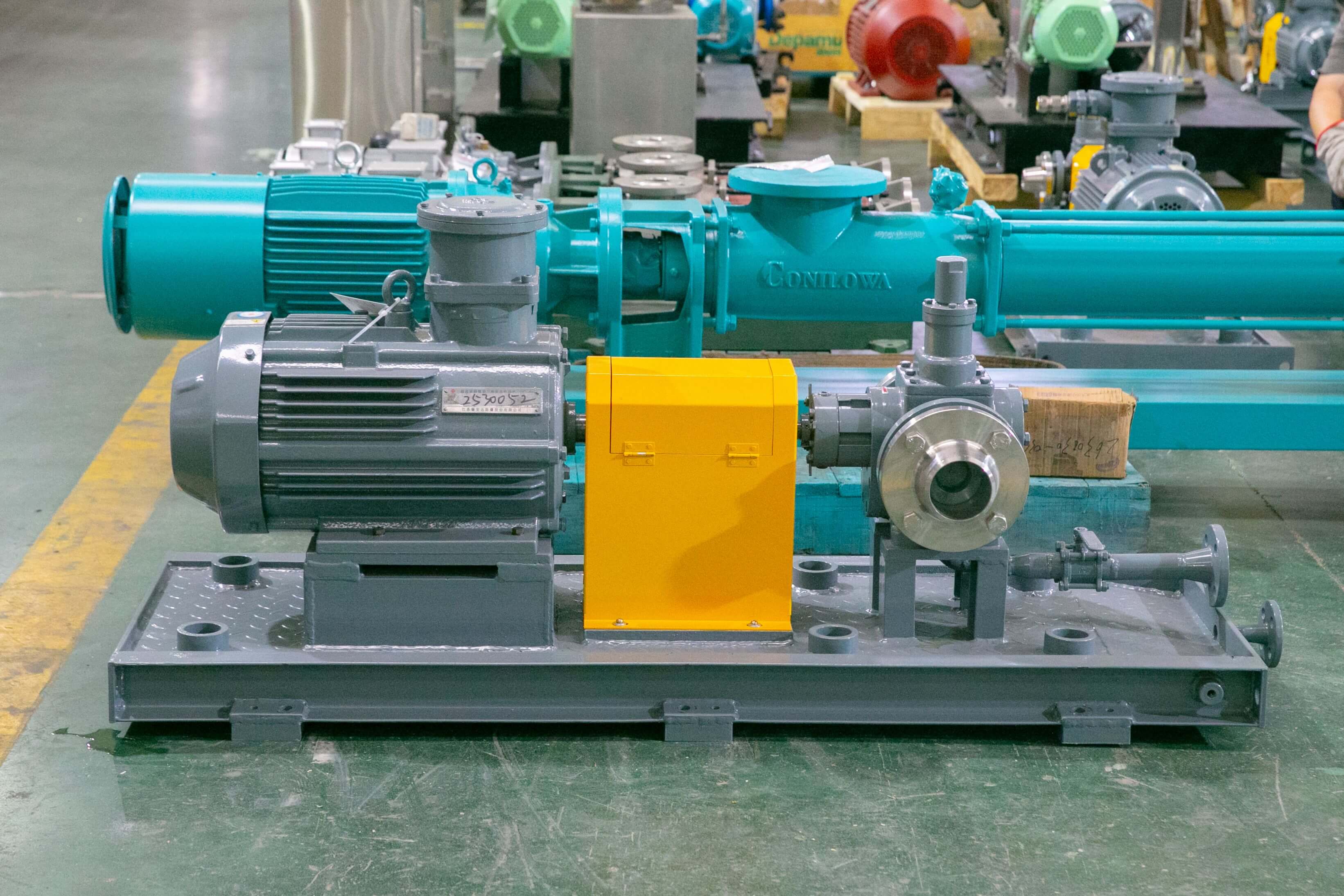
Introduction to the company's technological strength: DePam's technological layout for gear pump manufacturing
Depump (Hangzhou) Pump Technology Co., Ltd., established in 2003, specializes in the research and development, production, and complete set of services for high-end positive displacement pumps and fluid equipment. Its gear pump product line covers multiple series, including standard, high-pressure, and corrosion-resistant types, which are widely applied in fields such as petroleum refining, chemical engineering, and the nuclear industry. The company achieves efficient and precise manufacturing of gear pumps through the following technological arrangements:
STEP 1: Full-process digital manufacturing system
Depam has introduced equipment such as Germany's DMG MORI five-axis simultaneous machining centers and Switzerland's Studer high-precision CNC grinding machines, establishing a fully digital production line covering the entire process from gear blank machining to finished product assembly. Among them, the gear machining precision can reach ISO Grade 5 (tooth profile error ≤ 0.005 mm), with a surface roughness Ra ≤ 0.2 μm, meeting the sealing requirements of the nuclear industry. Real-time production data collection and quality traceability are achieved through the MES system, reducing the manufacturing cycle of a single gear pump by 30% and increasing the yield rate to 99.2%.
STEP 2: Independent research and development and verification of sealing technology
For high-pressure operating conditions, Depam has developed a double mechanical seal structure that employs a silicon carbide/carbon-graphite friction pair, paired with spring-energized sealing rings, capable of withstanding pressures up to 16 MPa with a leakage rate of ≤0.5 mL/h. For corrosive media, the company has developed PTFE-coated lip seals, enhancing the wear resistance of the sealing lips through molecular-level surface treatment technology, thereby extending their service life by two times compared to traditional rubber seals. All sealing structures have been validated through 1,000-hour continuous operation tests to ensure reliability.
STEP 3: Material Database and Heat Treatment Process Optimization
Depam has established a database covering over 200 materials, recommending the optimal material combinations based on medium characteristics (such as pH value, temperature, and particle content). For instance, when transporting sulfur-containing crude oil, 316L stainless steel gears are selected, paired with high-velocity oxy-fuel (HVOF) tungsten carbide coatings, achieving a hardness of HRC 65 and a fivefold increase in wear resistance. In terms of heat treatment processes, the company has determined the optimal parameters for gear quenching temperature (850 ± 5℃) and tempering temperature (200 ± 3℃) through orthogonal experiments, achieving a balance between the gear core toughness (AKV ≥ 30J) and surface hardness (HRC 58-62).
Real Technical Case: Gear Pump Retrofit in the Catalytic Cracking Unit of a Petrochemical Enterprise
The gear pump originally used in the catalytic cracking unit of a petrochemical enterprise frequently shut down due to seal failure, with annual maintenance costs exceeding 2 million yuan. Depam customized a high-pressure double-end mechanical seal gear pump for it, featuring 316L stainless steel gears with HVOF coating, complemented by an intelligent monitoring system (for real-time monitoring of vibration, temperature, and leakage). After the upgrade, the pump's continuous operation time extended from 3 months to 18 months, saving 1.6 million yuan in annual maintenance costs, reducing energy consumption by 12%, and winning the enterprise's "First Prize for Annual Technological Improvement."
FAQ Q&A Technology Selection Guide
Q1: How to select materials for gear pumps based on operating conditions?
A: Material selection requires comprehensive consideration of medium characteristics and operating condition parameters:
- For conveying clean water or low-viscosity oil products: Cast iron gears (HT250) can meet the requirements with lower costs;
- For conveying particulate media: Hard alloy-coated gears (such as HVOF-sprayed tungsten carbide) with a hardness of ≥HRC 65 should be selected;
- For conveying high-temperature media (>200°C): Select heat-resistant steel (such as 310S stainless steel) and use high-temperature grease;
- For conveying corrosive media (such as acids and alkalis): Hastelloy (C-276) or titanium alloy gears are selected, which offer superior corrosion resistance compared to stainless steel.
Q2: How to select the sealing structure of a gear pump?
A: The selection of sealing structures should be based on pressure, temperature, and medium characteristics:
- Low-pressure conditions (<1 MPa): Lip seals (e.g., NBR rubber), featuring simple structure and low cost;
- Medium-pressure conditions (1-10 MPa): Single mechanical seal utilizing a silicon carbide/carbon-graphite friction pair, with a leakage rate ≤ 1 mL/h;
- High-pressure operating conditions (>10MPa): Double mechanical seals with a barrier fluid system, capable of withstanding a maximum pressure of 16MPa;
- Corrosive media: Select PTFE-coated lip seals or perfluoroelastomer (FFKM) O-rings, which offer strong resistance to chemical corrosion.
Q3: How do the flow rate and pressure parameters of a gear pump match each other?
A: Flow and pressure parameters need to be determined based on process requirements:
- Flow calculation: Q = V × n × η (Q represents flow rate, V represents gear displacement, n represents rotational speed, η represents volumetric efficiency);
- Pressure selection: The rated pressure of the pump must be 20% higher than the maximum operating pressure of the system. For example, if the system pressure is 10 MPa, a pump with a rated pressure ≥ 12 MPa should be selected;
- Rotational speed limitation: High-speed gear pumps (n > 1500 rpm) require matching variable frequency motors to avoid cavitation; low-speed pumps (n < 500 rpm) necessitate an increase in gear modulus to enhance strength.
Key Operating Points: Installation and Commissioning of Gear Pump
- Installation foundation: The pump and motor must be connected via a flexible coupling, with a coaxiality error ≤ 0.05 mm;
- Inlet and outlet pipelines: Avoid excessively small bending radii (≥3 times the pipe diameter) to reduce fluid resistance;
- Exhaust operation: Before starting, open the exhaust valve on the pump body to expel all air and prevent cavitation;
- Operational Monitoring: Regularly inspect vibration values (≤4.5 mm/s), temperature (≤80℃), and leakage volume. Immediately shut down for maintenance if abnormalities are detected.
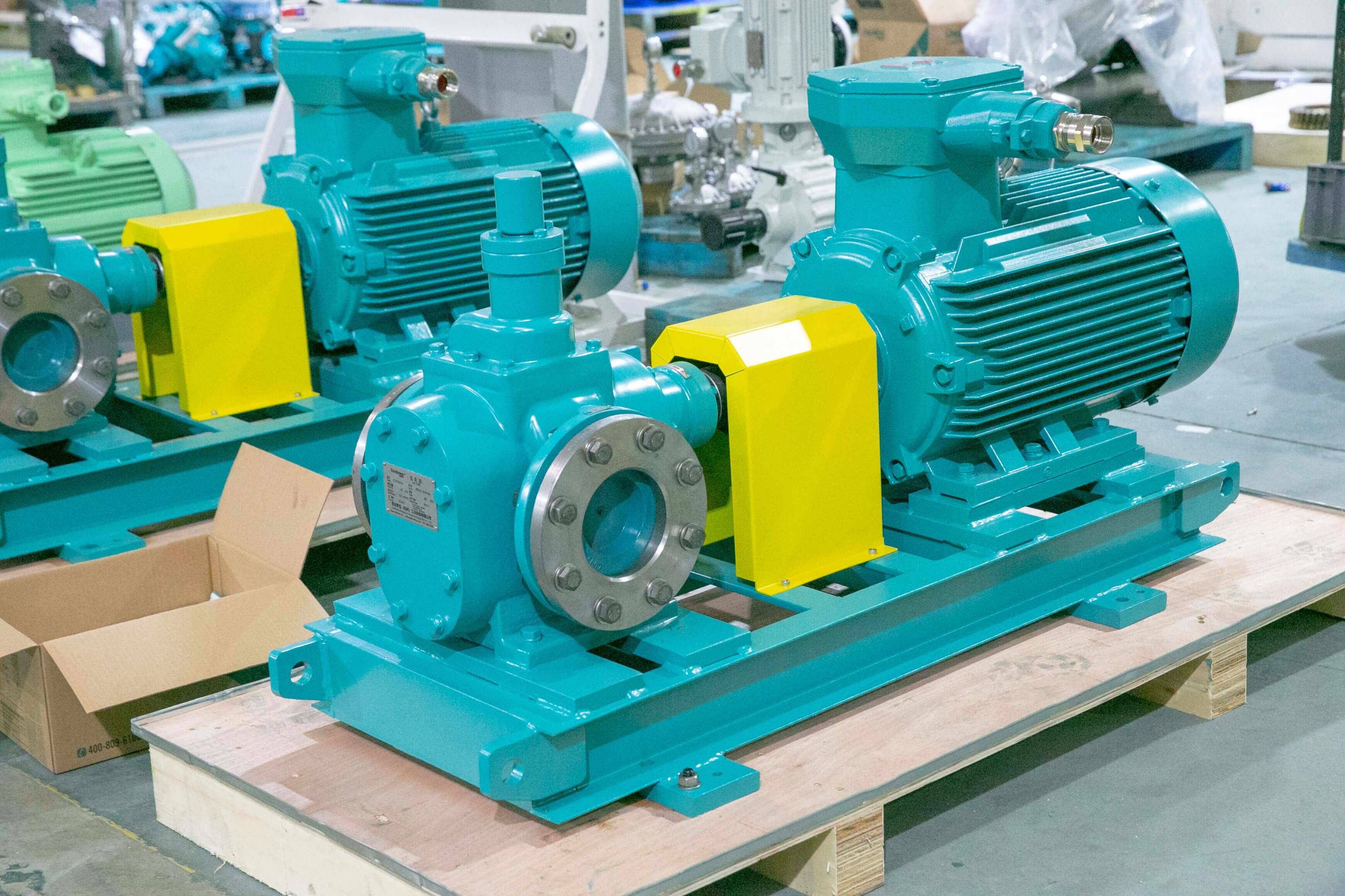
Reference for full text summary
The manufacturing of gear pumps requires a balance of precision, sealing performance, and material adaptability, presenting a relatively high technical threshold. Depamp (Hangzhou) Pump Technology Co., Ltd. has achieved efficient and precise manufacturing of gear pumps through full-process digital manufacturing, independent research and development of sealing technology, and the establishment of a material database. Its products have been widely applied in fields such as petroleum refining, chemical engineering, and the nuclear industry, with cumulative deliveries exceeding 100,000 units and a customer repurchase rate of 85%. For enterprises, when selecting a gear pump manufacturer, it is essential to focus on examining the precision of its processing equipment, the verification capability of sealing technology, and the experience in material selection to ensure long-term and stable operation of the equipment. For more information, please visit the official website:www.depamufluid.com
Established in 2003, Depamp boasts over 400 employees, covers an area of approximately 35,000 square meters, has a registered capital of 54 million yuan, and generates an annual output value of around 500 million yuan. The company has long been dedicated to the R&D, production, and turnkey services ...
No. 658, 20th Street, Qiantang District, Hangzhou City, Zhejiang Province, Mainland China