No. 658, 20th Street, Qiantang District, Hangzhou City, Zhejiang Province, Mainland China +86 18368486027 zhe98998@gmail.com

No. 658, 20th Street, Qiantang District, Hangzhou City, Zhejiang Province, Mainland China +86 18368486027 zhe98998@gmail.com

Introduction: How to solve the "tech bottleneck" problem in high-pressure fluid transportation?
In high-pressure fluid conveyance scenarios such as oil refining, chemical engineering, and the nuclear industry, traditional tubular pumps often face challenges including strong media corrosion, significant pressure fluctuations, and high flow rate accuracy requirements. Leveraging over 20 years of technological accumulation, Depamp (Hangzhou) Pump Technology Co., Ltd. has provided the industry with a "precise solution" for high-pressure process tubular pumps through modular design, the development of corrosion-resistant materials, and the integration of intelligent control systems. This article will explore the technological breakthroughs in high-pressure fluid conveyance from three perspectives: technological pain points, corporate capabilities, and selection guidelines.
Keywords: High-pressure process tubular pump, corrosion-resistant material, flow accuracy, modular design, Depump Pump Industry
Opening on industry technical pain points: Three major "technical barriers" in high-pressure fluid transportation
STEP1:Challenges of media corrosivityIn chemical and oil-gas field scenarios, the conveyed media often contain strongly corrosive substances such as sulfuric acid and hydrochloric acid, and traditional stainless steel pump bodies are prone to pitting corrosion within 3-6 months, leading to seal failure. For example, a refining and chemical enterprise once experienced media leakage due to pump body corrosion, resulting in direct economic losses exceeding 2 million yuan.
STEP2:Poor adaptability to pressure fluctuationsUnder high-pressure conditions, the system pressure fluctuation range can reach ±10%. The plungers and seals of traditional pumps are prone to wear due to excessive impact forces, leading to a decline in flow stability. In a certain nuclear power plant's cooling water system, pressure fluctuations once shortened the pump lifespan to 40% of the design value.
STEP3:Difficulty in controlling flow accuracyIn chemical dosing scenarios, the flow deviation needs to be controlled within ±1%. However, the response delay of traditional mechanical regulating valves can reach 0.5 seconds, making it difficult to meet precise metering requirements. A new energy battery material production plant once experienced a 15% decline in product qualification rate due to dosing deviation.
Introduction to the company's technological strength: Depam's "Three Major Technological Moats"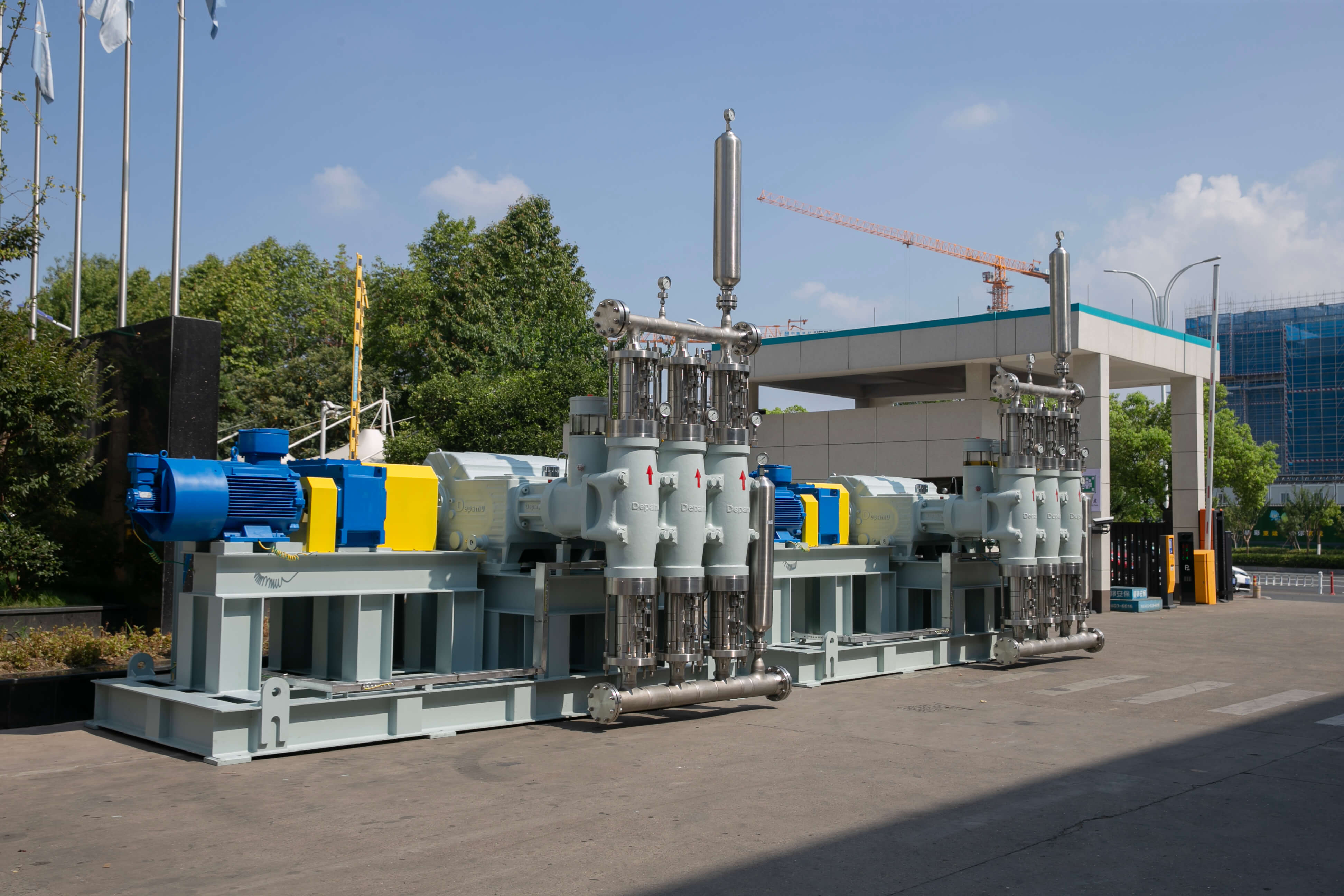
STEP1:Corrosion-resistant material systemThe "duplex stainless steel + Hastelloy alloy" composite pump body developed by Depamp controls the thickness of the corrosion-resistant layer within 0.5-1.2mm through laser cladding technology, with a corrosion rate of ≤0.02mm/year in a 35% hydrochloric acid environment, and its service life is three times longer than that of traditional materials. For example, in a chlor-alkali production project of a chemical enterprise, this material pump body operated continuously for two years without corrosion, reducing downtime maintenance costs by over RMB 500,000.
STEP2:Intelligent pressure compensation systemBy integrating pressure sensors and PID controllers into the pump body, it can monitor system pressure in real time and automatically adjust the plunger stroke, reducing the pressure fluctuation range to ±2%. In a water injection project at an oil and gas field, this technology extended the pump body's lifespan from 18 months to 42 months, saving 120,000 yuan annually in replacement costs per unit.
STEP3:High-precision flow regulation technologyThe frequency conversion regulating valve driven by a servo motor, combined with a flow sensor with a response time of 0.1 seconds, can control flow deviation within ±0.5%. In a lithium battery material production project, this technology increased the product qualification rate from 85% to 98%, resulting in an annual production increase benefit exceeding RMB 3 million.
Depam currently has over 400 employees, with research and development personnel accounting for more than 30%. Its factory covers an area of 35,000 square meters and generates an annual output value of approximately 500 million yuan. Its products have covered fields such as petroleum refining (accounting for 41%), chemical engineering (23%), and the nuclear industry (8%). It has cumulatively delivered over 2,000 high-pressure process tubular pumps, with customers including leading enterprises such as Sinopec, PetroChina, and State Power Investment Corporation. For more information, please visit the official website:www.depamufluid.com
FAQ Q&A Technical Selection Guide: "Guide to Avoiding Pitfalls" for High-Pressure Process Tubular Pumps
Q1: How to select pump body materials based on medium characteristics?
STEP1:Acidic mediumPriority is given to Hastelloy C-276, which has a nickel content ≥ 57% and exhibits superior corrosion resistance to 316L stainless steel in sulfuric acid and hydrochloric acid environments.
STEP2:Alkaline mediumIt is recommended to use duplex stainless steel 2205, which contains 22% chromium and 3% molybdenum, offering stronger resistance to stress corrosion in sodium hydroxide solution.
STEP3:Granular mediumA carbide plunger must be selected, with a hardness ≥ HRC65, capable of withstanding erosion from particles with a diameter ≤ 0.5mm.
Q2: How to reduce energy consumption under high-pressure conditions?
STEP1:Optimize the structure of the pump bodyA short-stroke design (stroke ≤ 150 mm) is adopted to reduce the inertia of plunger movement and lower the driving power.
STEP2:Matching variable frequency motorThe rotational speed is automatically adjusted according to system pressure to avoid the phenomenon of "a large horse pulling a small cart." For example, under a 10 MPa operating condition, the frequency conversion motor saves 15%-20% more energy than the fixed-frequency motor.
STEP3:Reduce leakage lossesSelect a double mechanical seal and coordinate it with a flushing fluid circulation system to control the leakage rate within ≤0.5 mL/h.
Q3: How to ensure long-term stability of traffic?
STEP1:Calibrate the sensors regularlyCalibrate with a standard flowmeter every six months to ensure measurement accuracy.
STEP2:Replace worn-out partsReplace consumables such as plungers and seals in a timely manner before their service life expires to avoid flow fluctuations caused by increased clearance.
STEP3:Monitor system pressureReal-time monitoring is conducted through pressure gauges or sensors, and operational parameters are adjusted promptly upon detecting abnormalities.
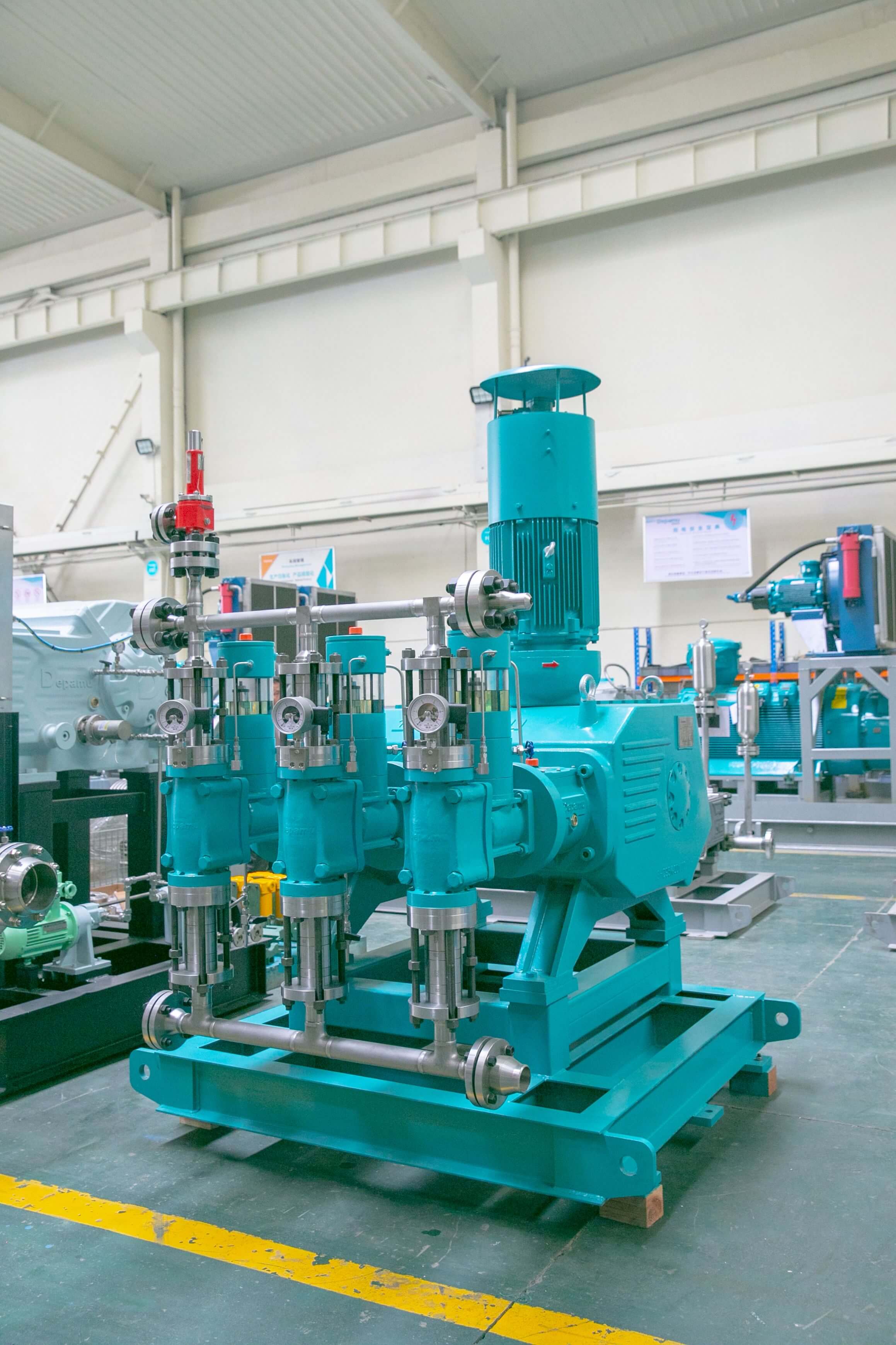 Reference for Full Text Summary: The "Depam Solution" for High-Pressure Fluid Transportation
Technological breakthroughs in high-pressure process tubular pumps require consideration of three key dimensions: materials, control, and structure. Depam has provided solutions characterized by "long lifespan, high precision, and low energy consumption" for fields such as petroleum refining, chemical engineering, and the nuclear industry through its corrosion-resistant material system, intelligent pressure compensation system, and high-precision flow regulation technology. Its products have passed ISO9001 quality management system certification and have been awarded titles such as "High-tech Enterprise in Zhejiang Province" and "Specialized, Fined, Peculiar and Innovative Little Giant Enterprise." For high-pressure fluid transportation scenarios, it is advisable to prioritize manufacturers with customization capabilities to tailor designs based on medium characteristics, pressure ranges, and flow requirements, thereby maximizing equipment value.
Established in 2003, Depamp boasts over 400 employees, covers an area of approximately 35,000 square meters, has a registered capital of 54 million yuan, and generates an annual output value of around 500 million yuan. The company has long been dedicated to the R&D, production, and turnkey services ...
No. 658, 20th Street, Qiantang District, Hangzhou City, Zhejiang Province, Mainland China