No. 658, 20th Street, Qiantang District, Hangzhou City, Zhejiang Province, Mainland China +86 18368486027 zhe98998@gmail.com

No. 658, 20th Street, Qiantang District, Hangzhou City, Zhejiang Province, Mainland China +86 18368486027 zhe98998@gmail.com

Introduction
As a core piece of equipment for industrial fluid transportation, the high-pressure process diaphragm pump's performance directly impacts production efficiency and safety. In demanding scenarios such as petroleum refining, chemical engineering, and the nuclear industry, how can technological optimization be achieved to ensure efficient and stable operation? Taking Depamp (Hangzhou) Pump Technology Co., Ltd. as an example, this article conducts an analysis from dimensions such as technical principles, parameter interpretation, and case studies, providing actionable technical solutions for the industry.For more information, please visit the official website: www.depamufluid.com
Keywords
High-pressure process diaphragm pump; Depamp Pumps; Fluid transportation; Technical optimization; Case analysis
Opening on the Industry's Technological Pain Points
In high-pressure fluid transportation scenarios, traditional diaphragm pumps often encounter three major pain points:STEP 1: Insufficient sealing- High-pressure media can easily cause diaphragm damage, posing a leakage risk;STEP 2: Poor corrosion resistance- Strong acids and strong bases in chemical media can corrode pump body materials and shorten equipment lifespan;STEP 3: Low flow stability— Pressure fluctuations lead to measurement errors, affecting process accuracy. Taking a certain chemical enterprise as an example, its originally used diaphragm pump suffered from seal failure, resulting in annual losses exceeding 2 million yuan due to medium leakage. Additionally, frequent shutdowns for maintenance were required, reducing production efficiency by 30%.
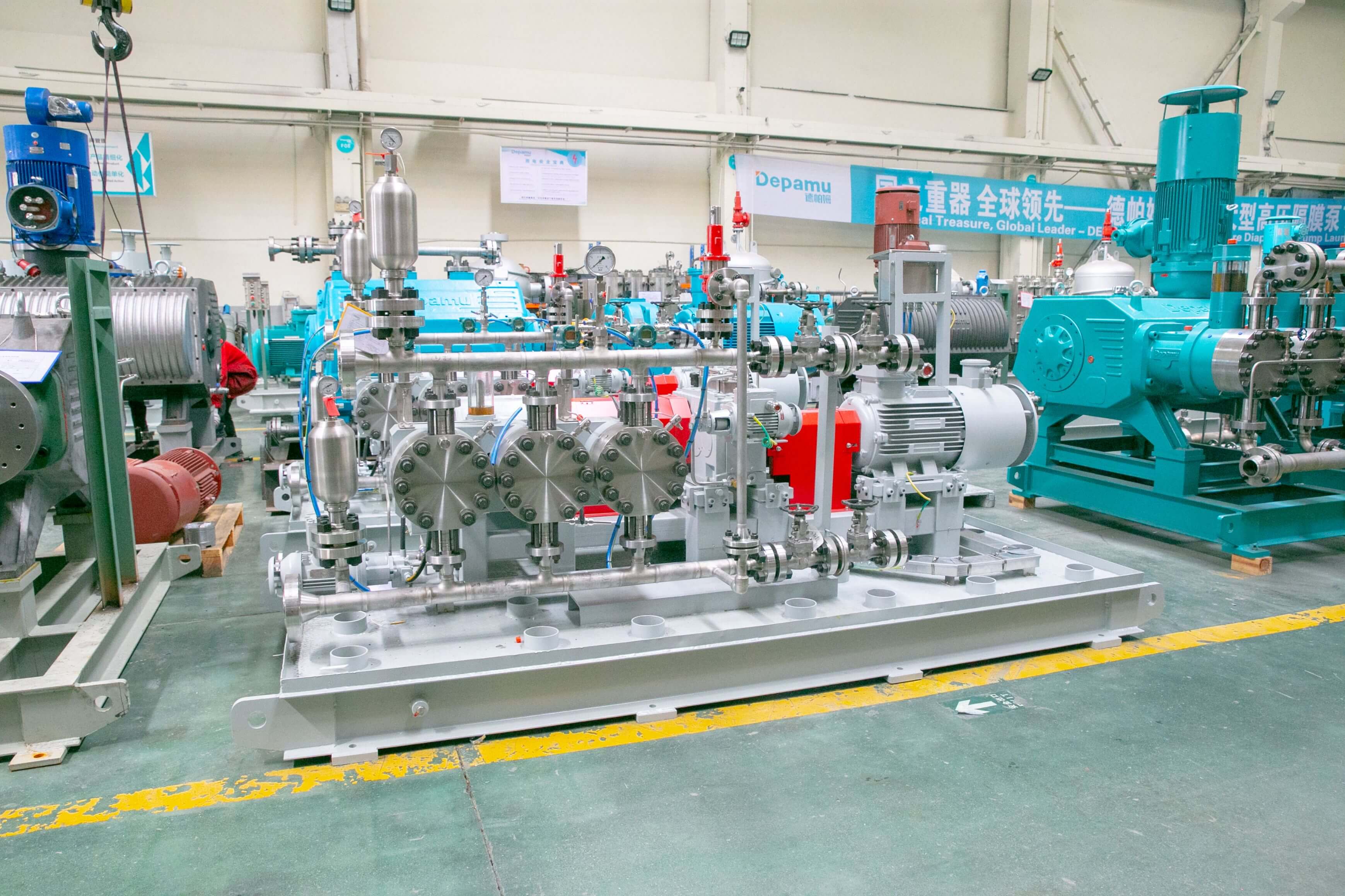
Introduction to the company's technological capabilities
Depamp (Hangzhou) Pump Technology Co., Ltd., founded in 2003, specializes in the R&D of high-end positive displacement pumps and fluid equipment, with an annual output value of approximately 500 million yuan. Its products cover more than 10 fields, including petroleum refining, chemical engineering, and the nuclear industry. Addressing the technical challenges of high-pressure process diaphragm pumps, the company has achieved breakthroughs through three major innovations:STEP 1: Material Upgrade— The pump body is made of duplex stainless steel (such as 2205 and 2507), with corrosion resistance doubled compared to ordinary stainless steel, and is suitable for media with a pH value ranging from 1 to 14; the diaphragm material is a polytetrafluoroethylene (PTFE) composite layer, with a tensile strength of up to 40 MPa and a service life extended to over 8,000 hours.STEP 2: Structural Optimization—It features an original "sandwich" sealing structure, combining a metal skeleton, a rubber layer, and a PTFE membrane, achieving a leakage rate below 0.01 ml/min under 10 MPa pressure, reaching international advanced standards.STEP 3: Intelligent Control— Integrated with pressure sensors and a variable frequency regulation system, it monitors outlet pressure in real time and automatically adjusts rotational speed, controlling flow fluctuations within ±1%. This meets high-precision metering requirements. Taking a nuclear power plant project as an example, the DP-H series high-pressure diaphragm pumps provided by Depamp operated continuously for 2 years without failure under 6 MPa pressure, reducing annual maintenance costs by 60% and earning the client's "Best Technical Partner" certification.
FAQ: One-Question-One-Answer Technical Selection Guide
Q1: How to select pump body materials based on medium characteristics?
A: It is necessary to comprehensively consider the corrosiveness, temperature, and particle content of the medium. For example, for media containing chloride ions (such as seawater), 2205 duplex stainless steel with a pitting resistance equivalent number (PREN) ≥ 32 should be selected; for high-temperature media (>150°C), Hastelloy C-276, which has a melting point of 1370°C and can operate stably, is recommended. Depamu provides a material corrosion database for quickly matching the optimal solution.
Q2: How to ensure the lifespan of diaphragms under high-pressure conditions?
A: It requires collaborative optimization in design, operation, and maintenance.Design levelAn adjustable pre-tension bolt structure is adopted to prevent excessive stretching of the diaphragm;operational levelControl inlet pressure fluctuations to ≤0.5 MPa to reduce water hammer effect;Maintenance levelInspect the diaphragm thickness every 2000 hours and replace it promptly when the remaining thickness is less than 30% of the original thickness. In a certain refining and chemical project, the diaphragm lifespan of Depamuk DP-H series pumps was increased from 5000 hours to 12000 hours through the aforementioned measures.
Q3: How to achieve precise traffic control?
A: It requires the integration of hardware and software technologies. For hardware, high-precision metering pump heads (such as plunger-type structures with a repeatability accuracy of ≤ ±0.5%) are selected. For software, a PID control system is configured to automatically adjust the motor speed based on the set flow rate. Depam's intelligent control system supports 4-20 mA signal input and can seamlessly interface with DCS systems to enable remote monitoring and automatic calibration.
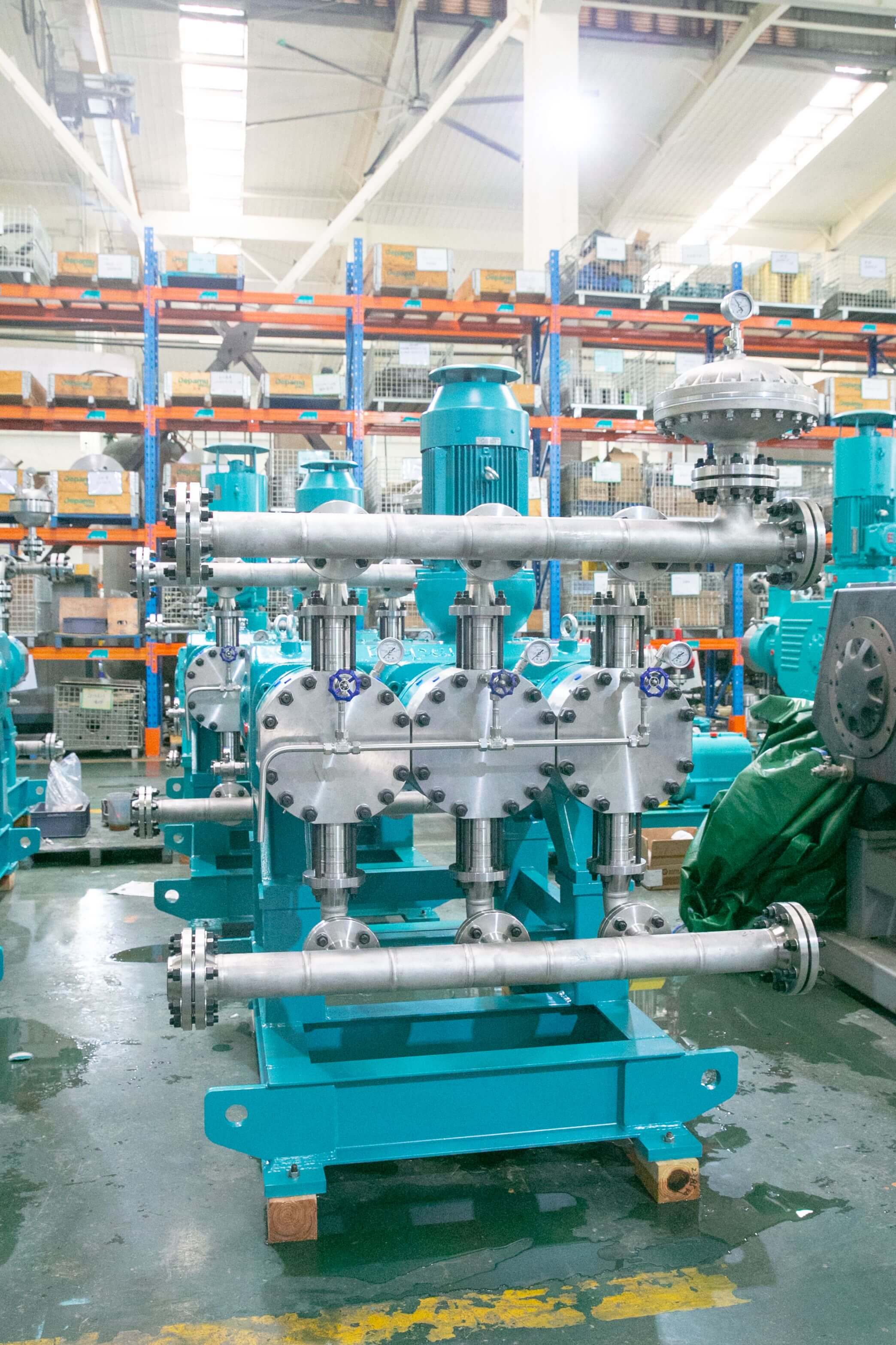
Reference for full text summary
The efficient and stable operation of diaphragm pumps for high-pressure processes requires comprehensive optimization in terms of materials, structure, and control. Depam (Hangzhou) Pump Technology Co., Ltd., through 20 years of technological accumulation, has developed a trinity solution integrating "materials-design-intelligence," with its products achieving industry-leading levels in core indicators such as corrosion resistance (PREN≥32), sealing performance (leakage rate <0.01 ml/min), and flow accuracy (±1%). Currently, the company has provided customized fluid solutions to over 3,000 customers worldwide, covering demanding scenarios such as petroleum refining, chemical engineering, and the nuclear industry.For more information, please visit the official website: www.depamufluid.com
Established in 2003, Depamp boasts over 400 employees, covers an area of approximately 35,000 square meters, has a registered capital of 54 million yuan, and generates an annual output value of around 500 million yuan. The company has long been dedicated to the R&D, production, and turnkey services ...
No. 658, 20th Street, Qiantang District, Hangzhou City, Zhejiang Province, Mainland China