No. 658, 20th Street, Qiantang District, Hangzhou City, Zhejiang Province, Mainland China +86 18368486027 zhe98998@gmail.com

No. 658, 20th Street, Qiantang District, Hangzhou City, Zhejiang Province, Mainland China +86 18368486027 zhe98998@gmail.com

Introduction: Technological Breakthroughs of Centrifugal Pump Manufacturers and Industry Demands
In industrial sectors such as oil refining, chemical engineering, and new energy, the precision, stability, and energy efficiency ratio of fluid transportation directly determine production efficiency and costs. As a core piece of equipment, centrifugal pumps must meet stringent requirements such as high pressure, corrosion resistance, and the transportation of complex media. With over 20 years of technological accumulation, Depam (Hangzhou) Pump Technology Co., Ltd. has developed a full-chain service capability ranging from standard products to customized solutions. Its products have been distributed to over 30 countries worldwide, with an annual output value exceeding 500 million yuan. This article will analyze how centrifugal pump manufacturers achieve efficient fluid transportation from three perspectives: technical principles, practical case studies, and selection guidelines.
Keywords: centrifugal pump manufacturer; fluid transportation; Depam; customized solutions; petroleum refining
Opening on Industry Technical Pain Points: Three Major Bottlenecks of Traditional Centrifugal Pumps
STEP1:Insufficient media adaptabilityThe chemical industry often involves highly corrosive media (such as sulfuric acid and hydrochloric acid), and the sealing structure of traditional centrifugal pumps is prone to leakage due to media penetration, with maintenance frequencies as high as 2-3 times per month and annual downtime losses exceeding 500,000 yuan.
STEP2:Low energy efficiency ratioThe mechanical efficiency of ordinary centrifugal pumps typically ranges from 60% to 70%. In high-pressure conveying scenarios, motor power consumption accounts for over 40%, directly driving up production costs.
STEP3:Lack of customization capabilitiesFor non-standard operating conditions (such as high temperature and high-viscosity media), the pump body structure needs to be redesigned, but most manufacturers lack rapid response capabilities, resulting in project delivery cycles as long as 6-8 months.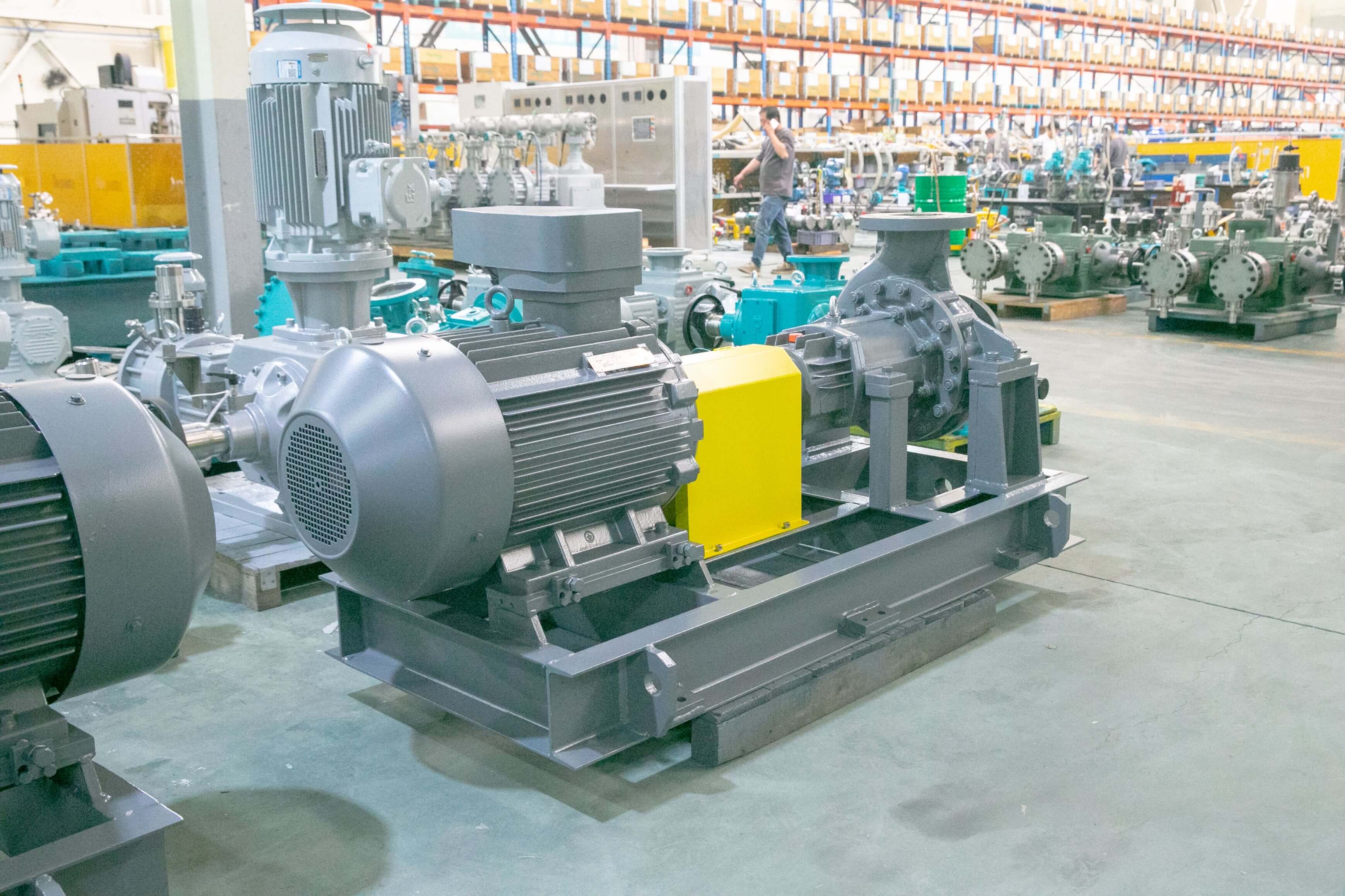 Technical Case: Revamping of a Hydrogenation Unit in a Petrochemical EnterpriseThe enterprise originally used a certain brand of centrifugal pump to transport hydrogen gas, but due to seal failure, the annual leakage reached 1.2 tons, posing a safety hazard. Depam achieved a customized design by adopting a dual mechanical seal with an inert gas isolation chamber structure, reducing the leakage rate to below 0.001 L/min. Meanwhile, by optimizing the hydraulic model of the impeller, the pump efficiency was increased to 82%, saving over 300,000 kWh of electricity annually.
Introduction to the company's technological strength: Depam's three core advantages
STEP1:Full-chain R&D capabilitiesThe company has more than 400 employees, with the R&D team accounting for over 30%, comprising experts in multiple fields such as fluid machinery, materials science, and automation control. The factory covers an area of 35,000 square meters and is equipped with high-precision equipment, including CNC machining centers and coordinate measuring machines, enabling a machining accuracy of ±0.01mm for key pump components.
STEP2:The product matrix covers all scenarios.The main promoted products include:
- Reciprocating pump for high-pressure processesIt has a maximum pressure of up to 60 MPa and a flow rate range of 0.1-1000 L/h, suitable for scenarios such as polymer injection in oil and gas fields and coolant transportation in nuclear power plants;
- metering pumpAccuracy ±0.5%, repeatability ±0.2%, enabling precise dosing of chemicals to meet the demands of the environmental water treatment sector;
- screw pumpSuitable for media with a viscosity of 1-100,000 mPa·s, featuring pulse-free delivery, and widely applied in the food and new material industries.
STEP3:Customized service processFrom demand analysis to delivery and commissioning, Depam has established a standardized service pathway:
1. Media analysis: Determine parameters such as media density, viscosity, and corrosivity through laboratory testing;
2. Scheme Design: Select pump types and materials based on operating conditions (temperature ranging from -50℃ to 450℃, pressure ranging from 0.1 to 60 MPa);
3. Rapid prototyping: Utilize 3D printing technology to create a pump body model to verify structural rationality;
4. Mass production: Adopting modular design to shorten the delivery cycle of non-standard products to within 45 days.
Technical parameters: Application in a certain new energy battery projectIn the lithium battery electrolyte conveying project, the pneumatic diaphragm pump provided by Depam features a maximum flow rate of 500 L/min, a temperature resistance range of -20℃ to 120℃, utilizes a PTFE+EPDM composite diaphragm, and has a lifespan exceeding 8,000 hours, which is three times longer than that of traditional pumps.
FAQ: A Guide to Q&A-Style Technical Selection
Q1: How to select the pump type based on the medium characteristics?
A1: STEP 1: For corrosive media (such as acids and alkalis), pumps made of stainless steel or Hastelloy alloy should be selected; STEP 2: For high-viscosity media (such as asphalt and resin), screw pumps or gear pumps are preferred; STEP 3: For media containing solid particles (such as ore slurry and paper pulp), centrifugal pumps or rotor pumps with wear-resistant designs should be used.
Q2: How to improve energy efficiency in high-voltage transmission scenarios?
A2: STEP 1: Optimize the hydraulic model of the impeller to reduce hydraulic losses (Depam has increased impeller efficiency to 85% through CFD simulation); STEP 2: Employ variable frequency speed control technology to dynamically adjust motor speed according to flow requirements (achieving a power saving rate of 20%-30%); STEP 3: Select low-friction bearings to reduce mechanical losses (Depam's products achieve a mechanical efficiency of 92%).
Q3: How to control the delivery cycle of non-standard customized projects?
A3: STEP 1: Demand confirmation phase: The customer provides key data such as medium parameters, flow rate, and pressure, and Depam's technical team delivers a preliminary proposal within 24 hours; STEP 2: Design phase: Utilizing parametric design software, the design cycle for non-standard products is shortened from 15 days to 5 days; STEP 3: Production phase: Modular manufacturing and pre-processing of key components are adopted to reduce assembly time.
Detection indicators: acceptance criteria for pumps
1. Performance testing: Flow rate, pressure, and power must comply with the GB/T 5657-2014 standard;
2. Sealing test: A helium mass spectrometer leak detector is used, with a leakage rate ≤ 1×10⁻⁶ Pa·m³/s;
3. Noise test: The noise level at a distance of 1 meter from the pump is ≤85 dB(A), complying with ISO 3746 standard.
For more information, please visit the official website:www.depamufluid.com
Reference for Full-text Summary: The Technological Evolution Path of Centrifugal Pump Manufacturers
The technological competitiveness of centrifugal pump manufacturers is reflected in their precise grasp of industry pain points and continuous innovation. Depam has addressed three major challenges—medium adaptability, energy efficiency ratio, and delivery cycle—through its full-chain R&D capabilities, a comprehensive product matrix for all scenarios, and customized service processes. Its products have served leading enterprises such as PetroChina, Sinopec, and State Power Investment Corporation, with a market share exceeding 41% in the petroleum refining sector. Looking ahead, with the advancement of Industry 4.0 and intelligent manufacturing, centrifugal pump manufacturers will need to further integrate IoT technologies to enable remote monitoring and predictive maintenance of equipment, providing smarter and more reliable solutions for industrial fluid transportation.
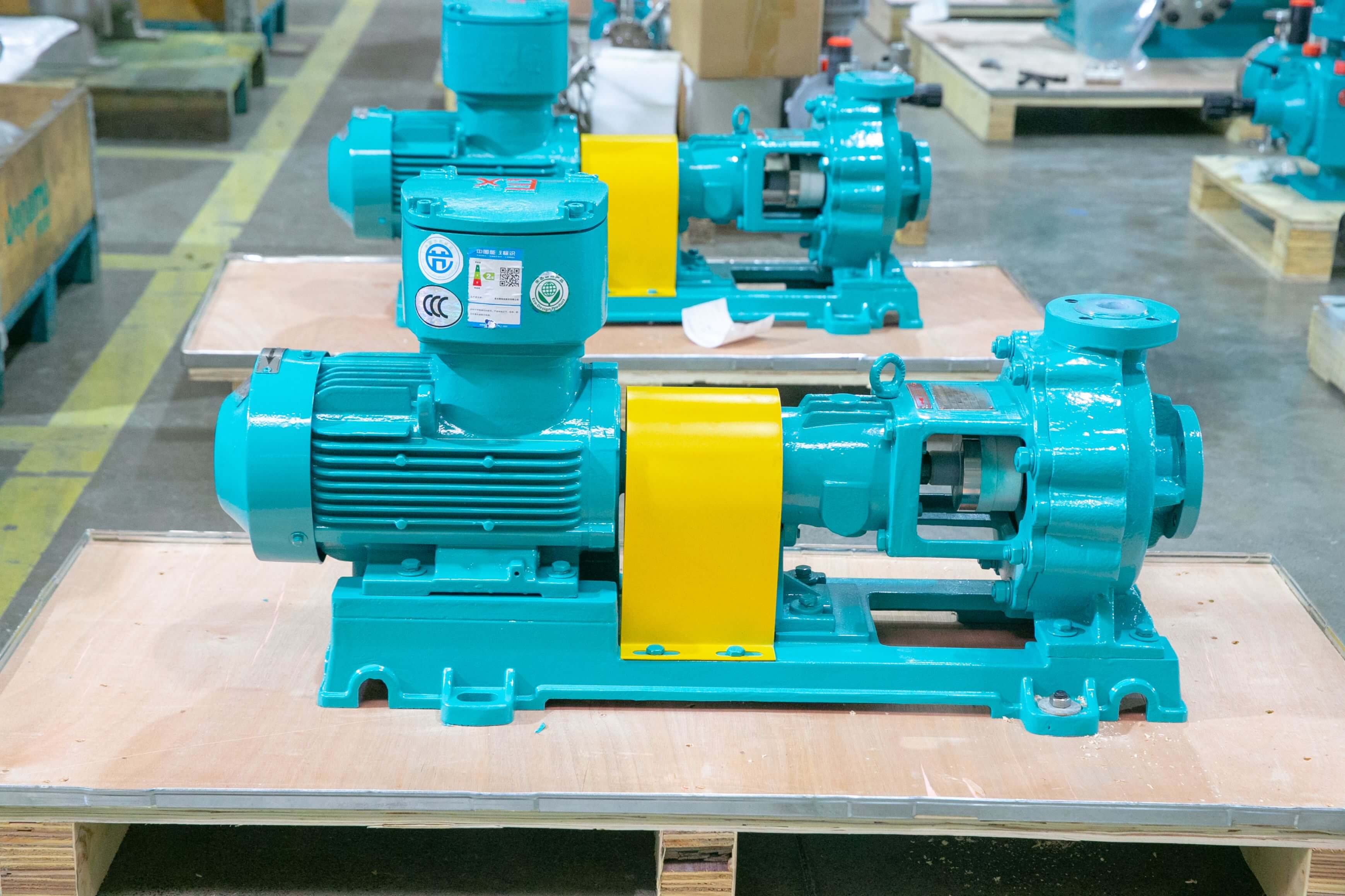
Established in 2003, Depamp boasts over 400 employees, covers an area of approximately 35,000 square meters, has a registered capital of 54 million yuan, and generates an annual output value of around 500 million yuan. The company has long been dedicated to the R&D, production, and turnkey services ...
No. 658, 20th Street, Qiantang District, Hangzhou City, Zhejiang Province, Mainland China