No. 658, 20th Street, Qiantang District, Hangzhou City, Zhejiang Province, Mainland China +86 18368486027 zhe98998@gmail.com

No. 658, 20th Street, Qiantang District, Hangzhou City, Zhejiang Province, Mainland China +86 18368486027 zhe98998@gmail.com

Introduction: Why has the technological breakthrough of hydraulic diaphragm metering pumps become the key to industrial fluid control?
In high-precision fluid control scenarios such as petroleum refining and the nuclear industry, hydraulic diaphragm metering pumps have become core equipment for chemical dosing and process pressurization due to their characteristics of zero leakage, corrosion resistance, and precise metering. However, traditional metering pumps generally face technical bottlenecks such as short diaphragm lifespan, significant flow pulsation, and inadequate pressure resistance. Depam (Hangzhou) Pump Technology Co., Ltd., leveraging 20 years of technological accumulation, has developed the third-generation hydraulic diaphragm metering pump, which employs a dual-diaphragm compensation structure and an intelligent pressure feedback system, enhancing metering accuracy to ±1% and extending the lifespan of a single unit to over 8,000 hours. This article will analyze the core competitiveness of high-end hydraulic diaphragm metering pumps from three dimensions: technical principles, parameter optimization, and industry applications.
Keywords: hydraulic diaphragm metering pump; precise metering; corrosion resistance; Depam Pumps; fluid control
Introduction to Industry Technical Pain Points: Three Major Technical Bottlenecks of Traditional Metering Pumps
STEP 1: High maintenance costs due to short diaphragm lifespan
The traditional single-diaphragm structure is prone to fatigue cracks under high-pressure conditions, particularly when transporting strongly corrosive media such as concentrated sulfuric acid and sodium hypochlorite, with a diaphragm replacement cycle of only 3-6 months and a single maintenance cost exceeding RMB 20,000. Depam has extended the diaphragm lifespan to over 24 months through a dual-diaphragm compensation design, where the outer diaphragm withstands hydraulic shocks and the inner diaphragm isolates the medium, combined with a 316L stainless steel diaphragm chamber.
STEP 2: Flow pulsation affects process stability
The flow pulsation rate of plunger metering pumps can be as high as 15%-20%, resulting in uneven chemical dosing and affecting the control accuracy of the pH value in the reaction kettle. Depam employs a combined technology of hydraulic buffer chambers and pulse dampers to reduce the flow pulsation rate to within 3%, meeting the stringent stability requirements of the cooling water dosing system in nuclear power plants.
STEP 3: Insufficient voltage resistance limits application scenarios
The maximum operating pressure of conventional metering pumps is only 25 MPa, making it difficult to meet the demands of high-pressure scenarios such as deep-sea oil and gas extraction and supercritical CO2 transportation. Depamu has strengthened the design of the pump head structure and developed a high-pressure series capable of withstanding 60 MPa, which has been successfully applied in the CNOOC "Deep Sea No. 1" gas field development project.
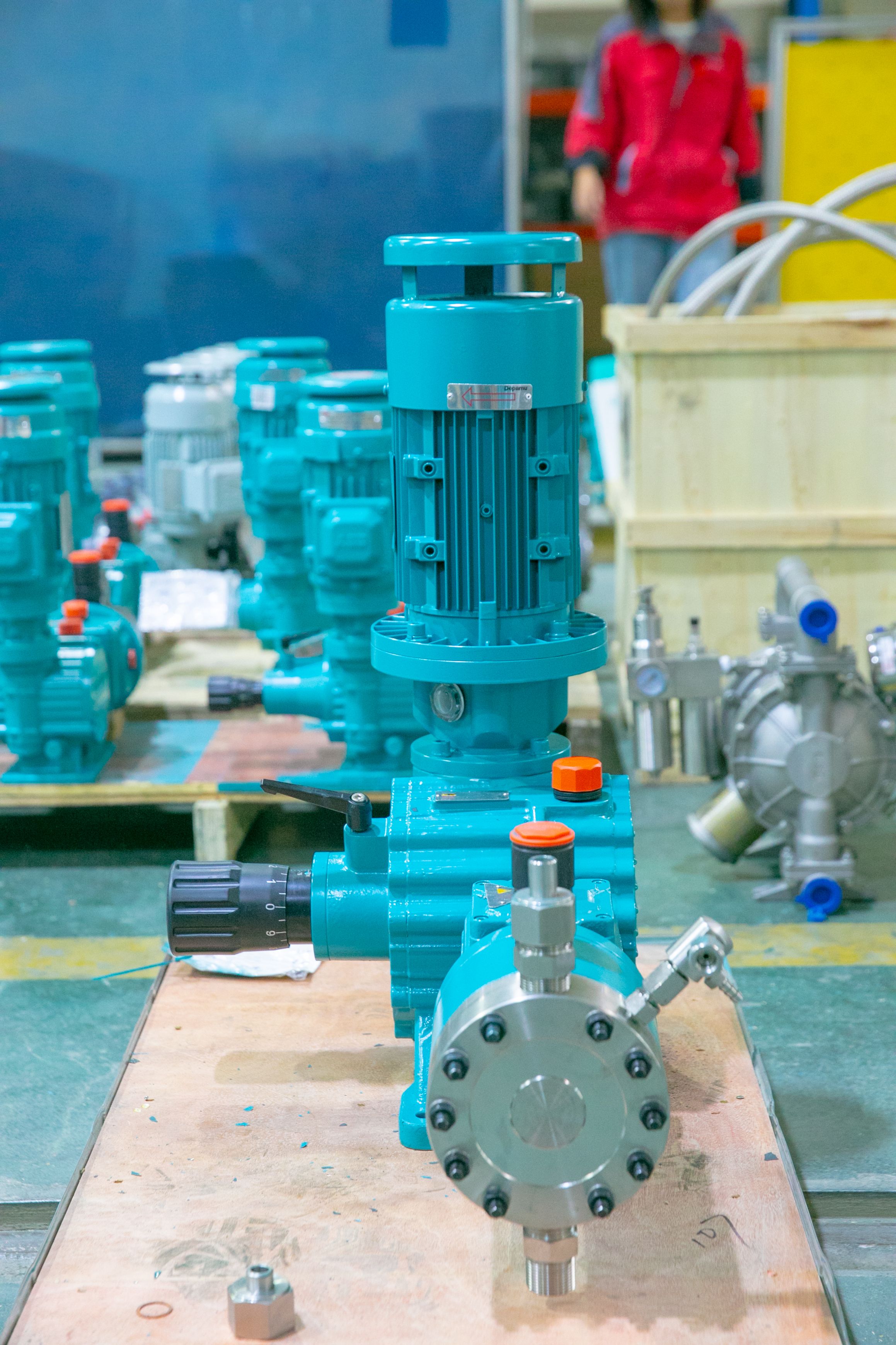
Introduction to the company's technological strength: Depam's three core advantages
STEP 1: Full-process R&D and manufacturing capabilities
Depam boasts a modern factory covering an area of 35,000 square meters, equipped with precision equipment such as CNC machining centers and coordinate measuring machines, enabling full-process control from pump head casting and diaphragm forming to final assembly and testing. Its hydraulic diaphragm metering pumps have passed API675 standard certification, with key components undergoing life tests exceeding 10,000 hours.
STEP 2: Industry-Customized Solutions
Based on the characteristics of different media, Depam has developed four major technical routes:
- Strongly corrosive media: Utilize PVDF/PTFE diaphragms + Hastelloy pump heads, resistant to acidity and alkalinity with a pH range of 0-14
- High-viscosity media: Equipped with a screw propeller, capable of conveying polymer solutions with a viscosity of up to 50,000 mPa·s
- Media prone to crystallization: Designed with a heating jacket structure to prevent crystallization and blockage of the medium within the pump chamber.
- Media containing solid particles: Utilizes a carbide valve seat to withstand solid particles with a diameter ≤ 2mm
STEP 3: Verification through Typical Application Cases
In the catalytic cracking unit of a petrochemical enterprise in Zhejiang, the HYDRO series hydraulic diaphragm metering pumps provided by Depam successfully replaced imported brands, achieving:
- Measurement accuracy: Improved from ±3% to ±1.2%
- Reduced energy consumption: Motor power decreased from 7.5 kW to 5.5 kW
- Maintenance cycle: Extended from quarterly inspection to annual inspection
For more information, please visit the official website:www.depamufluid.com
FAQ: A Q&A Guide to Technology Selection
Q1: How to choose the appropriate pump head material?
STEP 1: Clarify the medium composition: Choose Hastelloy C-276 for chloride ions, PVDF for fluoride ions, and PTFE for strong acid environments.
STEP 2: Verify temperature resistance: PTFE is suitable for temperatures ranging from -20℃ to 180℃, while PVDF is suitable for temperatures ranging from -40℃ to 150℃.
STEP 3: Consider cost factors: The cost of Hastelloy alloy is 3-5 times that of 316L, and PVDF is 60% of PTFE.
Q2: How to ensure the sealing performance under high-pressure conditions?
STEP 1: Adopt a combined structure of double O-ring static sealing + hydraulically driven dynamic sealing
STEP 2: Set up the pressure relief valve to automatically release pressure when it exceeds 10% of the rated value.
STEP 3: Regularly inspect the diaphragm thickness and use an ultrasonic thickness gauge to monitor the remaining service life.
Q3: What are the methods for flow regulation?
STEP 1: Manual adjustment: Achieve 10%-100% stepless speed regulation through the stroke length adjustment knob.
STEP 2: Frequency conversion regulation: Equipped with a frequency converter to dynamically adjust motor speed according to process requirements
STEP3: Intelligent Control: Integrates 4-20mA signal input for remote monitoring through linkage with the DCS system
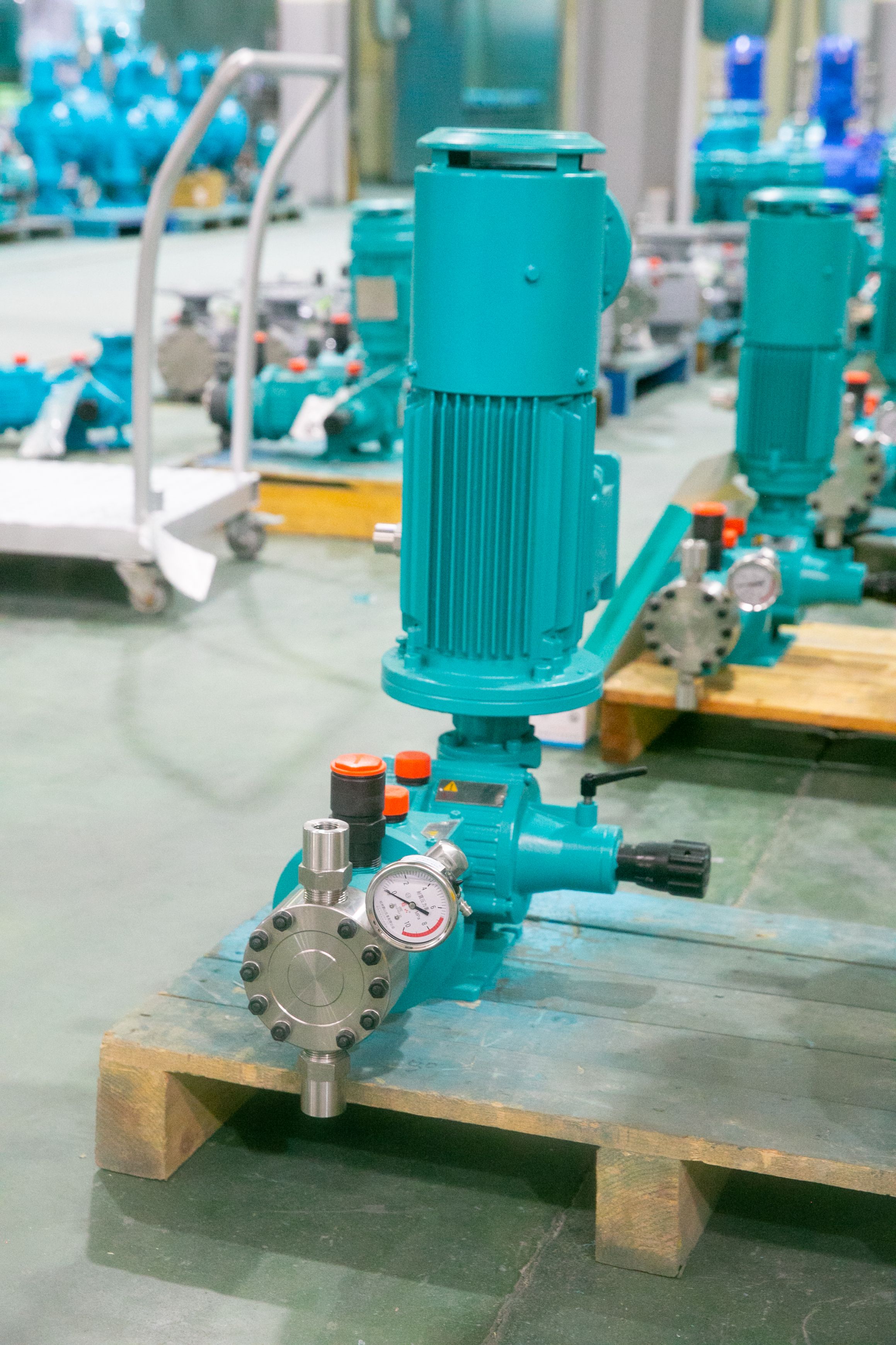
Reference for Full-text Summary
The technological upgrades of hydraulic diaphragm metering pumps are moving towards high precision, long service life, and intelligence. Depam has addressed the pain points of traditional metering pumps in terms of corrosion resistance, flow stability, and pressure resistance through three major technological breakthroughs: a dual-diaphragm compensation structure, an intelligent pressure feedback system, and industry-customized design. Its products have been successfully applied in over 300 key enterprises, including Sinopec, China National Nuclear Corporation, and State Grid, with a cumulative delivery of more than 20,000 units. For users in fields such as petroleum refining, nuclear industry, and environmental water treatment, choosing a brand with full-process R&D capabilities that provides customized solutions is crucial for ensuring process stability and reducing total lifecycle costs. For more product details and technical parameters, visit Depam's official website to obtain a professional selection manual.
Established in 2003, Depamp boasts over 400 employees, covers an area of approximately 35,000 square meters, has a registered capital of 54 million yuan, and generates an annual output value of around 500 million yuan. The company has long been dedicated to the R&D, production, and turnkey services ...
No. 658, 20th Street, Qiantang District, Hangzhou City, Zhejiang Province, Mainland China