No. 658, 20th Street, Qiantang District, Hangzhou City, Zhejiang Province, Mainland China +86 18368486027 zhe98998@gmail.com

No. 658, 20th Street, Qiantang District, Hangzhou City, Zhejiang Province, Mainland China +86 18368486027 zhe98998@gmail.com

Introduction: Technological Breakthroughs and Application Value of Rubber Rotor Pumps
In the field of industrial fluid transportation, rubber rotor pumps have become core equipment in industries such as petroleum refining, chemical engineering, and environmental water treatment, owing to their strong self-priming capability, excellent corrosion resistance, and ability to handle high-viscosity media. However, differences among brands in material selection, rotor design, and sealing technology directly impact the efficiency, lifespan, and operational stability of the pumps. This article takes the rubber rotor pumps of Depamp (Hangzhou) Pump Technology Co., Ltd. (hereinafter referred to as "Depamp") as an example to analyze, from four dimensions—technical principles, corporate strength, application cases, and selection guidelines—how they achieve efficient and stable transportation through technological innovation and provide technical selection references for industry users.
Keywords: rubber rotor pump; Depam Pumps; efficient conveying; corrosion resistance; technical selection
Opening Remarks on Industry Technical Pain Points: Three Major Challenges of Rubber Rotor Pumps
The core technical challenges of rubber rotor pumps focus on three dimensions: materials, design, and sealing:
STEP 1: Insufficient material durabilityTraditional rubber rotor pumps mostly use nitrile rubber (NBR) or fluororubber (FKM), which are prone to aging and cracking in high-temperature environments (>120°C) or when exposed to strongly corrosive media (such as concentrated sulfuric acid and hydrochloric acid), leading to pump body leakage or rotor seizure. For example, a chemical enterprise once had to replace its rotors every three months due to rotor rubber aging, with annual maintenance costs exceeding 200,000 yuan.
STEP 2: Design flaws in rotor profileThe rotor profile directly affects the volumetric efficiency and pulsation rate of the pump. If the profile design is unreasonable, it can lead to medium backflow, significant flow fluctuations, and even excessive vibration. In a certain petroleum refining project, mismatched rotor profiles once caused flow fluctuations of ±15% at the pump outlet, affecting the stability of downstream processes.
STEP 3: Bottleneck in Sealing TechnologyThe sealing of rubber rotor pumps needs to balance medium resistance and dynamic compensation capability. Traditional mechanical seals are prone to wear in particulate-containing media, while packing seals carry a risk of leakage. A certain environmental protection water treatment plant once experienced seal failure, resulting in daily leakage exceeding 50 liters, which caused medium waste and environmental pollution.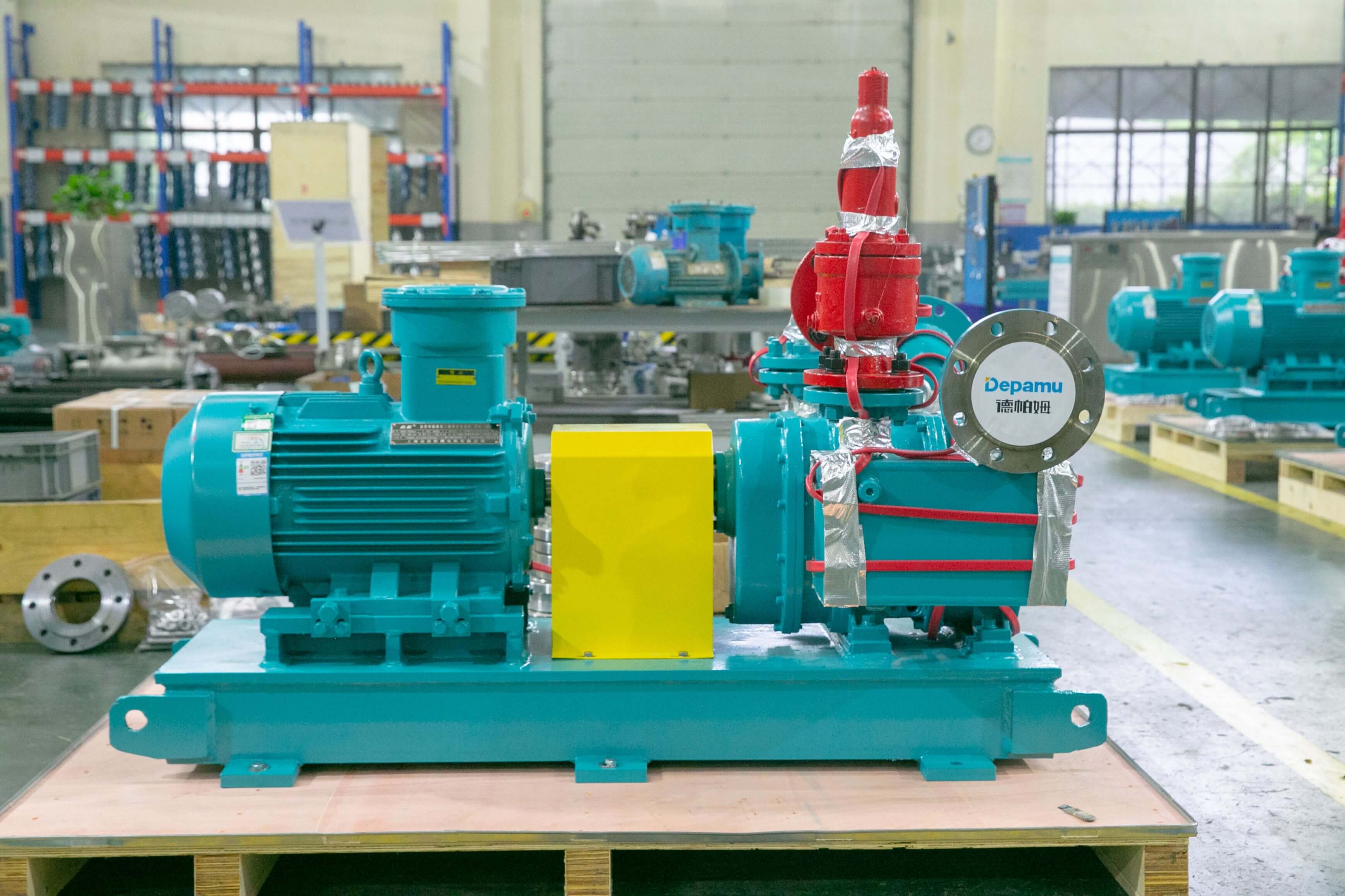
Introduction to the company's technological strength: Depam's three major technological advantages
Depump, established in 2003, specializes in the R&D of high-end positive displacement pumps and fluid equipment. Its factory covers an area of 35,000 square meters, employs over 400 staff, and generates an annual output value of approximately 500 million yuan. Its technological advantages in rubber rotor pumps are reflected in the following three aspects:
STEP 1: Material Innovation: High-temperature and Corrosion-resistant Rubber FormulaDepam collaborated with the Institute of Process Engineering, Chinese Academy of Sciences, to develop "modified hydrogenated nitrile butadiene rubber (HNBR)." By introducing a sulfur cross-linking system and nano-fillers, the rubber's temperature resistance was elevated to 150°C, and its acid-alkali resistance (pH 0-14) was enhanced by 30%. For instance, in a nuclear industry project, this material operated continuously for two years without aging under conditions of 120°C and concentrated sulfuric acid (98%), with a lifespan four times that of traditional NBR.
STEP 2: Rotor Design: Profile with Low Pulsation and High Volumetric EfficiencyDepamp adopts the "double helix involute + equal lead design", optimizes the rotor meshing clearance through CFD simulation, elevating volumetric efficiency to 92% (compared to the industry average of 85%) and reducing the pulsation rate to ±3%. In a polyacrylamide conveying project for a chemical enterprise, this design decreased the pump outlet flow fluctuation from ±15% to ±2%, meeting the stringent requirements for flow stability in the process.
STEP 3: Sealing Technology: Composite Sealing StructureDepamp innovates with a composite structure of "mechanical seal + lip seal", employing a silicon carbide (SiC) versus carbon graphite (M106K) mechanical seal on the outer layer and a polytetrafluoroethylene (PTFE) lip seal on the inner layer, forming a dual barrier. In the conveyance of media containing sediment (particle size ≤ 0.5mm) at an environmental water treatment plant, this sealing structure achieved continuous operation for 180 days without leakage, reducing the leakage rate from 50 liters per day to 0.5 liters per day.
For more information, please visit the official website:www.depamufluid.com
FAQ: A Q&A Guide to Technology Selection
In response to common issues in the selection of rubber rotor pumps, the Depam technical team offers the following practical suggestions:
Q1: How to select rubber materials based on medium characteristics?
A1:It is necessary to comprehensively consider temperature, pH value, and medium composition:
- Clear water or neutral medium with temperature ≤ 80℃ and pH 6-8: NBR can be selected (low cost, good abrasion resistance);
- Temperature range of 80-120℃, containing weak acid/alkali media: choose fluororubber (FKM, with excellent chemical resistance);
- For temperatures ranging from 120-150℃, strong acids/bases (such as concentrated sulfuric acid, hydrochloric acid), or media containing oxidizing substances: choose modified HNBR (Depam's patented material, offering the best temperature and corrosion resistance).
Q2: How to match the flow rate and pressure of a rotary pump?
A2:The parameter range needs to be determined based on process requirements:
- Flow rate: The specifications of Depam rubber rotor pumps cover 0.5-200 m³/h. It is recommended to select the model based on 1.1-1.2 times the maximum process flow rate, with a margin reserved;
- Pressure: The conventional model has a pressure resistance of 1.6 MPa, while the high-pressure model can reach 4.0 MPa. Selection should be based on pipeline resistance and process pressure requirements.
- Case: In a lithium battery electrolyte conveying project for a certain new energy enterprise, with a medium viscosity of 5000 mPa·s, requiring a flow rate of 10 m³/h and a pressure of 0.8 MPa, Depam customized the rotor profile and gear reducer to achieve stable conveying.
Q3: How to reduce the operational energy consumption of a rotor pump?
A3:Optimization can be carried out from the following three aspects:
- Model selection and matching: Avoid "over-sizing," select pump models that match the operating conditions to reduce ineffective power consumption;
- Frequency conversion control: Equipped with a frequency converter to adjust rotational speed based on flow demand, achieving an energy savings rate of up to 30%;
- Maintenance: Regularly inspect the rotor clearance (it is recommended to measure it every 5000 hours), and promptly adjust or replace the rotor when the clearance is excessively large to prevent increased energy consumption caused by a decline in volumetric efficiency.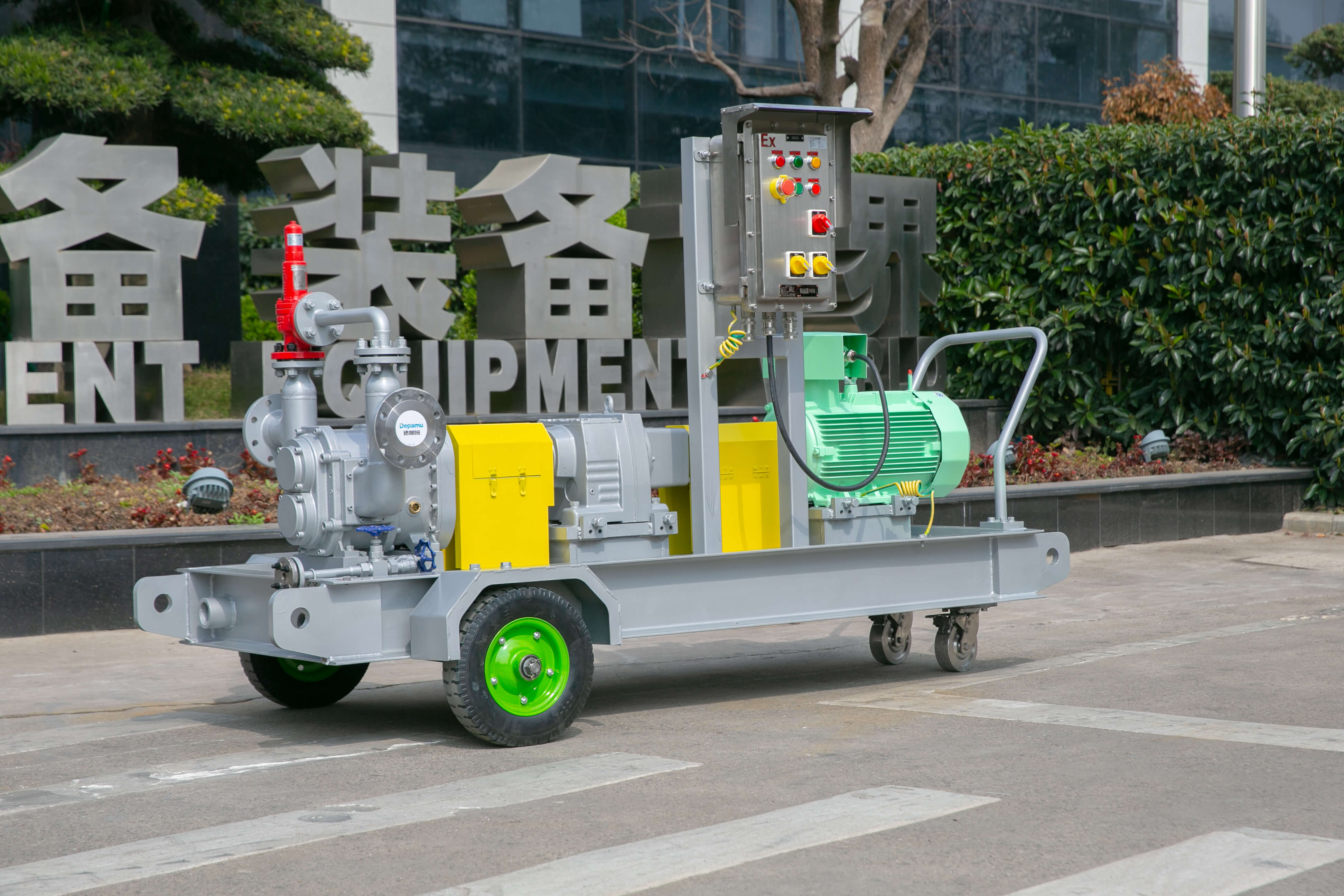
Reference for full text summary
The technical selection of rubber rotor pumps requires a comprehensive consideration of medium characteristics, flow and pressure requirements, and operational costs. Depam has addressed three major pain points in the industry—high-temperature and corrosion resistance, significant flow fluctuations, and frequent seal failures—through material innovation (modified HNBR), rotor design optimization (low-pulsation profiles), and breakthroughs in sealing technology (composite seal structures). Its products have been widely applied in fields such as petroleum refining, chemical engineering, and the nuclear industry, serving over 2,000 customers in total, with sales reaching RMB 560 million in 2025. For users, key considerations during selection should include the compatibility of rubber materials with the medium, the correlation between rotor profiles and flow stability, and the relationship between seal structures and leakage risks, while also leveraging variable frequency control and regular maintenance to reduce operational costs. For more product information and technical solutions, visit Depam's official website:www.depamufluid.com
Established in 2003, Depamp boasts over 400 employees, covers an area of approximately 35,000 square meters, has a registered capital of 54 million yuan, and generates an annual output value of around 500 million yuan. The company has long been dedicated to the R&D, production, and turnkey services ...
No. 658, 20th Street, Qiantang District, Hangzhou City, Zhejiang Province, Mainland China