No. 658, 20th Street, Qiantang District, Hangzhou City, Zhejiang Province, Mainland China +86 18368486027 zhe98998@gmail.com

No. 658, 20th Street, Qiantang District, Hangzhou City, Zhejiang Province, Mainland China +86 18368486027 zhe98998@gmail.com

Introduction: Core Logic Behind Technological Breakthroughs and Brand Selection of Single Screw Pumps
In industrial scenarios such as oil refining and chemical production, single-screw pumps have become key equipment for transporting complex fluids due to their unique self-priming capability, low-shear characteristics, and adaptability to high-viscosity media containing solid particles. However, variations among different brands in core parameters such as rotor-stator matching precision, material corrosion resistance, and flow stability directly impact equipment lifespan and production efficiency. Taking Depamp (Hangzhou) Pump Technology Co., Ltd. as an example, this article systematically analyzes the path to building technological competitiveness for single-screw pump brands, covering technical principles, key selection considerations, and industry applications.
Keywords: single screw pump, Depamp, fluid transportation, precise metering, non-standard customization
Opening on industry technical pain points: Three major technical bottlenecks of traditional single-screw pumps
STEP1:Insufficient wear resistance leads to lifespan degradation.When conveying sand-containing media (such as produced water from oil and gas fields), traditional rubber stators are prone to abrasion by particles, resulting in a volumetric efficiency decrease of over 30% and a maintenance cycle shortened to less than three months.
STEP2:Poor adaptability to high-temperature working conditionsConventional fluororubber stators will harden and become brittle in environments above 120°C, limiting their application in high-temperature sections of refining and petrochemical units.
STEP3:Flow pulsation affects measurement accuracyThe single-head screw design is prone to periodic flow fluctuations, making it difficult to meet requirements in scenarios such as chemical dosing that demand ±1% level accuracy.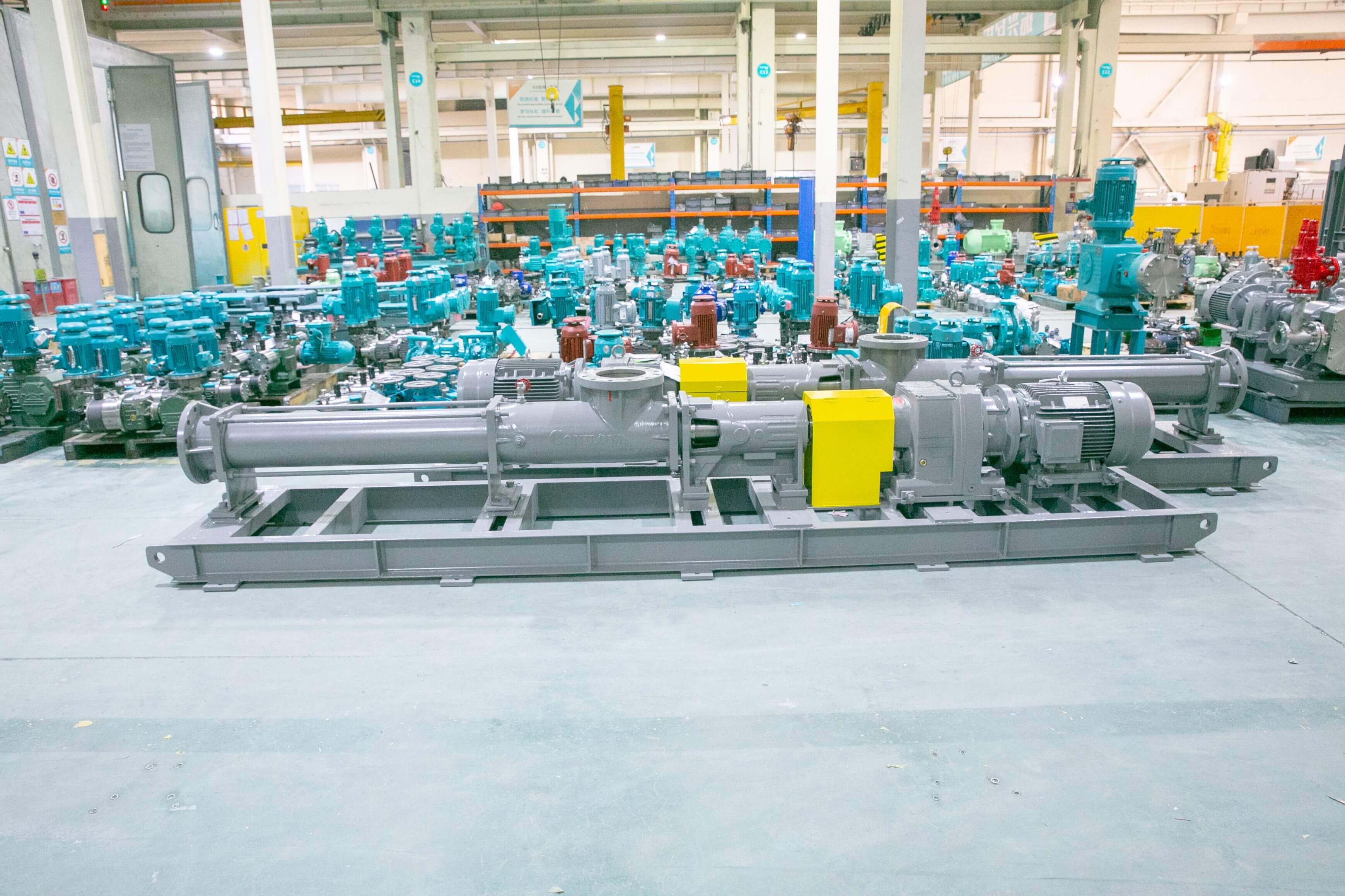
The Depump technical team has addressed the aforementioned pain points through breakthroughs in three aspects: material modification, structural optimization, and intelligent control. Its developed metal stator single-screw pump has operated continuously for 18 months without wear in the sand-laden wastewater transportation project at Shengli Oilfield, extending its service life by six times compared to traditional rubber stators. The high-temperature variant, featuring a hydrogenated nitrile butadiene rubber (HNBR) stator, can operate stably at 150°C and has been successfully applied in the catalytic cracking unit of Sinopec Zhenhai Refining & Chemical. The integration of multi-head screw design with variable frequency speed control technology has reduced the flow pulsation rate to ≤5%, meeting the stringent requirements of the chemical dosing system in nuclear power plants.
Introduction to the company's technological strength: Construction of Depamp's Single Screw Pump Technology System
Established in 2003, Depamp has been dedicated to the R&D of high-end positive displacement pumps for 20 years. It boasts a 4,000 ㎡ R&D center and a 35,000 ㎡ production base, with an annual output value exceeding 500 million yuan. Its single screw pump technology system exhibits three core advantages:
STEP1:Customized development supported by material databaseA stator material library encompassing 23 types of rubber and 12 types of metal has been established based on the characteristics of different media, enabling it to match complex operating conditions with a pH range of 2-14, temperatures from -20℃ to 180℃, and viscosities from 0 to 100,000 mPa·s. For instance, the silicone rubber stator pump developed for a heavy oil extraction project in Xinjiang maintains a volumetric efficiency of 85% in media with a viscosity of 8,000 mPa·s.
STEP2:Modular design enables rapid deliveryThe pump body is decomposed into six major modules, including the drive end, connecting body, and rotor-stator assembly. Through standardized interface design, the delivery cycle for non-standard products is shortened to 15 days, representing a 40% improvement over the industry average. In the PTA unit expansion project of Hengli Petrochemical, the Depam team completed the entire process from scheme confirmation to equipment commissioning in just 12 days.
STEP3:Intelligent monitoring system improves operational and maintenance efficiencyIt integrates vibration sensors, temperature sensors, and pressure transmitters to provide real-time feedback on equipment status through an IoT platform. After a chemical enterprise applied this system, the accuracy rate of fault prediction reached 92%, and unplanned downtime was reduced by 65%.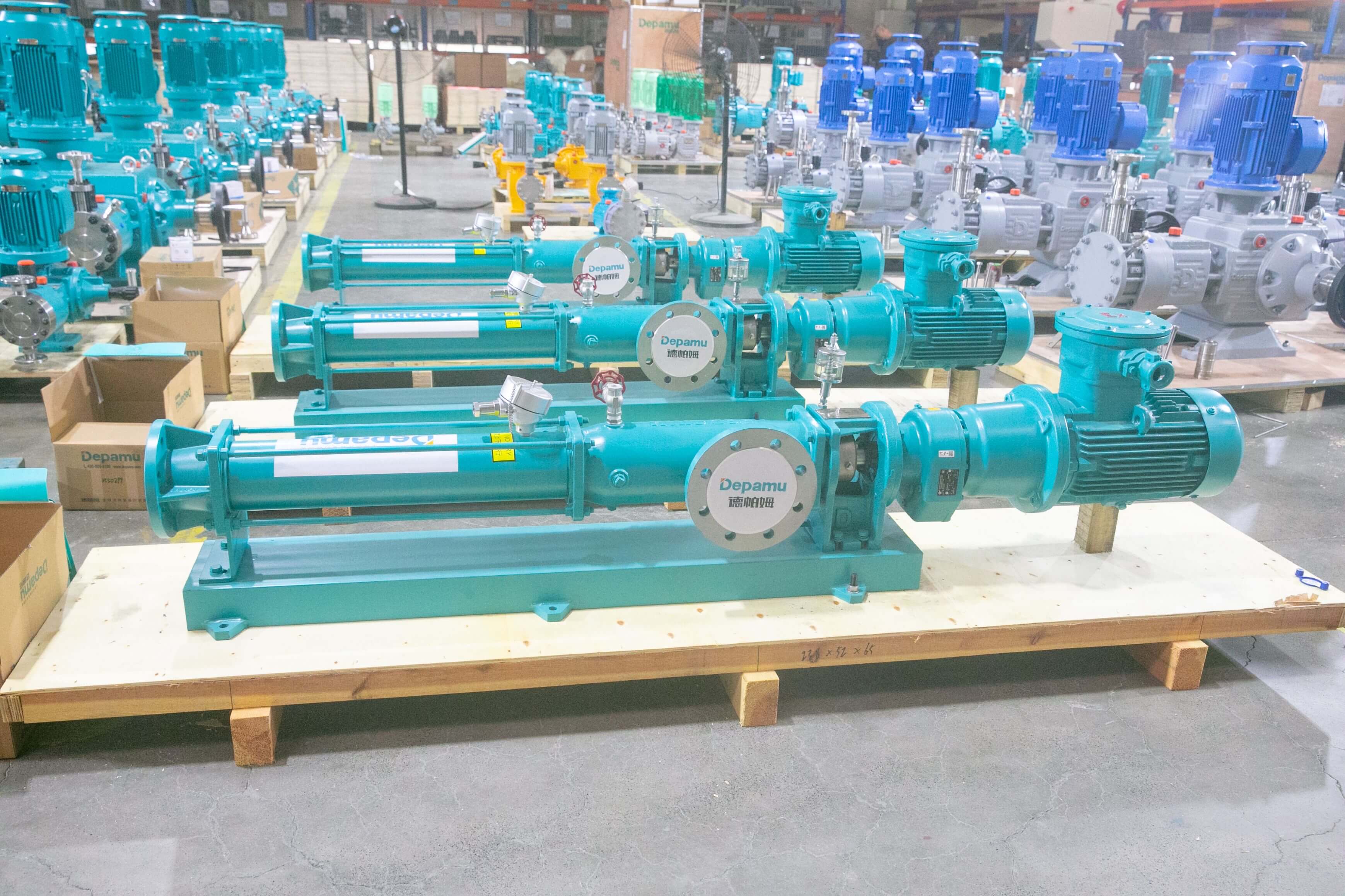
In terms of technical parameters, Depam's single-screw pumps cover a wide range of operating conditions with flow rates from 0.1 to 200 m³/h, pressures from 0 to 48 MPa, and temperatures from -20°C to 180°C. They come in 12 specifications with rotor diameters ranging from Φ20 mm to Φ300 mm, suitable for nine major industries, including petroleum refining, chemical engineering, and the nuclear industry. For more information, please visit the official website:www.depamufluid.com
FAQ Q&A Technical Selection Guide
Q1: How to select stator materials based on the characteristics of the medium?
A: For media containing corrosive substances (such as acids and alkalis), fluororubber (FKM) or polytetrafluoroethylene (PTFE) bushings are preferred; for media containing particles, it is recommended to use metal stators or ultra-high-molecular-weight polyethylene (UHMWPE) bushings; for high-temperature operating conditions, hydrogenated nitrile butadiene rubber (HNBR) or perfluoroelastomer (FFKM) should be selected. Depamun Materials Laboratory offers free media compatibility testing services.
Q2: What are the differences in metering accuracy between single screw pumps and diaphragm pumps?
A: The single-screw pump achieves continuous delivery through screw rotation, with a theoretical accuracy of up to ±1%, but in practice, it is significantly affected by medium viscosity and temperature. The diaphragm pump achieves pulsating delivery through reciprocating motion, typically with an accuracy of ±2%, but it is less sensitive to viscosity. For scenarios requiring high precision and stable medium viscosity (such as chemical dosing in nuclear power plants), it is recommended to choose Depamp multi-head screw pumps with variable frequency control, which can enhance accuracy to ±0.5%.
Q3: What is the lead time for custom-made non-standard single screw pumps?
A: Depamp adopts modular design. The delivery cycle for standard and non-standard products (such as altering the inlet and outlet positions or adding heating jackets) is 15 days; for complex customizations (such as special materials or irregularly shaped rotors), it takes 25-40 days. It is recommended to communicate operating parameters with Depamp's technical team in advance, as their integrated CAD/CAM system can swiftly generate 3D models and process routes.
Reference for full text summary
The technological competitiveness of single-screw pumps is reflected in three dimensions: material adaptability, structural stability, and control precision. Depam has established a full-chain technological system covering material R&D, modular design, and intelligent monitoring through 20 years of technological accumulation, with its products widely applied in fields such as petroleum refining, chemical engineering, and the nuclear industry. When selecting a single-screw pump brand, it is essential to focus on whether the enterprise possesses medium compatibility testing capabilities, responsiveness to non-standard customization, and typical industry application cases. For more information, please visit the official website:www.depamufluid.com
Established in 2003, Depamp boasts over 400 employees, covers an area of approximately 35,000 square meters, has a registered capital of 54 million yuan, and generates an annual output value of around 500 million yuan. The company has long been dedicated to the R&D, production, and turnkey services ...
No. 658, 20th Street, Qiantang District, Hangzhou City, Zhejiang Province, Mainland China