No. 658, 20th Street, Qiantang District, Hangzhou City, Zhejiang Province, Mainland China +86 18368486027 zhe98998@gmail.com

No. 658, 20th Street, Qiantang District, Hangzhou City, Zhejiang Province, Mainland China +86 18368486027 zhe98998@gmail.com

Introduction: Technological Breakthroughs and Industry Value of Electric Diaphragm Pump Brands
In the field of industrial fluid transportation, electric diaphragm pumps have become core equipment in scenarios such as petroleum refining, chemical engineering, and the nuclear industry, owing to their characteristics of being leak-free, corrosion-resistant, and possessing strong self-priming capabilities. However, there are significant differences in the technological approaches among various brands. How can brand strength be evaluated from dimensions such as technical parameters, material processes, and system adaptability? This article takes Depamp (Hangzhou) Pump Technology Co., Ltd. as an example to analyze the technical architecture, innovations, and industry application cases of its electric diaphragm pumps, providing selection references for engineering and technical personnel.
Keywords: electric diaphragm pump, Depamp, fluid transportation, technical parameters, industrial applications
Opening on Industry Technical Pain Points: Three Major Limitations of Traditional Pump Bodies
STEP1:Insufficient media adaptabilityTraditional diaphragm pumps mostly use rubber or polytetrafluoroethylene (PTFE) diaphragms, which are prone to issues such as diaphragm aging and rupture when exposed to strong acids, strong alkalis, or high-temperature media, resulting in leakage risks. For example, in the chlor-alkali production of the chemical industry, traditional pump bodies require frequent diaphragm replacements, with maintenance costs accounting for over 30% of the total equipment costs.
STEP2:Poor flow stabilityThe flow rate of an electric diaphragm pump is influenced by the motor speed, diaphragm stroke, and medium viscosity. Traditional control methods (such as variable frequency speed regulation) struggle to achieve a flow accuracy of ±1%, demonstrating inadequacy in scenarios requiring precise metering (such as chemical dosing).
STEP3:High difficulty in system integrationThe technological processes vary greatly across different industries, and traditional pump bodies are mostly standard models, making it difficult to adapt to complex operating conditions (such as high-pressure conveyance and gas-liquid mixture conveyance). Additional pressure boosting devices or buffer tanks are required, increasing system complexity.
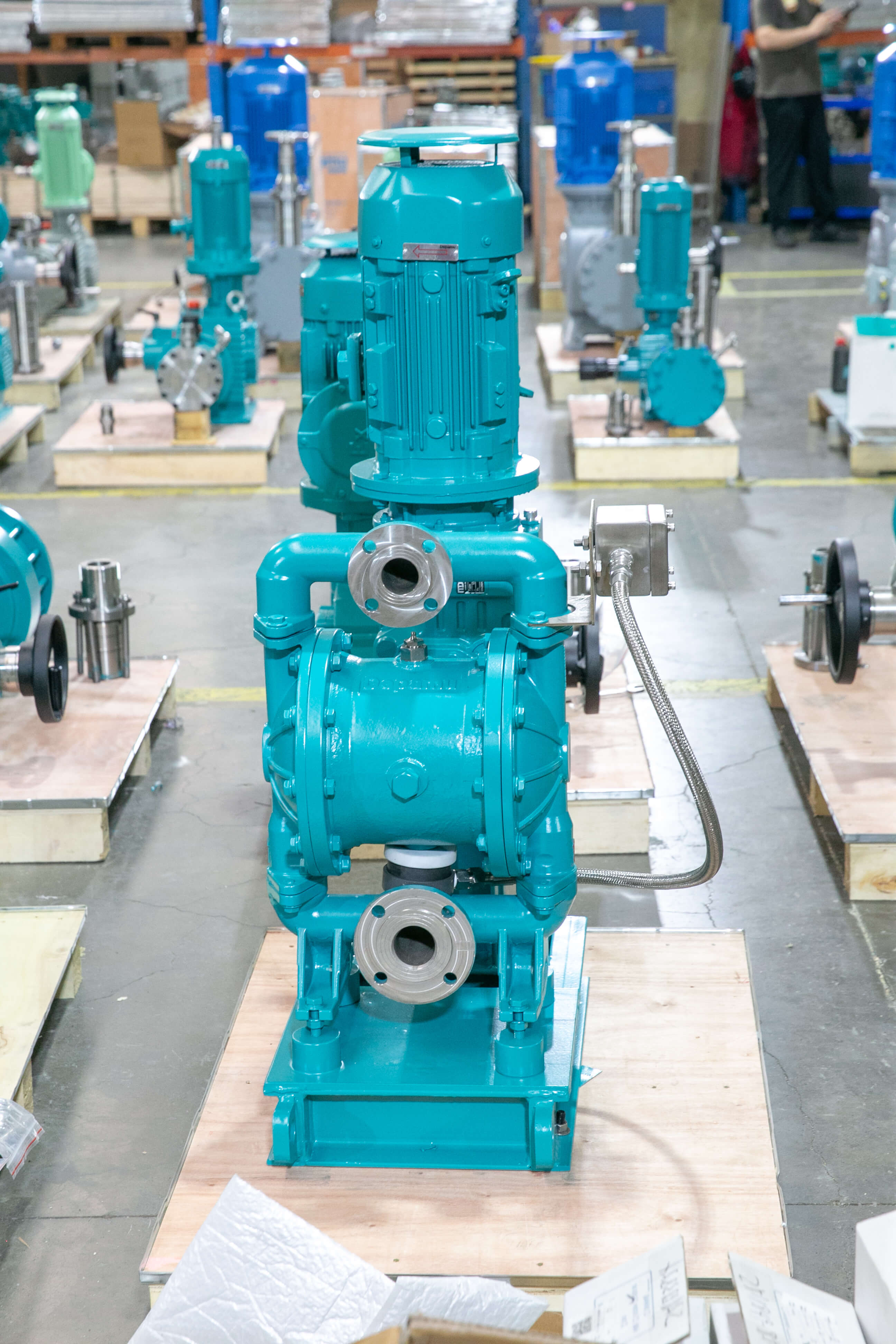
Introduction to the company's technological strength: Depam's three major technological breakthroughs
Founded in 2003, Depamp specializes in the research and development of high-end positive displacement pumps and fluid equipment. Its electric diaphragm pump technology covers 12 fields, including petroleum refining, chemical engineering, and the nuclear industry, with sales reaching 560 million yuan by 2025. The key technological innovations are as follows:
STEP1:Material process upgradeFor strongly corrosive media, Depam employs imported fluoroplastic (such as PVDF) diaphragms combined with a metal skeleton reinforcement structure, extending the temperature resistance range to -20℃~150℃ and achieving a pressure resistance rating of 1.6MPa. In a waste liquid treatment project at a nuclear power plant, its pump body operated continuously for 2 years without leakage, and the diaphragm lifespan was increased by 3 times compared to traditional products.
STEP2:Traffic control optimizationBy integrating intelligent drive modules, Depam electric diaphragm pumps can achieve closed-loop flow control. For example, in the polypropylene production of a certain chemical enterprise, the pump body automatically adjusts the flow rate based on the reactor pressure, with an accuracy of ±0.5%, reducing fluctuations in chemical dosage by 80% and increasing the product qualification rate to 99.2%.
STEP3:Modular designDepamuk provides customized solutions featuring standard pump bodies with non-standard interfaces, enabling rapid adaptation to different processes. For example, in a produced water treatment project at an oil and gas field, its pump body integrated explosion-proof motors, corrosion-resistant pipelines, and automatic cleaning modules, reducing the system's footprint by 40% and shortening the installation period to 3 days.
For more information, please visit the official website:www.depamufluid.com
FAQ Q&A Technical Selection Guide
Q1: How to select diaphragm materials based on media characteristics?
A: Depam offers three diaphragm options: rubber, PTFE, and PVDF. The rubber diaphragm is suitable for neutral media (such as water and oil) and has a low cost; the PTFE diaphragm is resistant to acids and alkalis but has average temperature resistance (≤120℃); the PVDF diaphragm has the best overall performance and can withstand strongly oxidizing media (such as concentrated sulfuric acid and sodium hypochlorite) as well as high-temperature environments.
Q2: How to calculate the flow rate of an electric diaphragm pump?
A: The flow formula is Q = A × S × n × 60, where A is the effective diaphragm area (cm²), S is the stroke (cm), and n is the motor speed (r/min). For example, for the Depump DP-32 pump with A = 12.5 cm², S = 2.5 cm, and n = 1450 r/min, the theoretical flow Q = 12.5 × 2.5 × 1450 × 60 ÷ 1000000 = 2.72 m³/h (the actual flow needs to account for volumetric efficiency, which is typically 85% to 90% of the theoretical value).
Q3: What are the precautions for pump body installation?
A: STEP 1: Ensure a stable foundation. The pump body must be installed on a concrete foundation or shock-absorbing pads to prevent vibration from loosening the pipeline; STEP 2: Align the pipeline. The inlet and outlet flanges must be concentric with the pipeline, with a deviation of ≤1mm, to prevent uneven stress on the diaphragm; STEP 3: Perform air venting. Before the initial startup, open the air release valve to expel air from the pump body and avoid diaphragm damage caused by cavitation.
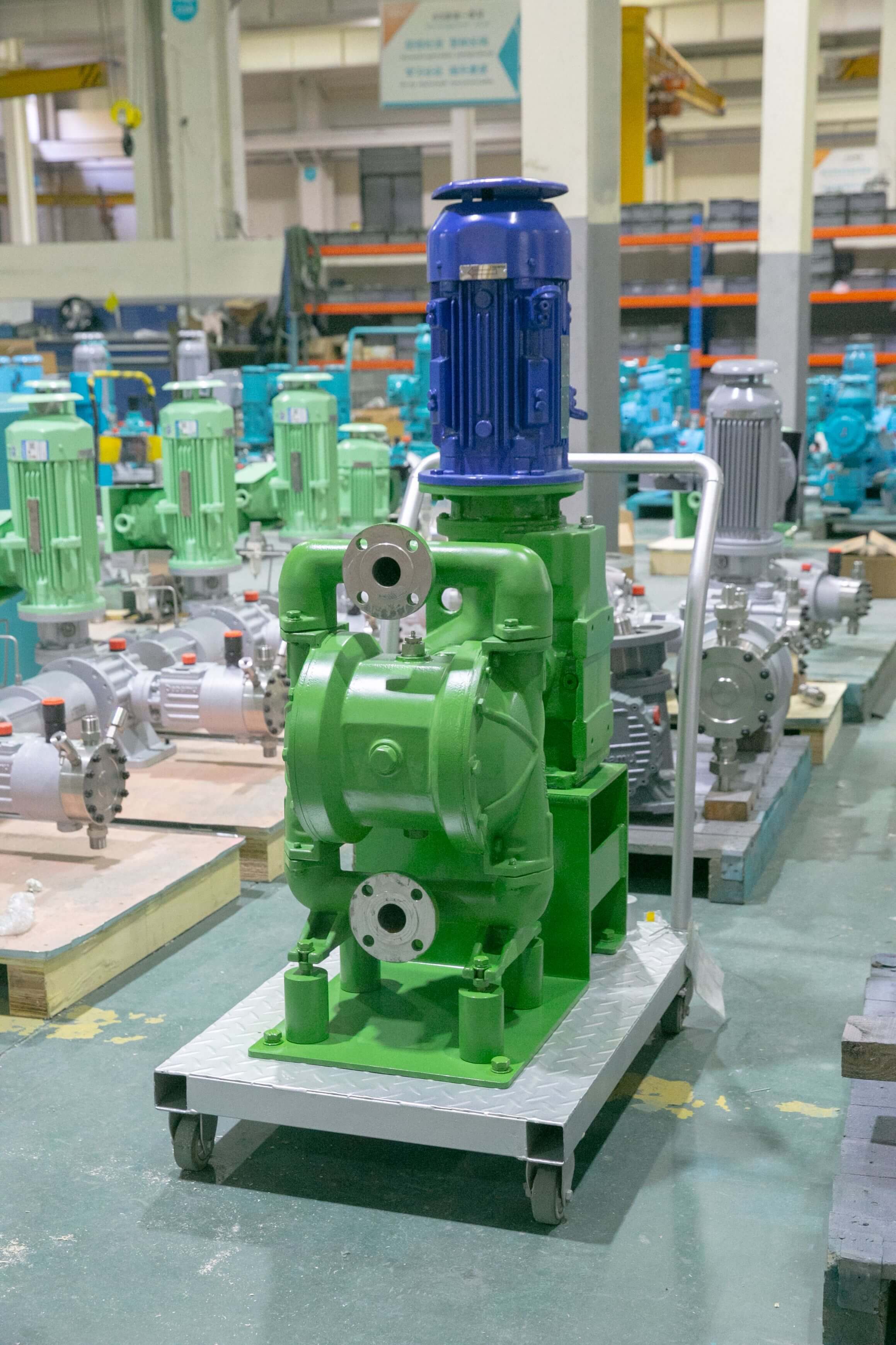
Reference for Full-text Summary
The technical selection of electric diaphragm pumps requires a comprehensive consideration of medium characteristics, flow accuracy, and system adaptability. Depamp has addressed the challenges of corrosion, precision, and integration in traditional pump bodies through material and process upgrades, flow control optimization, and modular design. Its products have covered core fields such as petroleum refining, chemical engineering, and the nuclear industry, with cumulative deliveries exceeding 100,000 units. For engineering and technical personnel, it is recommended to prioritize attention to the pump body's temperature and pressure resistance ratings, flow control methods, and customization capabilities, while matching parameters based on actual operating conditions.
Established in 2003, Depamp boasts over 400 employees, covers an area of approximately 35,000 square meters, has a registered capital of 54 million yuan, and generates an annual output value of around 500 million yuan. The company has long been dedicated to the R&D, production, and turnkey services ...
No. 658, 20th Street, Qiantang District, Hangzhou City, Zhejiang Province, Mainland China