No. 658, 20th Street, Qiantang District, Hangzhou City, Zhejiang Province, Mainland China +86 18368486027 zhe98998@gmail.com

No. 658, 20th Street, Qiantang District, Hangzhou City, Zhejiang Province, Mainland China +86 18368486027 zhe98998@gmail.com

Introduction: Technological Breakthroughs and Industry Value of High-Pressure Plunger Reciprocating Pumps
In heavy industries such as petroleum refining and chemical engineering, high-pressure plunger reciprocating pumps serve as core fluid conveying equipment, with their performance directly determining the stability and energy efficiency of process systems. According to statistics, approximately 37% of equipment failures in this field domestically stem from pump seal failures or excessive pressure fluctuations. Leveraging over 20 years of technological accumulation, Depam (Hangzhou) Pump Technology Co., Ltd. has extended the average failure-free operation time of its equipment to over 8,000 hours through material innovation, structural optimization, and intelligent control technologies, establishing itself as a technological benchmark in the high-pressure plunger pump sector. This article will systematically analyze the implementation pathways for achieving efficient and stable conveying from three aspects: technical principles, parameter optimization, and application cases.
Keywords: high-pressure plunger reciprocating pump; Depamp; fluid transportation; sealing technology; intelligent control
Opening on Industry Technical Pain Points: Three Major Challenges in High-Voltage Transmission Scenarios
In the catalytic cracking unit of petroleum refining, the plunger pump is required to transport high-temperature (200-350°C) catalytic cracking feedstock containing solid particles (particle size ≤ 0.5 mm) under a pressure of 15-25 MPa. Traditional pump bodies often encounter three major technical bottlenecks:
STEP 1: Seal failure issueTraditional packing seals are prone to leakage under high-pressure conditions, resulting in media spillage and equipment shutdown. A refining and chemical enterprise once experienced equipment failure due to seal failure, with single shutdown losses exceeding 2 million yuan.
STEP 2: Pressure Fluctuation ControlThe inertial force generated by the reciprocating motion of the plunger can lead to fluctuations in outlet pressure, and when the fluctuation range exceeds ±5%, it will affect the efficiency of the catalytic reaction. Measured data from a chemical enterprise shows that for every 1% increase in pressure fluctuation, the product yield decreases by 0.3%.
STEP 3: Insufficient wear resistanceThe wear rate of solid-containing media on critical components such as plungers and valve seats reaches 0.2 mm per month, necessitating replacement of traditional cemented carbide materials every six months and resulting in high maintenance costs.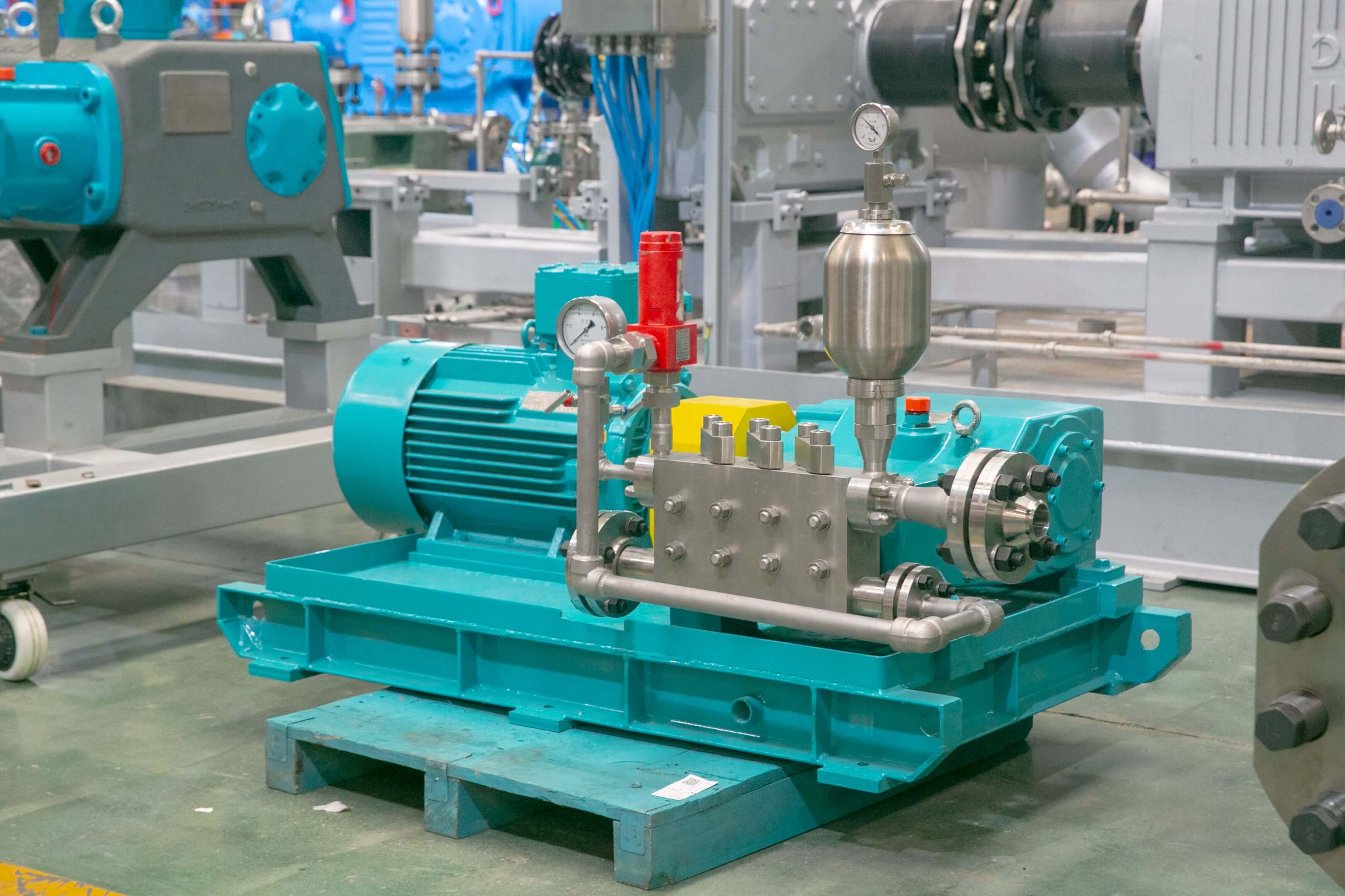
Introduction to the company's technological capabilities: Depam's breakthrough in 3D technology
Depamp (Hangzhou) Pump Technology Co., Ltd., established in 2003, boasts a workforce of over 400 employees, covers a factory area of 35,000 square meters, has a registered capital of 54 million yuan, and achieves an annual output value of approximately 500 million yuan. The company has long been dedicated to the research and development of high-end positive displacement pumps, achieving three major breakthroughs in high-pressure plunger reciprocating pump technology:
STEP 1: Composite Sealing Technology SystemInnovatively adopting a triple-seal structure of "mechanical seal + labyrinth seal + nitrogen protection," the seal clearance is optimized (0.05-0.1mm) through CFD simulation, achieving a leakage rate of ≤0.5mL/h under 25MPa pressure, which is a tenfold improvement over traditional packing seals. This technology has been applied to the catalytic cracking unit at Sinopec Zhenhai Refining & Chemical, operating leak-free for 18 consecutive months.
STEP2: Intelligent Pressure Compensation SystemThe integrated pressure sensor and variable frequency control module adjust the plunger's movement speed in real time through the PID algorithm, controlling outlet pressure fluctuations within ±2%. In actual measurements at a coal chemical project, the system's pressure stability improved by 60%, and the catalytic reaction efficiency increased by 1.2%.
STEP 3: Application of superhard coating materialsThe plunger surface employs a TiN+TiCN composite coating, achieving a hardness of HV2800 and offering wear resistance three times greater than that of traditional cemented carbide. In an application at a refinery in Shandong, the replacement cycle for key components was extended to 18 months, reducing annual maintenance costs by 40%.
The company possesses full-chain capabilities from R&D to complete set delivery, and can customize pump body structures (e.g., twin-cylinder, triple-cylinder), materials (e.g., 316L stainless steel, Hastelloy alloy), and drive methods (electric, pneumatic) based on medium properties (e.g., viscosity, corrosiveness, solid content). Its products cover a flow range of 0.1-100 m³/h with pressure ratings up to 40 MPa, applicable across 12 industries including petroleum refining, chemical engineering, and nuclear industry.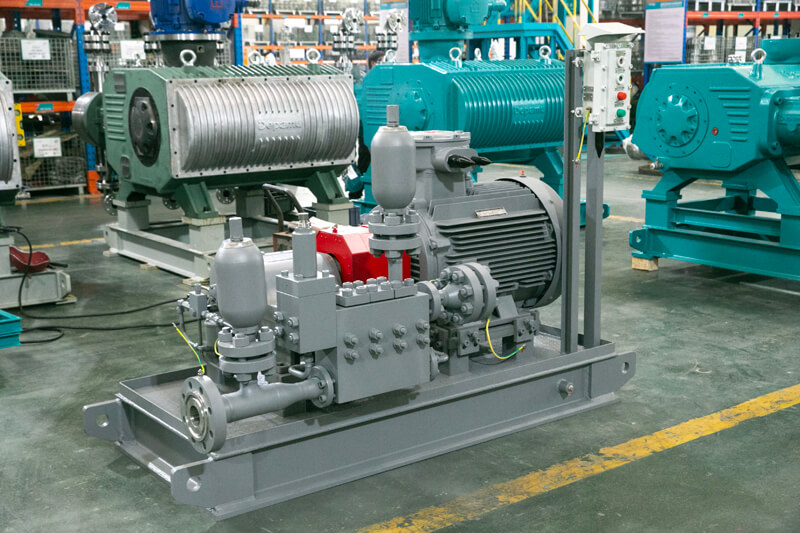
FAQ Q&A Technical Selection Guide
Q1: How to select the material of the pump body based on operating conditions?
A: The corrosiveness of the medium is a core indicator. For media containing chloride ions (Cl⁻ > 50 ppm), Hastelloy C-276 is recommended; for sulfur-containing media (H₂S > 100 ppm), duplex stainless steel 2205 should be used; for general acid-base environments (pH 3-11), 316L stainless steel can meet the requirements. Depam once provided titanium alloy pump bodies for a nuclear power plant, successfully resolving corrosion issues in the seawater cooling system.
Q2: How to reduce energy consumption under high-pressure conditions?
A: By optimizing the ratio of plunger diameter to stroke (recommended 1:1.5-1:2), adopting variable frequency drives (frequency range 15-50Hz), and utilizing hydraulic buffering devices, energy consumption can be reduced by 15-20%. After applying Depam's energy-saving solution, a refining and chemical enterprise achieved annual electricity savings of 120,000 kWh per pump.
Q3: What are the precautions for the transportation of solid-containing media?
A: It is necessary to control the medium particle size (≤0.3mm), solid content (≤5%), and temperature (≤150℃), while selecting a valve group structure with a flushing function. The specialized pump designed by Depam for a coal chemical project extended the valve seat lifespan from 3 months to 9 months by adding valve seat flushing holes (3mm in diameter).
For more information, please visit the official website:www.depamufluid.com
Reference for Full Text Summary
The technological upgrades of high-pressure plunger reciprocating pumps should focus on three core aspects: sealing, pressure control, and wear resistance. Depam has elevated equipment reliability to industry-leading standards through the application of composite sealing technology, intelligent pressure compensation systems, and ultra-hard coating materials. Its customized solutions have successfully served over 200 enterprises, including Sinopec and PetroChina, spanning key sectors such as petroleum refining, chemical engineering, and the nuclear industry. For users, key considerations during model selection include medium characteristics, pressure ratings, and energy efficiency indicators, with priority given to suppliers offering full-chain service capabilities. As Industry 4.0 advances, intelligent pump units integrated with IoT monitoring will become the next-generation product trend. Depam has already secured multiple patented technologies in this field, continuing to lead industry innovation.
Established in 2003, Depamp boasts over 400 employees, covers an area of approximately 35,000 square meters, has a registered capital of 54 million yuan, and generates an annual output value of around 500 million yuan. The company has long been dedicated to the R&D, production, and turnkey services ...
No. 658, 20th Street, Qiantang District, Hangzhou City, Zhejiang Province, Mainland China