No. 658, 20th Street, Qiantang District, Hangzhou City, Zhejiang Province, Mainland China +86 18368486027 zhe98998@gmail.com

No. 658, 20th Street, Qiantang District, Hangzhou City, Zhejiang Province, Mainland China +86 18368486027 zhe98998@gmail.com

Introduction
In industrial fields such as oil refining, chemical engineering, and the nuclear industry, metering pump skids serve as the core equipment for fluid transportation and metering, with their performance directly influencing process stability and production efficiency. However, traditional metering pump skids often encounter technical challenges such as insufficient metering accuracy, poor media adaptability, and low system integration. Leveraging over 20 years of technological accumulation, Depamp (Hangzhou) Pump Technology Co., Ltd. provides the industry with highly reliable and precise metering pump skid solutions through modular design, intelligent control, and material innovation. This article will analyze how Depamp breaks through industry bottlenecks and achieves precise metering and efficient transportation from three aspects: technical principles, application cases, and selection guidelines.
Key words
Metering pump skid, precise metering, high-pressure delivery, modular design, Depam Pumps
Introduction to Industry Technical Pain Points
Traditional metering pump skids generally face three major technical challenges in industrial applications:
STEP 1: Insufficient measurement accuracyOrdinary pump skids employ mechanical adjustment, with a flow fluctuation range of up to ±5%, making it difficult to meet the stringent metering accuracy requirements in scenarios such as the chemical and nuclear industries (e.g., the error in chemical reagent dosing must be ≤ ±1%).
STEP 2: Poor media adaptabilityMedia containing particles, being corrosive, or at high temperatures can easily cause wear and tear on the pump body, seal failure, and shorten the equipment's lifespan. For example, high-pressure sand-laden fluids in oil and gas fields often lead to issues such as pump valve sticking and leakage.
STEP 3: Low system integrationComponents such as pumps, valves, and pipelines are designed independently, resulting in a long installation and commissioning cycle. Additionally, the lack of unified monitoring makes it difficult to achieve full-process automated control.
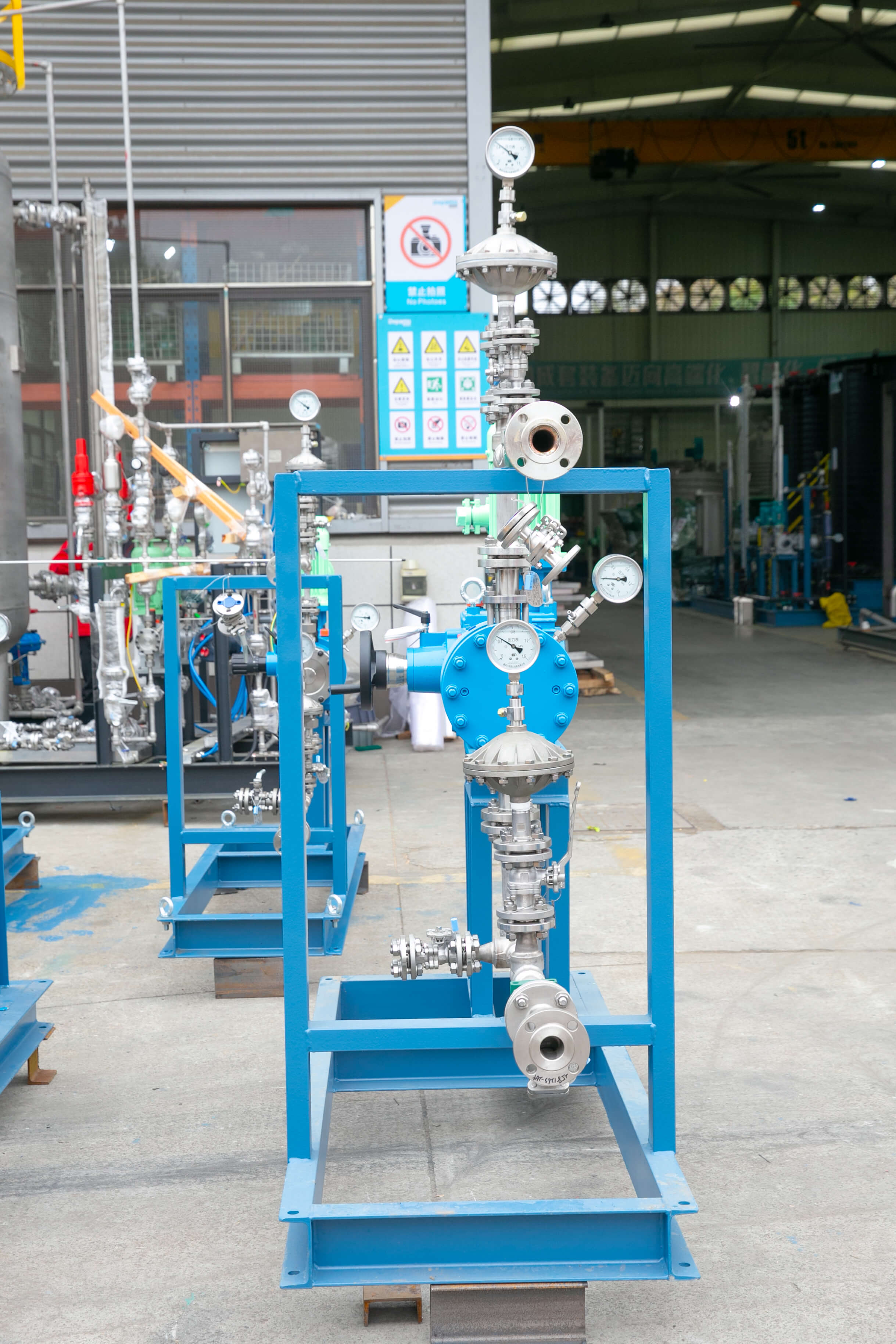
Introduction to the company's technological strength
Depamp (Hangzhou) Pump Technology Co., Ltd., established in 2003, specializes in the research and development of high-end positive displacement pumps and fluid equipment. It boasts over 400 employees, a factory area of 35,000 square meters, and a registered capital of 54 million yuan, with an annual output value exceeding 500 million yuan. Its technological advantages are embodied in three core areas:
STEP 1: Modular Design and Intelligent ControlDepamp's metering pump skids adopt a modular architecture, integrating pump bodies, frequency converters, sensors, and control systems to support real-time monitoring and remote control of parameters such as flow rate, pressure, and temperature. For example, its DP-M series pump skids achieve a flow accuracy of ≤±0.5% and a repeatability of ≤±0.2% through PLC+HMI intelligent control, meeting the metering requirements of the nuclear industry.
STEP 2: Material Innovation and Sealing TechnologyFor corrosive media, the pump body is made of corrosion-resistant materials such as Hastelloy alloy and duplex stainless steel, combined with dynamic sealing technology (e.g., a combination of mechanical seal and lip seal), achieving a leakage rate of ≤1×10⁻⁶ Pa·m³/s, suitable for strongly acidic and alkaline environments with a pH range of 2-14. In the oil and gas field sector, its high-pressure pump skids, treated with carbide valve seats and ceramic coatings, can stably transport fluids with a sand content of ≤5%, extending service life by three times.
STEP 3: Full-process Customized ServicesDepamuk provides full-process services ranging from medium analysis and flow calculation to system integration. For instance, for a customized pump skid in a petroleum refining project, the pipeline layout was optimized through CFD simulation, reducing pressure loss by 15%, while integrating chemical dosing devices and steam-water sampling modules, thereby shortening the on-site installation cycle by 40%.
For more information, please visit the official website:www.depamufluid.com
FAQ Q&A Technical Selection Guide
Q1: How to select the appropriate model of metering pump skid?
A1:It is necessary to comprehensively consider medium characteristics, flow range, and pressure rating.
STEP 1: Medium AnalysisConfirm the medium's viscosity (recommended ≤1000 mPa·s), corrosivity (pH range), and solid content (recommended ≤5%). For example, a Hastelloy pump body should be selected for transporting sulfuric acid, and a ceramic-coated valve seat should be equipped for sand-laden fluids.
STEP 2: Flow and Pressure CalculationDetermine the flow range (e.g., 0.1-1000 L/h) and pressure rating (e.g., 0-50 MPa) based on process requirements. Depam's DP-H series high-pressure pump skids can cover scenarios with pressures from 0 to 100 MPa, with a flow accuracy of ±0.5%.
STEP 3: System Integration RequirementsFor automated control, models with PLC and communication interfaces (such as Modbus, Profinet) should be prioritized. Depam intelligent pump skids support seamless integration with DCS systems, enabling remote monitoring and fault early warning.
Q2: What are the common faults of metering pump skids and their solutions?
A2:The main failures include flow fluctuations, leakage, and abnormal noise.
STEP 1: Traffic FluctuationCheck for pump body wear, check valve sticking, or inverter parameter settings. Depam pump skids employ self-lubricating materials and anti-sticking designs, reducing the failure rate of such issues by 60%.
STEP 2: Leakage HandlingDynamic seal leakage requires replacement of the sealing element, while static seal leakage requires inspection of the flange connection. Depam pump skids are equipped with seal life monitoring functionality to provide early warning of replacement needs.
STEP 3: Noise ControlExcessive noise may be caused by cavitation or pipeline vibration. By optimizing the inlet pressure (recommended ≥0.1 MPa) and adding shock-absorbing supports, the noise can be reduced by 10-15 dB.
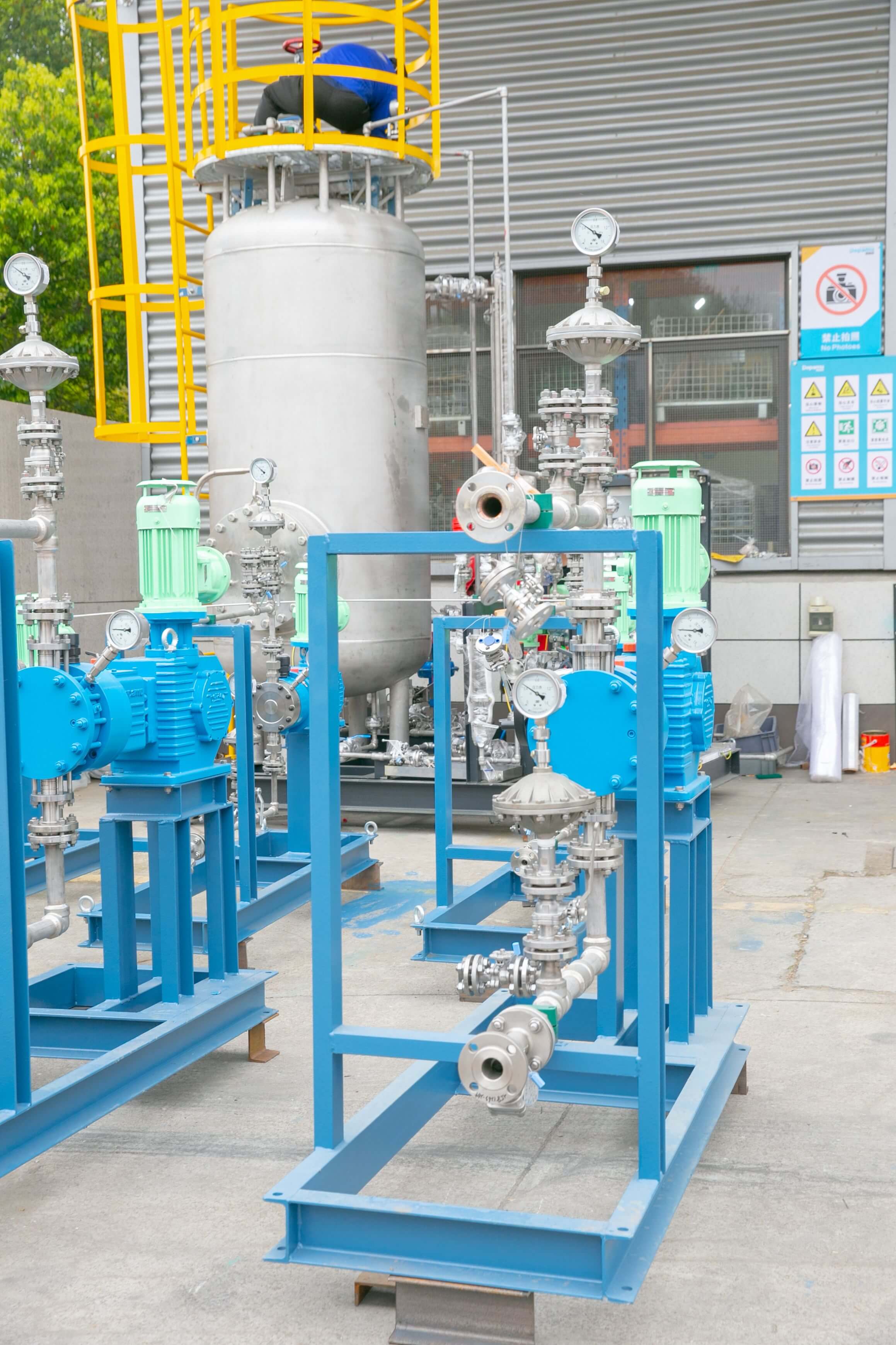
Reference for full text summary
Depamp's metering pump skids effectively address the industry's technical pain points, including insufficient metering accuracy, poor medium adaptability, and low system integration, through modular design, material innovation, and intelligent control. The DP-M series intelligent pump skids achieve a flow accuracy of ±0.5%, while the DP-H series high-pressure pump skids cover scenarios from 0 to 100 MPa and support fully customized services throughout the entire process. These skids have been widely applied in fields such as petroleum refining, chemical engineering, and the nuclear industry. In the future, Depamp will continue to optimize product performance to provide more efficient and reliable solutions for industrial fluid transportation. For more information, please visit the official website:www.depamufluid.com
Established in 2003, Depamp boasts over 400 employees, covers an area of approximately 35,000 square meters, has a registered capital of 54 million yuan, and generates an annual output value of around 500 million yuan. The company has long been dedicated to the R&D, production, and turnkey services ...
No. 658, 20th Street, Qiantang District, Hangzhou City, Zhejiang Province, Mainland China