No. 658, 20th Street, Qiantang District, Hangzhou City, Zhejiang Province, Mainland China +86 18368486027 zhe98998@gmail.com

No. 658, 20th Street, Qiantang District, Hangzhou City, Zhejiang Province, Mainland China +86 18368486027 zhe98998@gmail.com

Introduction: Why has the hydraulic diaphragm metering pump become the core equipment for industrial fluid transportation?
In industrial scenarios such as petroleum refining and chemical production, the precision of fluid transportation directly affects process stability and product quality. Hydraulic diaphragm metering pumps, with their characteristics of being leak-free, corrosion-resistant, and highly accurate in metering, have become key equipment for processes such as chemical dosing and process pressurization. This article will analyze, from three dimensions—technical principles, corporate strength, and selection guidelines—how Depamp (Hangzhou) Pump Technology Co., Ltd. addresses industry pain points through technological innovation, and provides practical cases and parameter references.
Keywords: hydraulic diaphragm metering pump; high-precision metering; corrosion-resistant design; Depam Pumps
Introduction to industry technical pain points: Three major limitations of traditional metering pumps
STEP1:High risk of seal leakage— Traditional mechanical seals or packing seals are prone to wear when conveying corrosive media, leading to excessive leakage rates and posing safety hazards and environmental pollution. For example, a chemical enterprise experienced a production line shutdown due to pump leakage, resulting in direct losses exceeding one million yuan.
STEP2:Large fluctuations in measurement accuracy—Affected by pressure fluctuations and temperature changes, the flow deviation of ordinary metering pumps can reach ±5%, failing to meet the stringent requirements of the fine chemical industry for dosing amounts (e.g., pH control requires within ±1%).
STEP3:Poor media adaptability— Media containing particles, with high viscosity, or prone to crystallization can easily block the pump chamber, leading to an increased equipment failure rate. A new energy enterprise experienced a halt in battery material production due to pump blockage, delaying the delivery cycle by 30 days.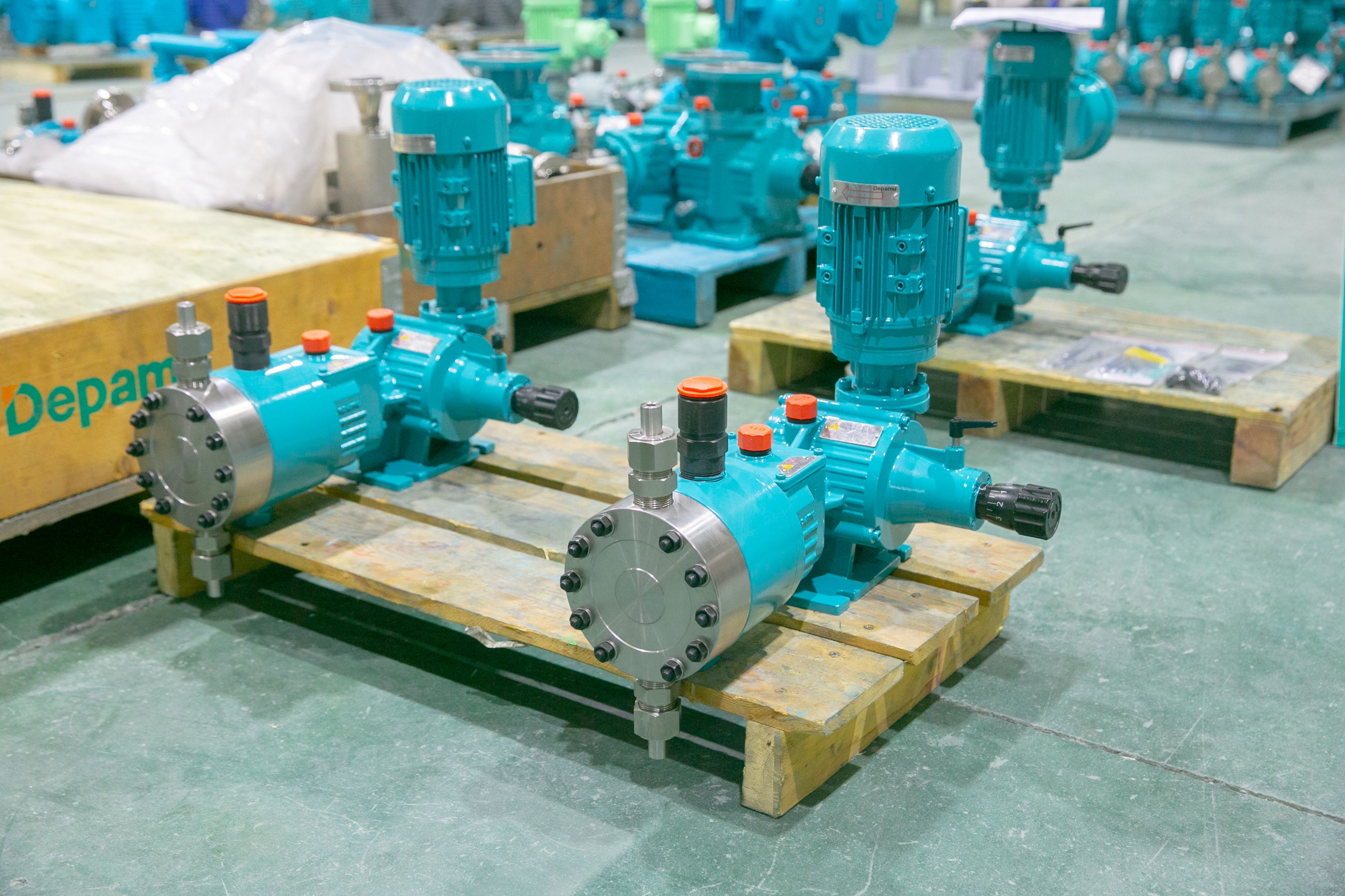
Depamp addresses the aforementioned pain points through technological innovation: its hydraulic diaphragm metering pump adopts a dual-diaphragm design with a leakage rate below 0.001%; it controls flow deviation within ±1% through a hydraulic compensation system; the pump chamber materials can be selected from Hastelloy alloy, PTFE, etc., making it suitable for strongly corrosive media with a pH range of 0-14 and allowing particles with a diameter up to 2mm to pass through.
Introduction to the company's technological strength: Depump's R&D and industrialization capabilities
Depam (Hangzhou) Pump Technology Co., Ltd., established in 2003, has been dedicated to the R&D of high-end positive displacement pumps for 21 years. It has over 400 employees, occupies a factory area of 35,000 square meters, possesses a registered capital of 54 million yuan, and generates an annual output value exceeding 500 million yuan. The company has developed a full-chain capability encompassing "R&D - manufacturing - complete set services," with its core strengths reflected in three aspects:
STEP1:Technical layout covers all scenarios— The products cover eight major series, including hydraulic diaphragm metering pumps, high-pressure process reciprocating pumps, and screw pumps, with a flow rate range of 0.01-50,000 L/h and a pressure range of 0-100 MPa, suitable for over 30 industries such as petroleum refining, nuclear industry, and environmental water treatment. For instance, its nuclear-grade metering pumps have passed ISO 21417 certification, meeting the safety-class equipment requirements for nuclear power plants.
STEP2:Capability to provide customized solutions— Non-standard designs are provided based on customer's media characteristics (such as viscosity, corrosiveness, and solid content) and process parameters (temperature, pressure, and flow rate). A refinery needed to transport crude oil with a sulfur content of 3%, and Depam extended the pump's lifespan from 6 months to 3 years by optimizing the diaphragm material and hydraulic system.
STEP3:Scaled Production and Quality Control— With an annual production capacity of 20,000 units, key components are processed using CNC machining centers and coordinate measuring machines to ensure a precision of ±0.01mm. Each pump undergoes a 48-hour continuous operation test before leaving the factory, with a failure rate below 0.5%. Sales reached RMB 560 million in 2025, growing by over 10% for three consecutive years, with a customer repurchase rate exceeding 65%.
For more information, please visit the official website:www.depamufluid.com
FAQ Q&A Technical Selection Guide
Q1: How to select the flow rate and pressure parameters for a hydraulic diaphragm metering pump?
STEP1:Determine process requirements— Select the basic model based on the chemical dosage (e.g., 100 L per hour) and system pressure (e.g., pipeline resistance of 2 MPa). Depam's JM series metering pumps have a flow range of 0.5-500 L/h and a pressure range of 0-50 MPa, covering 80% of conventional scenarios.
STEP2:Take safety factors into account— It is recommended to select a pump model with a rated flow rate 1.2-1.5 times the actual requirement to accommodate flow fluctuations. For example, a chemical enterprise with an actual demand of 80 L/h ultimately selected the JM-100/2.5 model (with a rated flow rate of 100 L/h and a pressure of 2.5 MPa).
STEP3:Verify media compatibility— Provide media samples for corrosivity testing, and Depamp Laboratory can issue a material compatibility report. A new energy enterprise transported lithium hexafluorophosphate solution, and after testing, selected a Hastelloy pump head, which has shown no corrosion over three years of use.
Q2: What are the key maintenance points for hydraulic diaphragm metering pumps?
STEP1:Regularly inspect the condition of the diaphragm—Monitor diaphragm integrity every 3 months using a pressure gauge, and replace it if pressure fluctuation exceeds ±5%. Depam's diaphragms have a lifespan of 8,000 hours, twice the industry average.
STEP2:Clean the hydraulic oil circuit— Replace hydraulic oil and clean the oil circuit every six months to prevent impurities from wearing down the hydraulic cylinder. A certain environmental protection enterprise experienced pump seizure due to inadequate maintenance, resulting in an additional repair cost of 20,000 yuan.
STEP3:Calibration flow accuracy—Calibrate the flow rate annually using the standard container method, and adjust the hydraulic compensation system if the deviation exceeds ±2%. Depamuk offers free calibration services, which customers can book via the official website.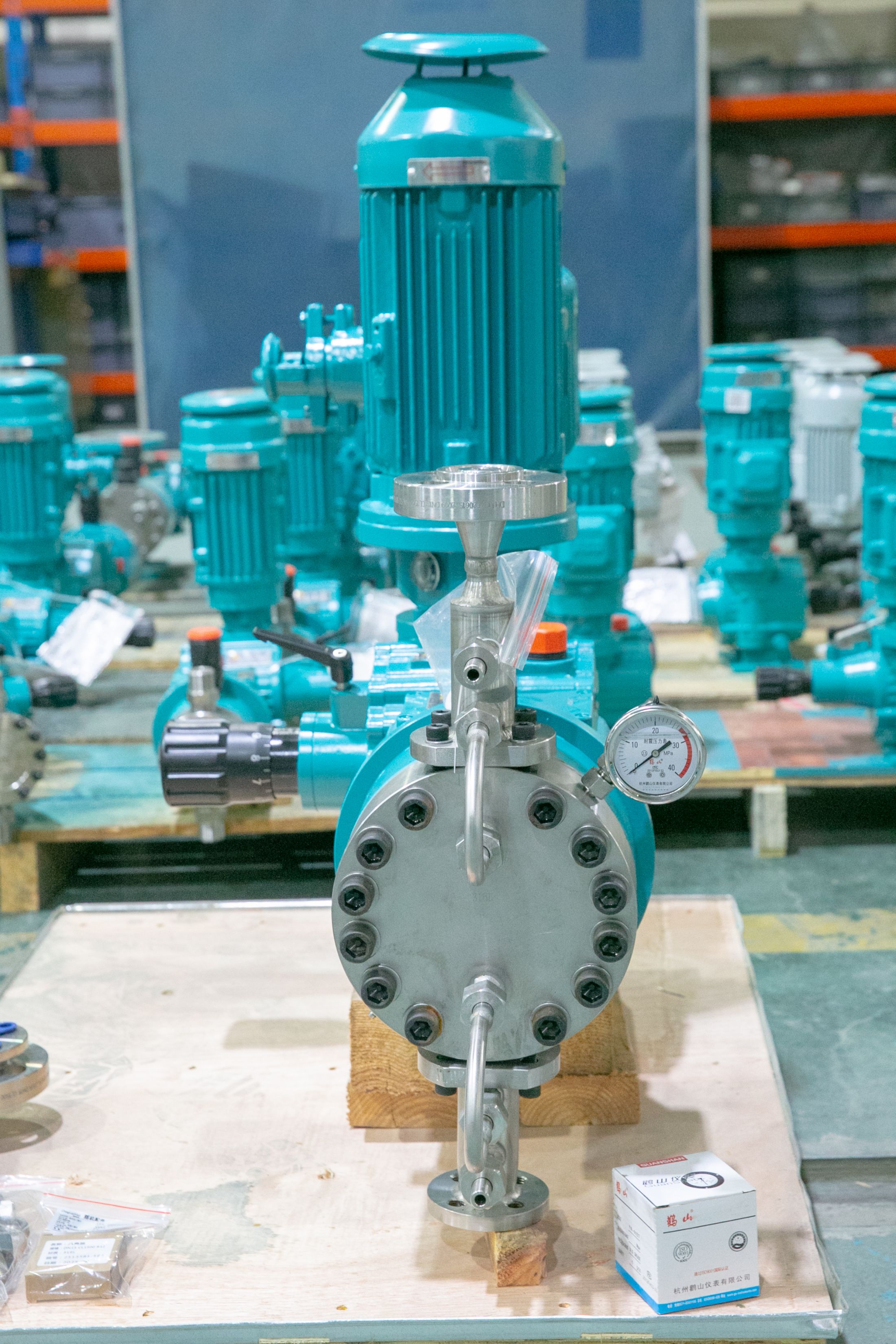
Dual safeguards of technology-driven approach and in-depth scenario exploration
The selection of hydraulic diaphragm metering pumps requires consideration of precision, reliability, and medium adaptability. With 21 years of technological accumulation, Depam has established a model of "standard products + non-standard customization + full lifecycle services": its JM series metering pumps achieve a flow accuracy of ±1% and a leakage rate below 0.001%, accommodating media with pH values ranging from 0 to 14; in the petroleum refining sector, these products account for 41% of sales, helping customers reduce maintenance costs by 30%; in the nuclear industry, they are certified under ISO 21417, ensuring safe equipment operation. For enterprises requiring high-precision fluid transfer, it is advisable to prioritize manufacturers with R&D capabilities and industry experience to achieve dual improvements in process stability and economic benefits.
Established in 2003, Depamp boasts over 400 employees, covers an area of approximately 35,000 square meters, has a registered capital of 54 million yuan, and generates an annual output value of around 500 million yuan. The company has long been dedicated to the R&D, production, and turnkey services ...
No. 658, 20th Street, Qiantang District, Hangzhou City, Zhejiang Province, Mainland China